Understanding Burners & Combustion: The Foundation for Operational Reliability
Burners & combustion systems are critical assets in industrial operations—yet many plant managers only focus on them when something breaks. After 35 years as a distributor of industrial equipment, 3G Electric has observed that most unplanned shutdowns stem from preventable issues: minor flame detection faults that escalate, pressure switches stuck in failure modes, or relay timing problems that aren't caught early.
Unlike facility maintenance guides focused on design principles, this article takes a different approach: it addresses what plant managers actually face in daily operations—diagnosing why a burner won't ignite at startup, determining whether a shutdown is a sensor fault or a real combustion problem, and knowing which components to test first when reliability drops.
The core truth: burner reliability is 80% about condition monitoring and 20% about replacement components. Your ability to detect problems early directly impacts both safety and profitability.
Section 1: Real-World Burner Failure Modes & Early Detection Strategies
Common Failure Signatures Plant Managers Need to Recognize
When burner shutdowns occur, they follow predictable patterns. Understanding these patterns lets you act before complete failure:
Flame Detection Faults (40% of unplanned shutdowns)
The burner starts, runs for 5-30 seconds, then trips on loss-of-flame. This is rarely an actual combustion problem. Instead, the flame sensor (UV or ionization electrode) is degraded, dirty, or misaligned. The Siemens Relay LFL 1.622 safety control unit monitors flame continuously and will lock out the burner if signal dropout occurs. Early warning sign: you notice flame-out trips during specific wind conditions or ambient temperature changes—this indicates marginal sensor performance, not combustion instability.
Pressure Switch Hysteresis Issues (25% of problems)
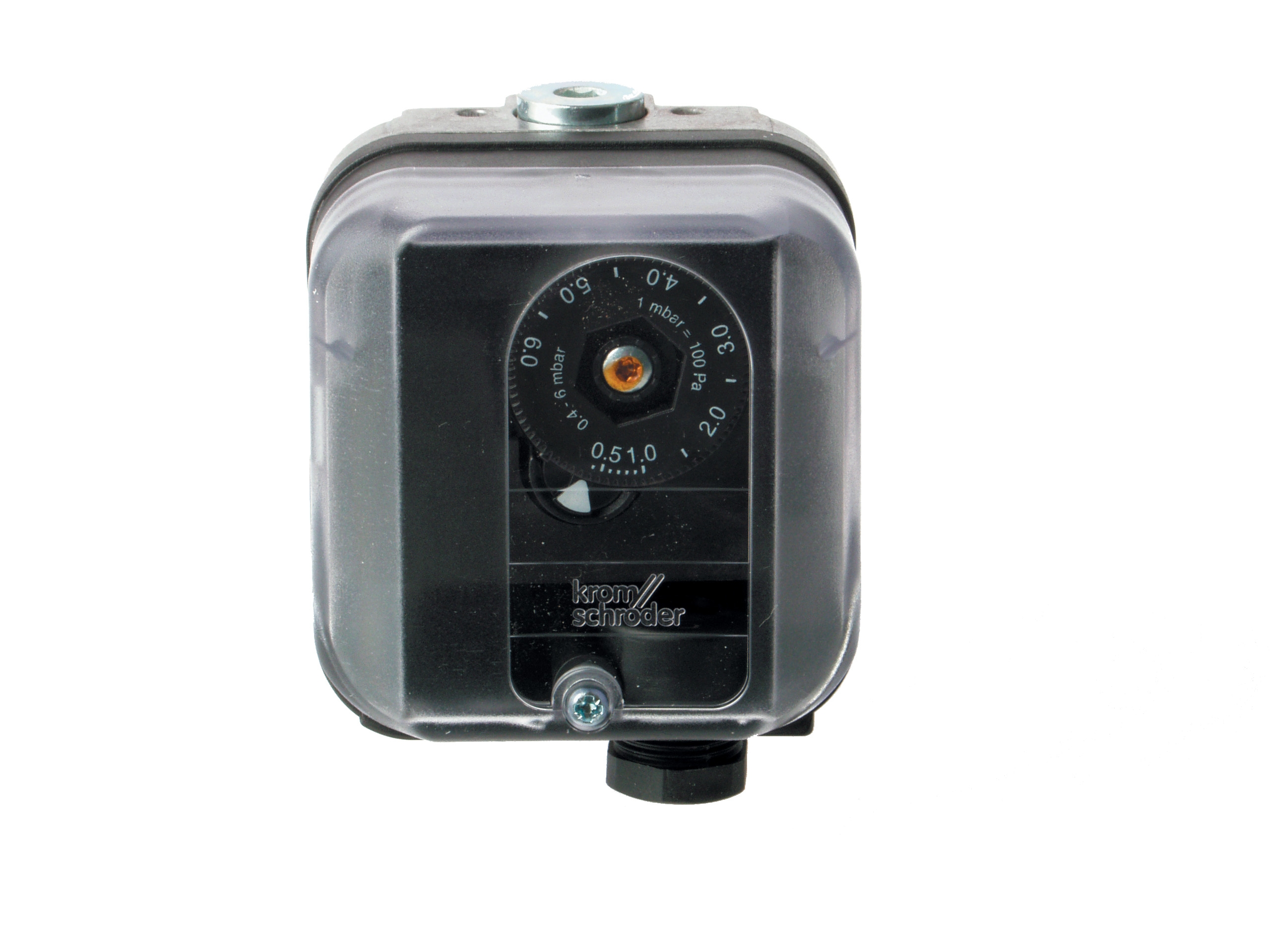
The burner ignites inconsistently or requires multiple restart attempts. Often, the issue is a stuck pressure switch relay that hasn't reset properly between cycles. The Kromschroder DG 50U/6 pressure switch is rated SIL 3 and meets EN 1854 standards, but even high-quality switches can stick if exposed to vibration or pressure spikes. Early warning: you hear mechanical clicking from the pressure switch area during startup, or the blower motor cycles erratically.
Ignition & Pilot Problems (20% of failures)
The main burner ignites but won't stay lit, or the pilot keeps extinguishing. This typically indicates either a control relay fault or incorrect burner sequencing timing. The Kromschroder Relay BCU 570WC1F1U0K1-E burner control relay supports both intermittent and continuous pilot modes and complies with EN 746-2 standards, but it requires correct commissioning timing. Early warning: you see a 3-5 second delay before main flame appears, or the pilot flame becomes visibly weaker over time.
Fuel Supply Inconsistency (10% of problems)
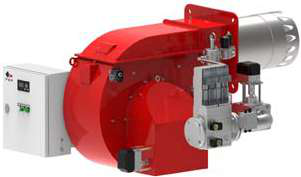
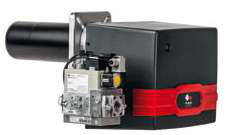
The burner operates normally most of the time, but occasionally sputters or surges, especially at part-load. This points to regulator drift, nozzle clogging, or air/fuel ratio instability. The FBR GAS XP 60/2 CE TC EVO gas burner delivers 116–630 kW with modulating control, but modulation fails if the fuel pressure isn't stable. Early warning: you notice combustion efficiency drops on your monitoring system (if you have one), or fuel consumption increases without corresponding output increase.
Heavy Oil Burner Specific Issues (5% of problems)
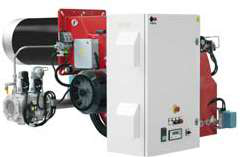
For facilities using dual-fuel burners like the FBR KN 1300/M TL EL dual-fuel heavy oil burner (1700–11500 Mcal/h range), oil viscosity changes with season, fuel atomization suffers, and nozzle coking increases. Early warning: stronger odor from stack, slightly longer ignition delay, or visible smoke color change during startup.
Diagnostic Framework: The 5-Minute Assessment
When a burner shuts down unexpectedly, plant managers need to triage quickly:
1. Check the control panel display or relay status: Does the flame detection relay show "flame loss" or does the safety relay show a pressure fault? This tells you which system failed.
2. Observe the burner's behavior on restart: Does it try to ignite (ignition transformer fires)? Does the blower run? Does fuel reach the burner? These observations narrow the fault to ignition, fuel supply, or air supply.
3. Listen and smell: A completely silent burner with no ignition sound points to electrical control failure. A hissing/clicking sound with no flame indicates ignition transformer firing but no fuel reach. A popping or surging flame indicates fuel/air imbalance.
4. Check physical indicators: Feel for vibration at pressure switches (stuck relay). Look for visible carbon buildup on flame sensors. Inspect fuel lines for visible leaks or pressure gauge fluctuation.
5. Review logs if available: Many modern burner systems log fault codes and operating hours. A flame-out fault that occurs only after 4 hours of runtime suggests sensor degradation, not commissioning error.
This framework takes 5 minutes and eliminates roughly 70% of guesswork about what to repair first.
Section 2: Pressure & Flame Monitoring—The Two Systems That Prevent Catastrophic Failures
Why Pressure Monitoring Matters More Than You Think
Plant managers often assume flame detection is the primary safety system. It's not. Pressure monitoring is your first line of defense against fuel line rupture, regulator failure, or nozzle blockage.
The Kromschroder DG 50U/6 pressure switch operates in two critical modes:
- Primary fuel pressure monitoring: Ensures fuel pressure stays within operating range before ignition is allowed. If pressure drops below setpoint (typically 1.0–1.5 bar for gas), the switch prevents ignition.
- Pilot pressure confirmation: For systems with pilot burners, confirms that pilot fuel is available before attempting main burner ignition.
The switch is rated SIL 3 and Performance Level e, meaning it's certified for safety-critical applications and meets both European (EN 1854) and North American (FM, UL, AGA) standards. In practical terms: if this switch fails in the open position, fuel can spray into the combustion chamber with no ignition, creating explosion risk. If it fails in the closed position, the burner won't start.
Actionable insight for plant managers: Pressure switches should be tested or replaced every 18–24 months in continuous-duty applications, even if no faults have occurred. The mechanical contacts degrade silently; you won't know until a real emergency happens.
Flame Detection: Why Sensor Cleanliness Is Non-Negotiable
The Siemens Relay LFL 1.622 safety control unit uses either UV or ionization flame detection—two different technologies with different failure modes:
UV sensors (most common in Southeast Asia):
- Detect ultraviolet radiation emitted by any flame
- Immune to visible light and stray electrical noise
- Fail when: lens becomes coated with carbon/soot, window gets hit by thermal shock, or the sensor ages (UV tubes degrade over time)
- Typical lifespan: 3–5 years in normal conditions, 18–24 months in high-soot environments
- Detect ionized flame gases (electrical conductivity)
- More sensitive to fuel type and combustion quality
- Fail when: carbon buildup blocks the electrode gap, high humidity causes electrical leakage, or fuel contamination changes ionization
- Typical lifespan: 2–4 years
The relay itself (LFL 1.622) handles the signal processing and generates the control outputs to fuel solenoids and modulating servos. It includes a 3-second trial-for-ignition timer, which is crucial: if ignition doesn't establish a flame within 3 seconds, the relay locks out the burner. This prevents fuel accumulation that could cause delayed ignition explosions.
Integration Reality: Pressure Switch + Flame Relay Working Together
These aren't independent systems—they work as a sequence:
1. Operator or automation calls for burner start
2. Blower motor ramps up
3. DG 50U/6 pressure switch confirms fuel pressure is available
4. LFL 1.622 relay allows ignition transformer to fire
5. Main burner flame is established within 3 seconds
6. LFL 1.622 continuously monitors flame signal
7. If flame is lost (pressure switch opens, fuel line ruptures, combustion fails), relay immediately de-energizes fuel solenoid
Plant manager action item: Every quarterly maintenance cycle, simulate a flame-loss condition by temporarily disconnecting the flame sensor while the burner runs. The burner should shut down within 2 seconds. If it doesn't, your LFL relay or wiring has a fault requiring immediate correction.
Section 3: Commissioning & Tuning Mistakes That Create Long-Term Problems
Many burner reliability issues don't stem from component failure—they stem from incorrect setup that was never corrected. Based on 3G Electric's experience supporting industrial facilities across Southeast Asia, here are the most common culprits:
Mistake #1: Wrong Ignition Delay Timing
The Kromschroder BCU 570WC1F1U0K1-E relay burner control relay has adjustable pilot ignition timing (typically 0–10 seconds). If set too short, the ignition spark arrives before fuel reaches the combustion chamber. If set too long, excess fuel accumulates, creating a hard start explosion.
Correct procedure: During commissioning, measure the time from when the fuel solenoid opens to when fuel actually reaches the burner nozzle. This is your transport delay (typically 1–3 seconds). Add 1 second safety margin, and that's your minimum ignition delay. Many technicians set this to 3–5 seconds regardless of actual nozzle distance—this leads to hard starts for months, then a one-day lockout investigation that consumes 8 hours.
Mistake #2: Ignoring Air/Fuel Ratio During Turndown
The FBR GAS XP 60/2 CE TC EVO two-stage gas burner delivers 116–630 kW, meaning it can modulate from 18% to 100% of full power. Most plant managers assume that if it works at full load, it works at part-load. Not true.
At reduced fuel flow, the air damper must also reduce proportionally to maintain correct stoichiometry (roughly 10 parts air to 1 part fuel for natural gas). If the damper stays open while fuel reduces, combustion becomes lean, efficiency drops, and the burner becomes unstable.
Actionable fix: After commissioning, require your technician to tune the burner at 25%, 50%, 75%, and 100% load. Measure stack temperature, O2 percentage, or CO levels at each point. Document these as your baseline. If efficiency drops more than 3% over 12 months, it usually indicates damper linkage wear or nozzle coking—predictable maintenance, not surprise failure.
Mistake #3: Pressure Switch Setpoint Drift (Mechanical Relay Creep)
The DG 50U/6 pressure switch rated SIL 3 has mechanical springs that hold contact points in position. Over months of vibration and thermal cycling, these springs gradually relax, causing the switch to close at slightly different pressures than originally set.
This sounds minor, but it causes insidious problems: the burner starts inconsistently because fuel pressure is marginal, then one day it doesn't start at all (you're now below setpoint).
Detection method: Every 6 months, manually measure the actual fuel pressure at which the switch closes (use a calibrated test gauge). Record it. If it drifts more than 0.1 bar from original setpoint, replace the switch before it fails during peak load season.
Mistake #4: Fuel Viscosity Management (Especially Heavy Oil)
For the FBR KN 1300/M TL EL dual-fuel burner operating 1700–11500 Mcal/h, heavy fuel oil viscosity changes dramatically with temperature. At 0°C, bunker C oil becomes thick and slow to atomize. At 40°C, it flows smoothly.
Real scenario from Singapore operations: A facility switches from gas to heavy oil in November (cooler season). For three weeks, everything works fine. Then ambient temperature drops to 18°C one week in late November, and ignition suddenly fails. The oil has become too viscous to atomize properly, but the technician spends a day troubleshooting the burner itself.
Solution: Install an oil preheater (thermostat-controlled, set to maintain 38–42°C) and use a pressure/temperature gauge on the fuel line. If temperature drops below 35°C during operation, preheat is failing and ignition problems will follow.
Section 4: Maintenance Schedules That Prevent Costly Shutdowns
Monthly Inspections (15 minutes)
- Visual check: any fuel leaks, loose electrical connections, or visible carbon buildup on burner nozzle
- Listen: any unusual clicking (pressure switch), grinding (motor), or hissing (air leak)
- Check fuel pressure gauge (if installed): should be stable within ±0.2 bar of normal operating pressure
- Check control panel display or status lights: any fault codes in history?
Quarterly Deep-Dives (1 hour)
- Clean flame sensor (UV or ionization) with specified solvent and soft brush; inspect lens for cracks or heavy carbon deposits
- Test emergency shutdown function: manually trigger flame sensor disconnection; burner should shut down within 2 seconds
- Inspect pressure switch for moisture or corrosion on terminals; test closing pressure with calibrated gauge
- Check burner nozzle tip for coking or carbon buildup; if visible buildup exists, plan for replacement
- Review operating logs (hours, fault events, fuel consumption): compare to baseline to spot efficiency drift
Semi-Annual Adjustments (2 hours)
- Recalibrate air/fuel ratio at 25%, 50%, 75%, and 100% load (using stack temperature or O2 measurement)
- Inspect ignition transformer electrodes for carbon buildup or electrode gap drift; clean or replace if gap exceeds specifications
- Test pilot fuel supply pressure and confirm pilot flame stability
- Inspect fuel filter element; replace if differential pressure gauge (if installed) indicates blockage
- Check relay contact wear: for mechanical relays like the Kromschroder BCU 570WC1F1U0K1-E Kromschroder Relay BCU 570WC1F1U0K1-E, contacts should show minimal pitting; heavy pitting indicates replacement is due
Annual Professional Service (4 hours, external technician)
- Pressure switch replacement (most critical preventive action)
- Flame sensor replacement if approaching end-of-life (3–5 years)
- Ignition transformer inspection and replacement if necessary
- Complete electrical safety check: megohm test on all circuits, voltage verification, control wiring inspection
- Combustion test using portable analyzer: measure O2, CO, CO2, stack temperature; verify efficiency and emissions compliance
- Relay contact inspection; consider replacement of BCU 570WC1F1U0K1-E relay if manual testing shows contact resistance trending high
Red Flags Requiring Immediate Attention
- Any flame-out event not preceded by external disturbance (wind, vibration, etc.): test flame sensor immediately
- Burner requires more than 2 restart attempts to ignite: suspect ignition delay timing or fuel pressure issue
- Visible smoke color changes (darker or bluer): indicates combustion imbalance; check air/fuel ratio
- Hard starting (delayed ignition with popping sound): suspect ignition delay set too long or fuel supply slow to reach nozzle
- Pilot flame becomes noticeably weaker over weeks: suspect fuel line blockage or nozzle coking; schedule cleaning
- Control panel displays pressure fault but pressure gauge reads normal: pressure switch is likely stuck; replacement needed
The Business Case: Why Preventive Maintenance Pays
Plant managers often face budget pressure to defer maintenance. Here's the math:
- Preventive maintenance cost (annual): ~SGD 2,000–3,500 for quarterly inspections and annual professional service
- Unplanned shutdown cost: Production loss (SGD 5,000–15,000 per hour depending on facility size), emergency technician call-out fee (SGD 800–1,500), overtime labor, potential component replacement under emergency conditions (30% cost premium)
One unplanned 4-hour shutdown costs SGD 20,000–65,000. One prevented shutdown pays for 5–10 years of preventive maintenance.
3G Electric's 35 years of experience shows: facilities that maintain burner systems on schedule experience 85% fewer unplanned shutdowns than facilities that operate until failure. In Singapore's competitive industrial environment, that reliability difference directly impacts customer delivery performance and profitability.
Putting It Into Practice: Your First Action Steps
1. This week: Review your current burner maintenance logs. Do you have documented baseline measurements (fuel pressure, ignition timing, air/fuel ratio at each load)? If not, schedule a commissioning review with your equipment supplier.
2. This month: Test your flame detection system by disconnecting the sensor during operation. Your burner should shut down within 2 seconds. If it doesn't, your control relay or wiring has a fault.
3. This quarter: Replace or thoroughly service your pressure switches. This single action prevents the majority of preventable shutdowns.
4. Within 6 months: Establish a quarterly maintenance schedule with a documented inspection checklist. Assign responsibility to a specific team member. Track metrics: operating hours between failures, fuel consumption per unit of output, and fault event frequency.
5. Ongoing: Partner with a distributor (like 3G Electric) that stocks both the common components (relays, pressure switches, flame sensors) and has technical support available for troubleshooting. When you need a replacement pressure switch at 2 AM on a holiday, you need a supplier that can respond, not one that ships next week.