Introduction: Burners & Combustion Efficiency in Industrial Operations
Burners & Combustion systems represent one of the largest energy expenditures in Singapore's industrial sector, with thermal efficiency directly impacting operational costs and environmental compliance. Unlike maintenance-focused approaches, this guide addresses the thermodynamic fundamentals that distinguish high-performing combustion systems from marginal ones.
Drawing on 35+ years of industrial equipment distribution experience, 3G Electric has observed that 60–70% of burner inefficiency stems not from equipment failure, but from suboptimal fuel selection, poor air-fuel ratio management, and inadequate thermal monitoring. Industrial professionals who master these three variables can recover 8–15% of thermal energy losses without capital investment—translating to significant cost savings across steam generation, process heating, and thermal processing applications across Singapore's refining, petrochemical, food processing, and manufacturing sectors.
This guide moves beyond component specification to address combustion chemistry, fuel characteristics, and real-world tuning methods that maintenance and operations teams can implement immediately.
Understanding Fuel Type Selection and Combustion Characteristics
Fuel Properties and Burner Performance Implications
Fuel selection fundamentally determines combustion behavior, flame stability, and thermal efficiency. Singapore's industrial operations typically work with three primary fuel categories: natural gas, heavy fuel oil (HFO), and dual-fuel configurations. Each presents distinct combustion characteristics that directly affect burner control requirements and thermal output.
Natural Gas Combustion:
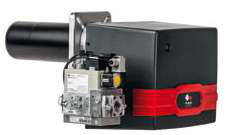
Natural gas (primarily methane) offers the highest combustion efficiency when properly controlled, with stoichiometric combustion temperatures reaching 1,920°C under ideal conditions. However, natural gas's rapid flame speed (0.3–0.4 m/s) and wide flammability range (5–15% by volume) require precise air-fuel ratio management. Gas burners operating without modulation or air damper control frequently run rich (excess fuel) or lean (excess air), both reducing thermal efficiency. The FBR GAS XP 60/2 CE TC EVO addresses this through two-stage modulation, enabling operators to maintain near-optimal air-fuel ratios across varying load conditions—critical for process heating where load fluctuates throughout production shifts.
Heavy Fuel Oil (HFO) Combustion:
Heavy fuel oil presents significantly greater combustion complexity. HFO's viscosity, sulfur content, and aromatic hydrocarbon composition create combustion challenges absent in gas systems. Heavy oils require atomization pressures of 8–20 bar to achieve droplet sizes (100–200 micrometers) suitable for complete combustion. Incomplete atomization leaves larger droplets that fail to burn completely, creating unburned carbon losses, elevated smoke opacity, and reduced thermal efficiency.
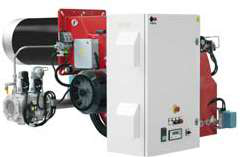
The FBR KN 1300/M TL EL dual-fuel burner addresses heavy oil combustion through staged combustion zones and optimized flame geometry, maintaining thermal efficiency across the 1,700–11,500 Mcal/h operating range. For Singapore operations processing feedstocks with varying sulfur content, this flexibility is operationally critical.
Dual-Fuel System Considerations:
Dual-fuel burners introduce additional complexity: fuel switchover dynamics, pilot flame stability across fuels, and control system responsiveness. Improper switchover sequencing can create rich combustion conditions during transitions, wasting fuel and generating excess emissions. Control systems must prevent simultaneous combustion of both fuels and ensure pilot flame stability throughout fuel transitions.
Practical Fuel Specification for Singapore Operations
Industrial procurement teams should specify fuels based on three parameters: combustion efficiency targets, environmental compliance requirements, and equipment capabilities. Natural gas consistently delivers 85–92% thermal efficiency in properly tuned systems; HFO typically achieves 80–87% due to atomization losses and incomplete combustion. However, HFO's lower cost per unit energy in many Asian markets makes it economically justified when burners are properly specified and maintained.
For Singapore operations subject to environmental regulations limiting sulfur emissions and particulate matter, fuel specification should incorporate:
- Sulfur content limits (typically <0.5% for industrial HFO in Singapore)
- Viscosity ranges matching atomizer specifications (typically 35–50 cSt at 40°C)
- Water content monitoring (maximum 0.5–1.0% to prevent steam explosions during atomization)
- Compatibility verification with existing fuel systems and storage conditions
Air-Fuel Ratio Management and Combustion Stoichiometry
Stoichiometric Principles and Practical Operating Conditions
Combustion fundamentally depends on precise air-fuel ratios. Complete combustion of 1 kg of methane requires exactly 17.2 kg of air; complete combustion of heavy fuel oil requires 13.5–14.2 kg of air per kg of fuel, depending on hydrogen content and sulfur content.
However, industrial burners never operate at exactly stoichiometric ratios. Practical combustion requires 3–8% excess air (lambda = 1.03–1.08) to ensure complete fuel oxidation despite inevitable mixing imperfections. This excess air represents a direct thermal loss: every 1% excess air reduces thermal efficiency by approximately 0.35–0.5%, depending on fuel type and flue gas temperature.
Conversely, insufficient air (rich combustion, lambda < 1.0) produces unburned carbon, incomplete oxidation products (CO, soot), and catastrophic efficiency losses. A 2% oxygen deficit (roughly lambda = 0.98) can reduce thermal efficiency by 4–6% while generating visible smoke and regulatory violations.
Measuring and Controlling Air-Fuel Ratios
Modern burner control systems rely on three primary measurement approaches:
Oxygen (O₂) Measurement:
Flue gas oxygen content directly indicates air-fuel ratio. 3–5% O₂ in flue gas indicates proper excess air; <2% signals incomplete combustion; >8% indicates excessive air. Oxygen analyzers provide real-time feedback for proportional-integral-derivative (PID) controller tuning, enabling automatic air damper modulation. This real-time adjustment is essential for burners operating across variable load ranges where manual tuning becomes impractical.
Pressure Differential Monitoring:
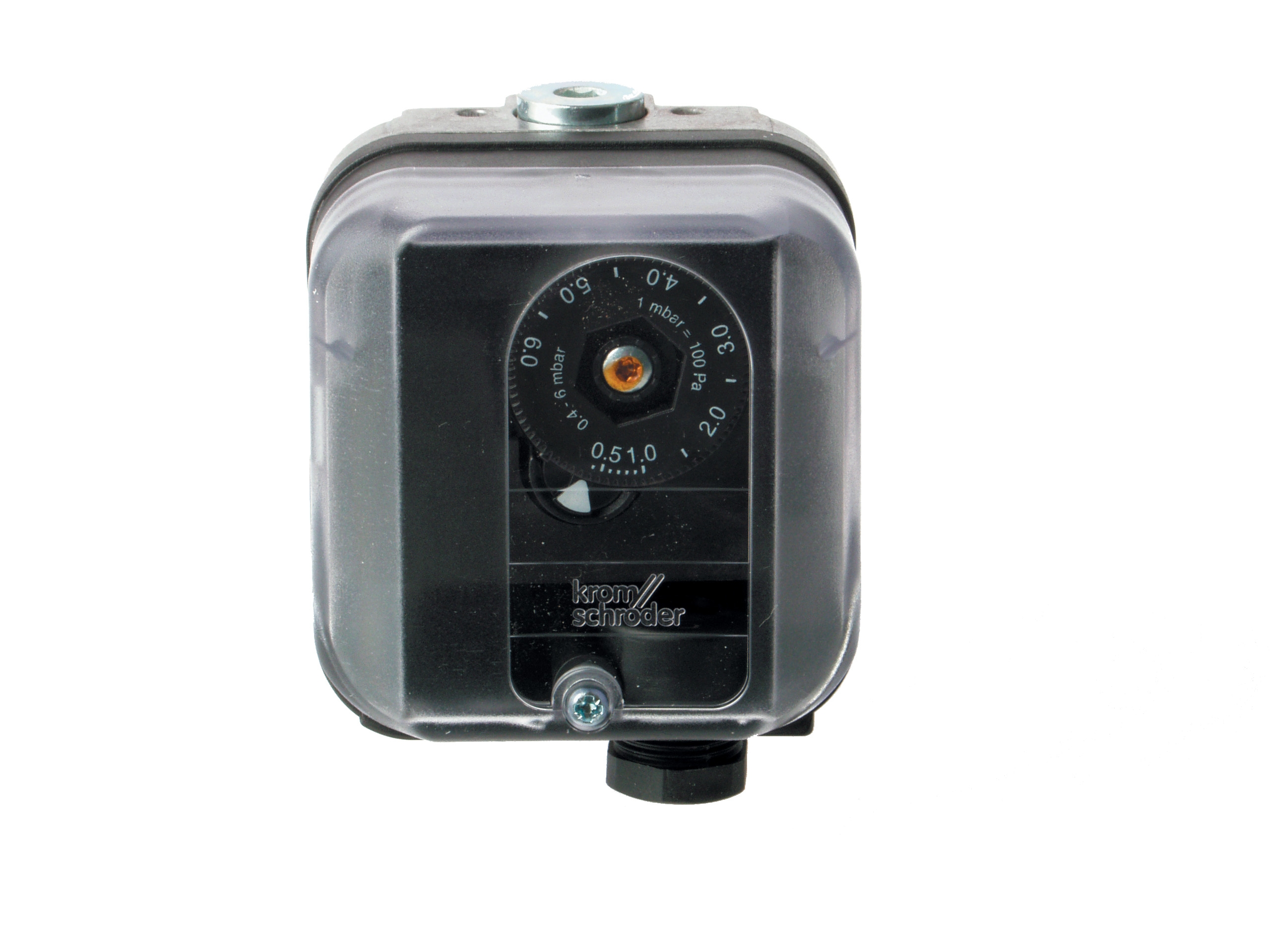
Air pressure drop across the burner's air inlet and fuel inlet pressures indicate combustion chamber conditions. The Kromschroder DG 50U/6 pressure switch, rated SIL 3 and meeting EN 1854 standards, monitors these differentials with diagnostic precision. Abnormal pressure signatures indicate burner fouling, air inlet blockage, or fuel nozzle degradation—early warning signs preceding efficiency collapse.
Flame Monitoring and Combustion Diagnostics:
The Siemens LFL 1.622 safety control unit provides both UV and ionization flame monitoring, creating redundant combustion confirmation. These sensors detect incomplete combustion by monitoring flame characteristics, triggering automatic shutdowns if combustion quality degrades beyond acceptable thresholds.
Practical Tuning Methodology for Singapore Industrial Sites
Achieving optimal air-fuel ratios requires systematic commissioning and periodic retuning:
1. Baseline Combustion Analysis: Measure flue gas composition (O₂, CO, CO₂, NOₓ), flame temperature (infrared pyrometry), and smoke opacity before any adjustments. This establishes the baseline efficiency and identifies whether the burner operates lean, stoichiometric, or rich.
2. Air Damper Adjustment: Using oxygen measurement or draft/pressure monitoring, incrementally adjust the burner's air inlet damper. For 3–5% excess oxygen, begin with rich combustion (visible smoke or >500 ppm CO), then progressively reduce air inlet until CO drops below 100 ppm and O₂ stabilizes at 3–4%. This process typically requires 30–60 minutes per burner.
3. Load Testing: Verify air-fuel ratio stability across the burner's operating range. Two-stage burners like the FBR GAS XP 60/2 CE TC EVO require separate tuning for high-fire and low-fire stages. Load variations due to process changes should not trigger dramatic efficiency swings.
4. Monitoring and Periodic Retuning: Burner fouling, fuel supply variations, and component wear gradually degrade air-fuel ratios. Quarterly combustion analysis (more frequently in harsh environments) identifies drift before efficiency losses become economically significant.
Thermal Performance Optimization and Energy Recovery
Flue Gas Temperature Management
Flue gas temperature represents the single largest energy loss in combustion systems. Each 10°C reduction in flue gas temperature recovers approximately 1% of thermal input—provided combustion efficiency doesn't degrade in pursuit of lower stack temperatures.
Optimal flue gas temperatures depend on fuel type and ambient conditions:
- Natural gas burners: 150–200°C stack temperature for efficiency; lower temperatures risk condensation and sulfur corrosion (less relevant with natural gas)
- Heavy fuel oil burners: 180–240°C stack temperature; lower temperatures risk fuel oil condensation in stack and corrosion from sulfurous acid formation
- Dual-fuel systems: Conservative tuning toward 200–220°C prevents fuel-specific condensation issues
Heat recovery devices (economizers, air preheaters) recover useful energy from flue gases, but must operate above fuel-specific minimum temperatures to prevent corrosion. For Singapore's humid tropical climate, stack temperature control and condensation management are particularly critical to prevent stack corrosion and discharge of acidic condensate.
Combustion Chamber Design and Flame Stability
Burner-specific design parameters—flame length, combustion chamber dimensions, and heat release intensity—directly impact thermal efficiency and emissions. High heat release intensity (exceeding 400 kW/m³ in combustion chamber volume) can create incomplete combustion despite adequate oxygen availability due to insufficient residence time for fuel oxidation.
The dual-fuel heavy oil burner specifications (1,700–11,500 Mcal/h thermal range) require careful matching to furnace volume. Undersized furnaces create excessively high heat release intensity; oversized furnaces cool the flame unnecessarily, reducing combustion efficiency and NOₓ formation (which complicates environmental compliance).
Practical Energy Auditing for Existing Installations
Industrial sites operating burners without recent efficiency audits typically discover 5–12% efficiency recovery opportunities:
1. Combustion Efficiency Testing: Portable combustion analyzers measure flue gas composition and calculate thermal efficiency. A single shift (8 hours) of analysis across multiple burners identifies which systems operate significantly below capability.
2. Heat Loss Quantification: Thermographic imaging identifies excess radiation losses from burner casings and combustion chamber walls—correctable through improved insulation without modifying combustion parameters.
3. Air Inlet Restriction Analysis: Visual inspection and static pressure measurement at burner air inlets reveal fouling or blockage reducing air supply. Simple cleaning often recovers 2–4% efficiency.
4. Fuel Supply Quality Verification: For heavy oil systems, fuel temperature stability, viscosity verification, and supply line condition directly impact atomization quality. Temperature-controlled fuel supply systems maintain consistent spray patterns and combustion quality despite ambient temperature variations—important for Singapore's heat-challenged operations.
Control System Integration for Burners & Combustion Optimization
Relay and Control Unit Selection for Efficiency
Burner control systems require redundant safety circuits (flame detection, pressure switches, shutoff valves) while simultaneously providing proportional control for air-fuel ratio optimization. The Kromschroder BCU 570WC1F1U0K1-E burner control relay supports both direct ignition and intermittent/continuous pilot modes, meeting EN 746-2 and EN 676 standards for industrial burner applications.
This control flexibility enables:
- Automatic ignition sequencing: Controlled fuel staging reduces unburned fuel losses during startup
- Intermittent pilot operation: Pilot flame operates only during main flame gaps, reducing parasitic fuel consumption
- Safety interlocks: Automatic shutdown prevents unsafe combustion conditions
Proportional Air Damper Control
Modulating burners require proportional air damper actuators responding to load demand signals (typically 4–20 mA or 0–10 VDC). The actuator must respond reliably across temperature extremes (40–60°C near combustion chambers) and dust environments typical of industrial thermal processing.
Control tuning requires:
- Proportional gain (P) adjustment: Controls response speed to load changes
- Integral time (I) constant: Eliminates steady-state error in air-fuel ratio
- Derivative time (D) constant: Dampens oscillations from overcorrection
Proper PID tuning prevents the oscillating combustion condition where burners hunt for optimal air-fuel ratio, wasting fuel through cyclical rich-lean excursions.
Monitoring Integration for Continuous Efficiency Tracking
Building measurement systems beyond safety-critical functions enables continuous efficiency monitoring:
- Flue gas temperature trending identifies heat recovery system fouling (economizer tube blockage)
- Oxygen percentage trending reveals slow degradation of air-fuel ratio control
- Burner runtime accumulation predicts maintenance intervals and component replacement timing
- Abnormal shutdown frequency indicates control instability or sensor degradation
3G Electric's 35+ years of industrial equipment distribution experience demonstrates that sites implementing continuous efficiency monitoring typically achieve 8–12% sustained efficiency gains through data-driven maintenance and operational adjustments—exceeding one-time tuning gains.
Conclusion
Optimizing burners & combustion efficiency transcends equipment selection, requiring systematic understanding of fuel chemistry, air-fuel ratio management, and thermal dynamics. Singapore's industrial professionals managing thermal equipment can implement the strategies outlined here—fuel specification refinement, air-fuel ratio tuning, and flue gas temperature optimization—to recover substantial efficiency gains while enhancing environmental compliance and operational reliability.
The control components available through 3G Electric—including the Kromschroder BCU 570WC1F1U0K1-E relay for precise burner sequencing, the Kromschroder DG 50U/6 pressure switch for combustion diagnostics, and the Siemens LFL 1.622 for redundant flame detection—provide the technical foundation for efficient, reliable combustion. However, their value is realized only through operational teams that understand the thermodynamic principles governing combustion efficiency.
Systematic commissioning, quarterly combustion analysis, and continuous monitoring represent investments in operational excellence with payback periods typically measured in months rather than years.