Understanding Gas Burner Nozzle Sizing and Heat Output Correlation: A Technical Guide for Singapore Industrial Applications
Gas burner selection is fundamentally a materials engineering problem. The nozzle—seemingly a simple component—governs atomization characteristics, combustion efficiency, and thermal output. For Singapore's industrial sector, where precision manufacturing, food processing, and chemical production demand consistent thermal performance, understanding the nozzle-to-power relationship is critical. This article decodes the technical principles behind burner nozzle sizing and demonstrates how diameter specifications correlate directly with kilowatt output ranges. By examining real product specifications and application scenarios, industrial professionals can make evidence-based decisions when specifying combustion equipment for their operations.
The Physics of Nozzle Sizing in Gas Combustion Systems
The nozzle is the critical interface where pressurized gas transitions from bulk flow to atomized spray. Nozzle diameter, measured in millimeters, determines the spray cone angle, droplet size distribution, and volumetric flow rate at operating pressure. This geometric relationship directly influences the flame envelope and combustion efficiency within the furnace or boiler.
In industrial gas burners, the nozzle diameter exhibits a non-linear relationship with maximum thermal output. A larger nozzle diameter permits greater volumetric gas flow, allowing higher fuel injection rates and correspondingly higher kW ratings. However, this relationship is constrained by furnace chamber geometry, oxygen availability, and heat exchanger design. For instance, a nozzle operating at 250 mm diameter typically supports heat outputs in the 232–630 kW range, while a 90 mm nozzle is limited to 17.4–93 kW. This 3x difference in diameter correlates to roughly a 7x difference in maximum power output, illustrating how nozzle sizing fundamentally governs burner capacity.
The minimum power rating is equally important. Gas burners cannot operate below a critical turndown ratio—typically 3:1 to 4:1—because flame stability deteriorates at extremely low fuel rates. The minimum kW specification reflects this physical limit. Industrial applications requiring precise temperature control often exploit this minimum rating, as it sets the lower boundary of modulation capability. Understanding both maximum and minimum power ratings enables engineers to specify burners with appropriate turndown ratios for their process requirements.
Nozzle material composition—typically brass, stainless steel, or ceramic—affects durability under high-temperature combustion. Gas burners operating in corrosive environments or with alternative fuel compositions require nozzle materials resistant to chemical attack. This consideration becomes critical for Singapore's humid industrial environment and applications involving specialty fuels.
Technical Specifications: Nozzle Diameter and Power Output Correlations
Analyzing specifications across the burners and combustion equipment available through 3G Electric reveals distinct product categories aligned with nozzle sizing.
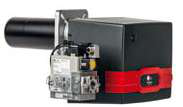
Compact Burners (90 mm nozzle): The FBR GAS X2/M series represents the lower capacity tier. The FBR GAS X2/M CE-LX4 TC Cl. 4 (_31) features a 90 mm nozzle with a maximum output of 93 kW and minimum of 23.7 kW, yielding a 3.9:1 turndown ratio. The comparable FBR GAS X2/M CE TC (_31) demonstrates specifications of 93 kW maximum and 17.4 kW minimum, providing a 5.3:1 turndown ratio. This additional flexibility makes the 002731_31 model more suitable for variable-load applications. Both models operate on single-phase electrical supply (1-phase), making them suitable for smaller installations where three-phase power is unavailable.
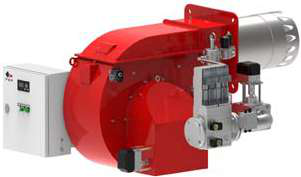
Mid-Range Burners (250-385 mm nozzles): The FBR X GAS XP 60 CE TC EVO (_41) occupies an intermediate capacity class with a 250 mm nozzle, 630 kW maximum output, and 232 kW minimum—a 2.7:1 turndown ratio. This model requires three-phase electrical supply, reflecting its higher power demand.
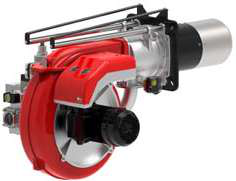
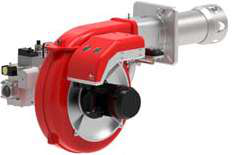
The larger 385 mm nozzle category includes two models with similar high-end specifications but different modulation characteristics. The FBR GAS XP 80/2 CE-LX4 TL Cl. 4 (_41) delivers 850 kW maximum and 170 kW minimum (5:1 turndown), while the FBR GAS XP 80/M CE-LX4 TL Cl. 4 (_41) achieves the same 850 kW maximum but operates down to 130 kW minimum (6.5:1 turndown). The /M designation indicates modulation capability, enabling finer load control.
All mid-range and high-capacity models require three-phase electrical supply due to their power consumption exceeding single-phase limitations. This specification requirement must be verified before equipment procurement for Singapore facilities.
The relationship between nozzle diameter and power output can be expressed empirically: doubling the nozzle diameter increases maximum power capacity by approximately 4-5 times. This non-linear scaling results from the relationship between diameter (linear) and cross-sectional area (quadratic), combined with pressure-dependent flow dynamics.
Real-World Application Examples in Singapore's Industrial Sector
Singapore's precision engineering sector frequently encounters applications requiring compact, modulating burners. Electronic component manufacturers operating muffle furnaces benefit from the FBR GAS X2/M series. These compact units with 90 mm nozzles provide the necessary heating capacity (up to 93 kW) while maintaining stable flame characteristics at low power levels—essential for temperature-sensitive processes. The 5.3:1 turndown ratio of the SKU 002731_31 model permits gradual temperature ramping without flame extinction, improving product quality and energy efficiency.
Food processing facilities—a significant industrial segment in Singapore—often require larger burners for steam generation and thermal processing. A facility operating a 1-2 ton/hour steam boiler would benefit from the mid-range FBR X GAS XP 60 CE TC EVO (_41), delivering up to 630 kW while maintaining stable operation down to 232 kW. This range accommodates both peak demand and part-load efficiency, critical for economic operation in competitive food manufacturing.
Chemical processing and petrochemical support operations frequently involve large-scale heaters requiring the full capacity of high-end burners. The 385 mm nozzle FBR GAS XP 80/2 and FBR GAS XP 80/M models (SKUs 002410_41 and 002412_41, respectively) with 850 kW maximum output suit large heat exchangers and process heaters. The superior turndown ratio of the /M variant (6.5:1 versus 5:1) makes it preferable for facilities with variable throughput, common in refinery support operations.
Selection Criteria and Best Practices for Gas Burner Specification
Load Profile Analysis: Before specifying a burner, calculate both sustained and peak thermal loads. Select nozzle diameter to match peak requirements; then verify that the minimum kW rating accommodates sustained operation without flame instability. A burner running continuously near its minimum threshold consumes excessive energy and generates excessive emissions.
Electrical Supply Verification: Compact burners (SKUs 002578_31, 002731_31) operate on single-phase supply, suitable for smaller facilities. All larger models require three-phase electrical infrastructure. Confirm facility electrical service before specifying higher-capacity equipment.
Turndown Ratio Matching: Applications with highly variable loads benefit from extended turndown ratios. The FBR GAS X2/M CE TC (_31) with 5.3:1 turndown provides finer load control than the 3.9:1 variant. Conversely, applications with relatively constant thermal demand can prioritize nozzle size matching over extended modulation capability.
Integration with Control Systems: Modern burners with electronic cam control integrate seamlessly with facility automation systems. When retrofitting or upgrading combustion equipment, consider compatibility with existing process control infrastructure.
Environmental Compliance: Singapore's strict emission standards require burners meeting CE certification requirements. All products referenced here carry appropriate certification markings (CE, TC, EVO designations) ensuring compliance with regulatory requirements.
Conclusion and Next Steps
Gas burner nozzle sizing is not arbitrary—it represents a carefully engineered balance between fuel flow capacity, combustion efficiency, and process control requirements. The nozzle diameter directly governs the burner's power output range, modulation capability, and suitability for specific industrial applications. By understanding the correlation between 90 mm nozzles (17.4–93 kW), 250 mm nozzles (232–630 kW), and 385 mm nozzles (130–850 kW), Singapore industrial professionals can make informed equipment decisions aligned with their specific thermal and operational requirements.
Whether you operate precision furnaces, steam generation systems, or large-scale process heaters, matching burner specifications to your load profile ensures optimal efficiency, compliance, and long-term reliability. 3G Electric's burners and combustion product range includes models across the full capacity spectrum, supported by technical documentation and professional guidance.
For assistance specifying the appropriate gas burner system for your Singapore facility, contact 3G Electric's technical team. With over 30 years of industrial equipment distribution experience, we provide application-specific recommendations based on your thermal load, electrical infrastructure, and process control requirements. Our specialists can review your facility's requirements and recommend burner models optimized for your operational parameters.