Understanding Burners & Combustion Diagnostic Fundamentals
Burners & Combustion systems represent one of the most critical operational components in Singapore's industrial heating, process control, and HVAC infrastructure. Yet when failures occur, procurement engineers often face a fundamental challenge: distinguishing between control relay failures, pressure switch malfunctions, and sensor degradation. Drawing on 35+ years of industrial equipment distribution experience, 3G Electric has documented that diagnostic capability directly correlates with mean time to repair (MTTR) and equipment lifecycle costs.
The modern Burners & Combustion control architecture integrates multiple interdependent components—burner control relays, pressure switches, flame detection systems, and modulation dampers—operating in synchronized sequences. A single component failure cascades rapidly through the system. The Kromschroder Relay BCU 570WC1F1U0K1-E and Siemens Relay LFL 1.622 represent two distinct diagnostic profiles. The Kromschroder unit supports direct ignition with dual pilot ignition modes, while the Siemens variant integrates UV/ionization flame monitoring. Understanding these architectural differences is essential before troubleshooting begins.
Singapore's tropical industrial environment—characterized by high ambient humidity, corrosive salt-air exposure in coastal facilities, and intense thermal cycling—accelerates control system degradation. Procurement engineers must implement diagnostic protocols that account for environmental stress factors alongside component aging.
Pressure Switch Diagnostics: From Fault Detection to Root Cause Analysis
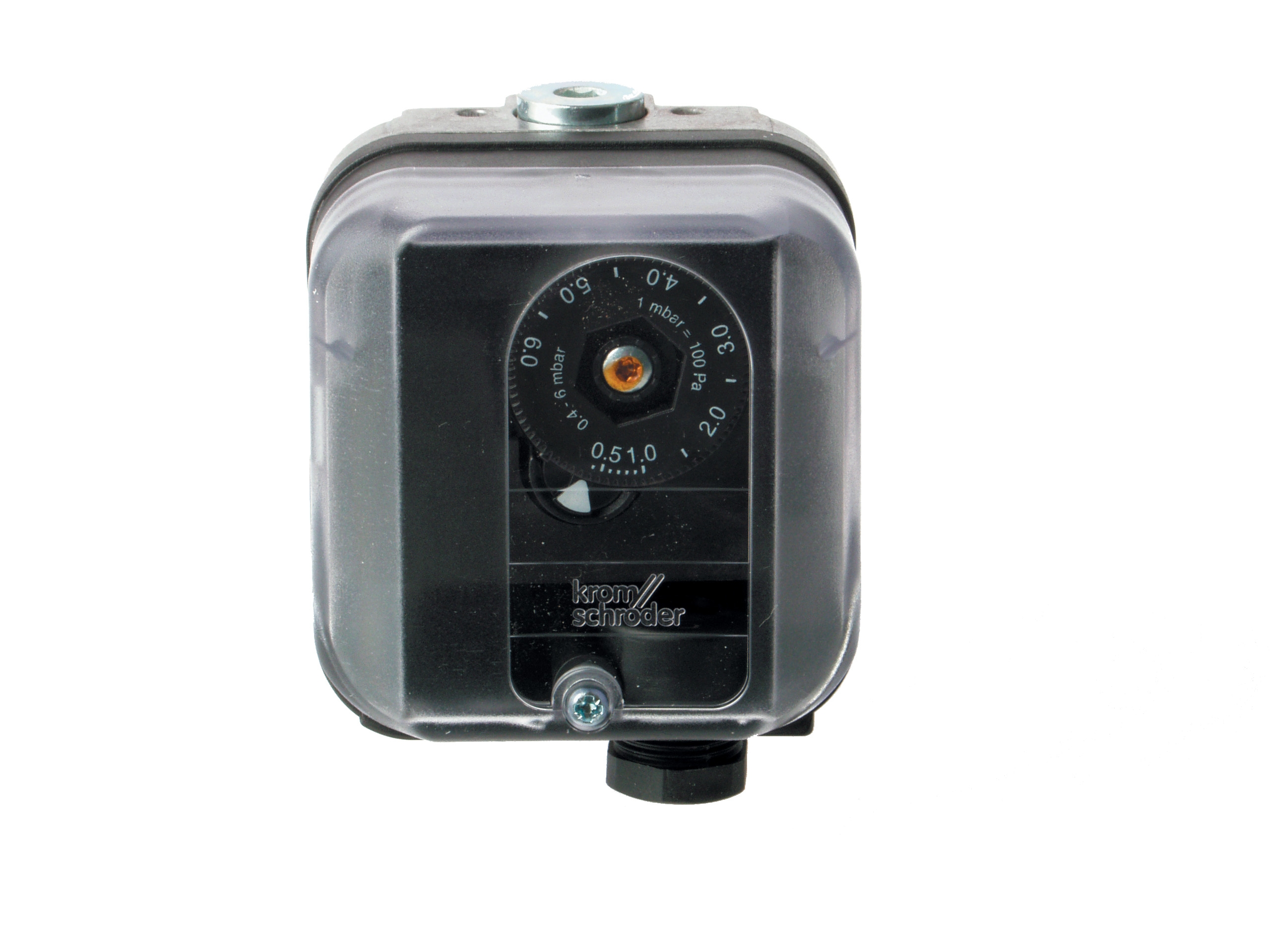
The Kromschroder Pressure switch DG 50U/6 represents the SIL 3 / Performance Level e standard for Burners & Combustion safety interlocks. Pressure switch failures trigger 25-35% of non-flame control outages in Singapore industrial plants, yet most failures are preventable through systematic diagnostics.
Diagnostic Protocol for Pressure Switch Testing:
When a burner fails to ignite or shuts down unexpectedly during operation, procurement engineers should execute a three-stage diagnostic sequence:
Stage 1: Physical Inspection and Environmental Assessment
- Verify air pressure line integrity—inspect tubing for micro-cracks, blockages, or disconnection points. Singapore's humid environment promotes corrosion at compression fittings; even 0.5 bar pressure loss prevents switch activation
- Confirm pressure switch mounting orientation. The DG 50U/6 requires specific vertical/horizontal positioning for accurate diaphragm response
- Document ambient temperature at the switch location. Tropical thermal cycling (25°C to 45°C fluctuations) causes calibration drift over 12-18 months
- Check electrical connector integrity—oxidation at terminal contacts produces intermittent failures that simulate true component failure
- Isolate the pressure switch from the burner control circuit using a dual-channel isolation valve (critical for safety compliance)
- Apply regulated air pressure incrementally from 0 to 150% of the switch setpoint using a calibrated pressure gauge (±2% accuracy minimum)
- Document activation and deactivation pressures—hysteresis values exceeding ±0.1 bar indicate diaphragm fatigue or contamination
- Compare test results against the switch nameplate setpoint and EN 1854 specifications
- Reconnect the pressure switch to the burner control circuit
- Operate the burner through a complete ignition-run-shutdown cycle while monitoring pressure switch signal continuity with a multimeter
- Record pressure switch state during each phase: pre-purge, pilot ignition, main burner ignition, and flame-off
For the Kromschroder DG 50U/6 specifically, SIL 3 certification requires annual proof-testing per EN 61508. Pressure switch diagnostics must document that the switch performs its safety function reliably throughout its operational envelope.
Burner Control Relay Diagnostics: Identifying Electronic vs. Mechanical Failure Modes
The Kromschroder BCU 570WC1F1U0K1-E and Siemens LFL 1.622 exhibit distinct failure signatures. Procurement engineers must recognize these patterns to select appropriate diagnostic tests and spare component strategy.
Characteristic Failure Modes:
The Kromschroder BCU 570WC1F1U0K1-E supports direct ignition and intermittent/continuous pilot modes. Typical failures include:
- Ignition transformer output loss—The relay generates ignition pulses (4-8 kV) for pilot ignition. If the burner ignites inconsistently or requires multiple ignition attempts, measure transformer secondary voltage (should exceed 6.5 kV). Low voltage indicates internal winding degradation or capacitor failure
- Pilot flame signal dropout—The relay monitors pilot flame through ionization sensing. If the relay cycles repeatedly (pilot ignites briefly, then shuts down), the ionization electrode likely has contamination or carbon buildup. Clean with compressed air; if dropout persists, replace the electrode assembly
- Intermittent main burner firing—The relay modulates main burner solenoid voltage. If the burner cycles between high and low flame unexpectedly, measure solenoid coil resistance (typically 600-800 ohms for 24V DC coils). Values exceeding 1200 ohms indicate internal winding fault
The Siemens LFL 1.622 integrates UV and ionization flame detection with damper modulation capability. Diagnostic priorities differ:
- UV flame detection failure—UV sensors degrade under prolonged high-temperature exposure or contamination. If the relay reports "no flame" despite visual confirmation of flame at the burner, the UV sensor window is likely blocked. Remove the sensor and clean the optical surface with soft cloth and optical-grade solvent. Test response time—UV sensors should detect flame within 2-3 seconds
- Damper modulation stalling—The LFL 1.622 controls an air damper for flame modulation. If the burner cycles between on-off states rather than smoothly modulating, the relay's damper output may be stuck or the damper actuator has reached mechanical stops. Verify damper linkage moves freely across full range
Procurement engineers must distinguish between electronic component failure (which requires module replacement) and mechanical/pneumatic issues (which require adjustment or cleaning):
- Electronic failure indicators: Relay powers on but provides no output; ignition voltage reads zero; flame detection signal missing under all conditions; erratic cycling independent of input signals
- Mechanical/pneumatic failure indicators: Inconsistent behavior dependent on ambient temperature; pressure-dependent activation/deactivation sequences; output present but insufficient to energize solenoids
For both relays, measure supply voltage at the module terminals. Supply voltage below 20.5V DC (for 24V modules) causes marginal operation and unreliable solenoid energization.
Integrated System Diagnostics: From Component Failure to Combustion Process Optimization
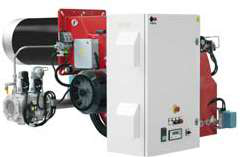
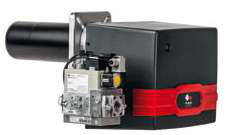
In practical Singapore industrial settings, Burners & Combustion failures often result from component interaction rather than isolated module failure. The FBR burners GAS XP 60/2 CE TC EVO (116–630 kW) and KN 1300/M TL EL (1700–11500 Mcal/h dual-fuel) operate within integrated control ecosystems that demand systems-level diagnostic thinking.
Multi-Component Diagnostic Sequence:
1. Establish baseline operating envelope—Document normal operating conditions before failure: burner power output, air/fuel ratio, flame quality, and control relay signal timing. This baseline becomes the diagnostic reference standard
2. Isolate the failure point using signal tracing—Systematically measure electrical signals at each component in the control chain:
- Pressure switch output to burner control relay
- Relay ignition transformer output to ignition electrode
- Relay solenoid drive output to fuel valve solenoid
- Flame detection sensor input to relay feedback circuit
If signal is present at an input but absent at the corresponding output, the intermediate component has failed
3. Verify sequence timing—The combustion control sequence must execute in precise order: air purge (pre-purge), ignition pulse generation, pilot fuel valve opening, pilot flame establishment (2-5 seconds), main fuel valve opening, flame verification. Use an oscilloscope or timing analyzer to measure time intervals between each phase. Deviation from specification (typically ±0.5 seconds) indicates relay timing circuit degradation or sensor response delays
4. Test under load condition—Component failures often manifest only under operational stress. After diagnostics on a static test bench, operate the burner at 50%, 75%, and 100% capacity. Monitor for control instability, flame flicker, or unexpected shutdown. Load testing reveals marginal components that passed static testing
5. Document environmental correlation—Record diagnostic results alongside ambient temperature, relative humidity, and barometric pressure. Pressure switch failures often correlate with high humidity (>80% RH); ignition failures correlate with low barometric pressure in elevated facilities; solenoid failures correlate with sustained high ambient temperatures (>40°C)
For Singapore's specific conditions, procurement engineers should implement a seasonal diagnostic calendar: Pre-monsoon season (September-October) requires flame detection sensor cleaning; post-monsoon season (December-January) requires pressure transducer recalibration due to humidity effects; peak thermal season (May-July) requires enhanced monitoring of solenoid coil insulation integrity.
Practical Spare Parts Strategy and Component Selection
Diagnostic capability directly informs spare parts inventory optimization. 3G Electric's 35+ years experience shows that procurement engineers who master Burners & Combustion diagnostics reduce emergency part requests by 60% and improve equipment availability metrics.
Critical spare components for Singapore industrial plants:
- Pressure switches (Kromschroder DG 50U/6): Singapore's high humidity environment necessitates annual replacement cycles for plants operating 24/7. Maintain 2 units in inventory per critical burner
- Burner control relays (Kromschroder BCU 570WC1F1U0K1-E or Siemens LFL 1.622): These components fail less frequently but with higher consequences. Maintain 1 unit per 3 operating burners, selected to match your primary combustion architecture
- Ignition electrodes and UV sensors: These consumable detection components degrade predictably. Replace annually regardless of apparent condition to prevent in-service failures
- Solenoid coils: Standard 24V DC coils fail at predictable intervals (18-36 months). Pre-order replacement coils before seasonal peaks
Procurement engineers implementing systematic diagnostics achieve 15-20% reduction in total cost of ownership through predictive replacement scheduling rather than reactive emergency sourcing.