Understanding Burners & Combustion: A Comparative Framework
Burners & Combustion remain fundamental to industrial heating, steam generation, and thermal processing across Singapore's manufacturing and processing sectors. However, selecting the optimal burner technology requires understanding the distinct characteristics of different fuel types and burner designs.
With over 35 years of experience distributing industrial equipment across Asia-Pacific, 3G Electric has guided hundreds of plant managers through combustion system selections. The choice between gas burners, oil burners, and dual-fuel systems involves trade-offs in efficiency, operational flexibility, capital costs, and maintenance requirements—not a single "best" solution for all operations.
This guide compares the major burner and combustion technologies available to Singapore plants, highlighting practical considerations that directly impact your operational performance and bottom line.
Gas Burners vs. Oil Burners: Key Performance Comparisons
Gas Burners: Efficiency and Operational Simplicity
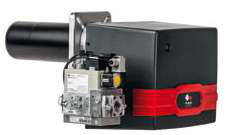
Gas burners dominate modern industrial combustion in Singapore due to several operational advantages. The FBR GAS XP 60/2 CE TC EVO exemplifies contemporary gas burner design, delivering 116–630 kW thermal power with two-stage operation for precise load matching.
Primary advantages of gas burners:
- Superior thermal efficiency: Gas combustion produces fewer exhaust losses and lower flue gas temperatures, typically achieving 85–92% thermal efficiency compared to 80–88% for oil burners
- Cleaner combustion: Minimal ash, soot, and particulate emissions reduce boiler cleaning frequency and environmental compliance burden
- Lower maintenance costs: Gas burners have simpler fuel handling, no nozzle fouling, and reduced fouling-related downtime
- Faster response: Fuel supply is instantaneous, enabling quicker load changes and modulation
- Space efficiency: Compact design with integrated fuel gas regulation reduces footprint requirements
- Fuel supply dependency: Natural gas availability fluctuations or supply interruptions require backup solutions
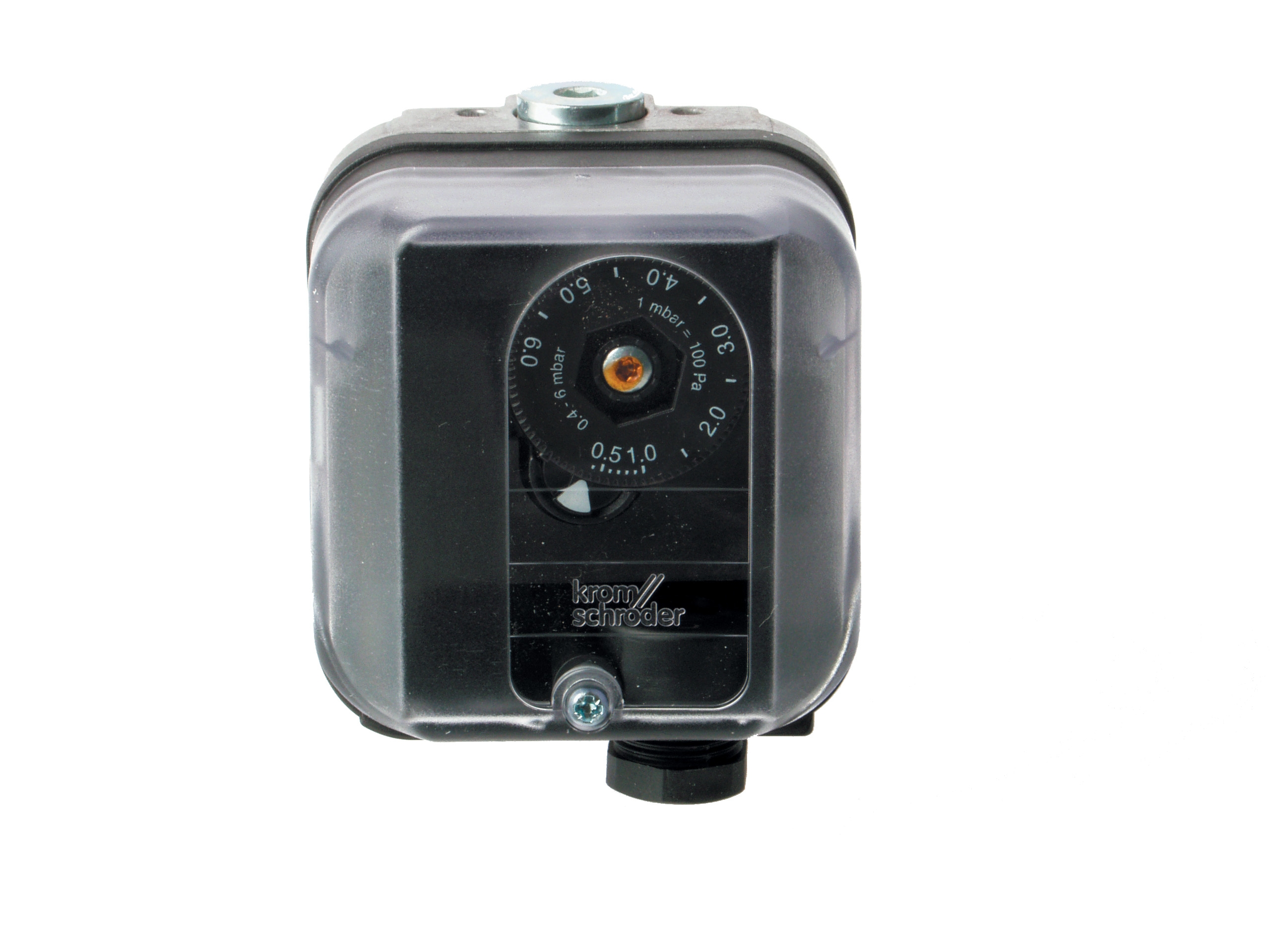
- Pressure regulation: Gas supply consistency directly impacts combustion stability; pressure switches like the Kromschroder DG 50U/6 are critical for reliable operation
- Ignition complexity: Direct ignition or pilot ignition modes require more sophisticated control electronics and flame detection
- Modulation limits: Two-stage burners may not match all load profiles; modulating versions cost significantly more
Oil Burners: Flexibility and Energy Independence
Heavy fuel oil burners remain prevalent in Singapore's refining, chemical processing, and large-scale heating applications where fuel flexibility or energy security is paramount.
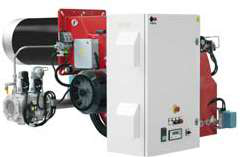
The FBR KN 1300/M TL EL represents modern oil burner technology, delivering 1,700–11,500 Mcal/h thermal power with dual-fuel capability and two-stage modulating control.
Key advantages of oil burners:
- Fuel flexibility: Operates on residual, heavy, or marine diesel fuel; valuable when natural gas supply is constrained or pricing is unfavorable
- Energy independence: On-site storage provides operational resilience and pricing hedging benefits
- Higher energy density: Fewer fuel supply line complications compared to gas; simpler infrastructure
- Proven durability: Mature technology with extensive maintenance knowledge across Singapore's industrial workforce
- Load matching: Modulating oil burners achieve precise load tracking across wide operating ranges
- Fuel handling complexity: Tank storage, fuel treatment (heating, filtration, settling), and periodic tank cleaning add operational overhead
- Combustion byproducts: Oil burner exhaust contains ash, sulfur oxides, and higher particulate matter—requiring enhanced emission control and boiler maintenance
- Nozzle maintenance: Spray nozzles require regular cleaning and periodic replacement; combustion inefficiency increases rapidly with nozzle wear
- Safety risk: Bulk fuel storage introduces storage hazards; fuel leakage or fire risk requires robust containment and monitoring
- Lower thermal efficiency: Typically 3–5% lower than comparable gas burners due to combustion characteristics and exhaust heat losses
Dual-Fuel Burners: Operational Flexibility at Higher Cost
Dual-fuel burners—operating on either gas or oil—offer maximum operational flexibility but introduce control complexity and higher capital costs.
The FBR KN 1300/M TL EL's dual-fuel capability allows seamless switching between fuels, critical for plants managing fuel supply volatility or requiring redundancy.
When dual-fuel burners make economic sense:
- Your facility faces unpredictable fuel supply or significant price volatility
- Regulatory requirements or customer contracts demand fuel flexibility
- Site constraints prevent expanding gas supply infrastructure
- Backup heating capability is essential for continuous process operations
- Long-term fuel price forecasts suggest multi-fuel operation offers cost advantage
- Capital investment: Dual-fuel burners cost 15–25% more than single-fuel equivalents
- Control systems: Requires more sophisticated burner control units capable of managing fuel switching, air adjustment, and ignition across both fuels
- Maintenance complexity: Plant operators must maintain competency with both fuel systems; spare parts inventory increases
- Flame detection challenges: Flame characteristics differ between fuel types; some optical flame detectors struggle with accurate monitoring across fuel transitions
Burner Control Systems: Comparing Safety Relay Technologies
Burner reliability and safety depend critically on control systems that monitor combustion conditions, manage ignition sequences, and shut down the burner immediately upon flame loss.
Singapore's industrial safety regulations (PSB standards and process safety requirements) mandate specific performance levels for burner control systems. Two competing technologies dominate the market:
Conventional Safety Relays: Proven Reliability
The Siemens LFL 1.622 is a safety control unit for medium to high-power gas and oil burners, featuring UV and ionization flame monitoring with controlled air damper capability.
Advantages of conventional relays:
- Proven track record: Decades of operation across thousands of Singapore installations
- Straightforward diagnostics: Technicians can troubleshoot with basic instrumentation
- Standardized spare parts: Wide availability and predictable costs
- No software updates: Fixed functionality eliminates compatibility issues
- Lower initial cost: Simpler design typically costs 20–30% less than modular PLC-based systems
- Fixed logic: Cannot adapt to changing process requirements without hardware replacement
- Limited data logging: Difficult to identify combustion degradation trends or optimize parameters
- Manual tuning: Air/fuel ratio adjustment requires onsite technician visits
- Integration challenges: Connecting to modern plant data systems requires additional interfaces
Modular Burner Control Units: Advanced Capability
The Kromschroder BCU 570WC1F1U0K1-E represents modular control relay design, supporting direct ignition and intermittent/continuous pilot ignition modes, compliant with EN 746-2 and EN 676 standards.
Advantages of modular controls:
- Flexible ignition modes: Switch between direct ignition, intermittent pilot, and continuous pilot without hardware changes
- Advanced diagnostics: Built-in data logging tracks ignition attempts, flame loss events, and combustion stability
- Integrated features: Can incorporate modulating load control, air damper management, and system interlocks in single unit
- Remote monitoring: Enables connection to SCADA or plant data collection systems
- Adaptive operation: Can optimize for varying fuel quality or seasonal combustion conditions
- Higher cost: Typically 30–50% more expensive than basic safety relays
- Technician training: Requires more sophisticated diagnostic skills
- Configuration complexity: Incorrect setup can disable safety functions; requires careful commissioning
- Software dependency: Firmware updates may introduce unexpected behavior changes
Practical Selection Framework for Singapore Plant Managers
Fuel Type Selection: Decision Matrix
Choose gas burners if:
- Natural gas supply is reliable in your location
- You have space for gas supply infrastructure (low-pressure regulators, safety shutoffs).
- Your facility prioritizes operational simplicity and minimal maintenance.
- Thermal efficiency gains justify the fuel supply dependency.
- Your loading is predictable (two-stage operation is acceptable).
- Your facility requires fuel independence or faces gas supply constraints.
- You operate in a region with significant natural gas price premiums.
- Your plant is already configured with fuel oil storage infrastructure.
- Your process tolerates (or benefits from) higher thermal mass in the fuel system.
- Long-term cost analysis favors dual fuel or exclusive oil operation.
- You face high fuel price volatility and need operational flexibility.
- Your process requires absolute continuity (fuel switching provides redundancy).
- Your facility can justify 15–25% higher capital costs for increased operational resilience.
- Your maintenance team has sufficient expertise to manage both fuel systems.
Control System Selection: Capability vs. Complexity Trade-off
Use conventional safety relays if:
- Your plant operates stable, predictable loads.
- Technician expertise is limited to basic burner maintenance.
- Integration with plant data systems is not a current requirement.
- Long-term cost minimization (total operating cost) favors simpler architecture.
- Equipment reliability track record is the primary decision factor.
- Your process requires adaptive burner behavior or frequent operational changes.
- Predictive maintenance and combustion diagnostics add measurable value.
- Integration with modern plant management systems is a strategic objective.
- Your facility has access to more sophisticated maintenance expertise.
- Long-term operational flexibility justifies higher initial investment.
Integration With Your Current Infrastructure
The optimal burner selection depends equally on your existing combustion system architecture. Replacing a burner in a system designed for oil firing onto a gas-fired chassis creates efficiency losses and control complexity.
Before specifying new equipment, document your current system:
- Existing fuel supply infrastructure: Gas supply availability, pressure regularity, or oil storage capacity
- Boiler/heater design: Combustion chamber size, excess air tolerances, flue gas characteristics
- Current control system architecture: Safety relay type, flame detection method, load control approach
- Operator expertise: Existing team competencies and training investment required for new technology
- Regulatory requirements: Local emission standards, safety performance requirements, energy efficiency mandates
Maintenance and Long-Term Cost Considerations
Burner selection directly impacts your plant's maintenance costs and reliability performance over 10–15 years of operation.
Gas burner maintenance costs are typically 20–30% lower than oil burners over equivalent service life:
- Annual fuel nozzle replacement (oil only): eliminated
- Boiler tube cleaning frequency: reduced 40–60%
- Combustion air blower servicing: simplified design, less fouling
- Fuel system maintenance: minimal (only pressure regulation)
- Annual or biennial fuel nozzle replacement (typically SGD 800–1,500 per event)
- Heavy boiler cleaning and tube brushing (annually or semi-annually)
- Fuel treatment systems (settling tanks, filtration, heating): regular maintenance
- Safety system validation: more frequent due to fouling effects on flame detection
- Technicians must maintain competency with gas and oil operation
- Spare parts inventory increases; stocking efficiency decreases
- Switching logic testing and validation adds periodic maintenance
Conclusion: Aligning Burner Selection With Plant Strategy
Burners & Combustion technology selection is not a standardized decision. The optimal choice aligns with your facility's specific fuel availability, operational requirements, long-term cost structure, and strategic priorities.
Gas burners deliver superior efficiency and simplicity for stable operations with reliable fuel supply. Oil burners provide fuel independence and proven durability for complex processes or constrained gas availability. Dual-fuel systems offer maximum flexibility at the cost of increased complexity and capital investment.
Control system selection follows similar logic: conventional safety relays prioritize proven reliability and simplicity, while modular units enable advanced diagnostics and integration for facilities ready to invest in sophisticated burner management.
3G Electric's 35+ years of experience distributing combustion equipment across Singapore and Southeast Asia has taught us that equipment selection success depends on matching technology to operational reality—not pursuing the newest or most capable solution available.
Contact our equipment specialists to conduct a comparative assessment of your current combustion system and identify the fuel type and control architecture that optimizes your specific operational and financial requirements.