Gas Valves & Regulation: Two-Stage vs. Modulating Burners – A Technical Comparison for HVAC Contractors in Singapore
HVAC contractors and installers in Singapore face a critical decision when specifying gas burners for industrial heating systems: two-stage units or modulating burners. Both deliver reliable combustion control, but they operate on fundamentally different principles and suit different application profiles. This comparison examines the technical specifications, operational characteristics, and cost-benefit analysis to help you make informed procurement decisions aligned with your projects' thermal and efficiency requirements.
Understanding Two-Stage vs. Modulating Burner Technology
Two-stage burners operate on a simple yet effective principle: they switch between two discrete power levels, typically a low-fire mode and a high-fire mode. The burner ignites on low flame, then transitions to high flame when demand increases. This on-off approach requires minimal control sophistication and provides straightforward operational logic. Low-fire typically operates at 40–50% of full capacity, while high-fire delivers 100% thermal output. Switching between stages is swift—usually under 5 seconds—but the burner cannot modulate smoothly across intermediate power levels.
Modulating burners, by contrast, use proportional combustion control to continuously adjust flame intensity across a wide range. A modulating burner can operate anywhere from 20% to 100% output depending on real-time heating demand. This is achieved through electronic or pneumatic feedback loops that monitor outlet temperature, system pressure, or sensor input, then dynamically adjust air-fuel ratios. Modulating burners employ variable-speed fan motors, proportional gas valves, or advanced ignition control systems to achieve smooth, continuous output adjustment.
The critical difference: two-stage burners cycle on and off to manage load, while modulating burners adjust their flame continuously. For HVAC systems serving variable-load environments—such as office buildings with fluctuating occupancy or manufacturing facilities with seasonal demand swings—modulating control significantly reduces energy waste during part-load operation.
Technical Specifications and Performance Comparison
The FBR GAS X2/M burner exemplifies two-stage technology, delivering 17.4 kW on low fire and 93 kW on high fire with a smooth progressive slide or optional modulating capability. This burner features a 75 W fan motor, operates at 61–62 dBA noise level, and carries IP 40 environmental protection. The 90 mm nozzle and compact aluminum body allow straightforward integration into boiler systems. Its dual-stage design suits applications where load swings are predictable and distinct—such as morning warm-up followed by steady-state operation, or seasonal heating transitions.
For larger industrial heating demands, the FBR GAS XP 60/2 CE TC EVO burner represents a two-stage unit scaled for higher thermal output, delivering 116–630 kW across hi-low flame or optional modulating modes. With a 250 mm nozzle and 110 W fan motor, this burner operates at 66–69 dBA and maintains IP 40 protection. Its larger displacement and two-stage configuration make it suitable for process heating in textile dyeing, food processing, or industrial steam generation where thermal demands are substantial but relatively stable.
Key performance metrics differ significantly between architectures:
- Turndown ratio: Two-stage burners typically achieve 1:2 to 1:3 turndown (high-to-low flame ratio). Modulating burners reach 1:5 to 1:10 turndown, allowing finer control across a much wider operating window.
- Response time: Two-stage burners switch between stages in 2–5 seconds. Modulating burners adjust continuously without discrete switching delays.
- Fuel consumption stability: Two-stage burners consume either 40–50% or 100% fuel depending on stage. Modulating burners match consumption precisely to load, reducing cycling losses.
- Flame stability: Both technologies achieve robust flame stability through combustion head design and air-fuel tuning; modulating burners add electronic feedback for enhanced stability across the full range.
Additional control components enhance burner capability. The Honeywell VK 4105 C 1041 U electric modulating pressure regulator provides proportional gas pressure control for modulating systems, with M8 x 1 pilot connection and M5 pressure feedback threading. This allows precise modulation of gas flow to match combustion demand. For two-stage systems, a simpler solenoid valve—such as the Elektrogas solenoid valve EVRM NC2-OT—switches gas supply between low and high stages without requiring proportional control.
Regulatory Compliance and Safety Integration in Singapore
Both two-stage and modulating burners must comply with Singapore Building and Construction Authority (BCA) requirements and international standards such as EN 161 and ISO 13611. Safety shut-off valves are mandatory regardless of burner type. The Dungs MVD 515/5 gas regulation valve rated to 200 bar with sub-1-second opening time and integrated 1 mm filtration is widely specified for gas supply protection. This 1½-inch valve handles up to 20 switching cycles per hour and operates reliably across −15 °C to +60 °C, encompassing Singapore's tropical climate.
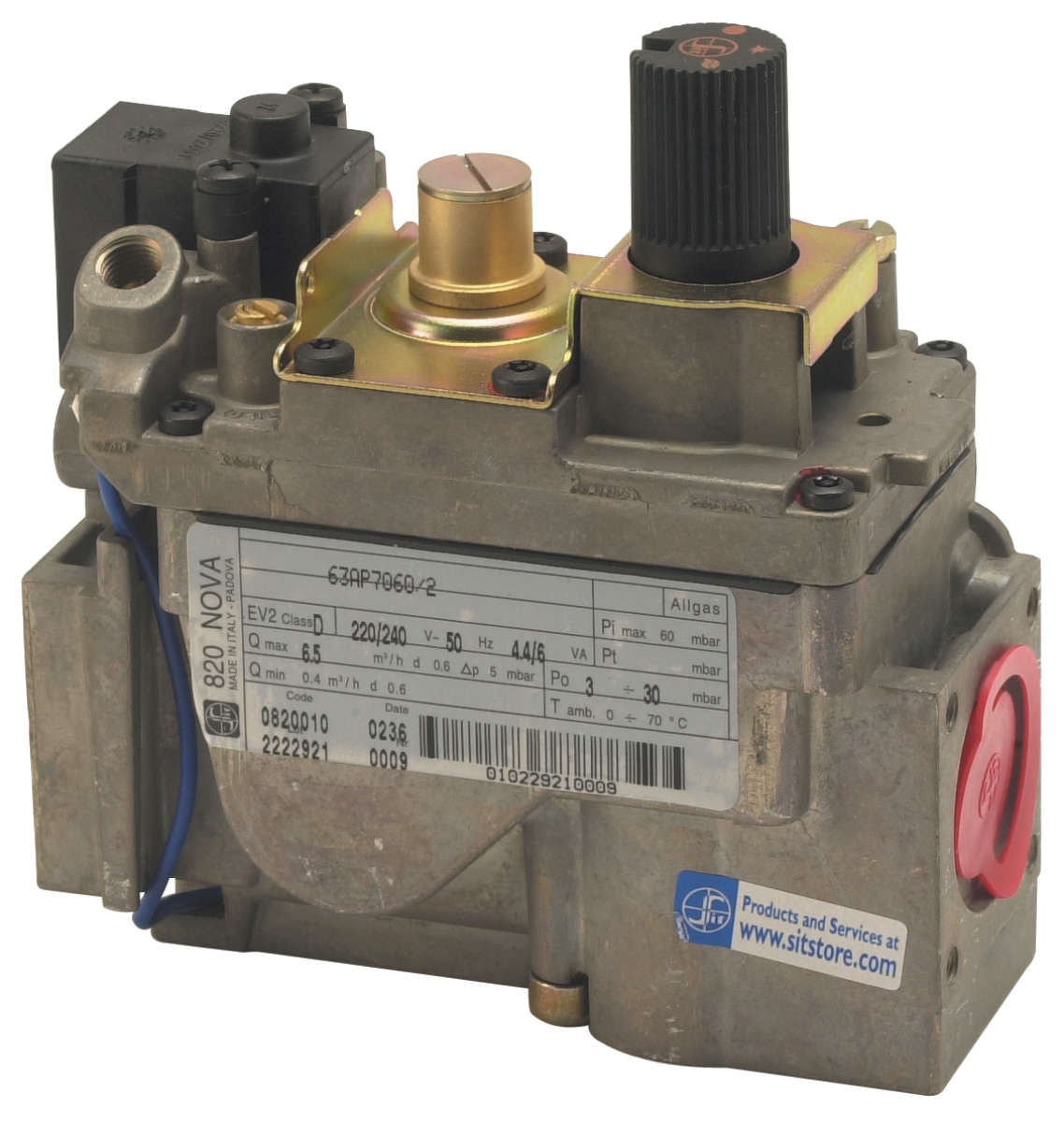
For systems requiring multifunctional control, the Sit tandem gas block 0830042 delivers dual automatic solenoid shut-off capability with minimal 5 mbar pressure drop. It handles 4.8 m³/h for family II gases and 6.2 kg/h for family III gases, suitable for both two-stage and modulating burner safety circuits.
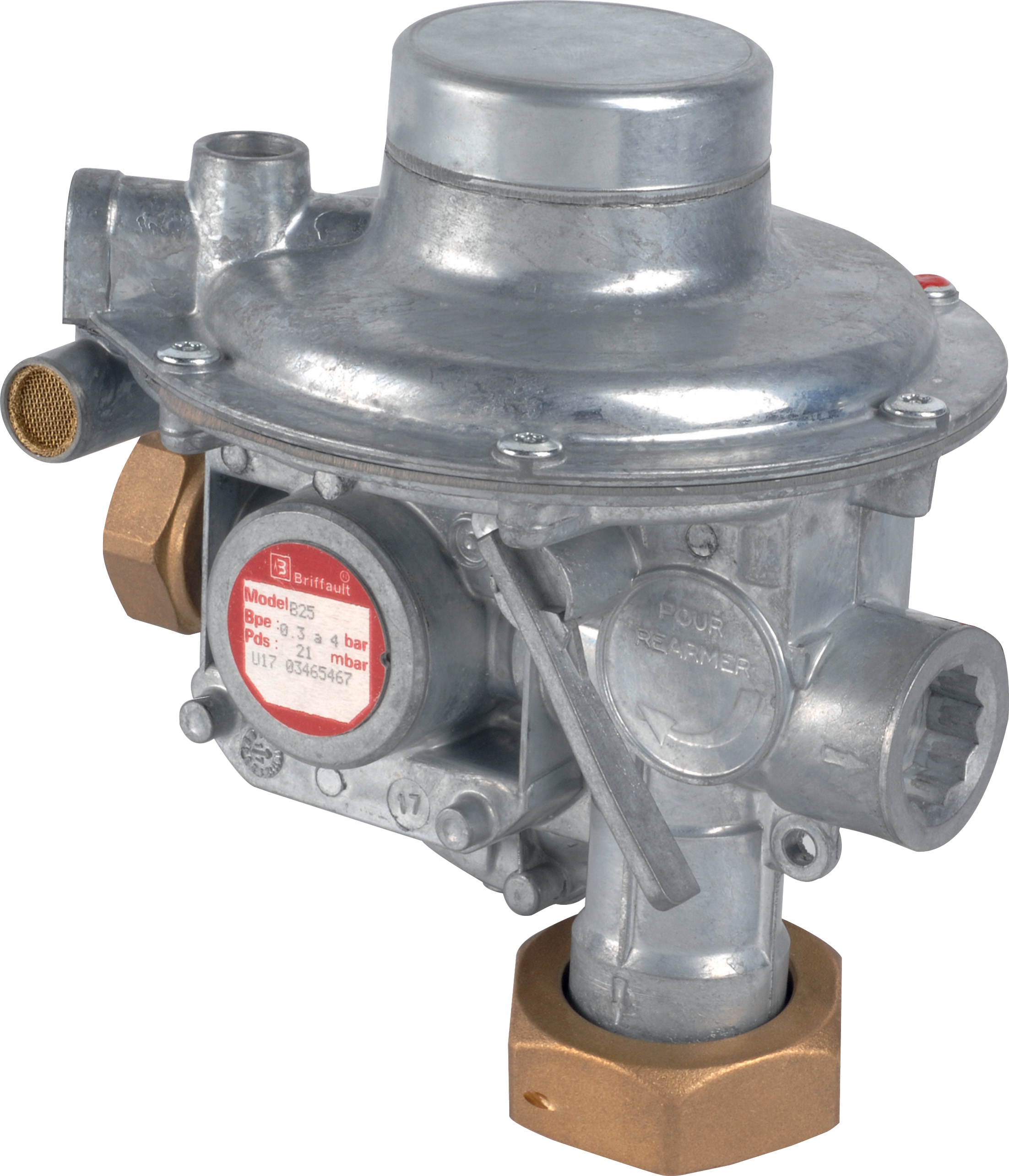
Pressure regulation must match burner inlet requirements. The Francel B25/37mb pressure regulator delivers 37 mbar outlet pressure with integrated safety relief, suited for low-pressure gas distribution supplying burner systems. For applications requiring flue gas analysis—common in large installations monitoring combustion efficiency—the FAG compact pressure regulator with 3/4" threaded connection and 5–300 mbar outlet adjustment range provides precise measurement-grade regulation. These regulatory components ensure both burners operate within safe, specified pressure windows.
Real-World Application Scenarios and Selection Framework
Two-Stage Burner Applications: A shopping mall in Singapore with variable occupancy uses a 93 kW two-stage heating system. During off-peak hours (23:00–06:00), the building operates at 30% heating load, cycling the burner on low fire (17.4 kW). As occupancy increases during business hours, demand rises to 80%, triggering high-fire (93 kW) operation. The two discrete stages match natural load breakpoints—low fire during minimal occupancy, high fire during peak tenant activity. Energy consumption remains reasonable because the burner spends most off-peak time on low fire, avoiding full-capacity cycling. Installation and commissioning are straightforward: set ignition parameters, verify flame detection, confirm safe low-to-high transition, and validate shut-off operation.
Modulating Burner Applications: A commercial laundry facility in Singapore experiences continuous but highly variable steam demand: morning wash cycles demand 75% thermal output, afternoon pressing operations require 45%, and evening finishing work needs only 25%. A modulating burner continuously adjusts flame intensity to match instantaneous demand, eliminating on-off cycling and associated thermal losses. Over a 24-hour operating cycle, the modulating system consumes approximately 8–12% less fuel than an equivalent two-stage burner cycling between discrete stages. The trade-off: modulating systems require proportional valve control (like the Honeywell VK 4105 C), temperature or pressure sensors for feedback, and more sophisticated commissioning to calibrate the proportional response curve.
Comparison Table: Technical Specifications
| Parameter | Two-Stage (FBR X2/M) | Modulating (Optional) | Implications |
|---|---|---|---|
| Thermal Output Range | 17.4–93 kW (discrete stages) | 17.4–93 kW (continuous) | Modulating offers finer control; two-stage suited for stable load profiles |
| Turndown Ratio | 1:5.3 (low to high) | 1:10+ with proportional control | Modulating reduces cycling in variable-load applications |
| Control Mechanism | Solenoid valve switching between stages | Proportional gas valve + feedback sensor | Two-stage: simple, robust; Modulating: precise but requires sensor calibration |
| Stage Transition Time | 2–5 seconds | Continuous (no discrete transitions) | Modulating reduces comfort complaints in comfort cooling/heating systems |
| Fuel Consumption Stability | ~40% or 100% fuel flow | Proportional to load (e.g., 25%, 50%, 75%) | Modulating reduces part-load energy waste by 8–15% |
| Fan Motor Power | 75 W (fixed) | 75 W fixed or variable-speed option | Variable-speed fan reduces auxiliary energy in modulating systems |
| Noise Level | 61–62 dBA | 62–65 dBA (modulating burners slightly noisier due to proportional valve solenoid) | Two-stage preferred in noise-sensitive environments |
| Installation Complexity | Low–Medium | Medium–High | Two-stage simpler commissioning; modulating requires sensor tuning |
| Safety Valve Integration | Standard solenoid shut-off (e.g., Elektrogas EVRM NC2-OT) | Proportional + integrated safety (e.g., Honeywell VK 4105 C with feedback) | Both meet EN 161; modulating adds proportional feedback redundancy |
| Suitable Load Profile | Stable or two-level demand | Variable or continuous demand swings | Match burner type to facility load characteristics |
| Maintenance Interval | 12–24 months | 12–24 months (proportional valve requires annual cleaning) | Both require periodic inspection; modulating needs proportional valve service |
Cost-Benefit Analysis and Procurement Recommendations
Initial capital cost favors two-stage burners: a basic two-stage unit with solenoid control typically costs 15–20% less than an equivalent modulating system with proportional valve and feedback sensors. However, operating cost analysis across a 10-year lifecycle often reverses this advantage. Modulating burners operating in variable-load environments consume 8–12% less fuel annually—equivalent to 0.8–1.2 kWh savings per operating hour in a 93 kW system. Over 8,000 operating hours annually (typical for Singapore commercial buildings), this translates to 6,400–9,600 kWh saved per year. At current Singapore electricity rates (~SGD 0.25/kWh equivalent for gas), savings reach SGD 1,600–2,400 annually, recovering the capital premium in 2–4 years.
For new installations, evaluate your facility's load profile. If demand is stable (office buildings with consistent occupancy, manufacturing with steady production), two-stage burners deliver excellent value. If demand fluctuates significantly (laundries, restaurants, hospitals with variable patient volumes), modulating control justifies the premium through fuel savings and reduced equipment cycling stress.
Component selection matters equally. Pair two-stage burners with robust safety components: the Dungs MVD 515/5 valve ensures reliable shut-off across 200 bar, while the Francel B25/37mb regulator maintains consistent low-pressure supply. For modulating systems, specify the Honeywell VK 4105 C proportional regulator and integrate temperature or pressure feedback sensors compatible with your building management system (BMS).
In Singapore's tropical climate, ensure all components handle high ambient temperatures (up to 35°C) and humidity. The Dungs MVD 515/5 operates reliably from −15 °C to +60 °C, covering Singapore's environmental range with margin. Prioritize valves with integrated filtration (1 mm mesh in the Dungs unit) to protect downstream burner components from contamination in tropical environments where dust and moisture ingress is common.
Conclusion: Selecting the Right Burner Technology for Your Singapore HVAC Projects
Two-stage and modulating burners both deliver safe, reliable combustion control—the choice depends on your facility's load profile and lifecycle cost priorities. Two-stage burners excel in stable-demand applications with straightforward commissioning and lower capital cost. Modulating burners justify their premium in variable-load environments through superior fuel efficiency and extended equipment life. Both require proper safety integration using certified shut-off valves and pressure regulation components compliant with Singapore's building codes and EN 161 standards.
As you specify gas valves, regulators, and burners for your next Singapore HVAC project, contact 3G Electric to discuss your facility's thermal load profile, discuss modulation requirements, and select components optimized for both performance and total cost of ownership. Our technical team has 30+ years of experience commissioning industrial heating systems across Southeast Asia and can guide you through the two-stage vs. modulating decision with confidence.