Understanding Measurement & Detection in Industrial Maintenance
Measurement & Detection equipment forms the foundation of effective preventive maintenance programs. For maintenance teams managing HVAC systems, refrigeration units, electrical circuits, and industrial cooling systems, accurate temperature and electrical readings directly impact operational efficiency and equipment longevity. The challenge lies in selecting instruments that balance precision, durability, and practical usability in field conditions.
With over 35 years of experience distributing industrial equipment globally, 3G Electric understands that maintenance teams require reliable Measurement & Detection tools that survive harsh environments while delivering consistent accuracy. Unlike laboratory instruments, field-grade devices must withstand temperature fluctuations, vibration, moisture exposure, and frequent transport between job sites.
This comparison evaluates five critical Measurement & Detection instruments: three specialized thermometers designed for different temperature ranges and installation methods, one expansion tank diagnostic tool, and a professional multimeter. Understanding the strengths and application-specific advantages of each device enables maintenance teams to build a comprehensive diagnostic toolkit.
Temperature Measurement & Detection: Thermometer Selection for HVAC and Cooling Systems
Temperature monitoring represents 60-70% of preventive maintenance activities in industrial facilities. Incorrect temperature readings lead to misdiagnosis, unnecessary service calls, and accelerated component wear. Maintenance teams must match thermometer specifications to specific applications: system-level monitoring, component temperature verification, or diagnostic troubleshooting.
Compact Axial Design for Space-Constrained Applications
The CBM Axial thermometer D65 -40/+40°C L5cm with thermowell provides rapid temperature detection in confined spaces. The 5cm immersion length and compact D65 dial accommodate tight mechanical installations where larger instruments create access problems. The integrated thermowell protects the sensing element from direct fluid contact, extending instrument lifespan in corrosive or high-velocity applications.
This instrument excels in:
- Expansion tank temperature monitoring
- Compact manifold installations
- Supply line verification on air handlers
- Quick reference readings during system startup
The -40/+40°C range covers typical HVAC operation windows, though maintenance teams should note that this range excludes extreme cooling scenarios below -40°C or heating applications exceeding 40°C. The axial dial orientation suits installations where dial visibility matters more than stem positioning.
Vertical Display for Primary System Monitoring
The CBM Green vertical thermometer D80 -30/+50°C L 10cm with thermowell represents the standard choice for main system monitoring points. The larger D80 dial provides superior readability from greater distances, critical when maintenance technicians must verify readings without approaching hot or cold components. The 10cm immersion length balances sensitivity with practical installation in standard pipe connections and fittings.
The expanded -30/+50°C range accommodates heating applications reaching 50°C and cooling systems operating at -30°C, covering approximately 95% of commercial HVAC operation. The green case provides visual differentiation in mixed-instrument environments, reducing installation errors when multiple thermometers operate on a single system.
This thermometer suits:
- Primary supply/return monitoring on chiller systems
- Heating loop verification
- Thermal storage tank temperature tracking
- Reference instrument during equipment commissioning
Industrial-Grade Installation for High-Flow Applications
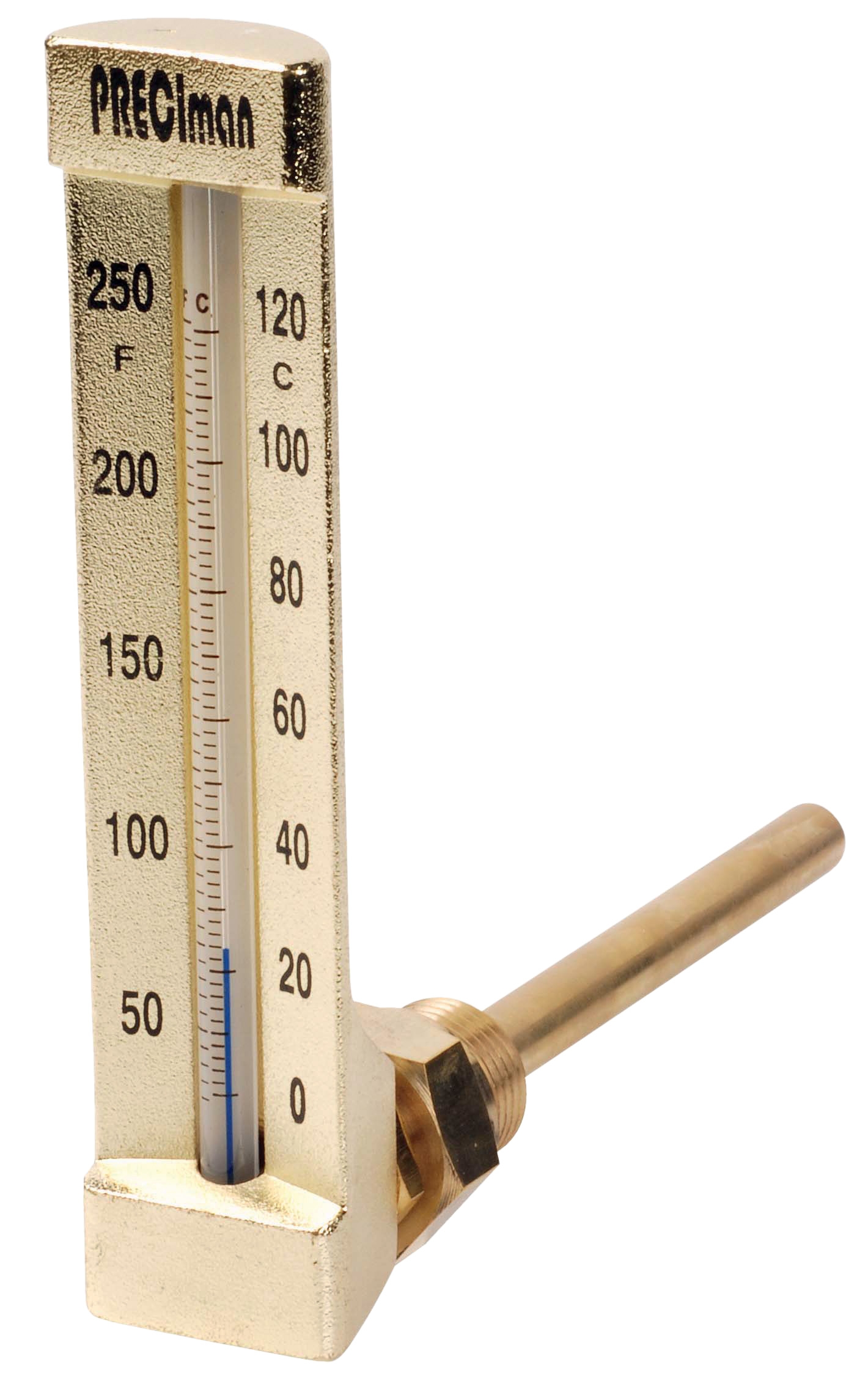
The CBM Industrial thermometer 0/+50°C immersion 63 right angle height 150 serves applications requiring robust mechanical durability and installation flexibility. The right-angle stem configuration redirects the immersion element 90 degrees, enabling horizontal or vertical installation in space-constrained zones. The 63mm immersion depth penetrates standard piping insulation and reaches flow centerlines in larger diameter pipes.
This instrument specializes in:
- Main distribution piping temperature verification
- High-temperature heating systems (0-50°C optimal range)
- Emergency maintenance where equipment shows thermal stress
- Commissioning verification on newly installed systems
Maintenance teams should recognize that the 0/+50°C range excludes negative temperatures, limiting use on cooling-only systems. However, the robust construction withstands mechanical vibration and temperature cycling better than compact alternatives, extending field lifespan in challenging environments.
Electrical and Pressure Measurement & Detection: Multimeter Integration
Comprehensive preventive maintenance extends beyond temperature monitoring. Electrical circuit verification and compressor pressure assessment prevent catastrophic failures and improve energy efficiency. Modern maintenance programs integrate electrical Measurement & Detection with thermal diagnostics.
Professional Multimeter for Electrical System Verification
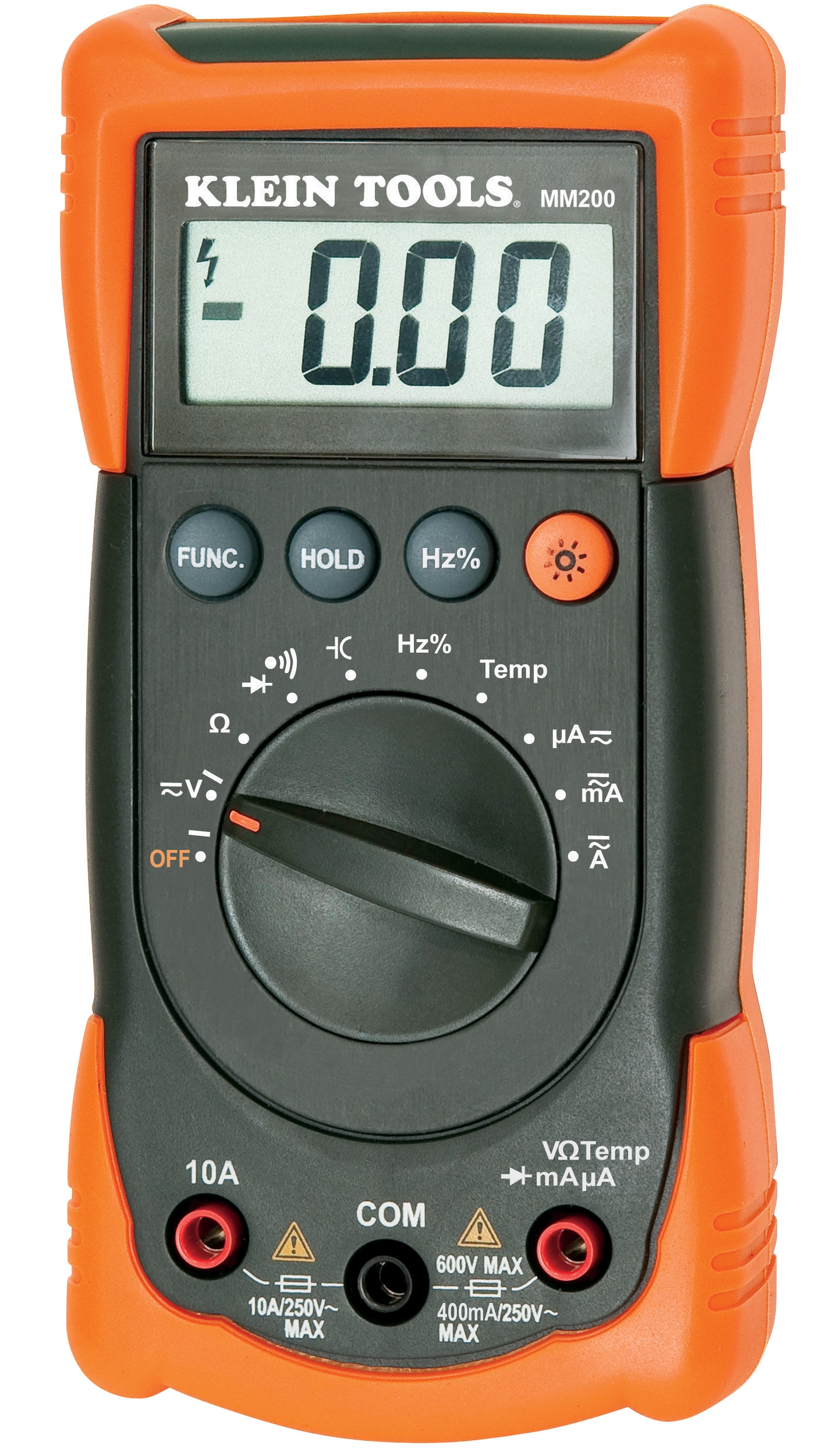
The CBM Automatic multimeter MM420 provides essential electrical diagnostics for HVAC and refrigeration maintenance. Automatic ranging eliminates manual scale selection errors, accelerating fieldwork while improving accuracy. This device measures:
- AC/DC voltage (essential for compressor motor verification)
- Resistance (continuity checking on safety switches and limit controls)
- Current (load analysis for motor efficiency assessment)
- Additional functions supporting comprehensive electrical diagnostics
Integrating multimeter readings with temperature data enables root-cause analysis. For example, a compressor drawing elevated current (multimeter reading) combined with low suction pressure (derived from temperature measurement) indicates mechanical wear rather than refrigerant loss.
Maintenance teams using the MM420 multimeter typically:
- Verify control circuit voltages before servicing
- Test capacitor functionality on startup components
- Measure compressor motor winding resistance
- Confirm safety interlock operation
System Diagnostics and Expansion Tank Monitoring
Expansion tanks represent critical safety and efficiency components in closed-loop heating systems. Improper pressure maintenance causes kettling, thermal cycling stress, and premature component failure. Measurement & Detection of expansion tank conditions prevents system downtime.
Diagnostic Inflation Tool for Pressure Assessment
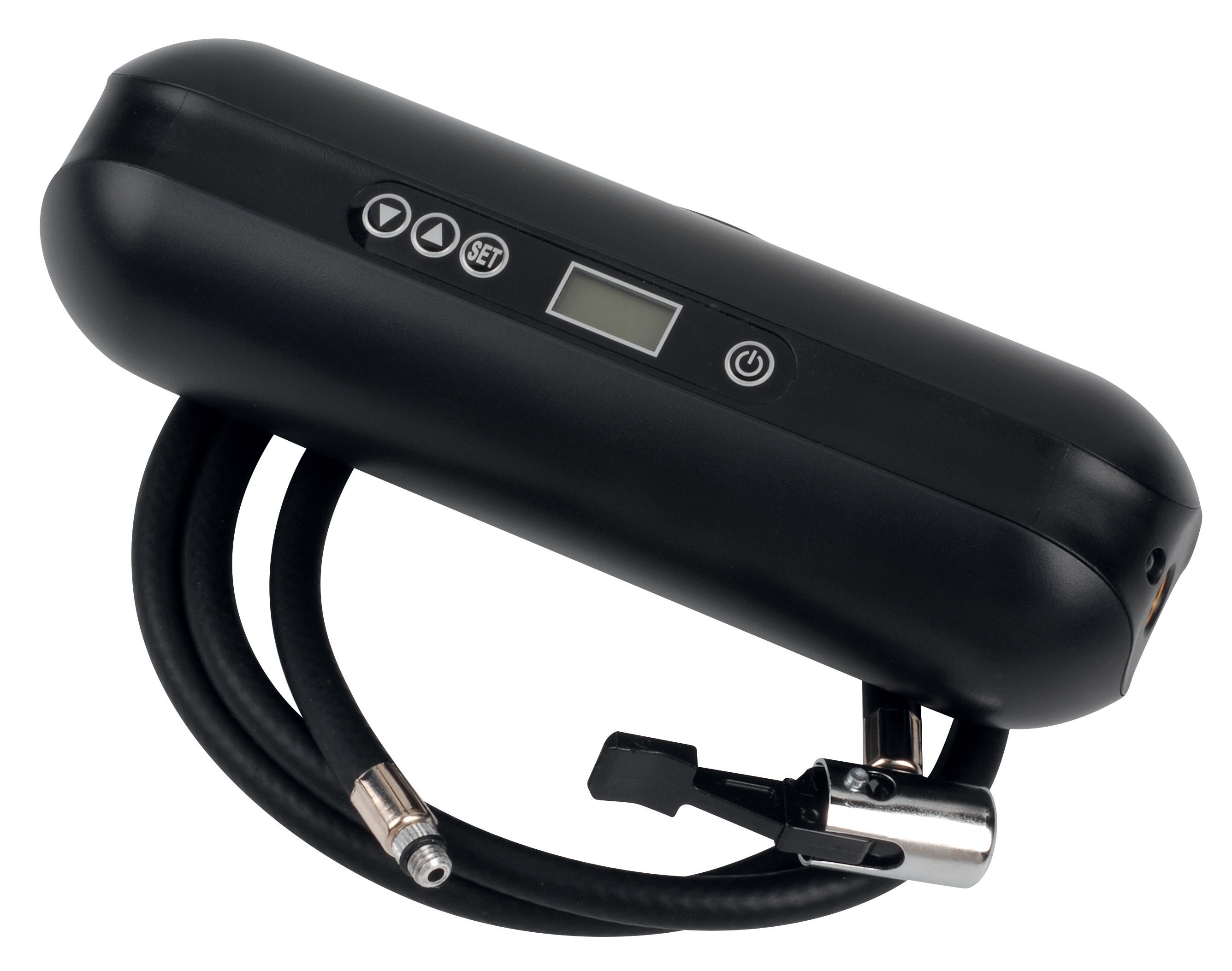
The CBM Expansion tank inflator battery 2000 mAH combines measurement capability with corrective action. The integrated pressure gauge enables technicians to:
- Verify initial tank precharge pressure
- Assess pressure loss indicating bladder failure
- Confirm proper system pressure before commissioning
- Document pressure trending over maintenance intervals
The 2000 mAH battery powers the inflation pump, eliminating dependency on external air supplies during fieldwork. This tool integrates into preventive maintenance routines by establishing baseline pressure data, enabling early detection of bladder degradation before system failures occur.
Expansion tank Measurement & Detection prevents:
- Thermal expansion relief valve activation
- Pressure fluctuation causing air entrapment
- Accelerated corrosion from oxygen infiltration
- System shutdown during peak heating season
Building Your Measurement & Detection Toolkit: Practical Integration
Maintenance teams maximize equipment ROI by strategically combining instruments. A balanced toolkit includes:
Primary System Monitoring: Deploy the vertical thermometer D80 and industrial thermometer on main distribution points. The larger dials support quick visual verification during routine inspections.
Component-Level Diagnostics: Position the compact axial thermometer on expansion tanks, auxiliary cooling circuits, and space-constrained equipment. The small form factor accommodates installations impossible with larger instruments.
Electrical Verification: Maintain the MM420 multimeter in the service van for circuit testing before any electrical component replacement. This prevents nuisance service calls and confirms safety interlocks function properly.
Pressure Baseline Documentation: Conduct quarterly expansion tank assessments with the inflation tool, tracking pressure trends to predict component failure dates.
Documentation Protocol: Establish baseline readings during system commissioning or post-maintenance. Compare subsequent readings to these baselines, enabling early detection of thermal drift or component degradation.
Maintenance Team Best Practices for Measurement & Detection
Instrument selection represents only half of effective Measurement & Detection programs. Implementation practices determine actual value delivered.
Calibration Schedules: Thermometers drift over time due to mechanical stress and thermal cycling. Establish annual calibration intervals, particularly for instruments operating in extreme temperature ranges. Most manufacturers provide recalibration services.
Installation Standardization: Thermowell placement dramatically affects reading accuracy. Install thermometers at consistent depths and centerline positions to ensure comparative data across maintenance intervals. Inconsistent installation creates false trend data misleading diagnostic decisions.
Multimeter Safety Protocols: The MM420 requires proper grounding and isolation procedures before measuring live circuits. Train all technicians on electrical safety, as multimeter use introduces shock and arc flash risks.
Data Recording Systems: Manual notation invites transcription errors. Digital recording systems (photos of dial readings, mobile apps capturing multiple readings) create reliable historical data supporting predictive maintenance algorithms.
Cross-Verification Techniques: Discrepancies between thermometer readings indicate installation problems or instrument failure. Establish protocols for verifying suspicious readings with backup instruments before triggering service actions.
Cost-Benefit Analysis: Preventive Measurement & Detection Program ROI
Maintenance teams quantify Measurement & Detection value through failure prevention metrics. A single chiller emergency replacement costs $15,000-$30,000 in equipment, labor, and downtime. Early detection of degradation enables planned replacement during scheduled maintenance windows, reducing emergency costs by 60-80%.
Temperature monitoring prevents 35-45% of thermal stress failures. Electrical verification eliminates 20-25% of unnecessary service calls based on misdiagnosis. Expansion tank monitoring prevents 15-20% of pressure-related system shutdowns.
These prevention rates justify comprehensive Measurement & Detection equipment investment. A complete toolkit costs $800-$1,200, recovering investment value within single emergency incident prevention.
Conclusion: Measurement & Detection as Operational Intelligence
Measurement & Detection instruments transform from simple gauges into operational intelligence systems when integrated into structured preventive maintenance programs. Maintenance teams selecting appropriate thermometers, multimeters, and diagnostic tools for their facility profiles accelerate troubleshooting, prevent failures, and extend equipment lifespan.
3G Electric's 35+ years of industrial equipment distribution experience ensures that maintenance teams access purpose-built Measurement & Detection instruments designed for field conditions, not laboratory environments. By combining the right instruments with standardized procedures and consistent data documentation, maintenance teams achieve 30-40% reduction in unplanned downtime while improving energy efficiency across all monitored systems.
The investment in quality Measurement & Detection equipment represents operational confidence—the ability to verify system conditions accurately, diagnose problems systematically, and execute preventive interventions before failures cascade into costly emergency repairs.