Introduction: Strategic Pump & Compressor Procurement for Global Operations
Procuring the right pumps and compressors represents a critical strategic decision for industrial organizations operating across multiple regions. With over 35 years of experience as an global industrial equipment distributor, 3G Electric understands that procurement engineers face unprecedented complexity when selecting pumps and compressors—from navigating diverse regulatory standards to managing multi-vendor supply chains while maintaining cost efficiency.
Unlike reactive purchasing, strategic procurement of pumps and compressors requires a structured methodology that aligns equipment specifications with operational requirements, regulatory compliance, maintenance capabilities, and total cost of ownership. This guide provides procurement engineers with actionable frameworks for making informed decisions throughout the procurement lifecycle.
Section 1: Developing Technical Specifications and Requirements Documentation
Understanding Application-Specific Requirements
Before engaging vendors or evaluating product datasheets, procurement engineers must establish comprehensive technical specifications rooted in actual operational requirements. This foundation prevents costly mismatches and ensures equipment delivers expected performance throughout its operational life.
Start by conducting a thorough application audit that documents:
Flow Rate and Pressure Parameters: Determine both nominal operating conditions and peak demand scenarios. Specify whether requirements are based on continuous operation, intermittent duty cycles, or variable load conditions. Include pressure relief settings, maximum allowable pressure, and any pressure fluctuation tolerances your system can accommodate.
Fluid Characteristics: Identify the exact media being pumped or compressed—water, oil, chemical solutions, compressed air, or specialty fluids. Each medium demands different material compatibility, sealing technologies, and lubrication strategies. Document viscosity ranges, temperature ranges, corrosivity levels, and any particulate contamination expectations.
Environmental Operating Conditions: Record ambient temperature ranges, humidity levels, altitude, and exposure to corrosive atmospheres. Global operations often require equipment functioning in diverse climates—tropical high-humidity environments demand different protection than arid high-altitude installations.
Duty Cycle and Runtime Profile: Specify whether the application requires 24/7 continuous operation, seasonal variations, or intermittent duty. This dramatically affects bearing selection, thermal management requirements, and maintenance intervals.
Creating Comparative Evaluation Matrices
Develop standardized evaluation matrices that allow consistent comparison across multiple vendor offerings. Include weighted scoring for critical parameters:
- Technical Performance Metrics (40% weighting): Flow rate accuracy, pressure stability, efficiency ratings, noise levels, vibration characteristics
- Reliability Factors (25% weighting): Mean time between failures (MTBF), bearing type and lifespan, seal material compatibility, redundancy features
- Total Cost of Ownership (20% weighting): Purchase price, energy consumption rates, maintenance costs, spare parts availability, warranty coverage
- Supply Chain Considerations (15% weighting): Lead times, geographic proximity of service centers, inventory availability, technical support accessibility
This systematic approach removes subjective decision-making and creates an auditable procurement record that satisfies compliance requirements and internal stakeholder expectations.
Section 2: Evaluating Interpump Solutions for Diverse Industrial Applications
Assessing Gearbox-Equipped Pump Assemblies
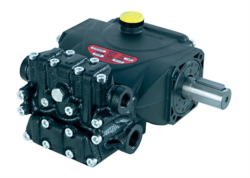
For applications requiring integrated power transmission and pressure generation, gearbox-equipped pump assemblies offer significant advantages. Consider the Interpump E3B1515 DX*VALV.DX + GEARBOX RS500H, which combines positive displacement pumping with integrated gear reduction, optimizing torque delivery and reducing external drivetrain complexity.
When evaluating such integrated solutions, procurement engineers should assess:
- Gear Ratio Compatibility: Verify that integrated gearbox ratios align with your motor speed (typically 1450 or 1750 RPM for AC motors). Mismatched ratios result in suboptimal efficiency and accelerated wear.
- Thermal Management Integration: Confirm how the gearbox cooling system interfaces with pump cooling. Some integrated designs share cooling circuits, while others maintain separate thermal management—each approach carries distinct maintenance implications.
- Seal and Bearing Isolation: Examine how the design prevents gear lubricant contamination of pump discharge media. Quality isolation prevents fluid mixing and extends service intervals.
Selecting Variable Displacement Pump Configurations
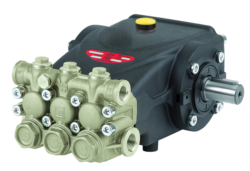
For applications with fluctuating demand profiles, variable displacement pumps like the Interpump E3B2515I R provide significant energy savings and reduced heat generation. These units automatically adjust displacement based on system demand, delivering substantial advantages for global operations managing electricity costs across regions with varying utility rates.
Procurement considerations for variable displacement units include:
- Pilot Line Pressure Requirements: Confirm available pilot pressure sources and validate that your system's control pressure architecture can reliably signal the pump's compensator mechanism.
- Control System Complexity: Variable pumps integrate proportional control elements requiring periodic calibration. Assess your maintenance team's technical capability and spare parts availability for proportional valve cartridges.
- Reduced Cavitation Risk: Variable displacement designs minimize no-load operation, reducing cavitation risk and extending fluid service life—a significant advantage for facilities with limited filtration infrastructure.
Evaluating Fixed Displacement Options for Reliable Simplicity
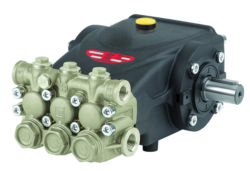
Fixed displacement pumps like the Interpump E3B2515 L and the Interpump E3C1515 L provide maximum reliability through simplicity—there are fewer control elements, reduced calibration requirements, and extensive global service support networks. These pumps excel in applications with consistent load profiles or where maintenance capability is limited.
Assess fixed displacement candidates through:
- Pressure Setting Stability: Confirm that pressure relief valve settings remain stable under temperature variations and extended runtime, critical for facilities operating in extreme climates.
- Spare Parts Ecosystem: Verify that your region's distributors maintain adequate inventory of wear items—plates, barrels, and relief cartridges—ensuring rapid maintenance response.
- Noise and Vibration Characteristics: Fixed displacement pumps can produce characteristic noise signatures; validate that noise levels satisfy facility requirements and worker safety regulations.
Specialized Applications with Custom Configurations
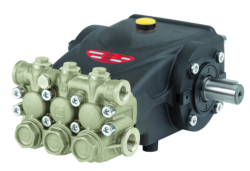
For complex applications requiring specific valve configurations, the Interpump E3C1021 DXV.DXNO.C/J offers customizable configurations addressing specialized requirements. Such specialized units often require:
- Extended Lead Time Planning: Custom configurations typically require 8-12 weeks versus standard 4-6 week lead times. Incorporate this into procurement timelines and inventory planning.
- Technical Documentation Verification: Ensure detailed pressure-flow curves, thermal performance data, and material compatibility documentation are provided before purchase, preventing installation surprises.
- Factory Testing Validation: Request third-party verification reports confirming performance specifications, particularly critical for mission-critical applications.
Section 3: Managing International Procurement Logistics and Compliance
Navigating Global Regulatory Requirements
Industrial equipment operates under diverse regulatory frameworks depending on geographic deployment. Procurement engineers must document:
Pressure Equipment Directive (PED) Compliance: Equipment destined for EU operations requires CE marking and comprehensive technical documentation files. Confirm that your supplier maintains current technical documentation dossiers meeting PED Article 4 and Annex VIII requirements.
Local Pressure Vessel Codes: Many regions maintain specific pressure vessel standards—API standards dominate North American operations, ASME equivalents apply in Canada, while INMETRO standards govern Brazil, and national standards prevail across Asia-Pacific. Verify that equipment documentation references the appropriate jurisdictional standards.
Electrical and Safety Standards: Compressor and pump motor specifications must align with regional electrical codes—IEC standards for international operations, NEMA specifications for North American equipment. Confirm that motor ratings, enclosure classifications, and thermal protection features meet jurisdiction-specific requirements.
Establishing Reliable Supply Chain Partnerships
With 3G Electric's 35+ years of global distribution experience, we recognize that vendor selection extends far beyond product evaluation. Establish long-term partnerships with distributors who:
- Maintain regional inventory for rapid parts delivery
- Provide on-site technical support and training
- Offer equipment lifecycle management services
- Document warranty claims and maintain spare parts traceability
- Support retrofit and modernization programs for aging equipment
Document all supplier agreements clearly, specifying delivery timelines, warranty coverage, technical support availability, and escalation procedures for supply disruptions.
Quality Assurance and Incoming Inspection Protocols
Implement standardized incoming inspection procedures that verify:
- Physical Specifications: Dimensions, weight, port sizing match engineering drawings
- Performance Certification: Test reports confirming flow rate, pressure performance, and leakage rates align with specifications
- Material Certification: Metallurgical reports confirming material composition for sealing surfaces and wear components
- Cleanliness Standards: ISO 4406 particle count documentation confirming fluid cleanliness meets application requirements
- Documentation Completeness: Technical manuals, spare parts lists, maintenance schedules, and warranty documentation
Section 4: Optimizing Total Cost of Ownership and Long-Term Value
Calculating True Operating Costs Beyond Purchase Price
Procurement engineers often face pressure to minimize capital expenditure, yet equipment selection fundamentally impacts operational costs spanning 5-15 years of service. Calculate total cost of ownership (TCO) comprehensively:
Energy Consumption Analysis: A pump operating 5,000 hours annually at 75% efficiency consumes dramatically more energy than a 90% efficient alternative. At industrial electricity rates of $0.08-0.15 per kilowatt-hour, efficiency differences translate to thousands of dollars in annual energy costs.
Maintenance and Downtime Expenses: Premium equipment from established manufacturers like Interpump often commands 15-25% higher purchase prices yet delivers 40-60% longer service intervals and 30-50% reduction in unplanned downtime costs.
Fluid Management Costs: Extended oil drain intervals reduce fluid inventory requirements and disposal expenses. A pump requiring oil changes every 2,000 hours versus 5,000 hours creates substantial financial and environmental advantages over equipment life.
Spare Parts Economics: Standardized equipment from global suppliers ensures spare parts availability and competitive pricing. Specialized or obsolete equipment often requires emergency procurement at 300-500% markups.
Warranty and Risk Mitigation Strategies
Negotiate warranty coverage addressing:
- Standard Manufacturer Coverage: Typically 12-24 months from shipment, covering manufacturing defects
- Extended Warranty Options: Consider extended coverage for mission-critical applications, protecting against bearing wear and seal degradation
- Performance Guarantees: Establish contractual commitments for flow rate, pressure, and efficiency specifications with defined remedies for non-compliance
- Failure Analysis Support: Secure manufacturer commitment to investigate failures and provide root cause analysis supporting future procurement decisions
Strategic Inventory Management for Global Operations
Identify critical spare parts requiring strategic stockpiling—wear plates, barrel assemblies, proportional valve cartridges, and high-wear items. Establish:
- Minimum Stock Levels: Calculate reorder points based on lead times and consumption rates
- Vendor-Managed Inventory Programs: Partner with distributors offering consignment arrangements reducing capital tied to inventory
- Obsolescence Management Plans: Establish upgrade pathways for aging equipment before spare parts become unavailable
- Regional Distribution Centers: For multinational operations, position inventory strategically to minimize emergency shipping costs
Conclusion: Executing Strategic Pump & Compressor Procurement
Successful procurement of pumps and compressors requires systematic methodology integrating technical specification, vendor evaluation, compliance verification, and total cost analysis. By implementing the frameworks outlined in this guide, procurement engineers can confidently navigate complex procurement decisions while optimizing equipment performance, operational reliability, and financial outcomes.
3G Electric's 35+ years of global distribution experience positions us as a trusted partner for organizations seeking reliable equipment sourcing and technical support. Contact our procurement support team to discuss your specific requirements and explore how our curated portfolio of industrial equipment solutions addresses your operational challenges.