Solenoid Valve Coils & Burner Integration: Selecting the Right Electrical Control for Gas Regulation Systems
Industrial gas burners require precise electrical control to manage fuel flow safely and efficiently. The solenoid valve coil is the critical interface between your facility's electrical infrastructure and your gas regulation system. Unlike standalone valve selection, choosing the correct coil voltage, power rating, and pressure compatibility directly impacts burner performance, response time, and operational reliability. This guide examines how to integrate solenoid valve coils with high-capacity industrial burners—from 232 kW to 630 kW systems—while accounting for Singapore's electrical standards, facility constraints, and pressure regulation requirements across food processing, ceramics, pharmaceutical, and chemical manufacturing sectors.
Understanding Solenoid Valve Coil Specifications and Electrical Integration
A solenoid valve coil converts electrical energy into electromagnetic force, pulling the valve's plunger to open or close the gas pathway. Three voltage standards dominate industrial gas regulation systems: 12V AC/DC, 24V AC, and 230V AC. Each addresses different facility requirements and control architectures.
12V AC/DC systems offer flexibility for facilities with low-voltage control circuits or emergency backup power supplies. The CBM Coil 1930.3700 exemplifies this category, rated at 12V AC/DC with 22W power consumption and compatible with EVRMNCOT valve bodies across 600mbar–6bar pressure ranges. These coils suit applications requiring intrinsic safety compliance or integration with programmable logic controllers (PLCs) operating on low-voltage bus systems. The dual AC/DC compatibility enables operation from both alternating current and rectified direct current sources.
24V AC coils represent the industrial standard for solenoid-driven gas valves in Europe-compliant systems. The CBM 24V AC coil connects to ELV7 series valve bodies, providing reliable actuation for medium-pressure applications. 24V systems reduce shock hazard risk compared to 230V, making them preferred in facilities with moisture-prone environments or where personnel regularly interface with valve manifolds.
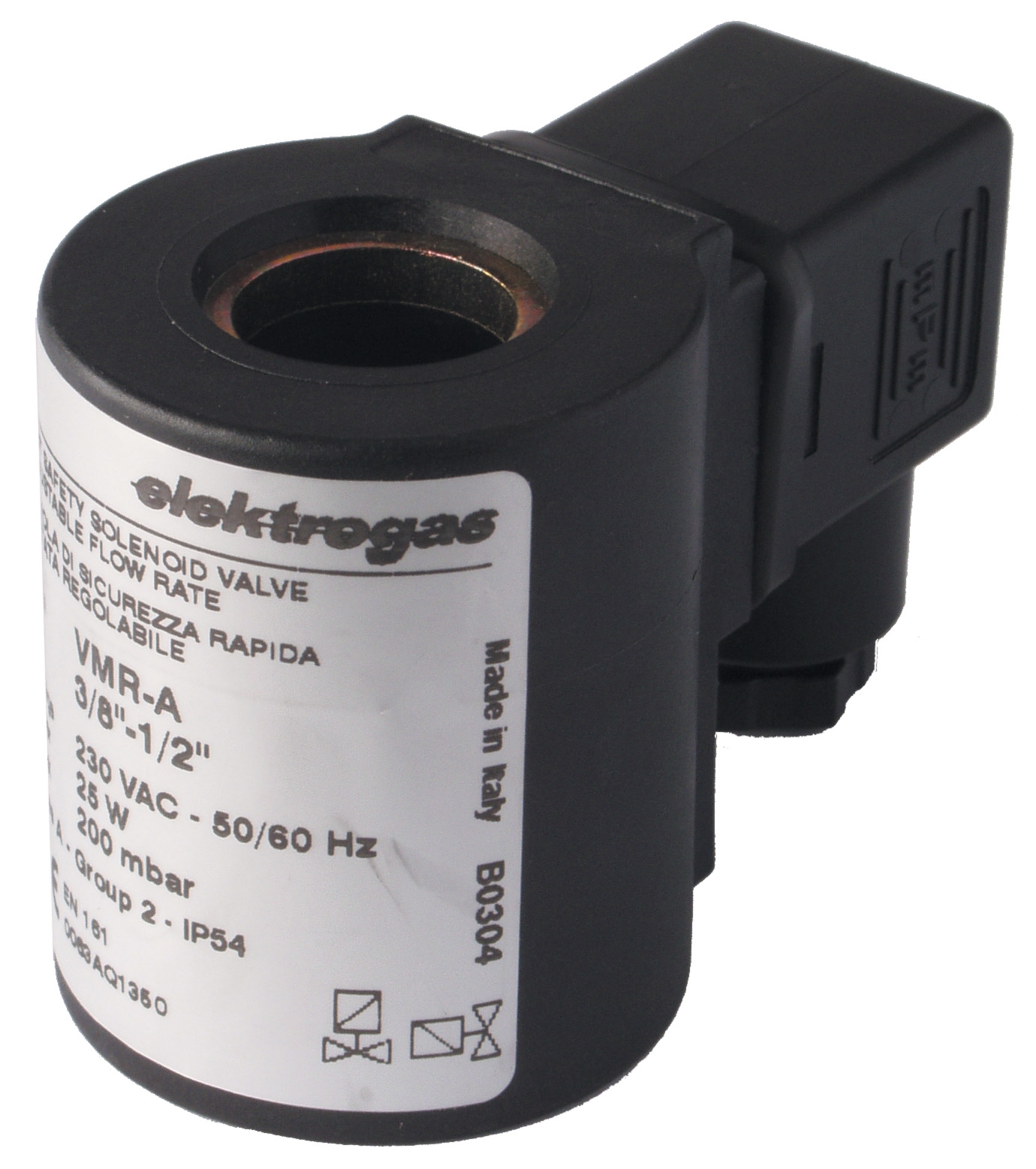
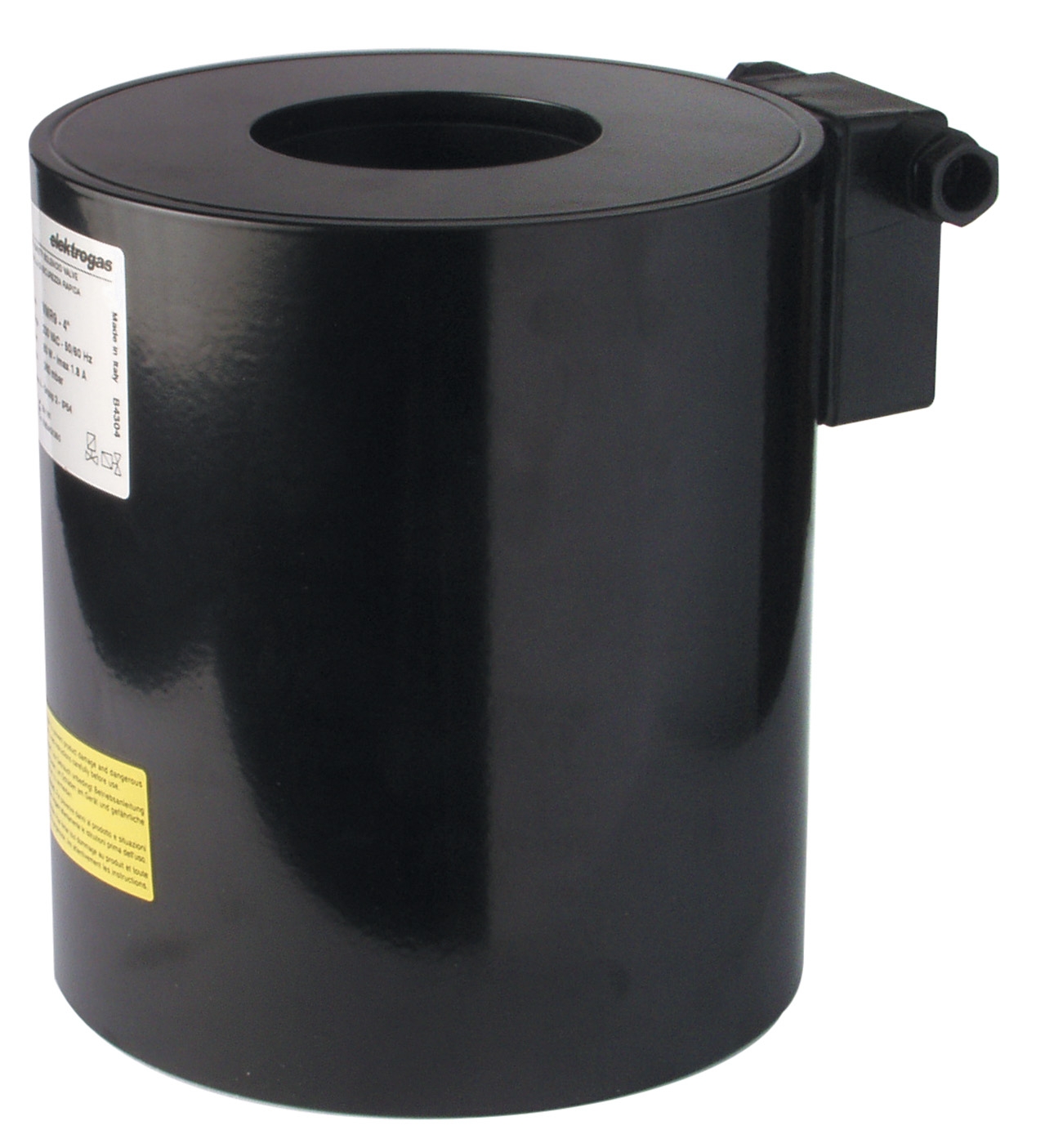
230V AC coils deliver maximum force output for large-bore applications and high-pressure regulation. The CBM Coil 1930.1814 operates at 230V on VML valve bodies sized 2½–3 inches, handling 200mbar pressure differential. For higher pressure demands, the CBM Coil 1930.3100 provides 8W power on EVRMNCOT bodies across 600mbar–6bar ranges. These 230V coils enable rapid valve response in large-capacity systems where electromagnetic actuation force must overcome significant pressure differentials and mechanical friction in oversized spool mechanisms.
Technical Specifications and Pressure-Voltage-Port Size Compatibility Matrix
Matching coil specifications to burner requirements involves four interdependent variables: voltage availability, differential pressure rating, valve body port size, and burner power output.
The FBR X GAS XP 60 CE TC EVO burner (_41) operates between 232–630 kW and requires gas regulation systems capable of handling high flow volumes with precise pressure modulation. This dual-fuel methane burner features a 250mm nozzle and three-phase electrical supply, indicating integration within large-scale industrial heating applications such as ceramic kiln firing or industrial oven systems. The burner's power range demands a regulation train featuring oversized valve bodies (typically 2–2½ inches) with solenoid actuation rated for stable operation across the full 232–630 kW modulation envelope.
For this XP 60 class burner, the CBM 230V coil options provide adequate electromagnetic force. The 1930.1814 coil (ELK26121) at 200mbar differential suits low-pressure gas supplies common in Singapore's industrial gas distribution infrastructure, where main-line pressure typically ranges 150–250mbar. The higher-rated 1930.3100 coil (ELK26302) accommodates facility scenarios where town gas pressure reaches 600mbar or where propane/LPG systems operate at 2–6bar, requiring robust electromagnetic actuation to modulate proportionally across the full burner output range.
Pressure compatibility determines response time and control stability. The differential pressure rating on the coil specification indicates the maximum pressure difference the coil's electromagnetic force can overcome while maintaining reliable actuation. For XP 60 systems operating on 600mbar–6bar supplies, the 1930.3100 (8W, 230V) coil provides sufficient actuation force with a rated pressure envelope of 600mbar–6bar. Lower-pressure coils cannot reliably modulate against high supply pressures, causing sluggish valve response or complete failure to open under load.
Port size synchronization ensures hydraulic compatibility. The 1930.1814 coil pairs with 2½–3 inch VML valve bodies, accommodating volumetric flow rates required by burners exceeding 600 kW. Undersized valves create excessive back-pressure, reducing burner modulation range and increasing supply-line stress. The CBM coil engineering data confirms these pairings through standardized EN 161 and EN 298 compliance, ensuring thermal stability and long-service life under continuous industrial operation.
Real-World Application Examples in Singapore Industrial Facilities
Singapore's food processing sector—particularly bakery operations and meat processing facilities—relies extensively on gas-fired ovens and steam generators operating in the 200–400 kW range. A typical application involves a modulating burner requiring proportional valve control across changing load demands. The facility operates on town gas supplied at 200mbar with three-phase 230V AC electrical infrastructure. Selection criteria favour the CBM Coil 1930.1814 (230V, 200mbar rated) on a 2½–3 inch valve body, enabling smooth modulation from pilot flame (50 kW equivalent) to full 400 kW output while maintaining burner stability within the facility's electrical and gas supply constraints.
Ceramic tile manufacturers in the Jurong industrial zone operate large kiln systems firing continuously at 500+ kW. These applications require dual-fuel capability (town gas and LPG) with redundant safety blocking and proportional modulation. Engineers specify the 1930.3100 coil (230V, 8W, 600mbar–6bar rated) paired with oversized valve bodies, enabling proportional control across high-pressure LPG supply conditions (typically 2–3bar) while maintaining town gas compatibility at 200–600mbar. The higher power rating (8W) ensures electromagnetic force adequate for large spool displacement and rapid response to load changes during the intensive firing cycles required for sintering operations.
Pharmaceutical manufacturing facilities requiring precise temperature control in sterilisation chambers or drying ovens typically operate smaller burners (150–300 kW) on 230V AC electrical systems with 600mbar gas supply. Here, the 1930.3100 coil delivers optimal performance—sufficient electromagnetic force for proportional modulation without excessive power dissipation or coil heating during extended operating periods.
Selection Criteria and Best Practices for Coil-Burner Integration
1. Electrical Infrastructure Assessment — Determine facility voltage availability (12V control circuit, 24V low-voltage bus, or 230V three-phase supply) and specify coils matching installed infrastructure. Retrofitting 230V coils into 24V-based control systems requires transformer investment and increases circuit complexity.
2. Gas Supply Pressure Confirmation — Verify actual supply pressure at the burner inlet. Town gas in Singapore typically ranges 150–250mbar; LPG systems 1–6bar. Select coil pressure ratings exceeding your confirmed supply pressure by 20–30% to ensure responsive modulation without electromagnetic saturation.
3. Valve Body Port Size Matching — Cross-reference burner manufacturer flow requirements (measured in m³/h or kg/h) against solenoid valve body Cv ratings. Undersized valves introduce excessive pressure drop; oversized bodies reduce modulation resolution.
4. Thermal and Mechanical Compatibility — Confirm coil mounting orientation, ambient temperature exposure, and vibration environment. Large industrial burners generate significant vibration; select mounting hardware and electrical connectors rated for continuous thermal cycling and mechanical stress.
5. Redundancy and Safety Interlocks — High-capacity burners (400+ kW) benefit from dual solenoid coil arrangements enabling safe isolation during maintenance or emergency shutdown. Industrial solenoid valve systems often incorporate dual-coil manifolds with integrated cross-checking for enhanced safety compliance.
Conclusion and Next Steps
Selecting the correct solenoid valve coil for industrial gas burner integration requires technical alignment across electrical voltage, differential pressure rating, valve body sizing, and facility-specific constraints. The CBM coil range—spanning 12V AC/DC, 24V AC, and 230V AC voltage options across pressure ratings from 200mbar to 6bar—provides flexible solutions for Singapore's diverse industrial sectors. Whether specifying burners for ceramic kilns, food processing ovens, or pharmaceutical sterilisation systems, matching coil electrical characteristics to facility infrastructure and gas supply conditions ensures responsive proportional modulation, extended equipment service life, and reliable safety operation.
3G Electric has served Singapore's industrial equipment sector since 1990, providing expert guidance on gas valve regulation systems and burner component integration. Our technical team can assess your facility's electrical infrastructure, gas supply specifications, and burner load requirements to recommend optimal coil-valve combinations. Contact us today to discuss your application requirements and receive a customised integration specification for your industrial heating system.