Understanding Pumps & Compressors Startup Failures
Startup failures represent one of the most disruptive yet preventable issues maintenance teams face. When Pumps & Compressors fail to prime, stall under load, or require excessive restart cycles, the root causes are rarely mysterious—they're typically related to fluid condition, clearance issues, or incomplete priming sequences.
At 3G Electric, we've supported industrial facilities worldwide for over 35 years, and one consistent pattern emerges: maintenance teams often overlook the critical window between equipment shutdown and restart. This guide focuses on the practical diagnostics and solutions that directly address startup performance, helping you avoid costly downtime and equipment damage.
Section 1: Pre-Startup Diagnostics and Readiness Checks
Visual and Physical Inspection Protocol
Before attempting to start any pump or compressor, implement a five-minute inspection routine:
- Fluid Level Verification: Check oil, hydraulic fluid, or water levels against manufacturer specifications. Low fluid levels prevent proper priming and cause cavitation immediately upon startup.
- Fluid Condition Assessment: Examine fluid color, clarity, and consistency. Discolored or cloudy fluid indicates contamination, water ingress, or thermal breakdown—all of which impair startup performance.
- Suction Line Integrity: Inspect all inlet connections for air leaks, loose fittings, or collapsed hoses. Even pinhole-sized leaks prevent effective priming.
- Filter Condition: Clogged inlet filters create excessive back-pressure and force the pump to work harder during startup, leading to stalling or pressure spikes.
- Coupling Alignment: Verify mechanical coupling alignment visually. Misaligned couplings cause binding during initial rotation, preventing the equipment from reaching operational speed.
In cold climates or after extended shutdowns, fluid viscosity increases dramatically. A 10°C temperature drop can double the viscosity of standard hydraulic fluids:
- Pre-warm equipment using circulation heaters or ambient heat source when outdoor temperatures drop below 5°C.
- Allow 15–30 minutes of low-speed operation before loading the pump or compressor with full demand.
- Use winter-grade hydraulic fluids rated for your operating environment.
- Monitor inlet and discharge pressures during the warm-up period; pressures should stabilize within 2–3 minutes.
Many startup failures stem from incorrect pressure relief settings established during previous maintenance:
- Confirm relief valve settings match the pump or compressor nameplate rating.
- Test relief valves independently using a hand pump and pressure gauge before integrating them into the startup sequence.
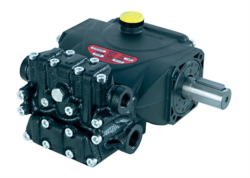
- For units like the Interpump PUMP E3B2515I R, verify that any integrated pressure compensation mechanisms are properly calibrated.
Section 2: Diagnosing No-Start and Slow-Start Conditions
Motor-to-Pump Power Delivery Issues
When equipment fails to start or starts sluggishly, the problem often lies at the motor-pump interface:
- Verify Electrical Supply: Confirm proper voltage, phase sequence, and amperage availability. Motors require 95–105% of nameplate voltage to develop sufficient torque.
- Check Soft Starters or VFDs: If your system uses variable frequency drives or soft starters, verify that ramp-up timing allows the pump adequate acceleration time. Compressed ramp times cause motors to stall.
- Inspect Coupling and Shaft Seals: Damaged shaft seals create internal drag. Binding or stiff couplings prevent the motor from rotating the pump at startup speed.
- Test Motor Bearings: Worn motor bearings increase rotational resistance. Spin the pump shaft by hand (with power disconnected)—it should rotate freely with minimal drag.
Proper priming is essential for pump and compressor operation. Loss of prime causes immediate performance degradation:
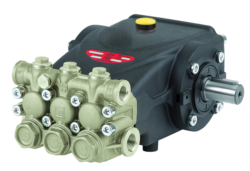
- Manual Priming: For centrifugal pumps, fill the pump casing completely with fluid before energizing. For positive displacement units like those featuring Interpump PUMP E3B2515 L, introduce fluid through the inlet port while rotating the shaft slowly.
- Check for Air Pockets: Air trapped in discharge lines creates compression noise and prevents pressure buildup. Vent discharge lines through manual or automatic air release valves during startup.
- Inlet Siphon Conditions: Verify that inlet sources (reservoirs, tanks) are positioned above the pump inlet. If below, install a check valve with a foot strainer to prevent siphon break during shutdown.
- Suction Lift Limits: Positive displacement pumps operate with suction lifts up to 1.5 meters; centrifugal pumps limit suction lift to 0.5–1.0 meter depending on design. Exceeding these limits causes immediate cavitation and startup failure.
Startup failures frequently correlate with fluid viscosity outside operational ranges:
- Measure fluid temperature at the inlet source; viscosity must fall within the pump manufacturer's specified range (typically 10–500 cSt).
- If fluid viscosity exceeds specification, preheat using in-line heaters or temporary immersion heaters in the reservoir.
- For compressors, ensure inlet air temperature doesn't exceed design limits; overheated inlet air reduces density and compressor output.
Section 3: Rebuild and Replacement Strategies for Chronic Startup Issues
Internal Clearance Degradation
Repeated startup failures often indicate that internal clearances within the pump or compressor have expanded beyond tolerance:
- Worn cylinders, pistons, or gears in positive displacement pumps create internal leakage paths. The pump works harder to reach pressure, consuming excessive startup current.
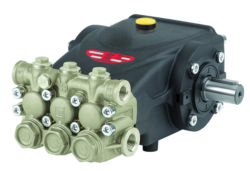
- For units like the Interpump PUMP E3B1515 DX*VALV.DX + GEARBOX RS500H, internal wear becomes apparent when startup current exceeds nameplate values by 15% or more.
- Measure internal leakage by capturing case drain flow during full-pressure operation. If leakage exceeds 5–10% of input flow, rebuild or replace the unit.
- Worn valve plates in swashplate pumps reduce flow control precision, causing pressure oscillations during startup.
Before full replacement, evaluate which components are serviceable:
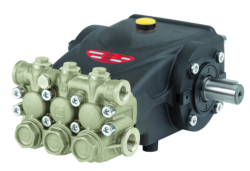
- Valve Replacements: Worn intake or discharge valves are often the primary cause of startup performance loss. The Interpump PUMP E3C1021 DXV.DXNO.C/J valve assemblies can be replaced independently, restoring startup response without full pump removal.
- Seal Kit Installation: Replace all elastomer seals during major maintenance. Degraded seals leak during low-pressure startup phases, preventing adequate priming.
- Shaft Seal Replacement: External shaft seals deteriorate over time, allowing fluid to escape and air to enter. Replace seals as a preventive measure every 2,000–3,000 operating hours.
- Bearing Preload Adjustment: Loosen bearing preload on gear pumps if startup drag has increased; retighten only to the point where shaft rotates freely without play.
Maintenance teams must evaluate the cost-benefit of repair versus replacement:
- If the pump has operated beyond 5,000 hours and startup issues persist despite seal and valve replacement, full replacement becomes more economical.
- Rebuilt or remanufactured units from trusted suppliers (like Interpump products available through 3G Electric) offer 12–24 month warranties and often cost 30–40% less than new equipment.
- The Interpump PUMP E3C1515 L and similar mid-range displacement units are commonly stocked in rebuilt condition, offering rapid deployment.
- Consider upgrading to higher-displacement units if current equipment consistently fails under startup stress; oversizing by 10–15% dramatically improves reliability and extends service life.
Section 4: Preventive Maintenance Calendar and Long-Term Startup Reliability
Monthly Pre-Season Preparation
Before seasonal operation begins, allocate two hours for comprehensive equipment readiness:
- Drain and refill reservoir fluid; settled contaminants accumulate during idle periods.
- Replace inlet filters and verify that backup filters are accessible.
- Test pressure relief valves independently; worn relief valves fail to modulate properly during startup transients.
- Document baseline startup current draw and pressure rise rate for comparison in future cycles.
Every 90 days, analyze startup performance metrics:
- Compare current startup amperage against historical baseline; increases of 10% or more indicate internal wear progression.
- Monitor time required to reach stable operating pressure; deteriorating performance suggests seal or valve degradation.
- Record fluid temperature stability during the first 10 minutes of operation; erratic temperatures indicate internal friction or cavitation.
- Inspect case drain fluid for metal particulates using a simple magnetic stick; copper or steel particles indicate bearing or gear wear.
Once yearly, engage an experienced technician to conduct thorough evaluation:
- Perform infrared thermography on motor and pump casings to identify hot spots indicating internal friction or misalignment.
- Measure acoustic signature during startup using a handheld meter; deviation from baseline suggests developing bearing wear or valve degradation.
- Conduct flow-rate and pressure-drop testing across all system components; map results to establish future reference points.
- Review control system logs for startup fault codes; patterns in restart cycles reveal intermittent problems before catastrophic failure.
Reduce startup-related downtime by maintaining a minimal critical spares inventory:
- Stock replacement seal kits for your most commonly deployed pumps (sized appropriately for models like the Interpump PUMP E3B2515I R).
- Maintain 5–10 liters of approved hydraulic fluid matching your system specifications.
- Keep a spare inlet filter assembly and pressure relief valve cartridge on hand.
- For facilities with multiple pump units, consider a complete remanufactured pump exchange available through 3G Electric's global distribution network; installation time averages 1–2 hours versus overnight waiting for emergency shipment.
By implementing these preventive practices, maintenance teams reduce startup-related downtime by 60–80% and extend equipment service life by 2–3 years, delivering measurable ROI through improved production reliability.