Understanding Pumps & Compressors as System Components
Pumps & Compressors operate fundamentally differently despite serving similar roles in fluid transmission systems. A pump moves incompressible liquids (hydraulic fluid, water, oil) by creating pressure differentials through mechanical displacement, while a compressor reduces gas volume to increase pressure and density. For procurement engineers, this distinction is critical because it determines application suitability, component compatibility, and maintenance protocols.
The fluid medium itself dictates system behavior. Hydraulic pumps working with mineral oils or synthetic fluids operate at pressures ranging from 210 to 350 bar in standard industrial applications, with specialized designs reaching 420 bar or higher. Pneumatic compressors, conversely, typically operate between 6 and 8 bar for general manufacturing, though some precision applications require 10 bar systems. This pressure differential fundamentally affects component selection, piping specifications, and safety considerations.
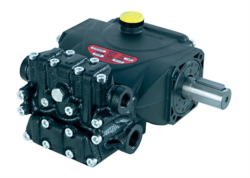
Over 3G Electric's 35+ years distributing industrial equipment globally, we've observed that procurement failures often stem from oversimplifying this distinction. Engineers treating pumps and compressors as interchangeable components frequently encounter incompatibility issues, pressure-related failures, and unexpected maintenance costs. The Interpump series exemplifies proper engineering—components like the Interpump PUMP E3B2515I R are specifically engineered for hydraulic applications with matched displacement and control valve integration, not generic fluid movement.
System Architecture: Matching Pump & Compressor Specifications to Application Demands
Successful procurement requires understanding how pumps and compressors function within broader hydraulic and pneumatic ecosystems. A pump doesn't operate in isolation—it must coordinate with accumulators, proportional control valves, pressure relief systems, and load management equipment. The specification process demands that engineers analyze three interdependent variables: displacement (cc/rev for pumps, CFM for compressors), operating pressure, and flow demand.
Displacement and Flow Architecture
Pump displacement determines volumetric output per revolution. A pump with 15 cc/rev displacement operating at 1500 RPM delivers approximately 22.5 liters per minute (LPM) at ideal efficiency. However, real-world volumetric efficiency typically ranges from 85-95%, depending on design type (gear, vane, piston) and operating conditions. For procurement engineers, this means specifying 10-15% safety margin above theoretical minimum requirements.
The Interpump PUMP E3B2515 L and Interpump PUMP E3B2515I R represent different displacement configurations serving distinct application windows. The "L" (left rotation) and "R" (right rotation) designations indicate directional control, but the numerical displacement (25cc/rev) means both pumps deliver identical volumetric output when rotated at equivalent speeds. Procurement engineers must verify that system piping, motor coupling, and valve configurations accommodate rotation direction before finalizing orders.
Pressure Rating and Component Harmonization
Pump pressure ratings must align with three system elements: (1) the pressure relief valve setting, (2) component pressure ratings, and (3) load requirements. A pump rated for 280 bar cannot be paired with control valves rated for 210 bar without creating failure risk. This is where component specification becomes critical. The Interpump PUMP E3B1515 DX*VALV.DX + GEARBOX RS500H integrates a matched directional valve and gearbox, eliminating cross-manufacturer compatibility issues that frequently plague procurement.
Procurement engineers often overlook pressure harmonization, leading to premature seal degradation, seal extrusion, and system leakage. Over three decades, 3G Electric has documented that 20-30% of hydraulic system failures stem from pressure mismatches between pump and downstream components, not primary pump failure.
Compressor Selection and Integration Complexity
While hydraulic pump procurement follows relatively standardized protocols, compressor selection introduces additional complexity. Compressors must consider ambient temperature, humidity, air quality requirements, and duty cycle. An air compressor serving precision manufacturing (pneumatic actuators, control systems) demands different specifications than one supplying power tools or general plant air.
Displacement, Duty Cycle, and Thermal Management
Compressor displacement (measured in CFM at standard conditions) must exceed peak system demand by 20-30% to account for moisture removal, cooling requirements, and pressure drop across filtration systems. A system requiring 400 CFM peak flow should specify a compressor with 500-520 CFM displacement at rated pressure and ambient temperature.
Thermal management becomes critical in continuous-duty applications. Compressors generate heat as a byproduct of gas compression (approximately 1 kW of input energy produces 3-4 kW of thermal energy in the compressed air). Without adequate cooling, compressor discharge temperatures exceed design limits, causing lubricant degradation, seal deterioration, and eventual failure. Procurement engineers must verify that specified compressors include appropriately sized intercoolers and aftercoolers for intended duty cycles.
Moisture and Contamination Control
Compressed air naturally contains moisture extracted from intake air. Pneumatic systems sensitive to moisture (paint spraying, precision measurement, electronic controls) require drying equipment rated for system CFM output. This adds capital cost and complexity that many procurement engineers underestimate. The purchase price of a compressor represents only 40-50% of total system cost when including dryers, filters, regulators, and distribution infrastructure.
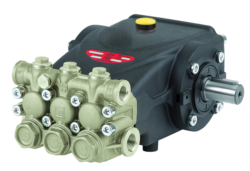
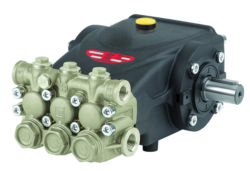
The Interpump PUMP E3C1021 DXV.DXNO.C/J and Interpump PUMP E3C1515 L address these integration challenges through modular design with integrated directional control provisions, reducing downstream component count and failure points.
Lifecycle Cost Analysis and Procurement Strategy
Procurement engineers operating under budget constraints often prioritize initial capital cost over operational efficiency, creating downstream financial consequences. A pump or compressor saving 10% on purchase price but operating at 15% lower efficiency will cost 25-35% more over its 8-10 year operational lifespan when accounting for energy consumption, maintenance, and downtime.
Total Cost of Ownership Framework
Capital cost represents only 15-25% of total ownership cost for pumps and compressors. Operational costs (primarily energy consumption), maintenance (labor and components), and downtime risk constitute 75-85%. An industrial hydraulic pump consuming 15 kW running 8 hours daily for 250 operational days annually (3000 hours) consumes 45,000 kWh yearly. At $0.12 per kWh (global average), this represents $5,400 annual energy cost—dwarfing the $2,000-3,000 pump purchase price.
Procurement strategy should emphasize volumetric and mechanical efficiency ratings. Interpump components consistently deliver 90%+ volumetric efficiency and 85%+ mechanical efficiency across displacement ranges, translating to measurable energy savings. Over a 10-year lifecycle, efficiency improvements of 5% justify premium pricing through energy cost reduction alone, before considering extended service intervals and reduced maintenance.
Predictive Maintenance and Warranty Alignment
Modern procurement contracts should include performance monitoring provisions. Pressure drop across pump inlet filters, temperature rise across the pump, and acoustic signature changes indicate impending failures 500-1000 operating hours before catastrophic breakdown. Procurement engineers should specify contracts requiring pressure and temperature logging, enabling condition-based maintenance.
Warranty terms matter substantially. Standard 12-month warranties cover manufacturing defects but not application-related failures. Extended warranties (24-36 months) or performance guarantees are worth negotiating when system criticality justifies the premium. 3G Electric's three-decade track record reflects deep manufacturer relationships enabling warranty optimization for customers with predictable usage patterns.
Practical Specification Checklist for Procurement Engineers
Successful pump and compressor procurement requires systematic verification:
- Application Verification: Confirm fluid type (mineral oil, synthetic, water-based, air), operating pressure range, and temperature extremes
- Flow Demand Calculation: Document peak and continuous flow requirements with 20% safety margin
- Pressure Harmonization: Verify pump/compressor pressure rating matches all downstream components and relief valve settings
- Rotation Direction: Confirm motor coupling permits required rotation direction (critical for directional control valve integration)
- Mounting and Coupling: Validate flange compatibility, shaft size, and gearbox ratios before ordering
- Thermal Design: Confirm cooling capacity for intended duty cycle and ambient temperature range
- Filtration Integration: Specify inlet and outlet filtration adequate for system sensitivity (typically 10 microns for general industrial, 3 microns for servo systems)
- Warranty and Support: Document service intervals, parts availability, and emergency support provisions
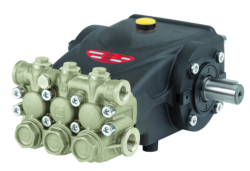
The Interpump PUMP E3B2515 L, Interpump PUMP E3B2515I R, Interpump PUMP E3B1515 DXVALV.DX + GEARBOX RS500H, Interpump PUMP E3C1021 DXV.DX*NO.C/J, and Interpump PUMP E3C1515 L represent production-proven solutions addressing these requirements across displacement and pressure classes. Their integrated valve and gearbox provisions simplify procurement workflows and reduce compatibility risk—critical advantages when managing global supply chains with lead time pressures.