Introduction: Why Pumps & Compressors Matter in HVAC Systems
Pumps & Compressors are the heart of efficient HVAC operations. Whether you're installing a chiller system, designing a heat pump circuit, or configuring a condensate removal system, selecting and installing the right pump or compressor directly impacts system reliability, energy efficiency, and lifecycle costs.
For over 35 years, 3G Electric has supplied industrial equipment to contractors worldwide. Our experience shows that improper pump or compressor selection accounts for nearly 30% of HVAC system failures during the first two years of operation. This guide provides actionable steps to help you avoid common pitfalls and deliver systems that perform as designed.
Section 1: Understanding Your HVAC Pump & Compressor Requirements
Define Your System Type and Load Profile
Before selecting equipment, identify your specific application:
- Chiller circulating pumps: Move cooled water through building loops at moderate pressure (typically 20–60 psi) and high flow rates (100–500+ gpm).
- Heat pump compressors: Compress refrigerant to enable heat transfer; operate at high pressure (150–400+ bar) and precise displacement volumes.
- Condenser water pumps: Handle higher pressures and temperatures than chilled water circuits.
- Condensate removal pumps: Low-flow, low-pressure units for drainage in split-system and packaged units.
Calculate Flow Rate and Pressure Demands
Flow rate is determined by your thermal load and temperature differential. Use this formula:
Flow (gpm) = Capacity (BTU/h) ÷ [500 × ΔT (°F)]
For example, a 120,000 BTU/h chiller with a 10°F temperature rise requires approximately 24 gpm. Always add a 10–15% margin for future expansion or system adjustments.
Pressure requirements depend on friction losses in piping, fittings, and control valves. Calculate total dynamic head (TDH) by adding:
- Elevation difference
- Friction losses in pipe runs
- Equipment pressure drops (heat exchangers, valves, coils)
- Required outlet pressure at load
Document System Constraints
Note physical space limitations, motor power availability, noise restrictions, and maintenance access before finalizing equipment selection. This prevents costly rework during installation.
Section 2: Matching Equipment Specifications to Your Design
Comparing Industrial-Grade Pump Options
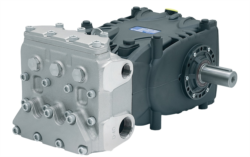
For high-performance HVAC applications requiring reliable pressure and flow consistency, Italian-engineered Pratissoli pumps offer proven durability. The Pratissoli KF30 delivers 106 L/min (28 gpm) at 200 bar pressure with 40 kW power input—ideal for mid-sized chiller circuits and heat pump auxiliary loops. At 72 kg, it fits compact mechanical rooms while providing the efficiency needed for 24/7 operation.
For larger tonnage systems, the Pratissoli MW40 scales capacity to 211 L/min (56 gpm) at 210 bar with 85 kW output. This unit handles the demands of 100–150 hp compressor systems, making it suitable for commercial rooftops and data center cooling loops.
Gear Pump Solutions for Compact Installations
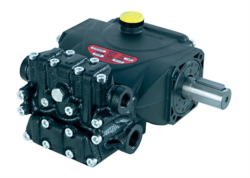
When space is extremely limited or you need ultra-compact pressure handling, Interpump gear pumps provide alternatives. The Interpump E1D1808 L is a compact industrial gear pump delivering 8 L/min at 180 bar in just 5 kg—appropriate for auxiliary oil circulation in rotary screw compressors or small heat pump circuits. The Interpump ET1C1612 SX*D20 offers 12 L/min at 160 bar with PTFE sealing, suitable for corrosive refrigerant environments.
High-Displacement Pump for Heavy-Duty Applications
The Pratissoli SS71153 variable-displacement pump delivers 122 L/min at 160 bar with 37.5 kW power at 800 rpm, accommodating larger water-side systems or high-volume condensate removal in multi-building complexes. Its adjustable displacement allows operators to dial flow rates to match current load, improving energy efficiency.
Critical Matching Factors
- Motor speed compatibility: Ensure pump rpm matches available motor speeds (typically 1750, 3500, or 1200 rpm). Mismatched speeds reduce efficiency and shorten bearing life.
- Power availability: Verify that facility electrical service can support motor startup loads. A 40 kW pump may draw 3–4× rated current during soft-start sequences.
- Pressure margin: Select equipment rated 20–30% above your calculated TDH. This margin accommodates aging piping, fouled heat exchangers, and future system modifications.
- Flow control strategy: Confirm whether you need fixed-displacement or variable-displacement equipment, and whether pressure-relief or throttling control aligns with building automation system capability.
Section 3: Installation Best Practices for Reliability
Piping and Foundation Preparation
1. Isolate vibration: Mount pump or compressor on a reinforced concrete pad or elastomer isolators rated for the unit's weight and operating frequency. This prevents noise transmission and protects adjacent equipment.
2. Use proper suction-side design: Keep inlet lines short, with no elbows immediately upstream of the pump inlet. Size suction piping one to two sizes larger than discharge to minimize inlet losses—critical for pump cavitation prevention.
3. Discharge piping: Install a check valve within 3 feet of the pump outlet to prevent backflow during shutdown. Add a pressure relief valve (set 10–15% above maximum operating pressure) to protect the system from overpressure events.
4. Flexible connections: Use vibration-isolating hose connections at pump inlet and outlet to dampen pulsation and reduce noise.
Filtration and Fluid Conditioning
Contamination is the leading cause of pump failure in HVAC systems. Before commissioning:
- Install a 25-micron suction strainer to protect pump internals.
- Use a 10-micron return filter in circulating systems to remove wear particles.
- For compressor oil circulation loops, employ 3-micron oil filters.
- Flush the entire system with clean mineral oil or glycol (depending on your refrigerant type) to remove installation debris, then drain and refill with system-appropriate fluid.
Pressure and Temperature Monitoring
Instal pressure gauges at inlet, outlet, and across differential devices. Add temperature sensors at pump inlet and outlet to catch thermal runaway. These instruments:
- Enable early detection of cavitation, cavitation damage, or heat exchanger fouling.
- Provide baseline data for preventive maintenance trending.
- Help validate that commissioned system performance matches design intent.
Commissioning Verification
Before handing off to building operations:
1. Run the system at no-load (bypassed) for 15–30 minutes to purge air and allow bearing surfaces to develop an oil film.
2. Gradually open isolating valves to bring the system online, monitoring pressure and temperature for 2–4 hours.
3. Record baseline pressure drop across filters, heat exchangers, and control valves under full load.
4. Confirm noise levels are acceptable and align with equipment data sheets.
5. Document all gauge readings, motor amp draw, and fluid condition for future maintenance reference.
Section 4: Long-Term Operation and Maintenance Planning
Establish a Preventive Maintenance Schedule
- Monthly: Check and log pressure, temperature, motor current, and oil level (if applicable). Listen for unusual noise.
- Quarterly: Inspect suction and return filters, clean or replace as needed. Verify mounting bolts are tight.
- Annually: Send fluid samples to a lab for viscosity, acid number, and particle count analysis. Replace seals and gaskets if fluid analysis indicates degradation.
- Every 2–3 years: Pull the pump or compressor for bearing inspection and renewal of wear rings if performance metrics decline.
Fluid Management Best Practices
Use the pump or compressor manufacturer's approved fluid type. Mixing synthetic and mineral oils, or using non-approved glycols, accelerates seal wear and bearing corrosion. Maintain fluid temperature within ±5°C of design specification; overheating weakens lubricity and thickens deposits on internal surfaces.
Partnering with Your Distributor
3G Electric's 35+ years supplying industrial equipment means we understand the field challenges contractors face. When you select equipment through us—whether it's the Pratissoli KF30, MW40, or Interpump compact pumps—we provide:
- Technical specification sheets and performance curves tailored to your design.
- Guidance on spare parts stocking (seals, gaskets, wear rings, oil filters) to minimize downtime.
- Access to field service bulletins and application notes from equipment manufacturers.
- Expedited replacement logistics if an unexpected failure occurs mid-season.
Conclusion
Selecting and installing Pumps & Compressors correctly transforms HVAC system performance from mediocre to exceptional. By calculating actual flow and pressure requirements, matching equipment specifications to your design constraints, and following proven installation and commissioning practices, you deliver systems that operate efficiently, quietly, and reliably for 15–20+ years.
The cost of proper selection and installation—perhaps 3–5% of total project value—is recouped many times over through reduced energy consumption, fewer emergency service calls, and extended equipment life. Leverage 3G Electric's decades of experience and product expertise to make informed decisions that protect your reputation and your customers' investments.