Understanding Duty Cycle Impact on Pump Selection
Plant managers across Southeast Asia face a critical challenge: matching Pumps & Compressors to real-world operating conditions, not just nameplate specifications. In our 35+ years as a distributor of industrial equipment, we've observed that most equipment failures result not from manufacturing defects, but from duty cycle mismatch—selecting a pump rated for 40% duty when your plant runs 90% continuous operations.
Duty cycle refers to the percentage of time equipment operates at full load within a defined period. A pump rated for intermittent service (25% duty) will fail prematurely when run at 80% continuous duty, even if horsepower ratings appear adequate. This distinction becomes critical in Southeast Asia, where tropical heat accelerates thermal stress and distributed manufacturing networks limit rapid parts availability.
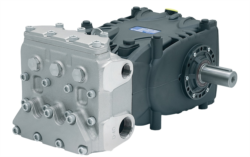
The Pratissoli KF30 and Pratissoli MW40 represent two distinct duty cycle categories. The KF30 delivers 106 L/min at 200 bar with 40 kW input—optimized for moderate continuous duty in mid-sized hydraulic systems. The MW40 provides 211 L/min at 210 bar with 85 kW input, designed for heavy continuous operations where flow consistency drives production capacity. Understanding which duty profile matches your operation prevents costly premature replacement and unplanned downtime.
Compact Pump Economics: When Smaller Delivers Better ROI
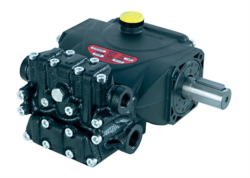
Many plant managers assume larger displacement equals better value. Southeast Asian operations prove otherwise. The Interpump E1D1808 L and Interpump ET1C1612 SX*D20 represent a critical market segment: compact, high-pressure gear pumps that reduce installation footprint, cooling costs, and maintenance complexity.
The E1D1808 L delivers 8 L/min at 180 bar, consuming only 2.72 kW at 2800 rpm and weighing just 5 kg. The ET1C1612 provides 12 L/min at 160 bar with 3.68 kW input at 1750 rpm. For precision hydraulic circuits—industrial automation, robotic material handling, or precision injection molding—these compact units often outperform larger pumps on a cost-per-useful-output basis.
Total cost of ownership (TCO) calculation for compact pumps includes:
- Cooling load reduction: Smaller displacement = lower heat rejection, reducing chiller capacity requirements and electricity consumption
- Manifold integration: Compact pumps enable integrated valve-pump assemblies, reducing component count and leak points
- Replacement lead time: Lighter units ship faster and require less installation infrastructure
- Operator familiarity: Smaller units integrate into existing systems with minimal redesign
For a 250-unit automotive parts supplier in Thailand running precision stamping lines, replacing three 50 kW pump systems with nine E1D1808 L units reduced annual cooling costs by 18% while improving circuit response time. This analysis wouldn't appear in any pump specification sheet—but it's essential for plant-level decision making.
Pressure & Flow Trade-offs Across Duty Profiles
The Pratissoli SS71153 illustrates a critical performance category: mid-range displacement at lower rotational speed. Delivering 122 L/min at 160 bar with 37.5 kW at 800 rpm, this pump prioritizes volumetric flow and thermal stability over peak pressure.
Compare three operational profiles:
Profile A: Intermittent Precision Work (45% duty cycle)
- Best choice: Interpump ET1C1612 (12 L/min, 160 bar)
- Rationale: High pressure capability, minimal heat generation, rapid response
- Annual cooling cost: ~$3,200
- Expected service intervals: 4,000 hours
- Best choice: Pratissoli KF30 (106 L/min, 200 bar)
- Rationale: Balanced flow-pressure output, proven Italian reliability, mature spare parts networks
- Annual cooling cost: ~$8,400
- Expected service intervals: 6,000 hours
- Best choice: Pratissoli MW40 (211 L/min, 210 bar)
- Rationale: High volumetric displacement reduces pressure spike stress, proven in 24/7 operations
- Annual cooling cost: ~$15,600
- Expected service intervals: 8,000 hours
Pressure alone never tells the complete story. A 200 bar pump operating at 160 bar continuously suffers lower component wear than a 160 bar pump running at peak pressure. Margin between operating and rated pressure determines service life—a critical calculation point plant managers often overlook.
Regional Considerations: Tropical Operations & Distributed Maintenance
Southeast Asian climate introduces variables absent from temperate-zone pump selection. High ambient temperature (32-38°C) combined with humidity creates three distinct challenges:
Thermal Management: Larger displacement pumps (MW40, SS71153) generate proportionally more heat. In Malaysia and Indonesia, ambient cooling may prove insufficient; oversized chiller capacity becomes necessary. Compact pumps like the E1D1808 reduce this burden significantly.
Spare Parts Availability: 3G Electric's regional presence helps, but distributed manufacturing networks create supply chain friction. The Pratissoli KF and MW families benefit from Interpump Group's supply maturity—KF30 and MW40 components stock in 4-5 regional distribution centers, reducing lead time to 2-3 weeks. Specialized units may require 8-12 weeks.
Corrosion & Contamination: Tropical humidity accelerates internal corrosion if systems sit idle. Sealed, low-displacement designs (Interpump E-series) show better idle-state protection than large open manifold systems. Operating environment also matters: coastal refineries and marine processing plants require stainless hardware; inland plants can use standard steel components.
Maintenance Skill Availability: Larger systems require advanced troubleshooting. Compact Interpump units can be swapped as complete assemblies by technicians with basic hydraulic training—critical in regions where specialist expertise requires international travel.
For a food processing facility in Vietnam operating 20 hours/day, six days/week, we recommended the KF30 over larger alternatives specifically because regional service availability trumped maximum displacement. Total downtime cost in Vietnam exceeds equipment cost within 18 months—availability becomes the primary selection driver.
Practical Specification Matrix: Matching Equipment to Operations
Plant managers should apply this decision framework:
Step 1: Quantify Actual Duty Cycle
- Log operating hours across peak, partial, and idle periods for 12 weeks
- Calculate true duty cycle percentage
- Account for seasonal variation (monsoon shutdowns, holiday periods)
- Measure peak flow requirement (not estimated)
- Identify sustained vs. transient pressure demands
- Include safety margin (typically 15-20%, not 50%)
- Confirm spare parts availability within your country
- Verify technical service response time (target: 24 hours)
- Assess technician training resources
- Equipment cost
- Installation labor (regional rates vary 3:1)
- Cooling system sizing
- Expected replacement intervals based on duty cycle
- Maintenance labor (typically $150-300/service event in SE Asia)
- Run equipment at 110% calculated duty for one week
- Monitor temperature rise (must stay below 60°C)
- Verify pressure stability (variance <5 bar)
- Confirm noise levels acceptable to plant operations
The KF30 performs excellently at 70% continuous duty but shows temperature creep above 75%; the MW40 handles 85%+ duty routinely. Compact Interpump units (E1D1808, ET1C1612) excel in precision circuits but cannot sustain high flow requirements. No universal "best pump" exists—only best fit for your documented operating profile.