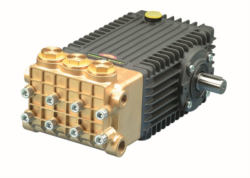
Understanding Industrial Pump Pressure Ratings: A Technical Guide for Singapore Operations
Selecting the right industrial pump for your operation requires a deep understanding of pressure specifications and performance metrics. Whether you're managing a manufacturing facility, operating cleaning equipment, or running hydraulic systems across Singapore, pressure ratings are fundamental to safe and efficient operation. This technical explainer breaks down pump pressure specifications, conversion standards, and practical selection criteria to help industrial professionals make informed equipment decisions. We'll examine real-world pressure ratings from leading industrial pump manufacturers and explain how these metrics translate to operational performance.
Fundamentals of Pump Pressure Specifications
Pump pressure is the force exerted by a fluid per unit area, typically measured in three standard units: bar (metric), MPa (megapascals), and PSI (pounds per square inch). Understanding these units and their relationships is critical for industrial professionals working with pumps and compressors across Singapore.
Pressure Unit Conversions: One bar equals 0.1 MPa or 14.5 PSI. For example, a pump rated at 150 bar operates at 15 MPa or approximately 2,175 PSI. This conversion standard is universal across industrial equipment specifications and is essential knowledge for operators comparing equipment from different manufacturers or working with international documentation.
Pump pressure ratings serve two critical functions: they define the maximum operating pressure and establish the performance envelope for safe operation. Industrial pumps are engineered with specific pressure tolerances, and exceeding these ratings can result in equipment damage, safety hazards, and system failures.
Pressure vs. Flow Relationship: A fundamental principle in pump engineering is that pressure and flow rate are inversely related within a given operating envelope. Higher pressure applications typically require lower flow rates, while high-flow applications operate at lower pressures. This relationship determines pump selection for specific industrial tasks. A pump delivering 15 liters per minute at 500 bar performs completely differently from one delivering 170 liters per minute at 110 bar—even though both are industrial-grade pumps from the same manufacturer family.
The working pressure of a pump is determined by system resistance, not by the pump itself. The pump generates pressure only when system backpressure requires it. This distinction is crucial for understanding pump performance and sizing equipment correctly for your application.
Technical Specifications and Performance Data
Modern industrial pumps come in diverse configurations, each optimized for specific pressure and flow requirements. Examining real product specifications illustrates how manufacturers design pumps for different applications.
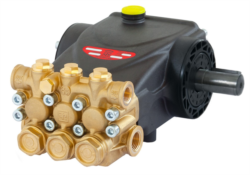
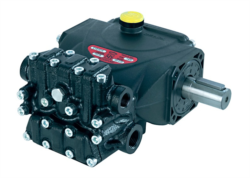
High-Pressure Compact Pumps: The Interpump PUMP 5015 R ATEX represents a specialized high-pressure solution. This ATEX-certified pump delivers 15 liters per minute at an impressive 500 bar (50 MPa / 7,250 PSI). Operating at 1,450 rpm with 20 hp (14.7 kW) power input, this compact unit weighs only 19.5 kg and measures 351.5 × 242.5 × 195.5 mm. The ATEX certification indicates suitability for potentially explosive atmospheres, making it essential for hazardous-area operations.
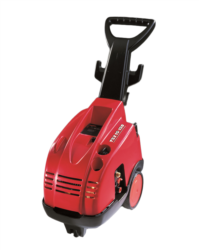
Medium-Pressure Commercial Solutions: The Interpump TSX 15.150 415/50 MULTIREG99 operates at 150 bar (15 MPa / 2,175 PSI) with a maximum pressure rating of 180 bar (18 MPa / 2,610 PSI). This 44.5 kg unit delivers 15 liters per minute (4 US GPM) and includes integrated pressure regulation and total-stop functionality—critical safety features for commercial cleaning and industrial applications. The MULTIREG99 system automatically adjusts pressure to system demand, enhancing efficiency and equipment longevity.
Compact General-Purpose Pumps: The Interpump PUMP WW90 R + FLANGE B3B14 represents the entry-level industrial pump segment. Rated at 90 bar (9 MPa / 1,300 PSI), this 2 hp (1.47 kW) pump delivers 8 liters per minute with a compact footprint of 177 × 175 × 130 mm, weighing just 5.2 kg. At 2,800 rpm rotation speed, these pumps excel in light-duty cleaning, small hydraulic systems, and portable applications.
Variable-Pressure Mid-Range Systems: The Interpump TSX 10.130 220/50 MULTIREG+ROTOTEK operates at 130 bar (13 MPa / 1,885 PSI) with maximum capability to 160 bar (16 MPa / 2,300 PSI). This versatile unit delivers 9.5 liters per minute and includes both pressure regulation and rotary encoder feedback, making it suitable for demanding commercial and light-industrial applications requiring consistent pressure maintenance.
These specifications demonstrate that industrial pumps in Singapore span a wide performance range. Selection depends on your specific pressure and flow requirements, space constraints, power availability, and environmental conditions.
Real-World Application Examples
Understanding how pressure ratings translate to actual industrial operations is essential for proper equipment selection and deployment.
High-Pressure Cleaning and Surface Preparation: Applications requiring sustained high pressure—such as industrial surface cleaning, paint removal, or water jetting—benefit from the Interpump PUMP 5015 R ATEX's 500 bar capacity. Manufacturing facilities in Singapore that process metal components, prepare surfaces for coating, or maintain heavy equipment rely on this pressure level to efficiently remove contaminants without damaging substrates. The 15 liter-per-minute flow combined with 500 bar pressure provides both penetrating force and controllable flow for precision work.
Commercial Cleaning Equipment: Pressure washers and commercial cleaning systems typically operate between 130–150 bar, making the TSX 10.130 and TSX 15.150 series ideal. These systems balance sufficient pressure for effective cleaning with manageable flow rates and equipment wear. With integrated pressure regulation, operators maintain consistent cleaning performance regardless of nozzle selection or minor system variations, extending equipment service life.
Portable and Light-Industrial Hydraulics: Low-pressure pumps like the WW90 series are deployed in portable cleaning equipment, small hydraulic presses, and agricultural applications. At 90 bar, they provide sufficient force for many industrial tasks while minimizing energy consumption and heat generation. Their compact weight and dimensions make them ideal for vehicle-mounted systems across Singapore's dense industrial and commercial infrastructure.
Selection Criteria and Best Practices
Choosing the correct pump requires evaluating several technical and operational factors beyond simple pressure and flow numbers.
Pressure Requirement Analysis: First, determine your actual system pressure requirement. Many operators over-specify pressure, selecting unnecessarily high-rated pumps that consume excess energy and generate unnecessary heat. Your system pressure should match the resistance it encounters—not exceed it. Work with your system designer to calculate actual backpressure requirements.
Flow Rate Compatibility: Match pump flow output to system demand. A 500 bar pump delivering 15 L/min serves different purposes than a 110 bar pump delivering 170 L/min. Higher-pressure applications typically accept lower flow rates; volume-critical applications require lower pressures with higher flows. The relationship between pressure and flow determines energy efficiency and operational cost.
Duty Cycle and Regulation: Consider whether your application requires continuous pressure maintenance or intermittent operation. Pumps with integrated pressure regulation (like the TSX series MULTIREG systems) automatically adjust output to system demand, significantly reducing energy consumption during idle periods and extending equipment lifespan.
Environmental and Safety Requirements: ATEX certification indicates suitability for hazardous atmospheres. If your Singapore facility operates in areas with explosive atmospheres (certain chemical, pharmaceutical, or fuel storage environments), ATEX-certified equipment like the W05015EX is mandatory.
Power and Space Constraints: Compact pumps like the WW90 series minimize installation footprint and are ideal for space-constrained environments. Ensure your available power supply matches pump motor specifications—both voltage and current capacity.
Conclusion and Next Steps
Pressure rating selection directly impacts operational efficiency, equipment longevity, and safety across industrial applications. Whether you require ultra-high-pressure equipment for specialized cleaning, reliable mid-range systems for commercial operations, or compact solutions for portable applications, understanding pressure specifications ensures proper system design and performance.
3G Electric has served Singapore's industrial equipment needs since 1990, providing distribution of leading pump and compressor manufacturers. Our technical team can help evaluate your specific pressure and flow requirements, recommend appropriate equipment from our comprehensive pumps and compressors inventory, and support proper installation and maintenance. Contact 3G Electric today to discuss your industrial pump requirements and receive expert guidance tailored to your Singapore-based operation.