How to Select the Right Industrial Pump for High-Pressure Applications in Singapore
Selecting an appropriate industrial pump for high-pressure applications is one of the most critical decisions in facility design and maintenance. The wrong choice can lead to operational inefficiency, equipment damage, and costly downtime. For industrial professionals in Singapore managing manufacturing operations, cleaning systems, or specialized process applications, understanding pump pressure ratings, flow rates, and technical specifications is essential. This guide walks you through the technical evaluation process and provides concrete examples using industry-leading equipment to help you make an informed decision that aligns with your operational requirements.
Understanding Pressure Ratings and Flow Rate Relationships
Pressure and flow rate are the two fundamental specifications that define pump performance, and they exist in an inverse relationship that directly impacts equipment selection. Pressure, measured in bar, MPa, or PSI, indicates the force the pump can generate. Flow rate, expressed in L/min or US GPM, indicates the volume of fluid the pump moves per unit time. Industrial applications require different balances between these parameters.
High-pressure applications—those exceeding 100 bar (1,450 PSI)—typically require specialized pump designs. A pump rated for 500 bar (7,250 PSI) can generate tremendous force for precision cleaning or hydraulic applications, but will deliver lower flow rates than a general-purpose pump operating at 90 bar (1,300 PSI). Understanding this trade-off is critical: the industrial pump that works for your application depends entirely on whether your process prioritizes pressure intensity or volume throughput.
For example, ultra-high-pressure applications like industrial surface preparation or specialized hydraulic systems demand pumps with robust construction and precise tolerances. These pumps operate at higher rotational speeds or use multi-stage designs to achieve extreme pressure while maintaining reasonable flow rates. Conversely, high-volume, moderate-pressure applications benefit from single-stage pump designs optimized for throughput. Your facility's piping system, fluid viscosity, temperature conditions, and end-use application must all inform this decision.
Power consumption also correlates directly to pressure and flow: higher pressure and flow rates require more motor power (measured in kW or horsepower). A 2 kW pump delivers fundamentally different capability than a 14.7 kW unit. Singapore's industrial energy costs make this efficiency consideration particularly important when evaluating long-term operational expenses.
Technical Specifications and Product Comparison Framework
When evaluating industrial pumps in Singapore, three critical performance bands emerge: standard-pressure (90-100 bar), medium-pressure (130-150 bar), and ultra-high-pressure (275+ bar) categories.
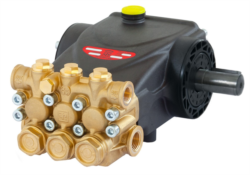
Standard-Pressure Range (90 bar / 1,300 PSI): The Interpump PUMP WW90 R + FLANGE B3B14 exemplifies this category. With specifications of 8 L/min (2.11 US GPM) flow rate and 90 bar pressure rating, this 2 kW compact unit weighs just 5.2 kg. At 2,800 RPM operating speed, it delivers consistent performance for general industrial cleaning, low-pressure hydraulic systems, and fluid transfer applications. The lightweight design and integrated flange make it ideal for space-constrained installations common in Singapore's industrial facilities.
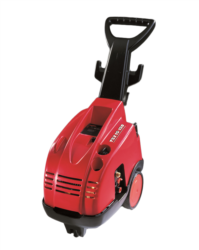
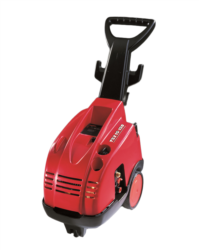
Medium-Pressure Range (130-150 bar / 1,885-2,175 PSI): The Interpump TSX 10.130 220/50 MULTIREG+ROTOTEK*TOTALSTOP addresses applications requiring higher pressure intensity. This unit delivers 9.5 L/min flow at 130 bar operating pressure, with a maximum pressure capability of 160 bar (2,300 PSI). The integrated MULTIREG99 control system provides automatic pressure regulation and total stop functionality, meaning the pump automatically shuts down when downstream demand ceases—a valuable energy-efficiency feature. At 44.5 kg, this is a complete system rather than a bare pump, including motor and control electronics. Jet reaction thrust remains below 29 Newtons, indicating manageable vibration and recoil forces.
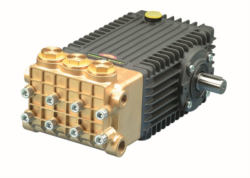
Similarly, the Interpump TSX 15.150 415/50 MULTIREG99*TOTAL STOP upgrades to 150 bar operating pressure with 15 L/min flow capacity and 180 bar maximum pressure rating. This unit provides approximately 58% more flow volume than the TSX 10.130 while maintaining the same pressure class, making it suitable for higher-volume, medium-pressure applications like pressure washing systems or active hydraulic circuits.
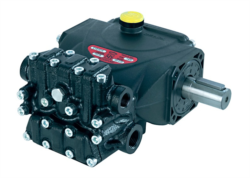
Ultra-High-Pressure Range (275-500 bar / 4,000-7,250 PSI): The Interpump PUMP 5015 R ATEX represents extreme-pressure territory. Operating at 500 bar (7,250 PSI) with 15 L/min flow, this 14.7 kW, 1,450 RPM pump delivers 50 MPa pressure suitable for precision industrial cleaning, water jet cutting, specialized hydraulic applications, and hazardous area operations (ATEX certification indicates suitability for explosive atmospheres). Weighing 19.5 kg with overall dimensions of 351.5 x 242.5 x 195.5 mm, this is a purpose-built precision instrument requiring appropriate system design and safety considerations.
Step-by-Step Pump Selection Process
Step 1: Define Your Process Requirements Begin by documenting the specific application. Record required outlet pressure in bar or PSI, required flow volume in L/min or GPM, fluid type (water, oil, specialty fluids), operating temperature range, and duty cycle (continuous, intermittent, or peak demand). For example, a high-pressure cleaning system might require 150 bar at 15 L/min, while a hydraulic press might need 100 bar at 9.5 L/min.
Step 2: Calculate Power Requirements Use the formula: Power (kW) = (Pressure [bar] × Flow [L/min]) / 600. A pump operating at 130 bar and 9.5 L/min requires approximately 2.1 kW. Add 10-15% for system losses. This calculation helps identify motor size requirements and electrical supply compatibility—critical for Singapore facilities with specific electrical infrastructure.
Step 3: Evaluate Control System Features Determine whether you need basic pump-only operation or integrated control systems. The TSX series pumps include MULTIREG99 pressure regulation and TOTAL STOP functionality, automatically managing pressure and stopping the pump during idle periods. This reduces energy consumption and heat generation compared to continuously running bypass-valve systems.
Step 4: Assess Physical Constraints Measure available installation space and weight-bearing capacity. The WW90 compact series weighs 5.2 kg and measures 177 x 175 x 130 mm, fitting tight spaces. Larger TSX units at 44.5 kg require proper mounting and vibration isolation, particularly for floor-mounted installations.
Step 5: Verify Fluid Compatibility Confirm the pump materials (brass, stainless steel, etc.) and internal components are compatible with your fluid. Some applications require food-grade or chemical-resistant configurations not apparent from basic specifications.
Step 6: Plan for System Integration Consider inlet filtration, outlet piping diameter, pressure relief valve sizing, and thermal management. Ultra-high-pressure systems like the 5015 R ATEX generate significant heat requiring dedicated cooling.
Selection Criteria and Best Practices for Singapore Operations
Pressure Safety Margins: Always select pumps with maximum pressure ratings 15-20% higher than your anticipated peak operating pressure. The TSX 15.150 operates at 150 bar but has a 180 bar maximum rating—providing a safe operating envelope. This protects against pressure spikes during transient conditions.
Energy Efficiency: Integrated control systems like TOTAL STOP and MULTIREG99 significantly reduce energy consumption by eliminating continuous bypass flow during idle periods. For Singapore operations with significant energy costs, this feature can reduce monthly electrical expenses by 20-30% depending on duty cycle.
Duty Cycle Alignment: Match pump selection to your duty cycle. Compact, lightweight pumps like the WW90 series excel at intermittent duty. Larger integrated systems like TSX units provide better performance for frequent cycling applications with built-in thermal and pressure management.
Maintenance Accessibility: Ensure selected equipment allows straightforward filter changes, seal inspection, and routine maintenance. Integrated units require access to control electronics and pressure relief systems, which may impose spatial requirements. In Singapore's tropical climate, proper ventilation around motor cooling fins is essential.
Certification Requirements: Verify compliance with relevant standards. ATEX-certified pumps like the 5015 R ATEX meet strict safety requirements for hazardous area installations. Standard industrial pumps require appropriate CE or equivalent certification for Singapore operations.
Conclusion and Next Steps
Selecting the right industrial pump requires balancing pressure intensity, flow volume, power consumption, control features, and physical constraints against your specific application requirements. Whether you need the compact efficiency of standard-pressure pumps like the WW90 series, the balanced performance of medium-pressure systems like the TSX 10.130 or TSX 15.150, or the specialized capability of ultra-high-pressure equipment like the 5015 R ATEX, proper specification ensures reliable operation and optimal total cost of ownership.
The technical specifications and selection framework presented here provide a foundation for informed decision-making. However, each industrial facility has unique requirements, environmental constraints, and operational parameters. 3G Electric has been serving Singapore's industrial sector since 1990, providing expert guidance on pumps and compressors selection and system integration. Our technical team can evaluate your specific application requirements, calculate precise power and pressure specifications, and recommend equipment that meets your operational and budget parameters. Contact 3G Electric today to discuss your industrial pump requirements and ensure your facility operates with optimal efficiency and reliability.