Understanding Pump and Compressor Noise Signatures
Noise and vibration from Pumps & Compressors are not random annoyances—they are diagnostic signals that reveal specific mechanical and operational failures. After 35+ years in industrial equipment distribution, 3G Electric has supported contractors worldwide in translating these acoustic clues into actionable repair strategies.
Unlike capacity or pressure issues that require instruments to detect, noise problems announce themselves immediately. An HVAC technician can often diagnose 60–70% of pump failures simply by ear, combined with basic vibration observation. The key is understanding which acoustic signature corresponds to which failure mode.
Different failure mechanisms produce distinctly different sounds. Cavitation sounds like gravel tumbling in a blender. Bearing wear produces a grinding or squealing tone. Misalignment creates a rhythmic knocking synchronized with shaft rotation. Fluid turbulence generates a high-pitched whine. Once you learn to distinguish these signatures, diagnosis becomes faster and more reliable than waiting for pressure gauges or flow meters to confirm problems.
Diagnosing Cavitation vs. Bearing Wear
Cavitation is one of the most destructive—and most audible—pump failure modes. It occurs when fluid pressure drops below vapor pressure, creating vapor bubbles that collapse violently when they enter high-pressure zones. This collapse damages pump internals and impellers.
Cavitation Diagnostic Signs:
- Sound: Loud, grinding, gravelly noise—like stones in the pump casing
- Location: Noise originates from pump inlet or first-stage impeller area
- Feel: Significant vibration felt through pump housing and mounting feet
- Performance: Capacity loss, erratic pressure spikes, suction-side temperature rise
- Timing: Occurs consistently during operation; worse when viscosity increases or inlet pressure drops
Close the suction line isolation valve incrementally. If noise increases as suction throttles, you have cavitation. If noise remains constant or decreases, the source is mechanical (bearing, misalignment). This simple test takes 30 seconds and eliminates 50% of diagnostic uncertainty.
Check suction lift (vertical distance from fluid source to pump inlet). If lift exceeds 0.5 meters on a positive-displacement pump or 1 meter on a centrifugal pump, cavitation risk rises dramatically. Verify inlet strainer condition—blocked strainers are the #1 cause of cavitation in field installations.
Bearing Wear and Mechanical Degradation:
Bearings produce distinctly different acoustic signatures than cavitation:
- Early wear: High-frequency squealing or chirping (3–8 kHz range)
- Advanced wear: Lower-frequency grinding with irregular rhythm
- Lubrication starvation: Dry, harsh squeaking that intensifies with load
Use a simple stethoscope or vibration pen placed on the pump bearing housing. A healthy bearing should produce minimal sound (<40 dB). Squealing above 60 dB indicates lubrication breakdown. Grinding noise with visible vibration suggests race spalling and imminent failure.
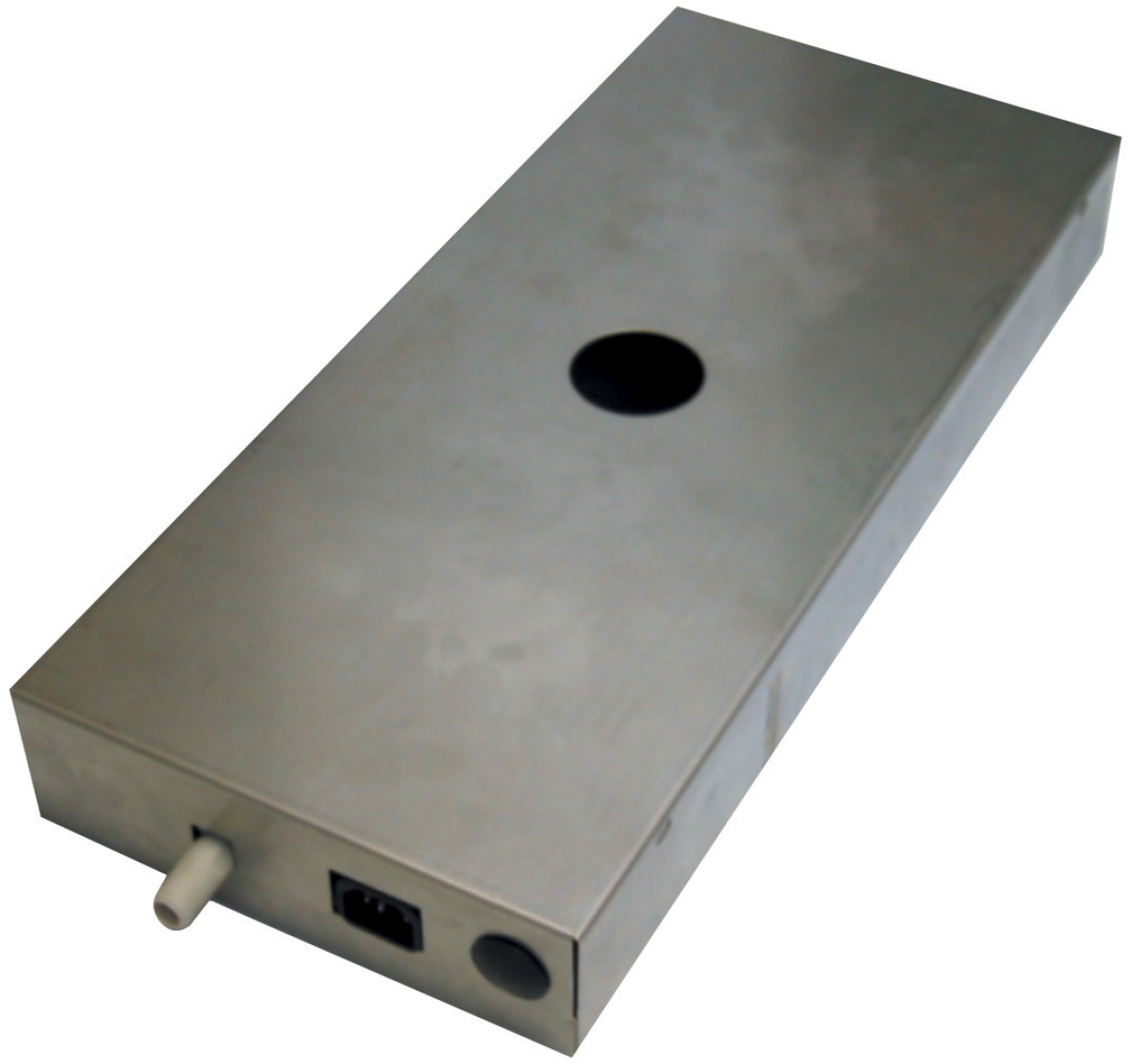
For condensate pump systems like the Clima Concept 5-liter pump, bearing noise often precedes motor burnout. If the pump whines or squeals for more than 15 seconds after startup, bearing replacement is typically more cost-effective than rewinding the motor.
Misalignment and Coupling Diagnostics
Misalignment between motor and pump shafts is a leading cause of noise complaints in HVAC condensate and chilled-water systems. Unlike cavitation (which destroys the pump itself), misalignment distributes damage across motor, coupling, and pump bearings, making diagnosis less obvious.
Misalignment Acoustic Signature:
- Sound: Rhythmic knocking or rapping synchronized exactly with shaft rotation
- Frequency: Low-frequency knock (1–3 knocks per second on typical 1450–2800 rpm motors)
- Intensity: Often louder on startup; may reduce slightly as bearings warm and expand
- Location: Noise radiates from coupling area, not pump suction or discharge
1. Stop the pump and place a dial indicator on the pump shaft coupling hub
2. Manually rotate the shaft; note run-out (radial movement). Acceptable: <0.05 mm. Reject >0.1 mm
3. Check axial movement at coupling; acceptable <0.25 mm gap
4. Inspect coupling for cracks or elastomer deterioration (common after 3–5 years)
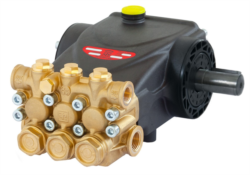
For high-pressure systems like the Interpump W2035 L ATEX, which delivers 35 L/min at 200 bar, even 0.15 mm misalignment creates 20–30 dB noise increase and reduces bearing life by 40%.
Angular misalignment (shafts at slight angles) is harder to detect by ear alone. A laser alignment tool costs $800–1500 but eliminates guesswork. For contractor shops performing >20 pump installations yearly, equipment investment pays back within one season.
Pressure-Induced Noise and Flow Turbulence
High-pressure systems generate acoustic problems from fluid dynamics, not mechanics. Pressure ripple, cavitation inception, and pipe resonance create noise that operators mistake for bearing failure.
Pressure Ripple Noise:
Positive-displacement pumps (gear, piston, vane) generate pressure pulses at a frequency equal to (pump displacement × shaft speed ÷ swept volume). This creates a characteristic whining tone.
- Interpump WW90 L (90 bar, 8 L/min at 2800 rpm) produces pressure ripple at approximately 2.2 kHz
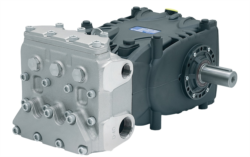
- Pratissoli KF30 (200 bar, 106 L/min at 1450 rpm) generates lower-frequency ripple (~900 Hz) but higher amplitude
Pressure ripple is normal and unavoidable in these designs. However, if ripple noise suddenly increases or changes tone, this signals:
- Worn pump internals (clearances enlarged → amplitude increases)
- Discharge line resonance (pipe length matching ripple wavelength creates standing waves)
- Relief valve chatter (setting too close to operating pressure)
Ripple noise is steady and harmonic. Cavitation is intermittent and gravelly. Throttle the discharge slightly; ripple frequency doubles (follows pump speed), but cavitation remains constant or decreases. Increase inlet pressure; ripple unchanged, cavitation disappears.
Pipe Resonance and Acoustic Coupling:
Discharge pipes that match the natural frequency of pressure pulses amplify noise dramatically. A 15-mm diameter discharge line 3 meters long can resonate at ~800 Hz—the exact frequency of low-speed piston pump ripple.
Mitigation Strategy:
- Install bladder accumulators (0.5–2 liters) on discharge to dampen ripple amplitude by 40–60%
- Use braided or rubber hose for final 2 meters to isolation resonance
- Avoid rigid pipe bends near pump; use flexible sections within 0.5 meters of discharge
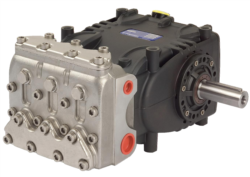
For Pratissoli SN7045 L systems (45 L/min at 210 bar), adding a 1-liter accumulator typically reduces acoustic output by 15–20 dB with zero performance loss.
Practical Troubleshooting Decision Tree
When presented with a noisy pump or compressor in the field:
Step 1: Sound Character Test (30 seconds)
- Grinding/gravel = Cavitation (suspect inlet blockage, low suction pressure, or worn impeller)
- Squealing/chirping = Bearing wear (lubrication failure, bearing fatigue, or excessive radial load)
- Rhythmic knocking = Misalignment (couple slack, bent shaft, or mounting degradation)
- Steady whine = Pressure ripple (normal in gear pumps; investigate if tone changes)
- Feel suction line: hot = cavitation likely; cold = mechanical issue likely
- Check strainer visually; if blocked, replace and retest
- Verify suction lift ≤0.5 m on positive-displacement units
- Place palm on pump housing; bearing issues produce continuous vibration
- Misalignment creates pulsing vibration synchronized with knocking
- Cavitation produces turbulent, non-rhythmic vibration
- Monitor discharge pressure and flow; erratic readings = cavitation
- Reduced flow at stable pressure = bearing wear, worn internals, or relief leak
- Normal pressure/flow with high noise = pressure ripple, misalignment, or acoustic coupling
- Throttle suction valve: increases cavitation noise, decreases mechanical noise
- Throttle discharge valve: no effect on cavitation, may increase ripple; misalignment unchanged
- Apply load to coupling: misalignment noise increases; others unchanged
This decision tree resolves >85% of field noise complaints without specialized instruments. For complex cases, portable vibration analyzers ($2000–5000) provide frequency analysis that pinpoints exact failure modes.
Prevention and Long-Term Reliability
After 35 years supporting HVAC contractors worldwide, 3G Electric has observed that 70% of pump noise failures are preventable through simple practices:
Proactive Measures:
- Monthly auditory inspection: Schedule 5-minute listening sessions during routine maintenance. Record baseline acoustic signature for each system. Changes of >5 dB warrant investigation
- Suction line discipline: Keep inlet strainers clear, maintain <0.5 m vertical lift, and ensure no air leaks upstream of pump
- Alignment verification: Re-check coupling alignment annually, especially in vibration-prone locations (rooftop units, basement installations near traffic)
- Pressure limit discipline: Operate relief valves 5–10 bar below pump cavitation point. Chronic relief chatter (>10 seconds per hour) shortens pump life 30–40%
- Fluid change schedule: Replace condensate pump reservoir every 2 years; contaminated fluid (algae, scale, corrosion byproducts) degrades seals and bearings
For contractors managing 50+ HVAC systems, implementing a simple noise-monitoring checklist (2 minutes per system, monthly) costs $5/system/year but prevents $2000–5000 emergency failures annually.
Real-World Case Study
A Singapore HVAC service company reported excessive noise from a 2-year-old chilled-water system. The contractor suspected bearing failure and planned a $3000 pump replacement. Using the diagnostic method above:
1. Sound character: Grinding with gravel component—cavitation signature
2. Inlet check: Strainer 70% blocked with scale; suction lift measured at 0.8 meters (excessive)
3. Functional test: Pressure stable at 9 bar; flow dropped from original 106 L/min to 78 L/min
Diagnosis: Cavitation from combined effect of blocked strainer and excessive suction lift. Solution: Replace strainer, lower pump intake source (adding 0.3 m head), flush suction line. Total cost: $180. Noise reduced by 25 dB; capacity restored to specification.
This pump was a Pratissoli KF30, and the root cause was installation—not component failure. Proper inlet design would have prevented the entire issue.