Understanding Pumps & Compressors in Your Maintenance Strategy
Pumps & Compressors form the backbone of industrial operations worldwide, and their reliability directly impacts production schedules. With over 35 years of experience distributing industrial equipment globally, 3G Electric understands that maintenance teams need more than specifications—they need practical guidance on equipment selection, preventive maintenance, and troubleshooting.
When your facility experiences pump failure, you're losing more than just equipment. You're losing production hours, potentially compromising system integrity, and straining your maintenance budget. This guide compares five critical Interpump models to help your team make informed decisions about which equipment fits your operational needs and maintenance capabilities.
Comparing Shaft Configurations and Valve Integration: Maintenance Complexity Assessment
One of the most significant factors affecting maintenance workload is how a pump's shaft and valve systems are configured. Different configurations require different expertise, replacement part strategies, and preventive maintenance schedules.
Right-Hand vs. Left-Hand Shaft Options
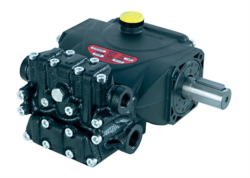
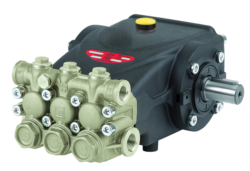
The Interpump PUMP E3B2515I R and Interpump PUMP E3B2515 L represent the two most common shaft orientations your maintenance team will encounter. The right-hand configuration (E3B2515I) suits installations where your system's rotational direction flows naturally in that direction, reducing vibration and stress on connecting components. The left-hand model (E3B2515 L) handles opposite rotation scenarios without requiring adapter modifications.
Maintenance Impact: Choosing the correct shaft orientation eliminates force-induced wear patterns. Mismatched orientations create vibration signatures that wear seals prematurely and stress bearing assemblies. Your maintenance logs will show dramatically fewer seal replacements and bearing adjustments when orientation matches system design.
Stock both orientations at your facility if you maintain multiple production lines. This prevents the costly practice of adapting mismatched equipment or waiting for specialized parts.
Integrated Valve Systems vs. Modular Designs
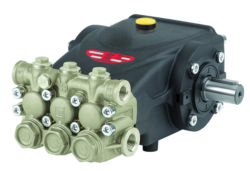
The Interpump PUMP E3B1515 DX*VALV.DX + GEARBOX RS500H represents a more complex integrated approach, combining valve functionality directly with gearbox assembly. This integration improves system efficiency by reducing connection points—fewer connections mean fewer leak sources and simplified troubleshooting.
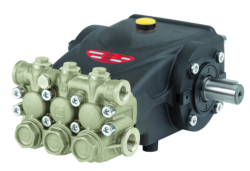
Conversely, the Interpump PUMP E3C1021 DXV.DXNO.C/J features modular valve architecture where the valve operates independently from the primary pump assembly. This modularity gives you flexibility—if a valve fails, you replace just that component rather than an entire integrated unit.
Maintenance Strategy: Integrated systems (like the E3B1515 with RS500H gearbox) require more comprehensive training for your technicians and longer service windows during maintenance. Modular systems allow faster repairs but demand that your team maintains larger spare parts inventory.
Performance Specifications and Preventive Maintenance Schedules
Your maintenance effectiveness depends on understanding not just what equipment does, but how its specific performance characteristics influence service intervals and failure patterns.
Pressure Rating and Seal Selection
The Interpump PUMP E3C1515 L operates within pressure ranges that directly determine which sealing materials you should stock. Higher-pressure pumps require more sophisticated seal materials and more frequent inspections. Your maintenance team needs to understand that a pump rated for 150 bar creates different stress conditions than one rated for 280 bar—this directly affects how often you should schedule seal inspections and replacements.
Establish pressure monitoring as a core preventive maintenance task. Track pressure trends over weeks and months. Gradual pressure loss often indicates seal degradation, allowing you to schedule maintenance during planned downtime rather than facing emergency failures.
Displacement and Flow Rate Consistency
Different Interpump models deliver different displacement characteristics—how much fluid each rotation cycle delivers. The E3B series typically handles higher displacement applications, while the E3C series suits lower-displacement, higher-speed operations.
Practical Application: If your system experiences pressure spikes or flow inconsistencies, the pump's displacement rating helps your team diagnose whether you've selected the wrong model for your application. Undersized pumps struggle, creating pressure spikes that stress seals and bearings. Oversized pumps waste energy and generate heat.
Document your system's actual flow requirements before selecting equipment. Many maintenance problems stem from equipment mismatches rather than manufacturing defects.
Building a Maintenance Protocol and Spare Parts Strategy
Successful maintenance teams don't simply react to failures—they build systematic approaches based on equipment characteristics.
Critical Spare Parts Matrix
Develop a spare parts inventory that reflects your installed equipment portfolio. For your Interpump installations:
- Seal Kits: Stock seals for each model's pressure rating. The E3B series and E3C series use different seal specifications despite visual similarities.
- Bearing Assemblies: High-speed models (like the E3C1021) wear bearings faster than low-speed models. Maintain higher bearing inventory for high-speed units.
- Shaft Components: Keep compatible shafts (right and left orientations) on hand to minimize equipment downtime while repairs progress.
- Valve Cartridges: For integrated valve systems like the E3B1515, maintain cartridge inventory matching your gearbox specifications.
- Gearbox Oil and Filters: Different gearbox assemblies (like the RS500H) require specific oil types and change intervals. Maintain maintenance logs tracking oil analysis results.
Predictive Maintenance Monitoring
Modern maintenance teams use condition monitoring to predict failures before they occur. Focus your monitoring efforts on high-impact indicators:
Temperature Monitoring: Establish baseline operating temperatures for each pump model. Rising temperatures indicate increased internal friction—often the first sign of wear before catastrophic failure. The E3B series with integrated gearbox systems typically runs warmer than simple pump-only models, so calibrate your temperature alerts accordingly.
Vibration Analysis: Each pump model has characteristic vibration signatures. Excess vibration often indicates bearing wear, seal degradation, or shaft misalignment. Document baseline vibration patterns for each installation, then schedule service when vibration exceeds established thresholds.
Pressure Trend Analysis: Slowly declining pressure indicates seal wear. Rapid pressure fluctuations suggest cavitation or air in the system. These different failure modes require different corrective actions, so maintain detailed pressure logs.
Training Your Maintenance Team
The differences between these Interpump models require team members to understand specific characteristics:
- Model-Specific Service Procedures: The integrated valve configuration on the E3B1515 requires different disassembly and reassembly procedures than the modular E3C1021.
- Seal Material Compatibility: Pressure ratings determine which seal materials work correctly. Using wrong materials causes premature seal failure.
- Gearbox Maintenance: Models with integrated gearboxes (like RS500H) require oil analysis and change intervals. Simple pump-only models eliminate this complexity.
Invest in training that covers both theoretical understanding and hands-on service procedures. Partner with 3G Electric for technical documentation and support—our 35+ years of global equipment distribution includes extensive field experience with exactly these models.
Creating Your Equipment Maintenance Timeline
Develop maintenance schedules based on operating hours rather than calendar intervals. Industrial equipment rarely follows 9-to-5 schedules, so maintenance intervals should reflect actual usage.
Initial Service (First 50-100 Operating Hours)
Check for manufacturing residue, verify proper seal seating, and establish baseline pressure and temperature readings. This early inspection catches installation problems before they become expensive failures.
Routine Maintenance (Every 500-1000 Hours)
Check seals, inspect shafts for wear, verify pressure consistency, and replace filters if applicable. Different models require different interval lengths—gearbox-equipped models like the E3B1515 need earlier filter maintenance than simple pump models.
Major Service (Every 2000-4000 Hours)
Plan comprehensive inspections including bearing assessment, seal replacement, and complete pressure system verification. This is where modular designs (like the E3C1021) save time—you can service individual components without removing the entire pump.
Annual Review
Compare actual maintenance costs and downtime against industry benchmarks. If specific models consistently outperform others, prioritize those for future installations. If particular models generate excessive service calls, investigate whether selection criteria need adjustment.
Making Equipment Selection Decisions for Your Facility
With multiple Interpump models available, your maintenance team should influence equipment selection. You understand maintenance complexity, spare parts availability, and which systems create recurring problems.
When evaluating E3B2515I, E3B2515 L, E3B1515 with RS500H, E3C1021, and E3C1515 L for your operations, consider:
- Maintenance Skill Level: Integrated systems require more expertise. Modular systems suit broader technician capabilities.
- Spare Parts Logistics: Can your distributors reliably supply the specific model's components? 3G Electric maintains global inventory of these Interpump models, ensuring accessibility.
- System Pressure Requirements: Matching pump pressure rating to actual needs prevents over-engineering and unnecessary maintenance complexity.
- Space and Configuration Constraints: Shaft orientation and valve integration affect how equipment fits within existing systems.
- Long-term Production Plans: Equipment selected today must support production growth without requiring replacement.
Your maintenance team should document these factors and present recommendations during equipment procurement processes. Equipment that seems cheaper upfront often generates higher maintenance costs over its operational life.