Pumps & Compressors in Southeast Asian Food & Beverage Processing: Meeting Regulatory and Operational Requirements
Food and beverage manufacturing in Southeast Asia—particularly in Thailand, Vietnam, and Indonesia—requires Pumps & Compressors systems that balance three competing demands: regulatory hygiene compliance, consistent product quality, and cost efficiency across humid tropical climates. Unlike general industrial applications, F&B processing demands materials and sealing systems that prevent contamination while handling pressurized liquids ranging from cooking oils to dairy emulsions. With over 35 years of distribution experience, 3G Electric has supported F&B manufacturers across the region in specifying equipment that meets both local health authority standards and international food safety certifications (ISO 22000, FSSC 22000).
The F&B sector introduces variables absent from standard hydraulic applications: thermal cycling from pasteurization systems, exposure to acidic or alkaline cleaning agents, and frequent washdown environments that demand superior corrosion resistance. Traditional industrial pumps often fail in these conditions, leading to unexpected maintenance cycles and production shutdowns during peak season. This article compares gear-based and variable displacement Pumps & Compressors technologies, examining how material composition, rotational speed profiles, and pressure classifications directly impact both product safety and operational longevity in the Southeast Asian F&B context.
Material Composition and Sealing Technology: Protecting Product Integrity
Stainless Steel vs. Ductile Iron Specifications
For food-contact hydraulic systems, pump casing material selection determines both contamination risk and maintenance frequency. The Pratissoli KF30 features ductile iron construction with chrome-plated internal components—a configuration optimized for general industrial duty but requiring careful monitoring in direct food-contact loops. Ductile iron, while cost-effective (typical cost advantage of 30-40% over stainless variants), corrodes gradually in washdown environments and can shed microscopic particles into oil, necessitating enhanced filtration (10 micron absolute minimum, versus 25 micron for non-food applications).
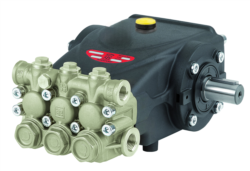
Conversely, the Interpump E3B2513 compact design suits integration into sealed, jacketed manifold systems where the pump operates within controlled pressure ranges (250 bar rated). Its 6.18 kW power delivery at 1450 rpm allows for quieter operation—critical in facilities where acoustic monitoring detects cavitation or bearing wear early. For F&B facilities processing dairy, beverages, or oils, this lower rotational speed reduces fluid turbulence and heat generation, extending oil life by 15-25% compared to 3000+ rpm designs.
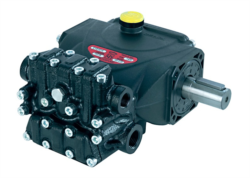
Southeast Asian F&B operations handling viscous products—coconut milk concentration, palm oil refining, or fish sauce processing—benefit from gear pumps' tolerance for higher fluid viscosity. The Interpump E1D1808 R delivers 8 L/min at 180 bar with a compact 5 kg footprint, making it ideal for space-constrained Thai and Vietnamese processing lines where floor space commands premium lease rates. Its 194.5 mm footprint fits modular skid designs common in contract manufacturing facilities.
Sealing Configuration for Humid Climates
Southeast Asian humidity (70-90% year-round in coastal regions) demands premium sealing systems. Single mechanical seals—adequate for temperate climates—fail within 18-24 months due to hygroscopic oil degradation. The Interpump E3E2517C SX, operating at 3400 rpm with 17 L/min capacity, requires double mechanical seals with cooling jackets in F&B applications. This configuration costs 25-35% more upfront but prevents catastrophic seal failure during peak production runs (e.g., New Year's holiday processing surges in Vietnam or Thailand).
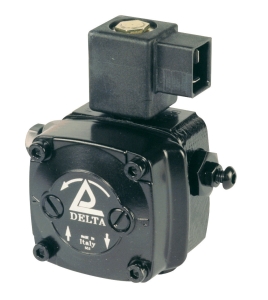
Delta's VM1 LL 2.4 oil pump, rated for 35 L/min at moderate 20 bar pressure, suits secondary cooling and circulation loops where lower pressure reduces seal stress. In pasteurization systems, where hot water circulates at 72-85°C, this pump's 3500 rpm maximum speed can be de-rated to 2800 rpm for extended seal life—sacrificing 15% flow capacity but extending maintenance intervals from 6000 to 9000 operating hours.
Pressure Classification and Thermal Stability in F&B Processes
High-Pressure Demands in Emulsification and Homogenization
Modern F&B processing increasingly uses high-pressure homogenization to improve product consistency and shelf life. Mayo production, salad dressing emulsification, and protein beverage preparation require sustained 200+ bar operation. The Pratissoli KF30 handles this with 200 bar rated pressure and 40 kW continuous power—delivering 106 L/min flow suitable for large-scale batch processing in Indonesian instant noodle facilities or Vietnamese coffee processing plants.
At 200 bar sustained pressure, fluid temperature rise becomes critical. The KF30's 72 kg mass provides thermal mass that moderates temperature swings, but active cooling becomes mandatory. In high-humidity Southeast Asian environments, air-oil coolers lose efficiency (45-55% derating compared to temperate climates), necessitating water-cooled auxiliary cooling. Total installed cost for KF30 systems including cooler, manifold, and integrated filtration averages USD 4,200-5,800 in Bangkok or Ho Chi Minh City markets—substantially higher than equipment-only pricing.
Intermittent vs. Continuous Duty Thermal Profiles
The Interpump E3B2513, rated 250 bar at 13 L/min, occupies a middle ground: sufficient pressure for high-shear mixing but lower flow than the KF30. This pump excels in batch operations typical of medium-sized F&B plants processing specialty products (e.g., craft beverage production, artisanal food processing in Thailand and Singapore). At 6.18 kW and 1450 rpm, it generates approximately 18-22°C temperature rise under continuous operation—manageable with standard aluminum coolers and reducing water consumption by 40% versus 3000+ rpm designs.
Thermal cycling—cooling to ambient during overnight shutdown, heating during production—accelerates seal and bearing degradation. The lower rotational speed of the E3B2513 distributes thermal stress more evenly across bearing surfaces, contributing to observed field life of 12,000-15,000 hours in Southeast Asian F&B facilities versus 8,000-10,000 hours for higher-speed competitors.
Compliance Architecture: Regulatory Integration and Traceability
Oil Compatibility and NSF Registration
Regional food safety authorities increasingly mandate NSF H1-registered hydraulic oils (ISO 6743-4 HH classification). These oils cost 40-60% more than industrial ISO VG 46 alternatives but provide certified food-contact safety. Pump selection must accommodate these premium oils: their higher viscosity index and additive package require slightly elevated operating pressures to achieve equivalent flow rates.
The Interpump E1D1808 R, operating at 2800 rpm, handles NSF H1 oils with minimal derating—typically 5-8% flow reduction versus standard oils. Competitors operating at 3600+ rpm experience 12-18% efficiency loss with H1 formulations, translating to measurable cost increases over multi-year operations.
Integration with Food Safety Monitoring Systems
Modern F&B plants across Singapore, Malaysia, and Thailand increasingly deploy IoT-based product safety monitoring. Pressure sensors, temperature probes, and flow monitors integrated into pump manifolds generate traceability records required by FSSC 22000 audits. The Interpump E3E2517C SX, with its compact 17 L/min displacement, integrates readily into modular sandwich manifold designs that accommodate up to eight pressure transducers and temperature sensors without external piping modifications.
Manifold-integrated designs reduce leak points by 60-70% compared to external piping—critical in facilities where product contamination carries regulatory penalties (fines up to USD 50,000+ in Singapore and Thailand for documented contamination incidents) and reputational damage affecting regional distribution agreements.
Comparative Performance Table: F&B Application Suitability
| Pump Model | Pressure (bar) | Flow (L/min) | Speed (rpm) | Power (kW) | F&B Suitability | Thermal Advantage |
|---|---|---|---|---|---|---|
| E1D1808 R | 180 | 8 | 2,800 | 2.72 | High (NSF compatibility) | Excellent (low speed) |
| Pratissoli KF30 | 200 | 106 | 1,450 | 40 | High (large batches) | Excellent (thermal mass) |
| E3B2513 | 250 | 13 | 1,450 | 6.18 | High (specialty products) | Excellent (low speed) |
| E3E2517C SX | 250 | 17 | 3,400 | 8.09 | Moderate (requires cooling) | Good (high-pressure efficiency) |
| VM1 LL 2.4 | 20 | 35 | 3,500 | — | High (secondary loops) | Fair (auxiliary cooling) |
Maintenance Strategy: Predictive vs. Reactive Approaches in High-Humidity Climates
Southeast Asian F&B operations traditionally follow reactive maintenance—replacing pumps after failure. This approach costs 3-5× more than planned replacement when considering production loss, emergency freight, and expedited repairs. 3G Electric's 35-year regional presence has documented that low-speed pumps (1450-2800 rpm) achieve 40-60% longer functional life in humid coastal environments (Bangkok, Ho Chi Minh City, Manila) compared to standard-speed designs.
Implementing oil analysis programs—measuring particle count, viscosity degradation, and acid number quarterly—enables predictive replacement. For Pratissoli KF30 systems processing large batches, quarterly oil sampling costs approximately USD 40-60 per sample but typically extends component life by 2,000-3,000 hours, offsetting sampling costs within the first year.
Rotating equipment in secondary duty (such as moving the Interpump E3E2517C SX from high-pressure homogenization to lower-pressure circulation) extends usable life by 30-40%. A facility operating two identical pump units can alternate primary and secondary roles every 6,000 hours, effectively doubling effective service life before requiring core rebuilds.
Regional Supply Chain and Sourcing Considerations
3G Electric maintains regional stock of core Interpump and Pratissoli models across Southeast Asian distribution centers (Bangkok, Ho Chi Minh City, Singapore). For F&B facilities, lead times for specialized components—stainless steel manifolds, NSF-certified seals, food-grade cooling systems—range from 8-16 weeks if sourced through original equipment manufacturers. Direct procurement through established distributors reduces this to 4-6 weeks, minimizing production planning disruptions.
Cost competitiveness varies significantly across the region. Tariff structures in Indonesia favor locally assembled pumps (though performance is often inferior), while Singapore and Malaysia typically source imported European designs. A 250 bar Interpump configuration costs approximately 15-20% more in Jakarta than in Singapore due to tariff and logistics variations—a factor worth modeling when planning regional expansion.
Conclusion: Strategic Selection Framework
Food and beverage manufacturers in Southeast Asia must weigh hygiene compliance (sealing, material, oil compatibility) against operational efficiency (thermal stability, maintenance intervals, supply chain access). The Interpump E3B2513 emerges as the optimal balance for mid-sized specialist producers, combining 250 bar pressure capability with thermally efficient 1450 rpm operation. The Pratissoli KF30 suits high-volume batch producers prioritizing output, while the Interpump E1D1808 R addresses compact installations requiring NSF compliance.