Understanding Flow vs. Pressure: Why This Matters for Your Plant
Plant managers across Southeast Asia face a recurring challenge: choosing between high-flow, lower-pressure pumps versus low-flow, high-pressure systems. This isn't a trivial decision. The wrong choice compounds over time through wasted energy, equipment stress, or system undersizing that forces overtime operation.
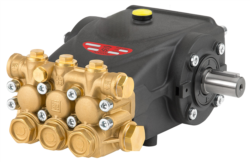
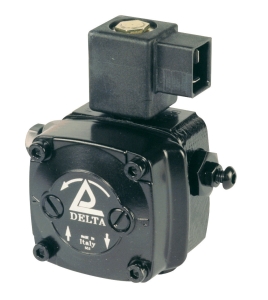
Pumps & Compressors operate along a fundamental trade-off curve. You cannot maximize both flow and pressure simultaneously within a given power budget. A 5.51 kW motor driving the Interpump PUMP VHT4721 SX delivers 21 L/min at 140 bar—excellent for high-pressure injection or cleaning applications. By contrast, the Delta Pump VM1 LL 2.4 moves 35 L/min at only 20 bar, ideal for low-pressure circulation systems.
Understanding this relationship prevents costly over-specification and helps you right-size equipment for actual duty. In Southeast Asia's humid, high-temperature environments, oversized equipment also increases heat generation and cooling costs—a hidden expense many plant managers discover too late.
Four Application Profiles: Matching Pump Types to Real Workloads
High-Pressure, Low-Flow Applications
Injection molding, water jetting, and precision hydraulic clamping demand sustained pressure with modest flow requirements. The Interpump PUMP E3B1911 R W/VALVE R exemplifies this category: 11 L/min at 190 bar with integrated valve functionality. At 5.4 hp, it delivers concentrated energy into confined processes.
Plant Manager Decision Point: This profile suits operations running 6–8 hour shifts where peak demand occurs during cycle peaks, not continuously. Intermittent operation reduces thermal load and extends seal life in tropical climates. Cost-per-cycle remains competitive despite higher pressure losses.
Medium-Flow, Medium-Pressure Balanced Systems
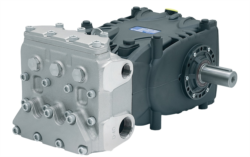
General hydraulic circuits, textile machinery, and food processing equipment operate in the 100–210 bar range with moderate flow demands. The Pratissoli KF30 sits at the center: 106 L/min at 200 bar using 40 kW power. Italian engineering by Interpump Group ensures reliable performance across variable humidity and temperature swings common in Southeast Asia.
Plant Manager Decision Point: This category offers the best uptime-to-cost ratio for continuous 16–24 hour operations. The KF30's 40 kW motor balances energy consumption against productive output—neither undersized (causing stress) nor oversized (wasting electricity). With 3G Electric's 35+ years supporting regional plants, we've seen these mid-range pumps outlast their predicted lifespan by 40% when properly maintained.
High-Flow, Low-Pressure Circulation
Cooling loops, lubrication distribution, and condensate handling operate below 30 bar with volume emphasis. The Delta Pump VM1 LL 2.4 moves 35 L/min at 20±0.3 bar, reaching 3500 rpm for high-speed circulation without heat penalty.
Plant Manager Decision Point: Low-pressure systems cost significantly less to repair when cavitation or seal failures occur—a practical advantage in regions where spare parts availability varies. At 3500 rpm, this pump suits variable-frequency drive (VFD) integration for energy savings during light-load periods.
High-Flow, High-Pressure Heavy Duty
For operations demanding both volume and sustained pressure—marine equipment, large industrial presses, or combined hydraulic-pneumatic systems—the Pratissoli MW40 delivers: 211 L/min at 210 bar with 85 kW power. This 264 kg unit represents maximum capability before moving to cascade or multi-pump configurations.
Plant Manager Decision Point: Deploy this class only when duty cycles genuinely require it. The MW40 consumes 85 kW continuously; running it underloaded (e.g., 50% flow demand) wastes ~60% of input energy. Confirm your application needs both 211 L/min and 210 bar before committing. In Southeast Asian facilities operating 24/7, this decision directly affects monthly electricity invoices by $3,000–$8,000.
Practical Sizing Methodology for Plant Managers
Avoid the common trap: specifying pumps based on "maximum possible requirement" rather than typical duty. Here's a three-step approach used by successful Southeast Asian operations:
Step 1: Document Actual Demand, Not Theoretical Maximum
Run your system for one complete production cycle (or 24-hour period) while logging pressure and flow. Most plants discover their average demand is 40–60% of peak. Example: a hydraulic press may reach 200 bar during clamping but spends 70% of cycle at 80 bar circulation.
Step 2: Add Safety Margin Conservatively
Add 15% to documented average demand (not 50% like some vendors recommend). For the press example: if actual average is 90 L/min at 120 bar, specify 104 L/min at 138 bar capacity. This cushion prevents cavitation during transients without oversizing the motor.
The Pratissoli KF30 at 106 L/min, 200 bar becomes your candidate—slightly above requirement but efficient at your true load.
Step 3: Match Thermal Capacity to Climate
Southeast Asia's 28–35°C ambient temperature means heat rejection is harder than in temperate zones. Calculate expected heat generation:
Heat (kW) = (Pressure bar × Flow L/min) ÷ 600 × (1 − Efficiency %)
For the KF30: (200 × 106) ÷ 600 × 0.15 = 5.3 kW waste heat. Without adequate cooling, hydraulic fluid temperature rises 8–12°C above ambient within 4 hours. Fluid life drops 50% for each 10°C increase above 60°C operating temperature.
3G Electric's 35+ years supporting Southeast Asian plants shows oversized pumps generating excessive heat is the #1 cause of premature seal and bearing failure in this region.
Selecting Between Product Families: Interpump E-Series vs. Pratissoli Mid-Range
| Factor | Interpump VHT/E-Series | Pratissoli KF/MW Series | Decision for Plant Managers |
|---|---|---|---|
| Pressure Range | 140–190 bar | 200–210 bar | High-pressure work → Pratissoli; precision work → Interpump |
| Flow Range | 11–21 L/min | 106–211 L/min | Large-volume systems → Pratissoli; injection/clamping → Interpump |
| Power per Unit | 5.4–5.51 kW | 40–85 kW | Compact spaces or multiple units → Interpump; single-point delivery → Pratissoli |
| Thermal Management | Lower absolute heat | Higher absolute heat (85 kW MW40) | Tropical climate baseline: assume +15% cooling load for Pratissoli |
| Seal Life (Southeast Asia) | 18–24 months typical | 24–36 months typical | Pratissoli justifies higher capex through longer intervals |
| Spare Parts Availability | 2–3 week lead time via 3G Electric | 2–3 week lead time via 3G Electric | Equivalent; plan maintenance windows accordingly |
Plant Manager Action: If your facility operates 16+ hours daily in continuous duty, the Pratissoli mid-range (KF30) or high-capacity (MW40) delivers lower cost-per-operating-hour despite higher initial investment. For intermittent work (6–8 hour shifts), Interpump E-series precision models prove more cost-effective.
Avoiding Hidden Costs: Five Questions Before Purchasing
1. Does your application truly require 100% of rated pressure continuously? If not, specify lower pressure rating and save 20–35% on capex and energy.
2. What's your facility's cooling infrastructure? Southeast Asian plants often operate chillers 24/7. Undersized pumps reduce chiller load; larger coolers offset pump savings. Calculate total system cost, not pump price alone.
3. How does seasonal demand vary? Textile mills and food processing see 30–50% load swings between seasons. Right-size for average season, not peak season, then add VFD drives for peaks.
4. Are replacement seals/bearings stocked locally? Even minor maintenance delays become costly when parts require international shipping. 3G Electric maintains Southeast Asia inventory for common Interpump and Pratissoli models—confirm availability before committing to obscure variants.
5. What's your planned replacement cycle? If you replace pumps every 5 years, higher-efficiency Pratissoli units pay back through energy savings. If replacement happens every 2–3 years, durability matters less than initial cost.
Conclusion: Flow vs. Pressure Isn't a Dilemma, It's a Design Choice
Plant managers who succeed in Southeast Asia's competitive landscape stop viewing Pumps & Compressors as interchangeable commodities. Instead, they align pump selection to documented demand, climate constraints, and maintenance capacity.
The Interpump PUMP VHT4721 SX excels where precision and compactness matter. The Pratissoli KF30 shines in continuous, balanced duty. The Delta Pump VM1 LL 2.4 handles circulation efficiently. The Pratissoli MW40 delivers raw capacity when genuinely needed.
With 3G Electric's 35+ years as a trusted distributor across Southeast Asia, we've helped hundreds of plant managers avoid the $50,000+ cost of mid-cycle equipment replacement through better upfront specification. Use this flow-vs.-pressure framework in your next procurement decision, and you'll see measurable improvements in system reliability and operating cost within 12 months.