Understanding Industry Applications: Pressure Regulation vs. Fluid Delivery
Industrial professionals in Singapore face a fundamental decision when designing or upgrading process systems: should priority be given to pressure regulation and safety systems, or to fluid transfer and delivery capabilities? This question touches the core of industry applications across manufacturing, food processing, chemical handling, and precision coating operations. With over 35 years of experience in industrial equipment distribution, 3G Electric has observed that successful installations rarely rely on a single technology—instead, they integrate both components strategically based on operational priorities.
Pressure regulation systems manage gas distribution with safety-critical precision, while industrial pump systems handle fluid movement and pressure generation. Understanding the distinction between these technologies, and recognizing when each becomes essential, directly impacts equipment reliability, safety compliance, and operational efficiency. This comparison provides Singapore-based industrial professionals with practical frameworks for evaluating these complementary technologies.
Pressure Regulation Systems: Safety, Precision, and Gas Distribution
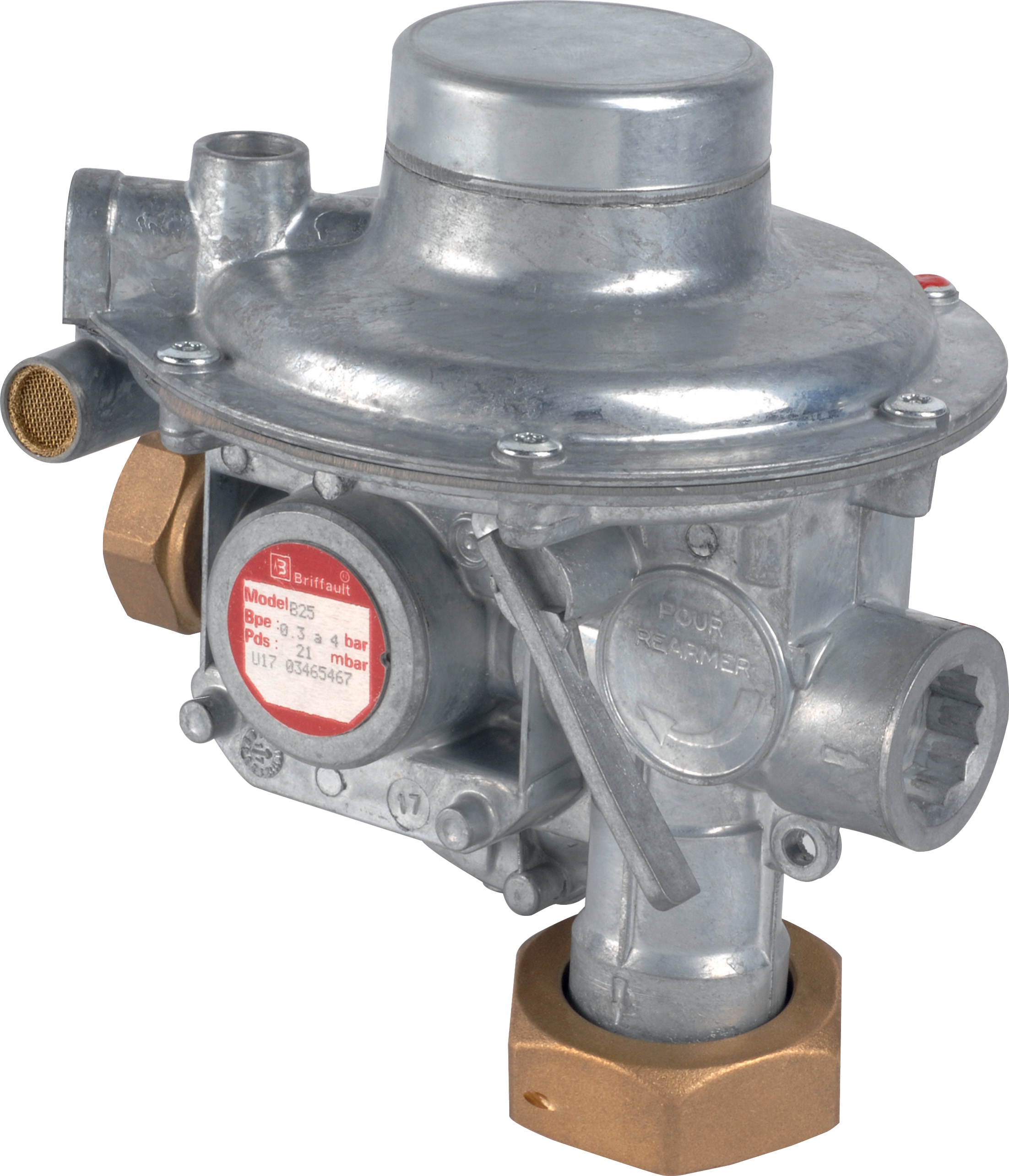
Pressure regulators represent the foundational safety and control layer in gas distribution networks. The Francel B25/37mb pressure regulator with integrated safety relief exemplifies modern pressure regulation technology designed for laboratory and industrial gas distribution systems. This unit delivers consistent 37 mbar outlet pressure with a 10 mm vent size, combining pressure control with built-in safety functions—a critical combination for Singapore's stringent industrial safety standards.
Key characteristics of pressure regulation systems:
- Consistency and control: Regulators maintain stable outlet pressure regardless of upstream fluctuations, essential for precision manufacturing and laboratory applications
- Integrated safety: Built-in relief valves protect downstream equipment and personnel from dangerous overpressure conditions
- Minimal maintenance: Gas regulation systems require far less preventive maintenance than mechanical pump systems
- Cost-effectiveness: Pressure regulators typically represent 15-20% of the cost of equivalent-capacity pump systems
- Wide application range: From laboratory gas mixtures to industrial processing, pressure regulators scale across operational contexts
For Singapore industries relying on compressed air, nitrogen, or other industrial gases—including precision manufacturing, medical device production, and semiconductor fabrication—pressure regulation systems form the essential control backbone. The 37 mbar outlet of the Francel unit suits applications requiring low-pressure distribution with reliable safety margins.
Industry applications favoring pressure regulation:
Laboratory gas distribution networks require precise, repeatable pressure control. Pharmaceutical manufacturing demands gas regulation for process consistency and regulatory compliance. Food processing operations use gas regulation for controlled atmosphere packaging and sterilization. Dental and medical facilities require certified pressure regulation for patient safety. Pneumatic automation systems depend on stable, regulated pressure for reliable actuation.
Industrial Pump Systems: Power, Flow, and High-Pressure Fluid Delivery
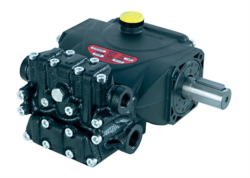
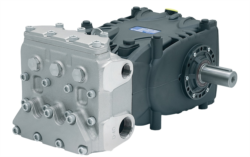
Where pressure regulators control and distribute existing gas supplies, industrial pump systems generate pressure and deliver fluids with sustained force. The Pratissoli KF30 pump delivers 106 L/min flow at 200 bar pressure with 40 kW power input—representing a fundamentally different operational paradigm. The Pratissoli MW40 escalates this capability to 211 L/min at 210 bar with 85 kW power, while the Interpump E1D1808 compact gear pump addresses applications requiring lower flow (8 L/min) at 180 bar in confined spaces.
Key characteristics of industrial pump systems:
- Pressure generation: Pumps create pressure internally rather than regulating pre-existing pressure
- Sustained flow delivery: Mechanical pumps deliver continuous, high-volume fluid transfer—critical for cooling, cleaning, and process circulation
- Scalability across power ranges: From 2.72 kW compact units to 85 kW high-capacity systems, pump selection adapts to specific flow demands
- Integration with spray systems: Euspray flat jet nozzles with 25° spray angle connect directly to pump discharge lines, enabling precision application of pressurized fluids
- Robust performance in demanding environments: Industrial pumps tolerate higher contamination, temperature variation, and continuous-duty cycles than pressure regulators
High-pressure cleaning operations—from manufacturing equipment washing to facility maintenance—rely on pump-based systems generating 150-250 bar pressures with sustained flow rates. Industrial coating and spray finishing require pump-driven delivery to nozzles, with the Euspray 25° flat jet enabling targeted pattern application across component surfaces. Hydraulic systems for machinery and automation depend entirely on pump-generated pressure for actuator control and force transmission. Cooling and circulation loops in manufacturing require consistent, high-volume flow delivery maintained by mechanical pumps. Food processing sanitation systems use pump-based pressure washers for rapid, thorough equipment cleaning compliant with hygiene standards.
Critical Comparison: Selection Framework for Singapore Manufacturing
Application-driven selection criteria:
Pressure regulation is optimal when:
- Upstream gas sources already exist (compressed air systems, cylinder supplies, pipeline networks)
- Application requirements focus on consistent outlet pressure and safety protection
- Maintenance resources are limited—regulators require minimal servicing
- Precision and repeatability are prioritized over raw power output
- Cost constraints favor lower-capital solutions
- Safety compliance demands integrated overpressure protection
- Fluid must be generated, transferred, or pressurized from a static state
- Application demands sustained, high-volume flow delivery (exceeding 100 L/min)
- Spray, coating, or cleaning operations require pressure generation at point-of-use
- Hydraulic or mechanical power transmission demands pressure-driven actuation
- Process requires mobility or portability—pump-based systems enable transportable pressure generation
- Existing infrastructure lacks sufficient gas supply or distribution capacity
Singapore's most successful industrial installations typically employ both technologies in complementary roles. A manufacturing facility might use the Pratissoli MW40 pump to generate high-pressure water or process fluid, with the Euspray flat jet nozzle delivering spray, while pressure regulation systems protect downstream equipment and maintain consistent supply pressures. A food processing facility uses pneumatic pressure regulators for controlled gas introduction while hydraulic pump systems power material handling and processing machinery.
The decision between regulation and pump systems reflects the fundamental question: Is the pressure already present (requiring regulation) or must it be generated (requiring pumps)? For most Singapore industrial operations, the answer involves both technologies deployed strategically across different process stages.
Operational and Maintenance Considerations
Pressure regulator maintenance requires periodic inspection of seals, filter cleaning (typically quarterly), and annual safety relief valve certification. Spare part inventory for regulators is minimal—primarily seal kits and diaphragm replacements. Downtime associated with regulator maintenance averages 2-4 hours annually per installation point.
Industrial pump maintenance involves more intensive preventive protocols: oil analysis every 500 operating hours, filter replacement every 250 hours, and bearing inspection annually. However, robust industrial pumps like the Pratissoli and Interpump systems operate reliably for 5,000-10,000 hours between major overhauls. Modern pump designs tolerate contamination better than earlier models, reducing maintenance frequency for well-filtered systems.
For Singapore operations, both systems benefit from documented maintenance protocols aligned with ISO 9001 or ISO 14644 requirements common in local manufacturing. 3G Electric's 35+ years of equipment distribution experience demonstrates that proactive maintenance of both pressure regulation and pump systems extends equipment life by 40-60% compared to reactive repair approaches.
Cost-Benefit Analysis for Singapore Market
Capital investment differences are substantial: the Francel B25/37mb pressure regulator represents a capital cost below SGD 800, while the Pratissoli MW40 pump system typically requires SGD 15,000-18,000 investment. However, the operational cost calculus includes:
- Energy consumption: Pump systems consume continuous electrical power (40-85 kW depending on model), while regulators consume minimal energy
- Process efficiency: Pump-based systems enable high-volume operations impossible with gas regulation alone
- Throughput capability: Facilities requiring sustained spray, cooling, or circulation must use pump systems despite higher energy costs
- Regulatory compliance: Safety-critical applications demand pressure regulation regardless of pump deployment
For Singapore facilities operating under tropical climate conditions with higher ambient temperatures, both pressure regulation (maintaining performance under thermal stress) and pump cooling management become more critical than in temperate regions.
Conclusion: Integrated Approach for Industry Applications
The most effective approach to industry applications in Singapore manufacturing recognizes that pressure regulation and industrial pump systems serve complementary functions within modern industrial ecosystems. Rather than viewing them as competing technologies, successful operations integrate both—using pressure regulators as control and safety systems while deploying industrial pumps for power-intensive fluid delivery and processing.
3G Electric's experience distributing these technologies across Singapore's diverse manufacturing sectors demonstrates that equipment selection should prioritize application requirements over brand preference or equipment category familiarity. A facility that exclusively focuses on pump capacity while neglecting pressure regulation may achieve process speed but sacrifice safety and consistency. Conversely, over-reliance on pressure regulation without adequate fluid delivery capability limits operational potential.
The framework presented here enables procurement teams to evaluate their specific requirements, assess capital and operating costs, and make informed decisions about pressure regulation, industrial pump, and integrated system investments. For Singapore's competitive manufacturing environment, this decision directly impacts equipment reliability, safety compliance, and operational profitability.