Understanding Industry Applications for Pressure Regulation and Fluid Delivery
Industry applications span diverse sectors—food processing, pharmaceutical manufacturing, chemical production, metalworking, and textile operations—each with distinct pressure, flow, and safety requirements. Pressure regulators and industrial pumps form the backbone of these systems, yet maintenance teams often struggle to select components that balance performance, safety compliance, and operational reliability.
At 3G Electric, we've spent over 35 years supporting global maintenance operations with equipment selection guidance. This article addresses a critical gap: how to evaluate pressure regulators and high-flow pump systems across different industrial contexts, and how component selection directly impacts your facility's uptime, safety records, and maintenance costs.
Pressure regulation isn't simply about reducing gas or fluid pressure from source to application—it's about maintaining precise outlet pressures under varying load conditions, preventing system failures, and ensuring worker safety. Similarly, pump selection requires understanding flow rates, pressure thresholds, power availability, and duty cycles specific to your operation. The convergence of these two subsystems determines whether your facility runs smoothly or faces unexpected shutdowns.
Pressure Regulation Systems: Applications Across Manufacturing and Laboratory Environments
Laboratory and Medical Gas Distribution
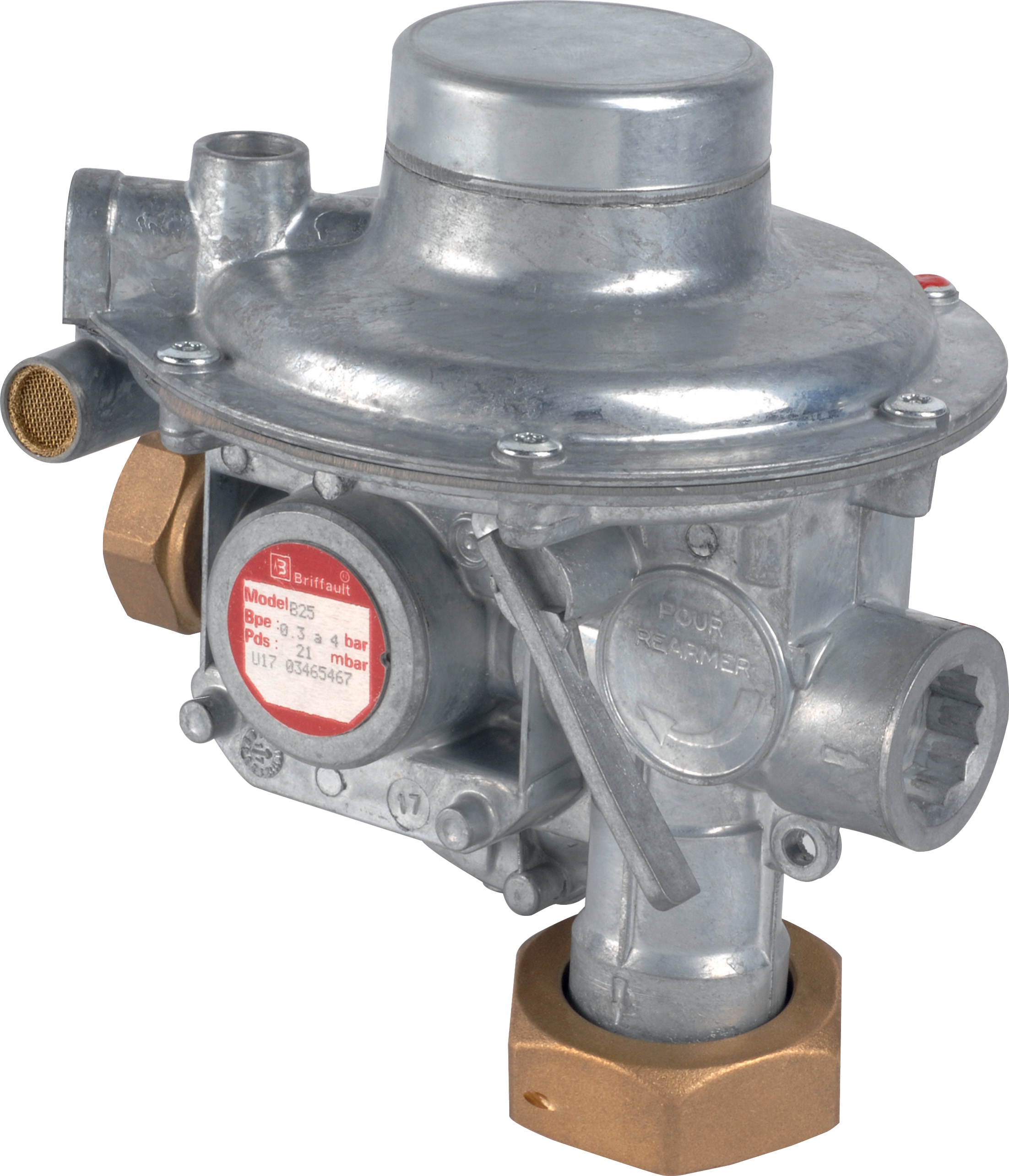
Laboratory environments—including medical gas systems, analytical instrumentation rooms, and research facilities—require exceptionally stable pressure regulation. The Francel B25/37mb pressure regulator with integrated safety relief delivers 37 mbar outlet pressure with a 10 mm vent size, making it suitable for gas distribution systems where precision is non-negotiable.
Why 37 mbar matters: In laboratory applications, this moderate outlet pressure supports analytical instruments, gas chromatography systems, and medical oxygen delivery without overshooting equipment specifications. The integrated safety relief prevents backpressure damage—a critical failure mode in sensitive instrumentation. The 10 mm vent size ensures atmospheric venting capacity matches typical lab-scale consumption rates.
Maintenance implications: Inspect the vent pathway quarterly to prevent blockages from dust or corrosion. If your facility's outlet pressure drifts above or below 37 mbar, the regulator diaphragm likely requires replacement rather than complete unit replacement, reducing downtime and spare parts inventory.
Industrial Gas Distribution and System Integration
Larger manufacturing facilities consuming compressed air, nitrogen, or specialty gases at higher volumes require different regulatory strategies. While laboratory regulators manage small flows, industrial gas systems demand regulators that maintain consistent outlet pressure across fluctuating demand scenarios.
The Francel B25/37mb's design philosophy—integrating safety relief into the regulator body—eliminates separate relief valve installation, reducing system complexity and potential leak points. In multi-stage gas distribution networks common in semiconductor fabrication, pharmaceutical clean rooms, or food processing plants, this integrated approach simplifies maintenance protocols and reduces troubleshooting complexity.
Practical application: If your facility operates multiple gas lines at different pressures (e.g., compressed air at 6 bar for pneumatic tools, nitrogen at 200 bar for chemical injection, oxygen at lower pressure for combustion support), using consistent regulator architectures simplifies technician training and spare parts management. Standardizing on integrated safety relief designs reduces the number of component variants your maintenance team must inventory and understand.
High-Flow Pump Selection: Matching Capacity to Industrial Duty Cycles
Compact Gear Pump Systems for Space-Constrained Operations
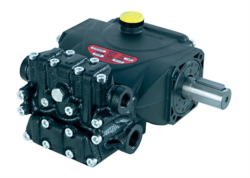
Not all industrial operations can accommodate large, externally-mounted pump systems. The Interpump E1D1808 compact gear pump delivers 8 L/min at 180 bar while operating at 2800 rpm with only 2.72 kW power input and weighs just 5 kg.
This compact footprint suits several practical applications:
- Machine tool lubrication systems: CNC machines, lathes, and milling equipment require consistent oil delivery to bearing surfaces. The E1D1808's modest flow rate matches typical spindle and linear guide requirements without oversizing the hydraulic circuit.
- Hydraulic brake and clutch actuation: Industrial machinery featuring brake engagement or multi-stage clutch systems benefits from the pump's compact mounting options and low vibration profile.
- Integrated manifold systems: When space limitations demand pump integration into central hydraulic blocks, the lightweight design reduces structural loading and simplifies installation.
Maintenance considerations: Compact gear pumps require cleaner fluid than larger displacement units. Implement ISO 16/14/11 or better filtration; otherwise, internal gear wear accelerates, reducing pump lifespan from 5,000 to 2,000 operating hours. Monitor inlet pressure—a restriction exceeding 0.3 bar indicates imminent filter blockage and requires immediate service.
Mid-Range Pumps for Sustained High-Pressure Operations
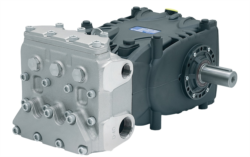
The Pratissoli KF30 industrial pump (106 L/min at 200 bar, 40 kW power) represents the next tier in pump capacity, bridging compact systems and heavy-duty applications. Its 72 kg weight allows floor or wall mounting without extensive structural reinforcement.
Industry applications for the KF30 include:
- Industrial cleaning systems: Pressure washers, surface preparation equipment, and tank cleaning operations consuming 80–120 L/min at sustained pressures.
- Fluid transfer in manufacturing: Moving hydraulic fluids, coolants, or process fluids between reservoirs, tanks, and processing equipment at controlled rates.
- Secondary injection and lubrication circuits: Facilities operating multiple pressure zones benefit from dedicated pumps for each circuit, preventing cascade failures.
The KF30's Italian engineering (built by Pratissoli, part of the Interpump Group) emphasizes component durability. Maintenance teams report typical service intervals of 8,000–12,000 operating hours before seal replacement becomes necessary—substantially longer than comparable Chinese-manufactured alternatives at similar price points.
Heavy-Duty Pumps for Continuous Industrial Operations
The Pratissoli MW40 high-performance pump (211 L/min at 210 bar, 85 kW power, 264 kg) addresses facilities requiring sustained, high-volume fluid delivery. Its doubled flow capacity compared to the KF30 suits:
- Industrial spray systems: Large-scale coating, painting, or chemical application operations requiring consistent fluid pressure across multiple spray nozzles.
- Hydraulic press and forming equipment: Metal stamping, composite molding, and industrial fabrication equipment drawing 150–200 L/min under pressure.
- Multi-station test and commissioning systems: Manufacturing facilities validating products under pressure conditions benefit from reliable, oversized capacity to avoid throttling losses.
The MW40's weight (264 kg) necessitates dedicated mounting infrastructure; however, this substantive construction translates to lower vibration, reduced noise, and extended operational lifespan compared to lightweight alternatives. In 24/7 continuous operations, the cost difference between a 5,000-hour-lifespan pump and a 12,000-hour-lifespan system quickly justifies premium component selection.
Integrating Spray Nozzles and Delivery Systems
High-pressure pumps deliver fluid only as effectively as the downstream nozzle system allows. The Euspray flat jet nozzle with 1/4" M BSPT connection and 25° spray angle (index 30) provides targeted spray patterns suited to industrial cleaning, chemical application, and coating operations.
Practical integration points:
Spray pattern selection: The 25° angle balances coverage width with impact force. Narrower angles (15°) concentrate energy for surface erosion or tough soil removal; wider angles (40°+) reduce surface impact for delicate component cleaning. Maintenance teams should specify angle based on material compatibility and contamination type rather than defaulting to manufacturer recommendations.
Connection standardization: The 1/4" M BSPT connection suits most industrial quick-disconnect couplers and hose fittings. When upgrading nozzles in existing systems, verify thread compatibility before ordering—common mistakes include confusing BSPT (tapered pipe thread) with BSPP (parallel), which leak if forced together.
Index 30 design: This spacing standard allows rapid nozzle swaps in multi-nozzle headers without system depressurization, reducing changeover time during production transitions or maintenance cycles.
Practical Maintenance Workflows for Multi-Component Systems
Installation and Commissioning
When integrating pressure regulators, pumps, and spray nozzles into existing or new systems, follow this sequence:
1. Pressure regulator installation: Position after pump discharge and before any downstream branching. Install a gauge port downstream of the regulator to verify outlet pressure under full-load conditions.
2. Pump startup protocol: Run the pump at half-speed (via VFD if available) for 15 minutes, allowing fluid circulation through the regulator. This breaks in seals and flushes air pockets without shock-loading the system.
3. Spray nozzle integration: Connect last, after regulator and pump operate stably together. Verify outlet pressure matches nozzle design specifications (typically 100–250 bar for industrial nozzles).
Preventive Maintenance Intervals
- Weekly: Check pump inlet strainer for blockage; monitor regulator vent line for condensation or debris.
- Monthly: Log outlet pressure at full-flow conditions; compare to baseline. Pressure drift exceeding ±2% indicates diaphragm wear.
- Quarterly: Drain and replace regulator vent filter; inspect nozzle tip for erosion or clogging.
- Annually: Replace pump intake filter; perform complete system flush if fluid color darkens (indicating internal corrosion or seal degradation).
Sector-Specific Implementation Examples
Food Processing Facilities
Food-grade applications demand FDA-compliant materials and frequent cleaning protocols. A Pratissoli KF30 pump with Euspray nozzles delivers consistent spray patterns during equipment sanitation cycles. The regulator maintains 150 bar process pressure while supporting 20 L/min cleaning water flow. Maintenance teams rotate nozzle angles seasonally based on season-specific soil types (e.g., wider angles for winter grease, narrower for summer organic residues).
Metalworking and Machining
High-speed CNC centers and transfer lines require stable coolant delivery at 180–200 bar. The Interpump E1D1808 gear pump, sized for individual machine tool circuits, prevents cross-contamination between stations. Each machine maintains independent pressure regulation via Francel regulators, allowing operators to adjust cutting fluid intensity without affecting neighboring equipment.
Chemical and Pharmaceutical Manufacturing
Precision fluid metering in chemical synthesis demands both high-pressure capability and regulatory compliance. The Pratissoli MW40, paired with pressure regulators at critical process points, supports multi-stage chemical injection at controlled rates. The Euspray nozzle system enables rapid recipe changes—each spray pattern corresponds to a specific chemical formulation without requiring complete system teardown.
Troubleshooting Common Integration Issues
Pressure instability: Fluctuating outlet pressure often indicates worn regulator diaphragm or contaminated pilot orifice, not pump malfunction. Isolate the regulator and apply stable inlet pressure; if outlet pressure stabilizes, the pump inlet strainer requires cleaning.
Reduced spray coverage: Nozzle wear occurs gradually; maintenance teams typically replace nozzles only after output drops visibly. Preventive nozzle replacement every 6–12 months (depending on spray hours) maintains consistent application quality and prevents late-stage nozzle disintegration, which contaminates downstream systems.
Pump cavitation noise: Air entrainment, not mechanical failure, causes cavitation. Check inlet strainer, verify tank fluid level, and inspect inlet hose for leaks. In multi-pump systems, ensure dedicated inlet lines prevent mutual pressure interference.
Long-Term Partnership with 3G Electric
Selecting pressure regulators and industrial pumps requires technical depth, field experience, and equipment familiarity. 3G Electric's 35+ years as a global industrial equipment distributor reflect our commitment to supporting maintenance teams with not just products, but reliable application guidance. Our distributor partnerships ensure you access Francel, Pratissoli, Interpump, and Euspray components backed by technical support and competitive lead times across all global markets.
When standardizing on component families—whether regulators, pumps, or nozzle systems—work with suppliers who understand your facility's duty cycles and can provide lifecycle support beyond initial installation.