Understanding Positive Displacement Pumps in HVAC Applications
Positive displacement pumps form the backbone of modern HVAC systems, delivering consistent fluid flow for heating, cooling, and pressure regulation. Unlike centrifugal pumps, these units trap a fixed volume of fluid and force it through the discharge port, making them ideal for high-pressure applications common in Singapore's industrial sector.
With over 35 years of experience as an industrial equipment distributor, 3G Electric has served HVAC contractors across Southeast Asia, helping them understand that maintenance & service excellence begins with comprehending pump fundamentals. Positive displacement designs—whether gear, vane, or piston-based—require different care strategies than their centrifugal counterparts. The tropical climate in Singapore, characterized by high humidity, temperature fluctuations, and potential for contamination, demands rigorous maintenance & service protocols to prevent premature failure.
Contractors who implement preventive maintenance & service routines on positive displacement pumps typically achieve 40-60% longer equipment lifespan and reduce emergency repair costs by up to 35%. Understanding your pump's operational characteristics—flow rate, pressure rating, power consumption, and materials of construction—is the foundation for effective maintenance & service planning.
Pre-Installation and Baseline Assessment
Maintenance & service success begins before your pump operates. Before installing a positive displacement pump, establish a detailed baseline assessment that documents initial conditions and performance metrics.
Documentation and Records
Create a maintenance & service logbook for each pump installation. Record:
- Pump model, serial number, and installation date
- Operating pressure and flow rate specifications
- Fluid type, viscosity grade, and supplier information
- Ambient temperature and humidity conditions during installation
- Initial vibration and noise baseline measurements
- Suction and discharge pressure readings under no-load conditions
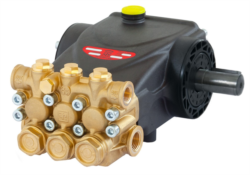
When deploying industrial-grade pumps like the Interpump PUMP E2C2111 L, which delivers 11 L/min at 210 bar, document its 1750 rpm baseline and establish alarm thresholds at 80% of maximum specification. This baseline becomes your reference point for identifying performance degradation during routine maintenance & service inspections.
Fluid Analysis Protocol
Positive displacement pumps are exquisitely sensitive to fluid contamination. Before operation, conduct ISO 4406 particle counting on your working fluid. In Singapore's humid environment, water ingress is a significant risk. Test fluid samples for:
- Water content (Karl Fischer titration)
- Particle size distribution (ISO 4406 codes)
- Viscosity index and actual operating viscosity
- Acid number and oxidation stability
Establish acceptance criteria: maximum ISO 17/15/12 particle count and water content below 200 ppm. These baseline measurements guide future maintenance & service intervals and alert you to system degradation before it causes pump damage.
Routine Maintenance & Service Procedures
Systematic maintenance & service prevents the majority of pump failures. Singapore's hot, humid climate accelerates fluid degradation, requiring more frequent attention than temperate regions.
Monthly Inspection Protocol
During the first month of operation and monthly thereafter, perform visual and auditory inspections:
- Vibration monitoring: Measure pump housing vibration at suction and discharge ports using a portable vibration meter. Document readings. Increasing vibration (>20% rise over baseline) indicates potential bearing wear, cavitation, or impeller damage.
- Temperature sensing: Using an infrared thermometer, record case temperature at pump body, suction line, and discharge line. Operating temperature should remain within 10°C of baseline. Elevated suction line temperature suggests cavitation; elevated discharge temperature indicates excessive internal leakage or wrong fluid viscosity.
- Acoustic analysis: Listen for changes in pump noise. Positive displacement pumps produce characteristic humming at operational frequency. New grinding sounds, metallic clinking, or irregular pulsations warrant immediate investigation.
- Seal condition: Inspect pump seals and case drains for weeping or active leakage. Minor seeping is acceptable; steady dripping requires seal replacement during the next maintenance & service window.
- Fluid appearance: Extract a small sample from the reservoir or circuit. Fresh fluid appears translucent amber; darkening indicates thermal stress or oxidation. Cloudiness suggests water ingress.
Every three months, execute deeper maintenance & service work:
- Fluid sampling and analysis: Send a 500 mL sample to an ISO-accredited laboratory for particle counting, viscosity verification, water content analysis, and acid number testing. Track trends across quarters. A rising particle count indicates wear; increasing water content suggests seal or breather problems.
- Filter inspection and replacement: Remove and inspect all circuit filters. In Singapore's dusty environment, high-pressure and return filters may require replacement every 2-3 months depending on application intensity. Replace when differential pressure reaches 60% of the specified maximum or at three-month intervals, whichever occurs first.
- Suction strainer cleaning: Clean or replace suction line strainers. Pressure drop across the suction strainer should remain below 0.3 bar. Higher pressure drop reduces pump inlet flow and increases cavitation risk.
- Hose and connection verification: Inspect all hydraulic hoses for abrasion, kinking, bulging, or weeping. Tighten all connections using a torque wrench. Over-tightening damages fittings; under-tightening causes leakage and air ingress. Consult the pump manual for correct torque specifications.
Twice yearly, perform comprehensive maintenance & service procedures:
- Pressure relief valve testing: Using a calibrated pressure gauge and bypass valve test kit, verify that pressure relief valves open at their rated setpoint ±3%. Dirty or sticking relief valves allow overpressure conditions that damage pump internals. If relief valve cracking pressure exceeds specifications, remove, clean, and re-test before reinstalling.
- Case drain line inspection: Verify case drain lines are clear and unobstructed. A blocked case drain causes internal pressure buildup, leading to seal failure and external leakage. Backflush case drain lines using low-pressure air (2-3 bar) to remove any blockages.
- Cooler performance assessment: If your HVAC system uses a fluid cooler, verify its effectiveness. Measure fluid inlet and outlet temperatures under normal operating conditions. If temperature differential is less than expected, the cooler may be fouled. Clean cooler fins using compressed air and a soft brush.
- Pump coupling inspection: For pump assemblies with flexible couplings, inspect coupling condition, alignment, and any visible wear. Misaligned couplings accelerate bearing wear and increase vibration. Use dial indicators to verify alignment within 0.05 mm radial and 0.5° angular tolerance.
Application-Specific Maintenance & Service for High-Pressure Systems
When deploying high-performance pumps like the Interpump PUMP SSU2040 R ATEX, which delivers 40 L/min at 200 bar with 15.29 kW power consumption, maintenance & service protocols must account for extreme operating conditions.
High-Pressure System Considerations
High-pressure positive displacement pumps in HVAC applications experience elevated mechanical and thermal stresses. Maintenance & service intervals must be more aggressive:
- Reduce fluid sampling intervals to monthly instead of quarterly for systems operating above 150 bar continuously
- Increase filter replacement frequency to monthly or every 250 operating hours, whichever is shorter
- Monitor pressure fluctuations more closely; erratic pressure spikes indicate impending component failure
- Implement thermal imaging quarterly to identify localized heat generation indicating internal wear or friction
- Inspect seals every six weeks on high-pressure systems; seal degradation accelerates under sustained elevated pressure
For ATEX-rated pumps like the Interpump PUMP W2035 L ATEX operating in hazardous environments, maintenance & service must additionally ensure:
- All electrical connections remain tight and corrosion-free
- Enclosure gaskets and seals are intact and properly seated
- No modifications have been made to the pump's electrical rating or configuration
- Temperature monitoring prevents exceeding ATEX temperature class limits
Singapore's tropical monsoon climate creates unique maintenance & service challenges:
- During heavy monsoon periods (Nov-Jan, Jun-Sep), increase filter replacement frequency by 50%; atmospheric moisture and dust contamination surge during high-humidity conditions
- Implement desiccant breathers on all reservoirs to prevent moisture ingress through breathing cycles
- Enhanced corrosion protection: Apply protective coating to all ferrous components; salt-laden air accelerates corrosion, particularly affecting pump casings and external hydraulic lines
- Fluid oxidation acceleration: Replace working fluid every 18-24 months in Singapore, compared to 24-36 months in temperate climates; tropical heat accelerates fluid degradation
Troubleshooting Common Issues and When to Seek Component Replacement
Recognizing warning signs during maintenance & service inspections prevents catastrophic failures. Here are common issues and diagnostic approaches:
Reduced Flow Output
If your pump produces less than rated flow despite normal pressure:
- Check fluid viscosity: Verify actual fluid viscosity matches pump specifications. Overly thick fluid (high viscosity) at startup reduces flow and increases power consumption. Allow warm-up period of 15-20 minutes before assessing flow.
- Inspect suction conditions: Verify suction line diameter, length, and condition. Suction line pressure drop above 0.3 bar starves the pump of inlet flow, reducing outlet volume. Clean suction strainers; replace if differential pressure approaches 60% of maximum.
- Evaluate internal leakage: Measure case drain flow rate. Excessive case drain flow (>10% of main outlet flow) indicates internal wear, requiring component overhaul or pump replacement.
- Examine relief valve: A leaking main relief valve bleeds pressurized flow back to tank, reducing net delivery. Test relief valve setpoint; if below specification, clean or replace.
Increasing pump noise during maintenance & service inspections warrants investigation:
- Cavitation signature: Cavitation produces a distinctive crackling, grinding sound, often accompanied by pulsating flow. Check suction line pressure; it should remain above -0.3 bar absolute. If suction pressure drops below -0.5 bar, cavitation is occurring. Increase suction line diameter, shorten suction line length, or install a suction booster pump to resolve cavitation.
- Bearing wear: Progressive metallic grinding indicates bearing degradation. Measure vibration frequency; bearing failure typically appears as broadband noise and elevated vibration at 1x, 2x, and 3x pump running speed.
- Worn internal components: Slapping or clunking sounds suggest loose internal parts, typically indicating significant wear requiring immediate pump replacement. Do not continue operating.
During maintenance & service inspections, external leakage indicates seal compromise:
- Weeping from case drain: Minor case drain leakage is acceptable; steady dripping requires case seal replacement. If case drain flow is excessively high (>15% of outlet flow) even with low leakage, internal wear is significant and component overhaul should be planned.
- Suction line leakage: Any leakage on the suction side is critical; air ingress causes cavitation and rapid component deterioration. Tighten all suction-side connections immediately and inspect for cracks.
- Main seal failure: If the main shaft seal leaks pressurized fluid, operating the pump for extended periods risks catastrophic internal flooding. Plan immediate pump shutdown and replacement during the next maintenance & service window.
If pump temperature cannot be controlled during maintenance & service operations:
- Check cooler effectiveness: Verify cooler fan operation and fin cleanliness. Fouled coolers lose 40-60% effectiveness. Backflush cooler tubes and clean fins with compressed air.
- Reduce system pressure if possible: Confirm relief valve operates at design setpoint. Overpressure conditions generate excess heat. Every 10 bar above optimal operating pressure increases heat generation by approximately 5-8%.
- Verify fluid grade: Incorrect fluid viscosity (too high) dramatically increases internal friction and heat generation. Confirm working fluid matches pump specifications exactly.
- Assess system demand: Excessive duty cycle or undersized pump increases internal slippage and heat. Evaluate whether pump size is appropriate for application load.
Implementing a Systematic Maintenance & Service Schedule
Successful maintenance & service begins with realistic planning. For HVAC contractors managing multiple installations across Singapore, a tiered maintenance & service schedule maximizes efficiency:
Tier 1: Monthly Inspections (2-3 hours per pump)
- Visual inspection, vibration measurement, temperature recording, fluid sample collection
- Suitable for routine rounds; can be performed on-site by technicians
- Filter replacement, fluid analysis results review, relief valve testing, seal inspection
- Coordinate with planned maintenance windows; typically quarterly during scheduled downtime
- Case drain flushing, cooler performance assessment, coupling alignment verification, full system pressure test
- Schedule during low-demand seasons; involves temporary system shutdown
- Complete teardown inspection, component dimensional verification, seal and bearing assessment, full thermal imaging survey
- Typically performed on rotating basis; not all pumps require annual audit in first year
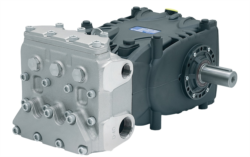
For installations using premium pumps like the Pratissoli KF30, which delivers 106 L/min at 200 bar with 40 kW power, implement Tier 3 and Tier 4 procedures more frequently given the high criticality and cost of unplanned downtime.
Document all maintenance & service activities in a centralized system. Track fluid analysis trends, filter change intervals, pressure test results, and seal condition notes. Over time, this data reveals patterns in component wear, allowing predictive maintenance & service planning that prevents failures before they occur.
Establish relationships with specialized service providers for major overhauls and component replacement. 3G Electric's 35+ years of experience in industrial equipment distribution means we maintain networks of qualified technicians and OEM-certified service centers throughout Singapore and Southeast Asia, ready to support your maintenance & service operations when specialized expertise is required.