Understanding Maintenance & Service Requirements for Combustion Equipment
Industrial combustion systems represent a critical asset class that demands precision maintenance and strategic component management. Whether operating oil burners, gas burners, or dual-fuel systems, the cost of unplanned downtime far exceeds the investment in systematic maintenance. Maintenance & Service protocols for combustion equipment differ fundamentally from general industrial equipment because they involve both mechanical reliability and precise atomization performance.
In Singapore's tropical environment with high humidity and salt-air exposure, combustion components face accelerated degradation. A burner nozzle that delivers optimal spray patterns in temperate climates may experience corrosion, clogging, or performance drift within months of operation in Singapore. This reality directly impacts your procurement strategy—component selection must account for environmental factors, not just nameplate specifications.
With over 35 years of experience distributing industrial equipment across Southeast Asia, 3G Electric has observed that procurement engineers who invest in understanding combustion system maintenance requirements achieve 30-40% longer component lifespan and reduce emergency service calls by half. This guide translates that operational knowledge into actionable procurement specifications.
Strategic Component Selection for Extended Service Life
Combustion system maintenance begins at procurement, not in the field. Your choice of nozzles, burner assemblies, and temperature sensors directly determines maintenance frequency and long-term costs.
Oil Nozzle Selection and Maintenance Implications
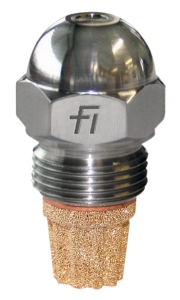
Oil atomization nozzles represent the most frequently replaced combustion component. The Jetoil 3.50 80° S full-cone nozzle delivers flow rates from 0.40 to 35.00 GPH with an 80° spray angle, making it suitable for industrial burner applications across various load ranges. However, procurement must recognize that nozzle selection directly impacts maintenance frequency.
When specifying oil nozzles for Singapore operations, consider:
- Material compatibility: Nozzles exposed to heavy fuel oil require more frequent inspection than those using light distillate. The Jetoil 3.50's construction must handle Singapore's humid environment without accelerated corrosion.
- Flow rate stability: A nozzle operating at 50% capacity experiences less wear than one operating at 90% capacity. Oversizing by 15-20% extends maintenance intervals.
- Spray pattern consistency: Degradation in spray angle indicates imminent failure. Monthly visual inspection identifies nozzle performance drift before it affects combustion efficiency.
For lighter-duty applications, CBM Fluidics 0.50 60° SF nozzle at 1.4 L/h provides precise atomization for burner systems requiring lower flow rates. This nozzle's smaller capacity means it tolerates contaminants better than higher-capacity alternatives, reducing filter maintenance frequency.
Burner Assembly Specification and Service Planning
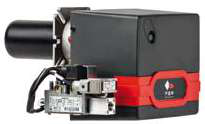
The FBR X GAS X0 CE TC complete gas burner assembly represents a fully integrated combustion unit delivering 11.6 kW to 34.3 kW with modulating capability. When procuring this equipment, establish maintenance intervals based on:
- Burner runtime hours: Most gas burners require inspection and cleaning every 2,000 operating hours, or annually for intermittent-duty systems.
- Fuel quality consistency: Gas supply variations (pressure, temperature, contaminants) affect electrode erosion rates and ignition reliability.
- Control system dependencies: Modulating burners rely on precise sensor feedback; thermal drift in control thermocouples creates combustion instability.
Procurement engineers should specify replacement electrode sets and gasket kits as consumables in the initial purchase order, rather than sourcing them reactively during downtime. This 35-year practice of equipment distributors in Southeast Asia consistently reduces emergency service labor costs by 25%.
Temperature Monitoring and Sensor Maintenance
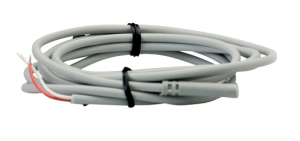
The Fantini Cosmi LS150 thermocouple J probe measures temperature from 0 to 450°C with ±2.5°C precision, offering stainless steel AISI 316 construction rated IP65. In combustion applications, sensor accuracy directly determines:
- Flame safety interlocks: A drifting thermocouple may prevent safe burner shutdown or allow unsafe startups.
- Combustion air supply: Temperature readings guide burner air volume adjustments; sensor error creates efficiency losses of 2-5%.
- Equipment protection: Overtemperature detection prevents costly heat exchanger damage.
Maintenance & Service specifications should mandate thermocouple recalibration annually (more frequently in corrosive environments). Procurement should budget for sensor replacement every 3-5 years, depending on ambient temperature exposure and chemical environment.
Preventive Maintenance Workflows and Documentation
Systematic maintenance prevents catastrophic failures and regulatory violations. Combustion systems in Singapore must comply with regulatory requirements for emissions monitoring, safety interlocks, and service records.
Monthly Inspection Procedures
Establish a standardized monthly checklist:
1. Visual nozzle inspection: Check for fuel leakage, carbon buildup, or spray pattern asymmetry. Remove nozzle and inspect internal orifice with magnification—contamination typically appears first in the nozzle.
2. Fuel system pressure verification: Measure pressure at burner inlet and compare to design specification. A 10% pressure drop indicates filter clogging; a 15-20% drop suggests fuel line restriction requiring investigation.
3. Electrode gap measurement: Gas burner electrodes should maintain 3-4 mm gap. Erosion or carbon buildup reduces ignition reliability; cleaning with soft brush restores function in many cases.
4. Control thermocouple continuity test: Use digital multimeter to verify sensor circuit continuity. Corrosion at connector terminals causes intermittent failures.
5. Flame quality observation: Document flame color (blue indicates complete combustion; yellow/orange indicates incomplete combustion or air starvation).
Quarterly Maintenance Tasks
- Fuel filter replacement: Schedule element changes every three months in Singapore's humid environment, or monthly if fuel supply shows water contamination.
- Air intake cleaning: Remove dust and debris from burner air box and intake louvers; tropical humidity promotes mold growth on filter media.
- Linkage and adjustment verification: Fuel valve linkage should move freely; verify modulating burner response at 25%, 50%, and 100% load.
- Combustion efficiency testing: Conduct flue gas analysis using calibrated analyzer; efficiency should meet design specification ±2%. Declining efficiency indicates combustion air shortage or fuel atomization degradation.
- Complete burner disassembly and cleaning: Remove burner from equipment; disassemble electrodes, nozzle, and fuel train components.
- Nozzle replacement: Rather than attempting internal nozzle cleaning (which damages precision internals), replace with new assembly. The cost of replacement (typically $200-400 per nozzle) represents less than 20% of labor to troubleshoot combustion problems.
- Fuel train component inspection: Check fuel control valve, damper, and linkage for wear or carbon deposits requiring cleaning.
- Thermal sensor replacement: Even if functioning, replace thermocouples every 3-5 years to maintain accuracy and prevent field failures.
- Gasket and seal replacement: All removable components should receive new gaskets; avoid reusing seals that have experienced thermal cycling.
High-Pressure Cleaning Equipment and Maintenance Integration
Many Singapore industrial facilities integrate high-pressure spray and cleaning systems with combustion-based operations. The Pratissoli ZT12B0800606 high-pressure sewer cleaning hose system represents industrial hose assemblies with fittings for pressure applications up to design rating.
When operating combustion systems in environments with high-pressure cleaning equipment:
- Separation specifications: Ensure burner equipment is physically isolated from high-pressure wash areas; water spray contact damages electrical components and corrodes metal surfaces.
- Humidity management: Use desiccant breathers on fuel tanks and controller enclosures to prevent moisture absorption in tropical humidity.
- Air intake positioning: Direct burner air intake away from cleaning operations; aerosols and mist restrict combustion air supply.
Maintenance & Service coordination between combustion and cleaning equipment teams prevents cross-contamination and extends overall system reliability.
Creating a Sustainable Procurement and Maintenance Strategy
Industrial equipment distributors with 35+ years of Southeast Asia experience consistently recommend a three-tier procurement approach:
Tier 1: Critical Replacement Components
- Nozzles (3-6 month supply on hand)
- Thermocouple assemblies (2-3 units per burner)
- Gasket and seal kits
- Fuel filters
- Annual burner inspection and cleaning contracts
- Quarterly combustion efficiency testing
- Semi-annual sensor calibration services
- Maintain detailed maintenance log for each burner (runtime hours, component replacements, service observations)
- Archive calibration certificates for thermal sensors
- Document any performance anomalies and corrective actions
- Prepare regulatory compliance records for emissions monitoring and safety inspections
This integrated approach typically reduces total cost of ownership by 35-45% compared to reactive maintenance, while improving safety and regulatory compliance in Singapore's industrial environment.
Conclusion
Maintenance & Service excellence for combustion systems represents a strategic procurement function, not merely an operational support task. By understanding how component selection affects maintenance requirements, establishing preventive workflows, and maintaining detailed documentation, procurement engineers ensure reliable performance and cost-effective operations.
3G Electric's distribution network across Southeast Asia supports this commitment through reliable supply of quality components—from precision nozzles to integrated burner assemblies—backed by technical expertise developed over three decades of regional industrial equipment support.