Understanding Maintenance & Service Integration in Southeast Asian Industrial Operations
Maintenance & Service excellence in modern Southeast Asian plants goes beyond reactive repairs—it demands a systems-based approach that links combustion efficiency, thermal monitoring, and atomization performance. Plant managers face unique regional challenges: high humidity, temperature variability, and supply chain complexity that directly impact equipment longevity.
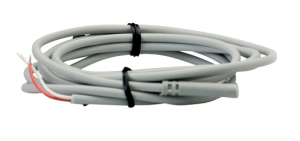
With over 35 years of experience distributing industrial equipment across Asia-Pacific, 3G Electric understands that preventive maintenance programs fail when components lack real-time feedback. The integration of precise thermal monitoring (like the Fantini Cosmi LS150 thermocouple probe), reliable combustion systems (such as the FBR X GAS X0 CE TC burner), and matched atomization nozzles creates a foundation for predictable equipment performance.
This article compares practical Maintenance & Service strategies across three critical subsystems: thermal monitoring, burner combustion reliability, and nozzle performance optimization. Your maintenance budget will be most effective when these three elements work in concert.
Thermal Monitoring and Temperature Control: The Foundation of Predictive Maintenance
Thermal monitoring represents the earliest warning system in any industrial heating or combustion process. Without accurate temperature feedback, plant managers operate blind—unable to detect drift, degradation, or impending failures until they become catastrophic.
The Fantini Cosmi LS150 probe delivers ±2.5°C precision across a 0–450°C range, with AISI 316 stainless steel construction rated for IP65 environments. For Southeast Asian plants, this specification matters because:
Corrosion Resistance in Humid Climates: Stainless steel construction resists salt spray and moisture infiltration common in coastal industrial zones across Malaysia, Singapore, Indonesia, and Thailand. Standard mild steel probes require replacement every 12–18 months; AISI 316 extends service intervals to 3+ years.
Precision Enables Early Detection: ±2.5°C accuracy allows you to catch thermal creep before it affects product quality or triggers shutdown sequences. A 5°C drift in a combustion process can reduce efficiency by 8–12%, silently increasing energy costs.
Integration with Control Systems: The LS150 probe connects to thermostats and hygrostats, feeding real-time data into building management systems (BMS) or dedicated process controllers. This enables automated alerts when temperatures deviate from setpoints, reducing response time from hours to minutes.
Maintenance Impact: With thermocouple readings logged continuously, your maintenance team can analyze thermal performance trends. If a burner's flame pattern shifts, temperature response slows, or consistency degrades, you'll detect it during routine data reviews—before component failure forces an emergency shutdown.
Combustion System Reliability: Gas Burner Selection and Maintenance Strategy
Gas burners represent one of the highest-maintenance components in industrial heating systems. A failed burner doesn't just stop production—it creates safety hazards, vents unburned fuel, and can damage downstream equipment.
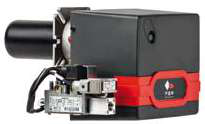
The FBR X GAS X0 CE TC + RAMPA CE D1/2"-S burner (metano variant) is engineered for modulating combustion applications, delivering 11.6–34.3 kW with a 90 mm nozzle. For Maintenance & Service planning, this equipment offers:
Modulating Combustion vs. On/Off Cycling: Modulating burners adjust flame intensity gradually in response to demand, reducing thermal stress on components. On/off burners create repeated heating-cooling cycles that accelerate seal degradation, gasket brittling, and ignition electrode fouling. Over a 5-year period, modulating systems experience 40–60% fewer ignition cycles, directly reducing maintenance labor.
Gas Train Integration: The FBR X GAS X0 includes an integrated gas train (pressure regulator, solenoid valve, flame detection electrode, and gas manifold assembly). This reduces external piping, eliminates leak points, and simplifies troubleshooting. A complete gas train unit requires single-point replacement if failure occurs; disassembled systems often experience cross-component failures (e.g., regulator failure leads to excessive pressure damaging solenoid coils).
Regional Maintenance Considerations for Southeast Asia:
- Fuel Quality Variability: Natural gas purity differs across regions. Burners with integrated filtration and regulator stages handle minor impurities better than single-stage designs. Plan quarterly regulator cleaning in high-humidity ports.
- Spare Parts Availability: Complete burner units from established manufacturers ensure spare gas trains, electrode assemblies, and gasket kits remain available. Single-source burners from small distributors create risk of obsolescence.
- Technician Certification: Gas burner service in Singapore, Malaysia, and Thailand requires certification. Standardized equipment (FBR, Riello, Baltur) have established training programs; proprietary systems require specialist on-call support at premium rates.
Nozzle Performance and Atomization Consistency: Spray Quality as a Service Indicator
Nozzles are the interface between fuel and flame. Degraded nozzle performance shows up as poor combustion efficiency, increased emissions, and uneven heat distribution before the system actually fails. This makes nozzles an excellent diagnostic tool for condition-based maintenance.
Comparing two options for your operation:
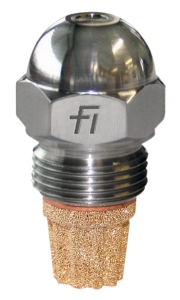
Jetoil 3.50 80° S Oil Nozzle is a full-cone design delivering 0.40–35.00 GPH at 80° spray angle, suitable for heavy fuel oil applications requiring wide coverage.
CBM Fluidics 0.50 60° SF Nozzle is a precision atomizer delivering 1.4 L/h (0.37 GPH) at 10 bar with 60° spray angle, optimized for lighter oils and exact atomization control.
When to Use Each for Maintenance Strategy:
The Jetoil 3.50 (0.40–35 GPH range) suits burners with varying load demands—common in Southeast Asian manufacturing where production shifts change heating loads significantly. The wide flow range means a single nozzle covers multiple operating points. Maintenance advantage: fewer nozzle variants to stock, simpler troubleshooting (if spray pattern degrades, it's likely internal wear rather than selection error).
The CBM Fluidics 0.50 (1.4 L/h fixed) serves high-precision applications where atomization consistency directly impacts product quality. Think precision furnaces, lab equipment, or specialty chemical heating. Maintenance advantage: tighter operating window means nozzle degradation is immediately visible (spray cone narrows or becomes asymmetric), triggering timely replacement before efficiency loss compounds.
Nozzle Maintenance Intervals in Southeast Asian Climate:
- Monthly Inspection: Visual check of external orifice for carbon buildup or fuel leakage.
- Quarterly Cleaning: Soak in appropriate solvent (diesel for Jetoil, light oil for CBM Fluidics). Never use compressed air on nozzle tips—risk of internal damage.
- Annual Replacement: Even well-maintained nozzles accumulate microscopic erosion. Budget nozzle replacement as a consumable, not a repair. A new nozzle ($80–200) prevents the $2,000+ cost of flame failure diagnostics and burner purging cycles.
- Climate Factor: Humidity and salt spray in coastal regions accelerate external corrosion of nozzle holders. Schedule protective coating reapplication every 18 months in high-corrosion zones (Singapore waterfront, coastal Thailand, Malaysian port areas).
Integrated Maintenance & Service Strategy: Linking Components into a Reliable System
The most effective Maintenance & Service programs treat thermal monitoring, burner combustion, and nozzle performance as interdependent. Here's how to build this integrated approach:
Step 1: Establish Baseline Performance Metrics
When equipment is new, document: burner flame pattern (color, shape, sound), gas pressure at burner inlet, nozzle spray angle and cone density, and thermal probe readings under full load. Store photos and readings in a maintenance management system (CMMS).
Step 2: Create a Monthly Visual + Data Inspection
Every month, your technician (or contracted service provider) should:
- Compare current thermal probe readings to baseline—flag any ±5°C drift.
- Inspect burner flame visually against stored reference photos—note color changes (yellow = incomplete combustion, blue = proper).
- Check nozzle spray pattern; any widening of cone angle indicates internal orifice wear.
- Log all readings in your CMMS with date, technician ID, and any observations.
If thermal readings show declining efficiency (same load, higher furnace temperature needed to achieve output), it often signals nozzle degradation before visual inspection reveals it. Replace nozzles proactively based on thermal trend data, not just failure.
Step 4: Schedule Maintenance Around Regional Climate Cycles
In Southeast Asia, the hot-wet season (May–October) increases humidity stress. Plan major preventive work (gas train servicing, electrode replacement, nozzle calibration) before this period. Schedule lighter inspections during dry season when corrosion risk is lower.
Step 5: Build Relationships with Local Suppliers
3G Electric's 35-year regional presence means we maintain stock of Fantini Cosmi probes, FBR burner components, and matched nozzles (Jetoil and CBM Fluidics options). When you need emergency replacement parts, waiting for shipment from Europe costs $5,000+ in lost production. Regional suppliers ship within 24–48 hours.
Maintenance Cost Optimization and ROI Calculation
Plant managers must justify Maintenance & Service investments to finance teams. Here's a realistic ROI model for Southeast Asian operations:
Scenario: 500 kW industrial furnace, current reactive maintenance approach
- Current cost: $8,000/year in emergency repairs + unplanned 2–3 shutdowns costing $15,000 each = $38,000–53,000 annual impact.
- Thermal monitoring system (probe + BMS integration): $2,500 upfront, $300/year.
- Monthly inspections (4 × $200): $800/year.
- Quarterly nozzle maintenance: $400/year.
- Annual burner gas train service: $600/year.
- Proactive nozzle replacement (every 18 months): $300/year.
- Total preventive cost: $4,600/year
ROI: By year 2, preventive program saves $35,000–40,000 annually. Over the 5-year equipment lifecycle, preventive maintenance delivers $150,000+ in avoided downtime costs—a 32:1 return on the initial $4,600 investment.
Regional Compliance and Safety Considerations
Southeast Asian industrial facilities must meet increasingly stringent emissions and safety standards. Singapore's NZEV regulations, Malaysia's environmental quality standards, and Thailand's industrial safety codes all affect burner and nozzle selection.
Modulating gas burners like the FBR X GAS X0 CE TC with precision nozzles (Jetoil or CBM Fluidics) operate at higher combustion efficiency, reducing:
- CO2 emissions by 10–15%
- Unburned hydrocarbon venting
- Soot and particulate generation
Thermal monitoring with certified probes (Fantini Cosmi LS150) provides audit trails proving compliance with temperature setpoints and operating protocols—essential during regulatory inspections.
Document all maintenance activities: service dates, technician certifications, parts replaced, and performance metrics. Auditors expect 12+ months of continuous maintenance records. Systems without documented monitoring are flagged as non-compliant, potentially triggering operational suspension.