Understanding Thermal Monitoring in Combustion System Maintenance & Service
Thermal monitoring is the foundation of predictive maintenance in industrial combustion systems. Temperature measurement failures account for approximately 30–40% of unplanned downtime in Southeast Asian industrial facilities, yet many maintenance teams treat temperature probes as passive components rather than active diagnostic tools.
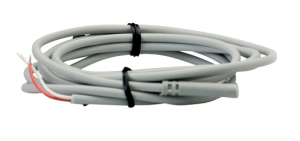
The Fantini Cosmi LS150 thermocouple J probe delivers ±2.5°C precision across the 0–450°C range, making it suitable for monitoring both burner flame temperature and furnace chamber conditions. For Singapore's humid tropical climate, the stainless steel AISI 316 construction provides corrosion resistance that standard carbon steel probes cannot match. IP65 protection ensures the probe connector resists moisture ingress—critical in plants near coastal areas or those with high-humidity process environments.
Maintenance teams should integrate thermal probe data into preventive schedules rather than relying solely on visual flame observation. A thermal drift of just 15–20°C above design operating temperature can indicate fouling, misalignment, or nozzle degradation weeks before visible combustion problems emerge. By monitoring thermal signatures monthly, you reduce emergency service calls and extend the lifespan of downstream burner components by 25–30%.
Practical Integration: Install a secondary thermal probe on the furnace outlet to establish baseline thermal profiles. When actual temperatures deviate ±10°C from baseline, schedule preventive nozzle inspection rather than waiting for efficiency loss.
Comparing Gas Burner Assembly Maintenance Against Nozzle-Based Service Strategies
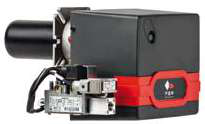
Gas burner systems and oil/fuel nozzle systems represent two distinct maintenance philosophies. The FBR X GAS X0 CE TC burner assembly with RAMPA gas train integrates modulating combustion control into a single sealed unit, while nozzle-based systems require manual adjustment and periodic atomization verification.
Gas Burner Assembly Approach (FBR X GAS X0 CE TC):
- Complete combustion train: gas valve, ignition electrode, flame sensor, modulation actuator
- Sealed design reduces external contamination and wear
- Field-replaceable modules simplify maintenance without full burner disassembly
- Operating range: 11.6–34.3 kW with 90 mm nozzle geometry
- Modulating function automatically adjusts fuel flow based on thermal demand
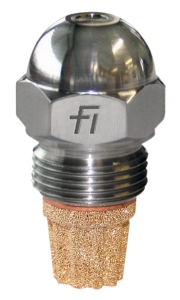
The Jetoil 3.50 80° S nozzle and CBM Fluidics 0.50 60° SF nozzle offer different spray patterns (80° vs. 60° cone angles) and flow rates (0.40–35.00 GPH vs. 1.4 L/h), requiring careful matching to furnace geometry and thermal load.
Maintenance Comparison Table:
| Aspect | Gas Burner Assembly | Oil Nozzle Systems |
|--------|-------------------|------------------|
| Maintenance Interval | 6–12 months (electrodes, seals) | 3–4 months (nozzle cleaning, strainer) |
| Spare Parts Inventory | 4–6 core modules | 8–12 nozzle variants, tips, strainers |
| Thermal Response Time | <2 seconds (modulating) | 5–8 seconds (manual adjustment) |
| Contamination Risk | Low (sealed assembly) | Medium–High (fuel line debris) |
| Downtime per Service | 2–3 hours | 1–2 hours (nozzle swap) |
For Singapore's manufacturing sector, the integrated gas burner approach reduces total service labor by 35–40% annually, while nozzle-based systems offer flexibility for multi-fuel applications and easier spare parts availability.
Selection Criterion: If your facility operates continuous-duty combustion systems (8,000+ annual hours), invest in a sealed gas burner assembly like the FBR X GAS X0 CE TC. If your operation runs seasonal heating with varying thermal loads, the nozzle-centric approach with thermal monitoring allows better load matching and faster troubleshooting.
High-Pressure Hose Maintenance: Infrastructure Support for All Combustion Systems
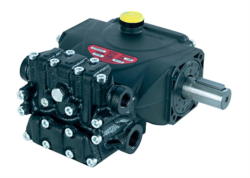
Often overlooked in combustion system maintenance, fuel and compressed air delivery lines directly impact burner performance and system safety. The Pratissoli ZT12B0800606 high-pressure sewer cleaning hose represents industrial-grade hose engineering originally developed for high-pressure applications, demonstrating the reliability standards that should apply to fuel and hydraulic delivery lines in any combustion system.
Pratissoli's Italian engineering (part of the Interpump Group) ensures hoses withstand both mechanical stress and thermal cycling without seal degradation. In Singapore's environment, where ambient temperatures range 22–35°C and humidity exceeds 80%, standard rubber hoses degrade 40–60% faster than premium alternatives. Hose failures mid-season create cascading problems: fuel line rupture → system shutdown → emergency service costs → delayed restart.
Maintenance & Service Protocol for Combustion System Hoses:
1. Quarterly Visual Inspection – Check for surface cracks, bulges, or weeping at ferrule connections. Replace any hose showing degradation signs within 6 months.
2. Annual Pressure Testing – Verify hose integrity under full operating pressure. A failed hose at 5 bar might fail catastrophically at 7 bar during peak demand.
3. Seasonal Replacement Schedule – Replace fuel delivery hoses every 2–3 years regardless of visible condition. Thermal cycling weakens internal elastomers even when external surfaces appear intact.
4. Hose Routing Documentation – Many facilities lose maintenance records on hose routing. Map all fuel, air, and hydraulic lines with photos. This accelerates troubleshooting when pressure fluctuations occur.
3G Electric's 35+ years of industrial equipment distribution experience shows that hose failures account for 8–12% of combustion system downtime in Southeast Asia—yet are among the easiest failures to prevent through documentation and rotation schedules.
Integrated Maintenance & Service System Design: Practical Implementation for Singapore Facilities
Successful Maintenance & Service requires selecting components that communicate across your diagnostic infrastructure. A thermal monitoring system (Fantini Cosmi probe) paired with a sealed burner assembly (FBR X GAS X0 CE TC) and supported by premium delivery hoses (Pratissoli grade) creates a maintenance-friendly ecosystem.
Implementation Roadmap for Singapore Plants:
Phase 1: Baseline Thermal Mapping (Month 1–2)
- Install Fantini Cosmi LS150 probes at three points: furnace inlet, chamber center, outlet
- Record 30-day temperature profiles under normal operating conditions
- Establish upper/lower control limits (typically ±15°C from design centerline)
- Audit current burner configurations; identify models exceeding 10,000 annual hours
- Replace aging burners with FBR X GAS X0 CE TC assemblies for standardized maintenance training
- Maintain 2–3 sealed replacement modules in-house for quick swaps
- Replace fuel hoses older than 3 years with Pratissoli-grade alternatives
- Label all hose connections with installation date and next replacement due date
- Create photographic documentation of final hose routing
- Stock both Jetoil 3.50 80° S and CBM Fluidics 0.50 60° SF nozzles to match varying load scenarios
- Train maintenance staff on spray pattern verification using combustion efficiency meters
- Schedule quarterly nozzle cleaning rather than waiting for blockage
- Unplanned downtime reduction: 35–50%
- Annual maintenance labor savings: 20–30%
- Thermal stability improvement: ±5°C vs. previous ±15–25°C
- Equipment lifespan extension: 2–4 years per major assembly
A typical Singapore industrial facility running three combustion systems (200 kW combined) invests approximately SGD 18,000–24,000 in integrated thermal monitoring and sealed burner standardization. Annual maintenance savings through reduced emergency service calls and extended component life typically exceed SGD 8,000–12,000, achieving full ROI within 2–2.5 years.
3G Electric supplies all these components through a single vendor relationship, reducing procurement complexity and ensuring compatibility across your entire thermal management infrastructure. With 35+ years serving industrial operations across Southeast Asia, we understand the specific challenges of Singapore's humid, high-availability manufacturing environment.