Maintenance & Service: Coordinating Thermal Monitoring with Combustion Nozzle Strategy
For plant managers across Singapore's industrial sector, Maintenance & Service effectiveness depends on understanding how thermal sensing, precise fuel atomization, and burner assembly performance interconnect. Over 35 years as an equipment distributor, 3G Electric has observed that facilities achieving the lowest maintenance costs and highest uptime share one trait: they treat temperature control and combustion optimization as integrated systems, not isolated components.
This article compares practical Maintenance & Service approaches using thermal probes, oil nozzles, and gas burner assemblies—equipment categories where specification mismatches drive costly failures, efficiency losses, and unplanned shutdowns.
Thermal Probe Selection: Temperature Range and Measurement Precision in Maintenance Planning
Why Thermal Monitoring Matters to Your Maintenance Schedule
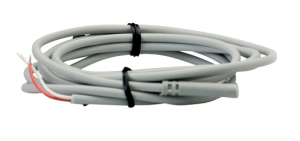
Temperature monitoring isn't merely a sensor function—it's the foundation of predictive Maintenance & Service. The Fantini Cosmi LS150 thermocouple J probe delivers 0–450°C measurement range with ±2.5°C precision, making it suitable for monitoring combustion chamber conditions, exhaust gas temperatures, and thermal process stability. For plant managers, this precision directly impacts two critical decisions:
1. Preventive Maintenance Timing
When a burner operates 15–25°C above design setpoint, component degradation accelerates. Seals fail sooner. Nozzles coke faster. Valve seats erode. A high-precision probe alerts your maintenance team before performance drops, allowing scheduled interventions instead of emergency repairs. In Singapore's humid, corrosion-prone environment, early detection of thermal drift prevents cascading failures.
2. Combustion Efficiency Validation
Fuel cost represents 40–60% of operating expense for industrial heating. If your burner's exit temperature drifts by just 10°C, you're either wasting fuel or risking incomplete combustion. The Fantini Cosmi LS150's stainless steel AISI 316 construction and IP65 rating withstand Singapore's coastal salt-air exposure while maintaining stable readings that justify nozzle replacement or air/fuel ratio adjustment.
Integration with Your Maintenance Plan
When specifying a thermal probe, align it with your burner's design temperature and your nozzle's atomization characteristics. Misalignment creates false alarms (unnecessary maintenance) or missed warnings (reactive breakdowns). For example:
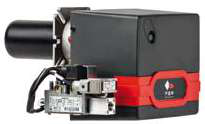
- Gas burner systems (like the FBR X GAS X0 CE TC + RAMPA CE burner) operate at controlled modulation. Your probe must track combustion stability across the entire modulation range, not just full fire.
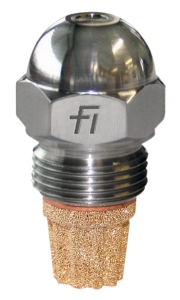
- Oil-fired systems using the Jetoil 3.50 80° S nozzle or CBM Fluidics 0.50 60° SF nozzle require temperature sensing in the fuel line and combustion chamber to detect nozzle clogging (which raises combustion temperature) versus poor atomization (which lowers flame temperature).
Oil Nozzle and Gas Burner Maintenance: Atomization Performance and Component Selection
Comparing Oil Nozzle Specifications for Your Maintenance Strategy
Two oil nozzles available through 3G Electric represent opposite ends of the industrial spectrum:
Jetoil 3.50 80° S: Full-cone delivery, 0.40–35.00 GPH flow range, 80° spray angle
- Maintenance implication: Extreme flow range means this nozzle adapts across multiple burner sizes and fuel types. However, wider spray angles consume more combustion air and are prone to wall wetting in smaller chambers. Maintenance teams should inspect for carbon buildup on chamber walls quarterly.
- Service interval: Nozzle strainer cleaning every 4–6 weeks; full nozzle replacement annually or after 2,000 operating hours—whichever occurs first.
- Maintenance implication: Narrower spray and fixed flow suit single-application systems where fuel type and pressure remain constant. Better combustion efficiency; less air requirement. Clogging occurs faster due to tighter internal passages.
- Service interval: Nozzle strainer cleaning every 2–3 weeks; replacement every 18 months or 1,500 operating hours. More frequent but simpler intervention.
Practical Maintenance Decision Framework
For plant managers deciding between these nozzles, ask:
1. How variable is your fuel supply or operating load? If you burn different fuel grades or modulate burner capacity significantly, the Jetoil's wide range reduces the need for multiple spare nozzles. If operation is consistent, the CBM's precision saves fuel cost (3–5% improvement typical) and reduces maintenance surprises.
2. What's your maintenance skill level? The CBM requires more disciplined strainer maintenance but is simpler to diagnose when problems arise. The Jetoil tolerates operator variation but demands more aggressive carbon cleaning.
3. What's the cost of an unplanned shutdown vs. preventive replacement? If downtime costs exceed SGD 5,000/hour, replace nozzles on schedule. If your facility can absorb an 8-hour unplanned maintenance window, monitor actual performance and extend intervals.
Gas Burner Assembly Integration: Maintenance Coordination with Thermal and Fuel Systems
Understanding the FBR X GAS Burner's Maintenance Profile
The FBR X GAS X0 CE TC + RAMPA CE D1/2"-S (metano) is a complete gas burner assembly delivering 11.6–34.3 kW with 90 mm nozzle and modulating combustion control. For Maintenance & Service planning, this unit's complexity demands structured oversight:
1. Modulation System Care
The "TC" (temperature control) and modulation components require:
- Monthly: Check pilot flame stability and electrode cleanliness. Soot accumulation reduces ignition reliability.
- Quarterly: Verify gas pressure at the inlet (should match design specification) and confirm modulation valve moves smoothly across full range (11.6–34.3 kW).
- Annually: Replace combustion air filter and inspect gas train seals for weeping (micro-leaks that escalate to equipment failure).
Your thermal probe monitors the burner's outlet. However, maintenance effectiveness depends on where you place the probe:
- Too close to the burner: Receives flame radiation noise; causes hunt (rapid on/off modulation) and false shutdowns.
- Too far downstream: Responds sluggishly to load changes; misses rapid combustion upsets.
- Recommended: 150–300 mm downstream, centered in the duct, shielded from direct radiation.
If your facility previously experienced erratic temperature or frequent burner shutdown, the problem often lies in probe placement, not the probe itself. 3G Electric's 35 years servicing Singapore facilities shows this is the #1 preventable Maintenance & Service issue.
3. Integration with Oil Nozzle Backup Systems
Many industrial plants run dual-fuel burners (gas primary, oil standby). The FBR X GAS burner's thermal monitoring must track both fuels' combustion signatures. When the facility switches to oil (the Jetoil or CBM nozzle), your thermal probe expectations change:
- Oil combustion is hotter and slower to respond than gas.
- The probe's ±2.5°C accuracy becomes critical for preventing over-temperature on oil fire.
This cross-fuel coordination must be documented in your Maintenance & Service manual and communicated to shift operators.
Maintenance & Service Cost Optimization: Component Lifespan vs. Operational Continuity
Total Cost of Ownership Framework
Plant managers must balance three competing pressures:
1. Component Cost: Nozzles range SGD 300–800 each; thermal probes SGD 250–500; gas burner assemblies SGD 3,000–8,000.
2. Maintenance Labor: Probe replacement takes 1–2 hours; nozzle cleaning/replacement, 2–4 hours; burner service, 8–16 hours (depending on accessibility).
3. Downtime Cost: A 2-hour nozzle replacement might cost SGD 800 in labor + parts but prevent a 12-hour emergency shutdown costing SGD 40,000–60,000.
Recommended Spare Parts Strategy
Based on 3G Electric's experience with Singapore industrial operations:
- Thermal probes: Stock 1 spare per burner. Failure rate ~0.5%/year; replacement cost is low; lead time is 2–3 weeks (order proactively).
- Oil nozzles: Stock 2 spares of your primary nozzle type plus 1 of the alternate type. Nozzle clogging is the #2 cause of unplanned combustion shutdown.
- Gas burner modules: Do not stock full assemblies (shelf life risk). Instead, maintain contracts with 3G Electric for emergency same-day delivery to Singapore locations within 15 km of the city center.
- Strainer elements and gaskets: Stock 10 of each per facility. These wear items prevent 60% of nozzle problems and cost minimal inventory dollars.
Preventive vs. Reactive Timeline
Preventive approach (recommended for continuous-duty facilities):
- Replace nozzles every 12–18 months regardless of condition.
- Inspect thermal probes every 6 months; replace if readings drift >2% from baseline.
- Annual gas burner inspection including valve seat cleaning and seal replacement.
- Estimated annual Maintenance & Service cost: 2.5–3.5% of equipment acquisition cost.
- Replace nozzles only after performance degradation (increased fuel consumption, flame instability).
- Monitor probe accuracy against a reference thermocouple; replace if variance exceeds tolerance.
- Repair gas burner components as failures occur.
- Estimated annual cost: 1.5–2% of acquisition cost + occasional unplanned downtime (SGD 2,000–15,000/incident).
For most Singapore plants operating 5,000+ hours annually, the preventive approach yields better total cost—but the math changes if your facility is seasonal or operates <2,000 hours/year.
Actionable Next Steps for Plant Managers
Immediate (This month):
1. Document your current thermal probe and nozzle specifications. Compare against the Fantini Cosmi LS150, Jetoil 3.50, CBM Fluidics 0.50, and FBR X GAS burner specs.
2. Review your last 12 months of combustion-related maintenance calls. Categorize: thermal sensing issues, nozzle clogging, burner modulation faults, unplanned shutdowns.
3. Contact 3G Electric to discuss your facility's specific duty cycle and obtain spare parts pricing for a 24-month supply.
Near-term (Next 3 months):
1. If your current thermal probe is >5 years old, schedule a replacement trial using the Fantini Cosmi LS150. Measure whether combustion temperature stability improves.
2. If nozzle cleaning occurs more than monthly, evaluate switching to the opposite nozzle type (Jetoil ↔ CBM) and measure fuel consumption impact.
3. Develop a documented Maintenance & Service schedule aligned with your equipment's thermal, fuel, and burner components working as an integrated system.
Strategic (6–12 months):
1. Establish a spare parts consignment agreement with 3G Electric to reduce lead time for critical components.
2. Train your maintenance team on probe placement, nozzle diagnosis, and gas burner modulation troubleshooting.
3. Implement thermal trending—log probe readings weekly—to build a baseline that predicts maintenance needs 4–6 weeks in advance.