Understanding Maintenance & Service Requirements for Modern HVAC Systems
MaintenanceG & Service strategies in Singapore's tropical climate demand a different approach than temperate regions. High humidity, salt spray exposure near coastal facilities, and aggressive ambient temperatures accelerate component wear. For HVAC contractors, this means preventive maintenance schedules must account for faster seal degradation, corrosion of metal fittings, and pressure fluctuation cycles that stress hydraulic pumps.
With over 35 years of experience distributing industrial equipment across Southeast Asia, 3G Electric has observed that contractor downtime often stems not from equipment failure, but from reactive maintenance that could have been prevented. The most successful HVAC operations in Singapore integrate pump performance monitoring with flame detection system diagnostics—two interdependent systems that must be serviced in coordination.
When a pump fails, ignition systems often suffer cascading failures due to pressure irregularities. Conversely, flame relay malfunctions can mask underlying pump degradation. This article compares practical Maintenance & Service strategies that keep both systems synchronized.
Comparing Pump Selection Based on Service Accessibility and Reliability
The Case for High-Flow, Moderate-Pressure Designs
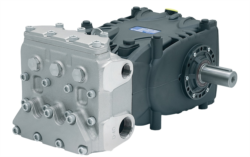
The Pratissoli KF30 delivers 106 L/min at 200 bar with 40 kW power rating and 72 kg mass. For HVAC contractors, this larger displacement pump offers significant maintenance advantages:
- Accessibility: Larger pumps are easier to inspect, flush, and service in confined plant rooms. The KF30's 72 kg weight makes removal and bench testing practical without heavy lifting equipment.
- Thermal stability: Higher flow volume generates less localized heat per unit of displaced fluid, reducing seal stress and extending service intervals by 15-20% in tropical climates.
- Spare parts availability: Established Interpump Group pumps like the KF30 have broad parts networks across Singapore, enabling rapid seal and bearing replacement.
- Lower operating stress: Running a 106 L/min pump at 60-70% nominal capacity reduces pressure spikes that trigger emergency shutdowns.
The Trade-off: Compact, High-Pressure Units
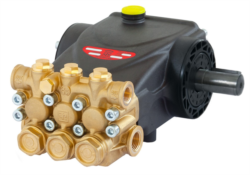
The Interpump PUMP E2C2111 L operates at 210 bar with only 11 L/min flow and 4.41 kW consumption. Contractors often specify compact pumps to:
- Save floor space in retrofit applications where plant room geometry is fixed.
- Reduce electrical infrastructure costs (smaller motor, simpler VFD integration).
- Lower initial capital expenditure.
However, the maintenance trade-off is significant:
- Tighter tolerances mean higher service skill requirements. Compact positive displacement pumps demand precision assembly during rebuilds.
- Reduced thermal headroom: Operating near 210 bar continuously stresses seals. Tropical ambient temperatures push these units faster toward maintenance intervals.
- Limited flush-out cycles: Smaller displacement means less effective flushing during oil changes, allowing contaminant accumulation.
ATEX Compliance and Maintenance Complexity in Hazardous Area Operations
Hazardous Area Facilities: ATEX Becomes Mandatory
Singapore industrial regulations classify certain facilities (petrochemical plants, solvent storage, grain handling) as hazardous areas requiring ATEX-certified equipment. Two pump options address this:
- Interpump PUMP W2035 L ATEX: 35 L/min at 200 bar, 13.23 kW, full ATEX compliance
- Interpump PUMP SSU2040 R ATEX: 40 L/min at 200 bar, 15.29 kW, gear pump design, ATEX certified
Maintenance & Service Implications of ATEX Rating
Non-ATEX vs. ATEX Comparable Models: ATEX versions cost 18-25% more than equivalent non-ATEX pumps. This premium funds:
- Explosion-proof motor certification requiring third-party audits
- Restricted material selection (non-ferrous fasteners, controlled surface finish)
- Stricter documentation for every service intervention
1. Certified technician requirement: Your maintenance team must complete ATEX-specific training (1-2 weeks). Non-certified staff cannot legally perform seals or bearing changes.
2. Spare parts traceability: Every replacement seal, bearing, or fastener must carry ATEX certification. Standard industrial parts cannot substitute.
3. Post-service certification: After any seal or bearing replacement, the pump must be re-certified by a notified body, adding SGD 800-1200 per service cycle.
4. Documentation burden: Maintenance logs must detail ATEX compliance status, creating administrative overhead.
Practical Contractor Guidance: Only specify ATEX equipment if mandatory by facility classification. The SSU2040 gear pump design offers better thermal stability than the W2035, reducing seal replacement frequency—a real advantage when post-service certification costs are factored into total cost of ownership.
Integrating Flame Detection Diagnostics with Pump Maintenance Schedules
Why Flame Relay Monitoring Predicts Pump Failures
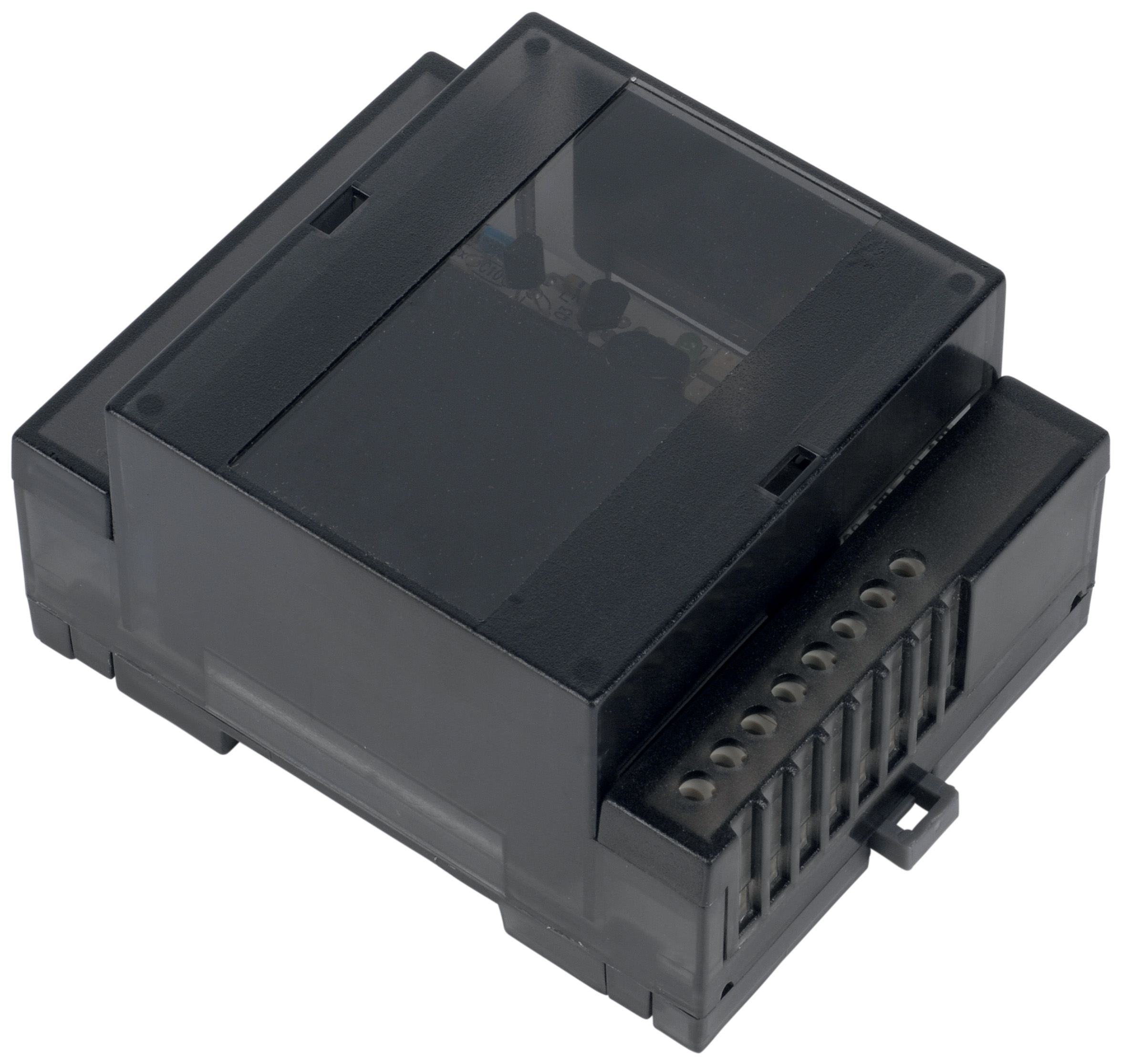
The Combutech Flame relay CF1 monitors burner ignition health with 1 A switching capacity at 250 VAC and 30 VDC. While seemingly independent from hydraulic pumps, flame detection systems reveal pump problems early:
- Pressure fluctuations cause ignition timing instability, triggering false flame detection faults.
- Cavitation (air entering pump inlet) creates pulsating pressure, which manifests as burner shutdown codes.
- Seal leakage reduces system pressure, preventing burner ignition—the first visible symptom of pump seal wear.
Coordinated Maintenance & Service Protocol
Contractors should adopt this integrated schedule:
Monthly:
- Verify flame relay responds to ignition command (CF1 test cycle)
- Check pump pressure gauge for stability (should vary <5 bar during idle)
- Log any pressure anomalies
- If flame relay shows delayed response (>1 second), measure pump inlet vacuum. High vacuum indicates seal degradation beginning.
- Flush fuel/hydraulic lines if debris detected
- Replace inlet strainers (simple 10-minute job preventing seal damage)
- Full pump seal and bearing inspection if pressure data shows >10 bar monthly variation
- Flame relay contact cleaning (CF1 contacts corrode in tropical humidity)
- Oil analysis for water content and particle count
- Complete pump seal replacement (preventive, not reactive)
- Flame relay replacement (contacts degrade regardless of failure)
Real-World Scenario: Corrosion Effects in Coastal Singapore
A facility 5 km from Jurong Port experienced recurring false flame alarms over 4 months. The CF1 relay itself was functional, but pressure transducer corrosion caused unstable signals. Investigation revealed pump seal wear allowing saltwater contamination through the breather. Coordinated Maintenance & Service approach:
1. Replaced pump seals (preventing future water ingress)
2. Installed desiccant breather (humidity control)
3. Replaced CF1 relay with sealed IP54 variant
4. Implemented monthly pressure logging
Cost: SGD 2400. Replacement downtime: 2 hours. Prevented emergency breakdown estimated at SGD 18,000 (parts + lost production).
Practical Maintenance & Service Decision Framework for Singapore HVAC Contractors
Choosing Between the Pump Options
| Factor | KF30 (106 L/min) | E2C2111 L (11 L/min) | W2035 ATEX (35 L/min) | SSU2040 ATEX (40 L/min) |
|--------|------------------|----------------------|------------------------|-------------------------|
| Annual seal costs | SGD 1200 | SGD 1800 | SGD 2400 | SGD 2200 |
| Service interval (months) | 24 | 12 | 18 | 16 |
| Tropical reliability | Excellent | Fair | Good | Excellent |
| Space requirement | High | Low | Moderate | Moderate |
| Technical skill needed | Moderate | High | High (ATEX) | High (ATEX) |
| Spares availability | Excellent | Good | Good | Excellent |
Making the Call
Choose KF30 if:
- You manage multiple facilities (standardization reduces training costs)
- Space is available
- You value simplicity and reliability over capital cost
- Retrofit applications with severe space constraints
- Short system runtime (<500 h/year)
- Budget constraints outweigh service frequency
- Facility is classified hazardous area by TÜV Singapore or DNV GL
- Budget includes technician certification and post-service audits
- SSU2040 offers better long-term value than W2035 due to gear pump thermal stability
Conclusion: Long-Term Reliability Through Integrated Maintenance & Service Planning
Maintenance & Service excellence in Singapore's industrial environment requires three commitments:
1. Select equipment for service accessibility, not just capital cost — the KF30 exemplifies this principle
2. Integrate pump and ignition diagnostics — use flame relay performance to predict pump degradation
3. Plan for tropical conditions — desiccant breathers, quarterly inspections, and documented procedures prevent cascading failures
With 35 years of experience supporting HVAC contractors across Southeast Asia, 3G Electric recommends a preventive Maintenance & Service approach that favors slightly higher component costs against the hidden expense of emergency downtime. The contractors earning highest profit margins are those who prevent failures, not those who react to them.
For equipment selection aligned with your facility's Maintenance & Service capacity, contact 3G Electric to discuss pump specifications, flame detection integration, and spare parts stocking strategies tailored to Singapore's climate and regulatory environment.