
Understanding Synchronized Measurement & Detection Across Thermal-Pressure-Flow Networks
Industrial systems in Singapore operate as integrated networks where temperature, pressure, and flow parameters are inherently interdependent. When one parameter drifts, it typically triggers cascading changes across others. Measurement & Detection strategies that address these parameters in isolation often miss the root cause of system degradation, leading to repeated troubleshooting cycles and extended downtime.
With over 35 years of experience as a distributor of industrial equipment across Southeast Asia, 3G Electric has observed that technicians who implement coordinated measurement protocols—simultaneously monitoring thermal conditions, pressure dynamics, and flow rates—identify system faults 40-60% faster than those using sequential single-parameter approaches. This synchronized methodology is particularly critical in Singapore's humid tropical environment, where temperature fluctuations directly impact hydraulic fluid viscosity and pneumatic system performance.
The core principle of synchronized Measurement & Detection is establishing baseline readings across all three parameters under normal operating conditions, then tracking deviations in relation to each other rather than in absolute isolation. For example, rising system temperature coupled with increasing pressure but stable flow often indicates bearing wear or fluid degradation—a different diagnosis than rising temperature with stable pressure and decreasing flow, which suggests pump cavitation or suction-side restriction.
Practical Field Protocol: Setting Up Coordinated Measurement Points
Effective Measurement & Detection requires strategically positioned instruments that capture data from functionally related system zones simultaneously. Rather than spot-checking individual parameters, successful technicians deploy instruments at complementary locations to reveal system state transitions.
Thermal Monitoring Strategy
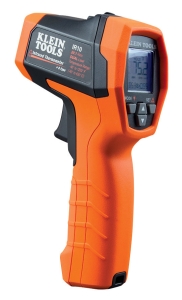
Temperature measurement must capture three critical zones: fluid reservoir baseline, system discharge (highest stress point), and return-line conditions. The CBM Infrared Thermometer with Type K Input provides non-contact measurement from -40 to 650°C with 20:1 optical resolution, allowing rapid scanning of multiple points without disrupting operations. The adjustable emissivity (0.10–1.00) compensates for different surface finishes on pump housings, motor bearings, and pipe insulation.
In Singapore's 85-90% humidity environment, the IP54 rating protects against condensation-induced measurement drift. The 3-meter drop protection reflects field realities in facilities where technicians work from elevated platforms or ladder positions. Establish baseline temperature differentials: typical hydraulic systems show 8-12°C rise from intake to discharge under normal load; deviations of ±5°C suggest efficiency loss requiring investigation.
Pressure Monitoring Architecture
Pressure readings must be captured at system supply, load-bearing points (cylinder or motor inlets), and return lines. The Preciman Manometer ABS Vertical D80 0/+16bar G1/2 provides mechanical gauge-based measurement with ±2.5% accuracy across the 0-16 bar range typical of pneumatic systems and low-pressure hydraulic circuits. The glycerin-filled design protects against pulsation damage and vibration-induced needle flutter—critical in Southeast Asian manufacturing where equipment operates continuously without planned shutdowns.
The 80 mm gauge diameter ensures readability in ambient industrial lighting without magnification. Mount this gauge at the pump discharge to establish pressure baseline; secondary pressure readings at load points reveal line loss and valve leakage patterns. Track pressure response to load changes: a system holding constant pressure while load increases indicates correct valve operation, while pressure spiking then stabilizing suggests relief valve drift requiring recalibration.
For precision pressure monitoring requiring electrical output, the Dwyer 629-05-CH-P2-E5-S1 Pressure Transmitter delivers 4-20 mA output with 0.5% accuracy across 0-100 psid range. The NPT 1/4" connection accommodates standard industrial installation. Wire the 4-20 mA signal to a multi-channel data logger or building management system to create pressure trend records over 8-12 hour shifts. In tropical environments, the IP65 rating prevents moisture ingress into the electrical connector—a common failure mode in Singapore's coastal industrial parks where salt spray accelerates corrosion.
Flow Rate Measurement Integration
Flow measurement completes the synchronized Measurement & Detection network by confirming volumetric output matches pressure conditions. The Dwyer Medium Flow Metal Probe MAFS-20 features a 71 cm probe length suitable for insertion into distribution headers or return manifolds without disconnecting working hydraulic lines. The 1/4-20 thread connection integrates with standard SAE ports.
Dwyer flow probes operate on thermal displacement principles: a heated element measures cooling rate as fluid flows past it, translating cooling directly to volumetric rate. Connect the analog output to the same data logger capturing pressure data. Monitor for flow decline without corresponding pressure increase—this pattern indicates pump wear (decreasing displacement) versus line blockage (pressure would rise). In pneumatic systems, flow measurement confirms compressor capacity hasn't degraded; falling flow at constant pressure suggests intercooler fouling or partial unloading valve stiction.
Interpreting Synchronized Data Patterns: From Raw Readings to Actionable Diagnostics
Once baseline readings are established across thermal, pressure, and flow parameters, the diagnostic power emerges from analyzing how parameters deviate together rather than individually.
Pattern 1: Temperature Rising, Pressure Stable, Flow Declining
This combination indicates volumetric efficiency loss—typically pump wear, bearing friction, or internal leakage across damaged components. The system is expending energy producing heat without productive flow output. Recommended actions: measure return-line oil viscosity (indicates thermal degradation), inspect pump displacement by measuring flow across multiple pressure ranges, and plan pump overhaul or replacement.
Pattern 2: Pressure Rising, Temperature Stable, Flow Constant
This pattern occurs when load increases but system responds correctly: the pump maintains flow while relief valve allows pressure increase to match load demand. This is normal operation. Distinguish it from Pattern 3 by confirming load sensor readings (cylinder extension distance, motor speed command) have actually increased.
Pattern 3: Pressure Spiking (10-15% above setpoint), Temperature Climbing, Flow Unstable
This indicates relief valve malfunction or load-holding valve creep. Pressure spikes waste energy as the relief opens and closes rapidly, creating turbulence and heat generation. Flow instability reflects intermittent blockage as high pressure subsides. Required action: remove and bench-test relief valve cartridge; inspect poppet seating surfaces for contamination or erosion. In Singapore's dusty industrial environment, inadequate intake filtration is the primary cause—upgrade filter element rating from 10µm to 3µm absolute.
Pattern 4: All Parameters Drifting Together (Pressure -5%, Temperature +8°C, Flow -12%)
This synchronized drift indicates environmental or operating condition change rather than equipment failure. Verify: Has ambient temperature increased (tropical afternoon heating), has system duty cycle changed (more frequent start-stops), or has filter restriction indicator activated? Address the root cause rather than adjusting component setpoints.
Detection-Based Decision Making: When to Intervene and How
Synchronized Measurement & Detection data enables predictive maintenance decisions based on objective trending rather than reactive repair scheduling.
Establishing Intervention Thresholds
Define numerical triggers for each parameter combination:
- Efficiency loss threshold: Combined metrics (pressure-to-flow ratio) degrading >15% from baseline = schedule preventive maintenance within 2 weeks
- Imminent failure threshold: Single-parameter deviation >20% and affecting two other parameters = immediate equipment removal and bench diagnostics
- Safety threshold: Pressure overshoot >25% above relief setpoint = stop system operation, inspect relief valve, replace if poppet show erosion
The Dwyer DXW-11-153-4 Pressure Switch provides hardwired safety detection for systems where electrical monitoring isn't installed. Set the 0.41–0.55 bar differential to trigger alarm output (5 A @ 125/250 VAC, IP65 rated) when pressure drift exceeds design tolerance. This mechanical failsafe prevents operator error from missing electrical data logger warnings.
Data Collection and Trending Infrastructure
In Singapore's 24/7 manufacturing environment, single-shift Measurement & Detection snapshots miss critical patterns. Deploy:
1. Analog data logger: Capture 4-20 mA outputs from pressure transmitter and flow probe at 5-minute intervals minimum. Store 30 days of data to identify weekly load cycles and ambient temperature influence.
2. Temperature logging: Manual infrared readings at shift start/end provide trend visibility; supplement with fixed thermocouple stations at critical zones to enable automated trending.
3. Anomaly documentation: When any parameter deviates >10% from trend baseline, photograph gauge readings, note operational load, and record ambient conditions. This contextual data accelerates root cause analysis.
Practical Implementation in Singapore Industrial Environments
Tropical coastal conditions in Singapore create specific Measurement & Detection challenges requiring localized solutions.
Humidity and Condensation Management
The 85-90% relative humidity combined with air-conditioning temperature differentials creates condensation on gauge glasses and sensor optics. The Preciman manometer's glycerin fill buffers humidity impact on internal components. For infrared thermometer lenses, wipe optics with lint-free cloth every 4 hours during operation; the CBM unit's IP54 protection prevents moisture ingress into electronics but not on the lens surface itself.
Salt Spray and Corrosion Prevention
Facilities near Singapore's ports or on industrial islands experience salt-spray corrosion. Use stainless steel fittings and tubing for all gauge connections; standard carbon steel quickcouplings corrode within 3-6 months. The Dwyer pressure transmitter and switch feature stainless wetted parts—verify this specification when procuring replacement instruments.
Integration with Tropical Maintenance Schedules
During monsoon season (November-March), humidity peaks and equipment run continuously without cool-down periods. Increase Measurement & Detection sampling frequency from daily to 12-hour intervals to catch thermal runaway events before cascading failures occur. Post-monsoon, conduct full system teardown and inspection—accumulated moisture in pilot lines and solenoid coils causes intermittent pressure control issues.
3G Electric's 35+ years of regional experience shows that technicians implementing these synchronized protocols reduce emergency repairs by 35-45% and extend equipment service life by 18-24 months compared to facilities relying on operator observation and reactive troubleshooting.
Conclusion
Measurement & Detection effectiveness in Singapore industrial operations depends on understanding the interdependency of thermal, pressure, and flow parameters rather than treating them as isolated metrics. By establishing coordinated monitoring stations, implementing systematic data collection, and developing decision-triggered maintenance intervals based on parameter patterns, technicians transform raw gauge readings into predictive intelligence. Combined with durable instruments designed for tropical environments—glycerin-filled gauges, IP65-rated electronics, and non-contact infrared measurement—this approach delivers measurable improvements in system reliability and operational cost control.