
Understanding Measurement & Detection Instrument Selection for Singapore Industrial Operations
Measurement & Detection capabilities form the backbone of modern industrial asset management in Singapore. As a procurement engineer, your selection of pressure gauges, flow probes, pressure switches, and temperature sensors directly impacts system reliability, maintenance costs, and operational safety across your facility. Since 1990, 3G Electric has supplied technical professionals across Southeast Asia with industrial measurement instruments, and we've observed that purchasing decisions made without a structured specification framework frequently result in either over-specification (unnecessary cost) or under-specification (operational risk and premature failure).
The Singapore industrial landscape—from petrochemical operations in Jurong Island to precision manufacturing in Bukit Timah—demands instruments that perform reliably in high-humidity environments, withstand thermal cycling, and integrate seamlessly with existing control systems. This guide walks procurement engineers through the technical and commercial framework needed to specify measurement instruments that deliver measurable ROI.
Section 1: Establishing Measurement Requirements Through System Analysis
Defining Your Measurement Architecture
Before selecting individual instruments, you must first establish what your systems actually need to measure. Begin by documenting your three primary measurement domains:
Pressure Measurement Requirements: Identify all pressure points where monitoring is critical—hydraulic system discharge pressure, pneumatic actuator supply pressure, boiler steam pressure, and equipment inlet/outlet differentials. For each point, specify:
- Operating pressure range (minimum and maximum expected)
- Normal operating pressure (typical steady-state value)
- Transient or spike conditions (startups, relief events)
- Required measurement accuracy (±2.5%, ±5%, or ±10%)
- Frequency of measurement (continuous digital output vs. periodic visual checking)
- Cooling water circulation
- Hydraulic fluid return lines
- Compressed air distribution
- Thermal fluid circuits
For each, document the fluid type (water, oil, glycerin-based hydraulic fluid, etc.), expected flow velocity, and whether you need analog output for integration with building management systems or simple on-site indication.
Temperature Measurement Requirements: Establish temperature monitoring points for:
- Bearing and motor thermal zones
- Hydraulic fluid reservoirs
- HVAC supply and return temperatures
- Process fluid inlet/outlet temperatures
Specify the measurement range (e.g., -20°C to +80°C for cooling systems, room temperature to 350°C for thermal oil circuits) and the required accuracy and response time.
Regulatory Compliance and Singapore Standards
Singapore's Ministry of Manpower (MOM) establishes specific pressure equipment standards under the Pressure Equipment and Lifting Gear Regulations. Your measurement instruments must support compliance verification:
- PED Category I-IV equipment: Requires certified pressure gauges with traceable calibration
- Electrical safety: HVAC and pneumatic systems often require instruments rated for damp/humid environments (IP65 minimum)
- Documentation: Specify instruments that provide calibration certificates and asset identification support
3G Electric's 35+ years of experience serving Singapore facilities means we understand these compliance pathways and can guide specification of instruments that satisfy both your operational needs and regulatory documentation requirements.
Section 2: Product Selection Framework—Matching Instruments to Application
Pressure Measurement: From Analog Gauges to Smart Transmitters
Analog Pressure Gauges for Visual Indication: The Preciman Manometer ABS vert D80 0/+16bar G1/2 represents the traditional but still essential analog pressure measurement approach. With its 80 mm dial diameter and ±2.5% accuracy across a 0–16 bar range, this glycerin-filled manometer suits applications where:
- Local visual indication is required (operators need at-a-glance confirmation)
- Continuous network connectivity is unavailable or undesired
- System pressure fluctuates within a tight range (the glycerin damping prevents needle flutter in pulsating systems)
- Cost-per-measurement-point is the primary constraint
Electronic Pressure Transmitters for System Integration: The Dwyer Transmitter 629-05-CH-P2-E5-S1 delivers 4–20 mA output with 0.5% accuracy across a 0–100 psid range. This instrument type enables:
- Real-time pressure trending via building management systems (BMS) or industrial control networks
- Automated alarm generation when pressure deviates from setpoints
- Historical data logging for predictive maintenance analysis
- Remote monitoring from centralized facilities management centers
- Current labor hours spent on manual pressure checks
- Cost of unplanned downtime from missed pressure anomalies
- Expected equipment life extension from earlier intervention
For Singapore operations with 24/7 shifts, transmitters typically justify themselves within 18–24 months.
Pressure Switches for Protection and Control
The Dwyer Pressure Switch DXW-11-153-4 provides binary (on/off) switching when pressure crosses a setpoint. This 0.41–0.55 bar unit with 3.46–5.17 bar differential range is ideal for:
- Pump unload control (switches to standby when accumulator pressure reaches setpoint)
- Equipment shutdown protection (isolates circuit if pressure exceeds safe limits)
- Alarm notification (triggers audible or visual warning to operators)
- Integration with safety interlocks (prevents equipment operation if system pressure is insufficient)
Flow Measurement for System Diagnostics
The Dwyer Medium Flow Metal Probe MAFS-20 provides insertion-point flow measurement. With its 71 cm probe length and 1/4-20 thread connection, it suits:
- Hydraulic return line monitoring (detects flow blockages or pump degradation)
- Cooling water circuit verification (confirms adequate flow after maintenance)
- Compressed air distribution audits (identifies leaks or demand-side waste)
- Thermal circuit troubleshooting (diagnoses heat exchanger performance)
- Impending pump failure (clearance wear)
- Filter blockage (resistance increase)
- Cooler fouling (reduced cooling effectiveness)
Specifying flow measurement at critical junctures enables predictive maintenance that prevents catastrophic failures.
Temperature Measurement for Thermal Systems
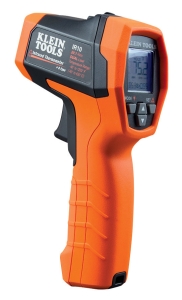
The CBM Infrared Thermometer with Type K Input extends temperature measurement range from -40°C to +650°C with 20:1 optical resolution and adjustable emissivity. Key advantages:
- Non-contact measurement: Assess bearing surface temperatures without physical contact
- Type K thermocouple input: Measures internal fluid temperatures in sealed reservoirs
- IP54 rating: Survives Singapore's humid environment and workshop washdown protocols
- Field durability: 3 m drop protection and sealed electronics withstand industrial use
Section 3: Total Cost of Ownership Analysis for Singapore Procurement
Capital Cost vs. Operational Value
When evaluating measurement instruments, procurement engineers must look beyond purchase price. A comprehensive TCO analysis includes:
Acquisition Costs:
- Instrument purchase price
- Installation labor (mounting, piping, electrical connections)
- Initial calibration and commissioning
- Documentation and training for operations staff
- Periodic calibration (annual recertification for regulatory compliance)
- Replacement of failed sensors or transmitters
- Labor for manual readings and data transcription (if not automated)
- System integration costs (BMS connectivity, historian software, network infrastructure)
- Unplanned downtime prevented through earlier anomaly detection
- Extended equipment life from condition-based maintenance
- Reduced energy consumption from optimized system tuning
- Regulatory compliance and avoided fines
Specification Example: Cooling System Measurement Strategy
Consider a typical Singapore industrial cooling system (supply/return water circuit for machinery cooling):
Minimal Specification ($1,500 capital cost):
- Two analog thermometers on inlet/outlet (visual indication only)
- No flow measurement
- Operators manually record temperatures twice per shift
Comprehensive Specification ($8,500 capital cost):
- Two temperature transmitters (inlet/outlet) with 4–20 mA output
- One flow probe on return line
- BMS integration with 15-minute logging and email alerts if temperature exceeds 35°C or flow drops below 60% of baseline
- Annual calibration contract ($400/year)
TCO Comparison over 5 years:
- Minimal specification: $1,500 + $45,000 (failure) + $3,000 (replacement after failure) = $49,500
- Comprehensive specification: $8,500 + (5 × $400 calibration) + $12,000 (planned replacement) = $22,500
- Net savings: $27,000 plus avoided production disruption
This analysis demonstrates why procurement engineers in Singapore's competitive manufacturing sector increasingly specify comprehensive measurement systems—the ROI is typically 2–3 years.
Section 4: Implementation and Best Practices for Singapore Operations
Specification Standards and Documentation
When specifying instruments for your procurement team, use this checklist:
For each measurement point, document:
- Instrument type (analog gauge, transmitter, switch, or probe)
- Measured parameter (pressure, temperature, or flow)
- Range and accuracy (e.g., "0–25 bar, ±2.5%")
- Output type (visual, 4–20 mA, binary contact)
- Environmental rating (IP rating for humid locations, temperature extremes)
- Connection standard (G1/2 BSP, NPT, or DIN)
- Calibration requirement (annual, tri-annual, or as-needed)
- Integration (standalone vs. BMS-connected)
- P&ID excerpts showing measurement point locations
- System schematic indicating how transmitter outputs connect to control/monitoring systems
- Calibration plan with assigned responsibility (in-house lab vs. external service provider)
- Spare parts inventory for critical measurement instruments
Vendor Selection: Why 3G Electric's Experience Matters
Your measurement instrument supplier should offer more than just products—they should provide application expertise. Since 1990, 3G Electric has supported procurement engineers across Singapore and Southeast Asia with:
- Technical consultation: Our sales engineers work with your team to translate system requirements into specific instrument specifications
- Integration support: We help specify transmitter outputs compatible with your existing BMS or control systems
- Logistics reliability: As a distributor with 35+ years serving Singapore, we maintain stock of common instruments and support next-day delivery for emergency replacements
- Compliance guidance: We understand Singapore regulatory requirements and specify instruments that meet MOM documentation standards
When you partner with 3G Electric for measurement instrument specification, you gain access to a network of technical professionals who've solved similar challenges across hundreds of Singapore industrial facilities.
Commissioning and Validation Protocol
After instruments are installed, verify performance through a structured commissioning protocol:
1. Pressure instruments: Compare new transmitter output to existing analog gauge; record discrepancy (typically <3% is acceptable)
2. Temperature instruments: Verify thermometer readings in controlled temperature bath or against certified reference standard
3. Flow probes: Confirm visual reading aligns with calculated flow from pump displacement and speed
4. Data integration: Verify transmitter signals appear in BMS historian with correct units and scaling
5. Alarm testing: Manually trigger setpoints to confirm BMS notifications function correctly
Document all commissioning test results and retain for regulatory audit purposes.
Maintenance and Calibration Planning
Establish a preventive calibration schedule:
- Analog gauges: Annual calibration, more frequent if installed in high-vibration environments
- Electronic transmitters: Annual calibration to maintain ±0.5% accuracy; interval may extend to 18 months if operating well within nominal range
- Pressure switches: Test functionality quarterly; recalibrate annually or after setpoint adjustment
- Infrared thermometers: Verify optics annually (dust/contamination can degrade accuracy); recalibrate every 2 years
For Singapore operations, partner with a certified calibration service (most major metropolitan areas have several SAMCRA-accredited providers) to maintain measurement traceability and regulatory compliance.
Conclusion
Measurement & Detection instrument specification is not a commodity procurement decision—it's a strategic investment in operational visibility and equipment reliability. Procurement engineers who approach specification systematically, balancing accuracy requirements against total cost of ownership, consistently achieve better outcomes: extended equipment life, reduced unplanned downtime, and lower life-cycle costs.
The framework presented here—establishing clear requirements, matching instruments to applications, calculating true TCO, and implementing rigorous commissioning—provides a repeatable process you can apply across your facility. Combined with the specific products available through 3G Electric and the technical guidance our team provides based on 35+ years serving Singapore industry, you have the tools needed to specify measurement systems that deliver measurable business value.
Your next step: audit your current measurement infrastructure. Are critical system points lacking monitoring? Do your operators rely on manual checks rather than automated alerts? Are you making maintenance decisions based on calendar schedules rather than condition data? These gaps represent opportunities to implement Measurement & Detection improvements that will strengthen your facility's operational foundation.