
Understanding Measurement & Detection in Compressed Air Systems
Measurement & Detection instruments form the backbone of reliable compressed air operations. Unlike HVAC or thermal systems, compressed air presents unique challenges: rapid pressure fluctuations, moisture content variations, and the need for real-time flow verification across multiple branch lines. For procurement engineers managing facility upgrades or new installations in Singapore, selecting appropriate measurement tools ensures compliance with ISO 8573 air quality standards and prevents costly equipment failures downstream.
Over 35 years, 3G Electric has supplied measurement instruments to Singapore's industrial sector, where tropical humidity and continuous manufacturing operations place exceptional demands on compressed air purity and pressure stability. The difference between a well-specified system and an undersized one often lies in accurate pre-commissioning measurement and ongoing detection capabilities.
Pressure Measurement: Foundation for System Diagnostics
Pressure measurement forms the cornerstone of compressed air system verification. During commissioning, you need pressure data at three critical points: compressor discharge, after filtration/drying, and at point-of-use branches. This reveals pressure drops that indicate filter loading, leaks, or undersized piping—problems that cause 20–30% energy waste if undetected.
The Preciman Manometer ABS vert D80 0/+16bar G1/2 provides mechanical, glycerin-damped pressure indication suitable for baseline system commissioning. Its 80 mm dial offers clear visibility in noisy plant environments, and the ±2.5% accuracy meets typical industrial verification requirements. The 0/+16 bar range covers most facility compressed air systems (typically 6–10 bar operating). Position this at the compressor output during initial setup to verify nameplate discharge pressure and confirm the unit is performing within specification.
For permanent installation where electronic data logging adds value, the Dwyer Transmitter 629-05-CH-P2-E5-S1 delivers 4-20 mA output suitable for integration with SCADA systems or data loggers. Its 0.5% accuracy and IP65 protection withstand Singapore's humidity. Procurement teams should specify transmitters at three branch points: main line, secondary filtration outlet, and a critical end-use location (compressor, pneumatic tools, or process air headers). This three-point strategy reveals where pressure loss concentrates and justifies piping upgrades or compressor capacity increases.
Flow Measurement and Detection
Flow measurement in compressed air systems answers a critical procurement question: "Is this compressor capacity sufficient for actual demand?" Many over-provisioned systems exist because flow was never verified during planning. Undersized systems mean unplanned downtime; oversized systems waste 15–40% of energy on unnecessary compression.
The Dwyer Medium flow metal probe MAFS-20 integrates into system piping as a permanent insertion point for periodic flow checks. Its 71 cm probe length allows installation in exposed header sections without requiring system shutdown, and the 1/4-20 thread connection fits standard compressed air fittings. During commissioning, attach a portable flow meter to this probe to measure actual discharge in cubic feet per minute (CFM) under typical plant load. Record data across morning startup, mid-shift peak, and end-of-shift decline to build a usage profile.
For procurement engineers, this flow data drives three decisions: (1) compressed air capacity adequacy, (2) justification for upgrade or auxiliary compressor investment, and (3) baseline metrics for future energy audits. In Singapore's competitive manufacturing environment, compressed air efficiency audits often reveal 10–15% cost reduction opportunities—but only if flow measurement provides credible baseline data.
Pressure Control and Detection Safety
Beyond measurement, detection-based protection prevents catastrophic failures. Pressure switches monitor for unsafe conditions: tank overpressure, line rupture events, or compressor malfunction.
The Dwyer Pressure switch DXW-11-153-4 provides setpoint protection in the 0.41–0.55 bar range with IP65 environmental rating—essential in Singapore's humid coastal facilities. For most compressed air systems, install a high-pressure limit switch at the compressor discharge (typically set 10% above normal operating pressure) and a low-pressure alarm in secondary circuits to detect major leaks or filter blockage before equipment damage occurs. The 5 A switching capacity accommodates compressor motor unload solenoids and alarm circuits.
Procurement strategy: pair mechanical manometers with electronic pressure switches. The manometer provides visual confirmation during troubleshooting; the switch provides automated protection when attention lapses during night shifts or maintenance windows.
Temperature Monitoring for System Health
Compressed air temperature indicates moisture content, compressor strain, and aftercooler performance. Elevated discharge temperatures (above 100°C) suggest compressor trouble or inadequate cooling; low temperatures after dryer indicate proper operation.
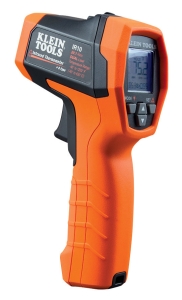
The CBM Infrared thermometer with type K input measures discharge temperature without contact—critical when touching hot piping poses burn risk. Its -40 to 650°C range covers compressor discharge (80–120°C typical) and also supports broader facility diagnostics. The 20:1 optical resolution provides pinpoint accuracy on pipe temperatures, and the IP54 rating withstands workshop environments. Adjustable emissivity (0.10–1.00) compensates for pipe surface oxidation, a common issue in older Singapore industrial facilities.
During commissioning, establish discharge temperature baseline at no-load and full-load conditions. Temperature rise under load indicates compressor efficiency; excessive rise suggests wear, fouled cooling surfaces, or inadequate air intake. Procurement teams should budget for quarterly infrared temperature surveys—a simple 30-minute check that reveals maintenance needs before failure occurs.
Commissioning Protocol and Procurement Checklist
When specifying instruments for system verification, use this three-phase approach:
Phase 1 – Pre-Startup Verification (Before first compressor start):
- Install manometer at compressor discharge
- Install pressure transmitters at three circuit points
- Document baseline atmospheric pressure and ambient temperature
- Verify tank test certificate and pressure rating
- Record pressure at each transmitter location at no-load, half-load, and full-load
- Measure flow using insertion probe attachment
- Document discharge temperature every 2 hours
- Verify pressure switch setpoints match system design
- Compare measured data against design specifications
- Identify pressure drop per 100 meters of piping (should be <1 bar for nominal flow)
- Validate compressor efficiency rating using power draw and flow data
- Establish maintenance intervals based on actual temperature and pressure trends
Why 3G Electric Specifications Matter for Singapore Procurement
3G Electric supplies measurement instruments selected for tropical industrial environments. Products specified here—Preciman glycerin-filled gauges, Dwyer transmitters with IP65 protection, and CBM infrared tools—perform reliably despite Singapore's 80–95% relative humidity, temperature fluctuations, and salt-air exposure in coastal areas.
Procurement engineers benefit from 35+ years of Singapore facility experience: we understand that generic specifications fail in this climate. Glycerin-filled gauges withstand moisture ingress better than dry gauges. IP65 transmitters survive washdown environments. Metal probes resist corrosion better than plastic alternatives. These seemingly small details prevent instrument failure during the 6–12 month commissioning window when early detection of system problems is most valuable.
When budgeting for new compressed air systems, allocate 8–12% of equipment cost to measurement and verification instruments. This investment returns value immediately through optimized compressor sizing and operationally throughout the system lifetime via predictive maintenance. Systems commissioned without this measurement foundation typically exceed budgets by 15–20% and consume 20% more energy—a cost penalty that lasts decades.