
Understanding Multi-Parameter Measurement & Detection in Modern Manufacturing
Measurement & Detection in contemporary Southeast Asian manufacturing facilities extends far beyond simple gauge reading. Modern production lines generate continuous streams of critical data across hydraulic systems, pneumatic networks, thermal processes, and fluid delivery mechanisms. As a plant manager, your ability to interpret and act on these measurements determines whether your facility operates reactively—responding to failures—or proactively—preventing them.
The challenge for most facilities in the region is fragmentation. Pressure readings come from one instrument type, temperature from another, flow from a third. When these measurements exist in isolation, you miss the interconnected story of system health. A pressure spike combined with rising temperature and reduced flow might indicate developing pump cavitation—but only if you're monitoring all three parameters simultaneously.
With over 35 years of experience supplying industrial equipment across Southeast Asia, 3G Electric has observed that plants implementing integrated Measurement & Detection strategies reduce unplanned downtime by 30–40% within the first year. This guide translates that experience into actionable steps for your production environment.
Establishing a Three-Tier Detection Strategy: Static Limits, Dynamic Baselines, and Trend Analysis
Tier 1: Static Pressure and Temperature Boundaries
Your first defense is establishing fixed operating limits. These are your "do not cross" thresholds based on equipment specifications and safety standards.
For hydraulic and pneumatic systems, pressure measurement forms the foundation. The Preciman Manometer ABS vert D80 0/+16bar G1/2 provides ±2.5% accuracy with glycerin-filled damping, making it reliable for humid Southeast Asian conditions where moisture and temperature fluctuations are constant variables. This instrument works best as a reference standard during commissioning and periodic verification—establishing what "normal" looks like for your system.
However, static manometers are insufficient for continuous monitoring. Install the Dwyer Pressure Switch DXW-11-153-4 at critical points where pressure deviation signals system compromise. With setpoint ranges of 0.41–0.55 bar and differential ranges of 3.46–5.17 bar, this switch detects both overpressure (pump failure, blocked lines) and underpressure (leakage, filter clogging). The IP65 protection handles the corrosive, humid environments common in Malaysian, Thai, and Vietnamese industrial zones.
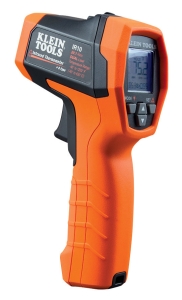
Temperature monitoring requires similar tiered approach. For non-contact measurement of system components—pump housings, line temperatures, motor casings—the CBM Infrared Thermometer with Type K Input covers -40 to 650°C with 20:1 optical resolution. This instrument is particularly valuable for identifying localized hot spots: a bearing running 15–20°C above baseline often indicates imminent failure. The 3 m drop protection and IP54 rating make it practical for active production environments.
Tier 2: Real-Time Pressure and Flow Trending
Static limits catch catastrophic failures, but gradual degradation happens undetected. This is where continuous transmitters become essential infrastructure.
The Dwyer 629-05-CH-P2-E5-S1 Pressure Transmitter delivers 4-20 mA output with 0.5% accuracy across 0–100 psid ranges. Unlike discrete pressure switches, this transmitter integrates into your SCADA system or PLC, creating a continuous historical record. Over weeks and months, this data reveals the true operational signature of your systems.
Pressure trending answers critical questions: Is pump output declining gradually? Does pressure drop correlate with ambient temperature? Are there cyclical patterns suggesting periodic maintenance needs? In Southeast Asian facilities where production schedules are tight and unplanned shutdowns catastrophic, this visibility is invaluable.
For fluid delivery systems—hydraulic lines, coolant circuits, lubrication networks—flow measurement completes the picture. The Dwyer Medium Flow Metal Probe MAFS-20 offers 71 cm probe length with 1/4-20 thread connections, designed for direct insertion into process lines. Medium flow capability (typically 0.5–5 LPM range) suits the injection molding, machining, and automated assembly lines common throughout the region.
Flow measurement combined with pressure creates a performance map. Constant pressure but declining flow indicates filter saturation or component wear. Rising pressure with constant flow suggests line blockage or accumulator issues. These combinations tell you what's failing before it fails completely.
Tier 3: Environmental and Contextual Factors
Southeast Asian manufacturing environments present unique challenges: high humidity, tropical temperature swings (25–35°C ambient), seasonal variations, and frequent power instability. Your Measurement & Detection strategy must account for these realities.
Temperature trending becomes critical because thermal stability directly affects hydraulic viscosity and pneumatic expansion ratios. A system calibrated at 23°C morning startup may exhibit 8–12% performance variation by afternoon if ambient temperature rises to 32°C. The CBM Infrared Thermometer with Type K input allows you to establish facility-specific baseline corrections, accounting for your actual operating environment rather than theoretical standards.
Humidity and corrosion protection matter more here than in temperate regions. The IP65 rating on the pressure switch and glycerin-filled design of the manometer aren't luxuries—they're essential for instruments to survive year-round reliability testing in monsoon zones.
Implementing Detection at Critical System Junctures: Selection Matrix for Your Facility
Not every system point requires identical detection density. Strategic placement maximizes information gain while controlling costs.
Pump Discharge and Accumulator Circuits
This is your highest-value measurement zone. Install the transmitter at pump discharge to capture baseline system pressure. Install the pressure switch set 10–15% above nominal operating pressure to detect system faults. Use the reference manometer quarterly to verify transmitter calibration hasn't drifted.
For systems with accumulators, measure both pump-side and load-side pressure. The delta between these points reveals energy losses and component efficiency degradation.
Feed Lines and Secondary Circuits
Secondary circuits (pilot pressure, control lines, lubrication) operate at lower pressures but indicate systemic problems when they fluctuate. Install pressure switches here to detect isolation valve failures and pilot line leakage before they cascade into primary system failures.
Temperature-Critical Processes
Coolant circulation, thermal stabilization chambers, and environmental control zones need continuous temperature trending. Place the infrared thermometer in a fixed mount bracket during operations, taking readings at 4-hour intervals. Temperature trends over days and weeks reveal efficiency losses in cooling systems—a 5°C rise in coolant temperature often indicates heat exchanger fouling developing 2–3 weeks before it impacts product quality.
Fluid Delivery and Injection Systems
For injection molding, plastic processing, and precision machining, the flow probe detects pump cavitation (sudden flow dropouts) and progressive wear (gradual flow reduction). Monitor flow in relation to cycle time: if cycle time extends while flow readings remain constant, look upstream for pressure losses.
Data Integration and Decision Protocols
Measurements without response protocols create information without action. Establish decision rules:
**Pressure Alerts (via switch):" Immediate investigation. Stop production if pressure remains out of limits for >2 minutes. Document the incident and correlate with temperature and flow readings from the same period.
**Pressure Trends (via transmitter):" Weekly review of 7-day pressure logs. Flag any trend showing >2% weekly decline. Investigate filter condition, pump efficiency, and external leakage.
**Temperature Excursions (via infrared thermometer):" Flag any component >15°C above baseline. Correlate with production rate, ambient temperature, and humidity. Schedule maintenance if temperature remains elevated across multiple days.
**Flow Anomalies (via flow probe):" Compare flow readings to production volume. Expected flow per cycle should remain constant. Changes signal pump output loss or circuit blockage.
Practical Implementation Timeline for Southeast Asian Facilities
Weeks 1–2: Assessment and Procurement
Map all critical systems. Identify 6–8 measurement points. Procure instruments from 3G Electric, whose 35+ year track record in the region ensures local support and rapid replacement availability.
Weeks 3–4: Installation and Commissioning
Install transmitters with data logging. Establish baseline readings across all systems under normal operation. Calibrate reference instruments. Document all readings.
Weeks 5–12: Baseline Collection
Operate systems normally while collecting continuous data. Don't implement corrective actions yet—establish what normal operating variation looks like in your specific facility environment.
Week 13+: Trend Analysis and Optimization
Analyze baseline data. Identify seasonal patterns, production correlations, and thermal cycles. Set alert thresholds based on actual facility data, not manufacturer defaults. Implement response protocols.
Common Implementation Mistakes in Southeast Asia
Mistake 1: Over-reliance on analog readings. Install the manometer but fail to connect transmitters for data logging. Result: You respond to crises but never develop predictive capability.
Mistake 2: Ignoring humidity and thermal effects. Calibrate instruments in controlled conditions, then deploy to humid production floors without accounting for environmental drift. Result: Inaccurate readings generating false alarms and missed problems.
Mistake 3: Insufficient alert threshold tuning. Set pressure switch setpoints to manufacturer defaults rather than your facility baseline. Result: Constant false alarms from normal operational variation, leading to alarm fatigue and ignored alerts.
Mistake 4: Isolated measurements without correlation. Monitor pressure separately from temperature and flow. Result: You detect symptoms but miss root causes.
Expected Returns on Measurement & Detection Investment
Plants implementing comprehensive Measurement & Detection strategies in Southeast Asia typically achieve:
- 30–40% reduction in unplanned downtime through early detection of developing faults
- 15–25% improvement in energy efficiency by identifying gradual performance degradation
- 20–35% extension of equipment service life through condition-based maintenance replacing time-based replacement
- Improved product quality through stabilized operating parameters
- Better maintenance team efficiency as technicians respond to data-driven alerts rather than reactive breakdowns
These returns justify instrument investment within 12–18 months in most manufacturing environments.
Conclusion: Measurement & Detection as Operational Infrastructure
Measurement & Detection is not a project—it's infrastructure. Like electrical service or compressed air, once implemented, it becomes part of normal operations. The difference is that measurement infrastructure gives visibility into what's actually happening inside your systems, enabling decisions based on data rather than intuition.
For plant managers in Southeast Asia navigating tight production schedules, rising energy costs, and equipment reliability challenges, integrated Measurement & Detection transforms plant operations from reactive crisis management to predictive optimization. Start with pressure and temperature at critical points. Add flow monitoring where systems depend on fluid delivery. Correlate these measurements across daily and weekly cycles. Build historical baselines. Then respond systematically to detected anomalies.
3G Electric's 35+ years serving Southeast Asian manufacturers means our equipment recommendations are based on what actually works in your climate, with your production challenges, with your team's capability. We supply the instruments; you supply the discipline to measure, record, and respond.