
Measurement & Detection in Process Validation: Setting Your Equipment Up for Success
When new industrial equipment arrives on your Singapore facility floor, Measurement & Detection instruments are your first line of assurance that everything will perform as specified. Commissioning without proper measurement is like launching a ship without checking the rudder—you'll only find problems after you've left port.
For procurement engineers managing equipment installations, the challenge isn't just buying instruments; it's selecting the right combination that validates multiple system parameters simultaneously. Over 35 years, 3G Electric has helped hundreds of operations in Southeast Asia avoid the expensive trap of discovering performance issues weeks after installation. The difference? A structured validation approach using the right measurement tools upfront.
This guide focuses on practical strategies for selecting and deploying Measurement & Detection equipment during the commissioning phase—when your investment in the right instruments pays for itself many times over through problem avoidance.
Section 1: Building a Multi-Parameter Commissioning Kit for Singapore Operations
Why Measurement Matters During Commissioning
Commissioning validation serves three critical purposes: it confirms equipment meets specification, establishes baseline performance data for future diagnostics, and documents compliance for local regulatory requirements. Each purpose demands specific measurement approaches.
In Singapore's industrial environment—where humidity, temperature variation, and vibration challenge equipment stability—baseline data captured during commissioning becomes essential reference material for maintenance teams. Skipping this step creates a blind spot: you won't know if performance degradation is due to installation defects or operational wear.
Structuring Your Validation Protocol
A robust commissioning measurement strategy addresses three overlapping domains: static verification (does the equipment physically match specifications?), dynamic baseline (what is normal performance under controlled conditions?), and environmental limits (how does the equipment behave across Singapore's operating range?).
For pressure-based systems, this means capturing steady-state readings, transient response, and performance at system boundaries. The Preciman Manometer ABS vertical D80 provides ±2.5% accuracy across the 0/+16 bar range, making it ideal for validating hydraulic and pneumatic system installation integrity. Its glycerin-filled design handles Singapore's humid conditions without drift, and the 80 mm dial face ensures your technicians can read values accurately from installation access points where eyesight angles aren't ideal.
For flow-based validation, the Dwyer Medium Flow Metal Probe MAFS-20 offers a practical approach: the 71 cm probe length reaches into system headers or test points without requiring major piping modifications. During commissioning, this lets you verify flow distribution across parallel circuits—critical for systems where unbalanced flow indicates installation problems.
Instrument Integration and Data Capture
Modern commissioning relies on instruments that connect to your system without permanent modification. This is where electronic instruments provide value beyond mechanical gauges. The Dwyer Pressure Transmitter 629-05-CH-P2-E5-S1 delivers 4-20 mA output with 0.5% accuracy, allowing real-time data logging during commissioning sequences. Rather than manually recording gauge readings every 30 seconds, transmitters feed continuous data streams to data loggers or supervisory systems.
For procurement engineers in Singapore, this capability solves a practical problem: commissioning often occurs on compressed timelines where manual data collection creates bottlenecks. With transmitters feeding automated logging, your commissioning team can run longer test sequences and capture transient phenomena that manual observation would miss.
The IP65 protection rating handles Singapore's on-site conditions—salt spray near coastal facilities, condensation in humid environments, and occasional washdown procedures.
Section 2: Temperature and Thermal System Validation
Thermal Commissioning Challenges in Singapore
Singapore's ambient temperatures (consistently 24–32°C) and high humidity create thermal stability challenges that equipment commissioning must address. Cooling systems designed for temperate climates often underperform in tropical environments, and this mismatch isn't obvious until weeks of operation reveal gradual temperature drift.
Thermal validation during commissioning answers a specific question: "Under controlled load conditions, does the system maintain temperature within specification?" This requires non-contact temperature measurement across multiple points—compressor discharge, cooler outlet, return line, and ambient reference.
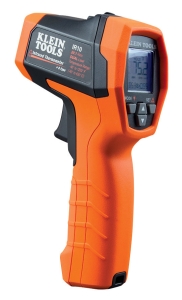
The CBM Infrared Thermometer with Type K Input handles this validation workflow efficiently. The -40 to 650°C range covers everything from ultra-low cryogenic applications to high-temperature process lines. The 20:1 optical resolution lets you measure small components from safe distances—essential when validating hot discharge lines or compressor casings that might reach 100°C+ during commissioning ramps.
Using Infrared Data for Baseline Documentation
During commissioning, thermal imaging-style point measurement serves two purposes: it documents baseline heat patterns (normal operation looks like this) and identifies thermal asymmetries that indicate installation defects. Uneven cooling circuit distribution, inadequate insulation on specific sections, or improperly seated heat exchanger plates all show up as thermal anomalies.
The adjustable emissivity setting (0.10–1.00 range) handles measurement challenges in real industrial environments. Shiny metal surfaces reflect ambient temperature and require low emissivity settings; painted or oxidized surfaces use higher values. During commissioning, your technicians document which emissivity setting produces accurate readings against known reference points—this documentation becomes critical for maintenance teams repeating measurements months later.
The 3 m drop protection and IP54 rating make field deployment practical on crowded job sites where instruments get bumped and exposed to minor splashes.
Section 3: Safety and Pressure Switch Validation
Why Pressure Switches Require Dedicated Commissioning
Pressure switches aren't just instruments—they're safety devices that must function at precise setpoints. Singapore's Machinery Safety Directive (based on EU standards) requires documented proof that pressure protection systems operate within specification. Commissioning validation of these switches isn't optional; it's regulatory.
The challenge for procurement engineers is that pressure switch validation requires careful setpoint verification and proof of repeatability. A switch that activates at 0.42 bar on first test but 0.48 bar on the second test is unsafe—but this defect only emerges through systematic commissioning testing.
Validating the Dwyer DXW-11-153-4 Switch
The Dwyer Pressure Switch DXW-11-153-4 is specified for 0.41–0.55 bar setpoint range with 3.46–5.17 bar differential. During commissioning, your protocol should verify:
- Setpoint accuracy: Slowly raise system pressure and document the exact point where electrical contacts close (setpoint) and open again (differential endpoint)
- Repeatability: Perform multiple pressure cycles to confirm consistent switching behavior
- Response time: Document how quickly the switch responds to pressure changes—essential for safety-critical applications
- Electrical continuity: Verify the 5 A @ 125/250 VAC contact closure actually triggers downstream protective devices
For this validation, a precision pressure source (manual pump with gauge) and a continuity tester form the minimum toolkit. The Preciman manometer provides the reference pressure reading; a simple electrical test meter confirms switch operation.
Integration with Electronic Monitoring
For facilities requiring permanent documentation of switch performance, the Dwyer transmitter can be installed in parallel with the mechanical switch during commissioning. This creates a data stream showing how the transmitter output correlates with switch activation—validation that your electronic monitoring system accurately represents physical system state.
This parallel measurement approach is particularly valuable in Singapore's regulatory environment, where equipment commissioning reports must demonstrate documented proof of safe operation. The transmitter data becomes part of your compliance file.
Section 4: Commissioning Documentation and Knowledge Transfer
Creating Reusable Commissioning Protocols
Your first equipment installation is expensive and time-consuming. Your second, third, and tenth installations should leverage knowledge from earlier projects. This requires structured commissioning documentation that your maintenance teams can reference for years.
The instruments you select during commissioning should support this documentation goal. Electronic instruments (transmitters, pressure switches with test ports) leave data trails—automated logs showing what was measured, when, and under what conditions. Mechanical instruments (manometers) require manual recording, but their simplicity means less to troubleshoot when validation fails.
For procurement engineers, the question is: which instrument mix supports documentation while remaining practical on job sites? The answer depends on your facility's future capabilities. If your operations team plans to implement condition-based maintenance with data historians, commissioning transmitters make sense as templates for permanent installations. If your maintenance culture remains primarily preventive (run-to-failure with interval checks), documenting gauge readings and creating photographic records of baseline conditions may be sufficient.
Training Maintenance Teams on Baseline Interpretation
Commissioning instruments generate baseline data—the reference point against which future measurements are compared. Over 35 years, 3G Electric has observed that commissioning success depends heavily on whether maintenance teams understand what the baseline represents.
A manometer reading of 12.3 bar during commissioning becomes meaningful only if the maintenance technician knows: "This is what normal discharge pressure looks like when the system operates at 50% load under 25°C ambient." Without this context, future readings become confusing noise.
Structured commissioning includes a knowledge transfer phase where the commissioning engineer walks the maintenance team through instrument operation, interpretation of readings, and the commissioning test procedures. When you select instruments during procurement, consider whether they support this training objective. The CBM infrared thermometer is intuitive for temperature measurement; the Dwyer flow probe requires explanation about insertion depth and velocity averaging. Your procurement specification should include time for this training in the commissioning budget.
Practical Implementation: Building Your Singapore Commissioning Kit
Instrument Selection Checklist
When specifying measurement equipment for commissioning, work through these procurement decisions:
- Pressure validation: Will you use mechanical gauges (simple, reliable, no power) or electronic transmitters (data logging, automation, harder to troubleshoot)? The Preciman manometer and transmitter serve different roles—often you need both.
- Flow confirmation: Does your system require point measurement (probe-based like the Dwyer MAFS-20) or system-wide balancing? Flow validation is labor-intensive; plan commissioning time accordingly.
- Temperature baseline: Will you measure spot temperatures (infrared like the CBM instrument) or continuous monitoring at fixed points? Spot measurement works well during commissioning; continuous monitoring transitions to long-term operation.
- Safety verification: Are pressure switches or other protective devices part of your commissioning scope? These require dedicated time and testing procedures separate from performance validation.
- Documentation approach: Will your commissioning team manually record data, use automated logging, or combine both? This choice affects which instruments you specify and how much technician time the commissioning requires.
Leveraging 3G Electric's Supply Capabilities
3G Electric's 35+ years as a global industrial equipment distributor in Southeast Asia means we understand Singapore's commissioning environment—space constraints on job sites, humidity challenges to instrument reliability, and the specific compliance documentation that Singapore's regulatory framework requires.
When you specify measurement instruments through 3G Electric, you gain access to equipment selection that reflects real commissioning experience across hydraulic systems, pneumatic controls, thermal management, and process monitoring. Rather than generic "best practice" guidance, you get recommendations based on what actually works on Singapore job sites.
Our relationship with manufacturers like Dwyer and Preciman ensures you receive instruments with Singapore-appropriate warranties, local support availability, and spare parts access. Commissioning delays caused by waiting for replacement instruments from overseas suppliers are eliminated when your equipment comes through a distributor with established supply chains and local technical resources.
Summary: Commissioning as Prevention
Measurement & Detection during equipment commissioning is investment in prevention. The cost of proper commissioning instruments and procedures is typically 2–5% of project cost but prevents 50–80% of post-installation problems that would otherwise emerge during operation.
For procurement engineers in Singapore, the path forward is clear: specify measurement instruments that match your commissioning protocol, ensure technician training addresses baseline interpretation, and document results for maintenance team reference. The Preciman manometer, Dwyer transmitter, Dwyer flow probe, Dwyer pressure switch, and CBM infrared thermometer form the foundation of a practical commissioning toolkit.
Start your next equipment project with clear measurement objectives, select instruments that support those objectives, and build commissioning procedures that transfer knowledge to your operations team. The result is equipment that performs as specified from day one—and maintenance teams who understand what "normal" actually looks like.