Introduction: Why Measurement & Detection Matters for Maintenance Teams
Measurement & Detection forms the foundation of modern preventive maintenance programs. For maintenance teams managing critical industrial systems, the ability to accurately measure temperature, electrical parameters, and system pressures directly impacts equipment reliability, safety compliance, and operational costs.
With over 35 years of experience distributing industrial equipment globally, 3G Electric understands that maintenance teams face unique challenges: tight budgets, multiple equipment types, and the pressure to minimize unplanned downtime. The difference between reactive maintenance and proactive failure prevention often comes down to one critical factor—having the right Measurement & Detection tools and knowing how to use them effectively.
This guide provides practical, actionable strategies for implementing a comprehensive Measurement & Detection program tailored to maintenance team workflows. We'll cover temperature monitoring, electrical diagnostics, pressure system detection, and best practices for establishing reliable measurement routines that catch problems before they become failures.
Section 1: Temperature Measurement & Detection in Industrial Systems
Why Temperature Monitoring is Your First Defense
Temperature is one of the most reliable indicators of equipment health. Abnormal temperature readings often signal bearing wear, coolant degradation, electrical resistance issues, or inadequate ventilation—all problems that worsen rapidly without intervention.
Maintenance teams should establish baseline temperature readings for each critical asset and monitor variations. Temperature increases of 10-15°C above normal can indicate imminent failure in motors, compressors, and hydraulic systems. By detecting these changes early, teams can schedule maintenance during planned downtime rather than facing emergency repairs.
Selecting the Right Thermometer for Your Application
Different industrial applications require different thermometers. Your selection depends on three factors: temperature range needed, immersion depth, and measurement frequency.
For HVAC systems and fluid temperature monitoring, the CBM Axial thermometer D65 -40/+40°C L5cm with thermowell provides reliable analog readings with excellent visibility in tight spaces. The 5cm immersion length suits return air monitoring, chilled water lines, and expansion tank measurement. The thermowell protection prevents direct fluid contact, extending instrument life and maintaining accuracy.
For applications requiring wider temperature ranges and larger dial visibility, the CBM Green vertical thermometer D80 -30/+50°C L 10cm with thermowell offers superior readability from distance, making it ideal for process monitoring stations where multiple team members need quick visual reference. The 10cm immersion depth accommodates larger diameter pipes and reservoirs.
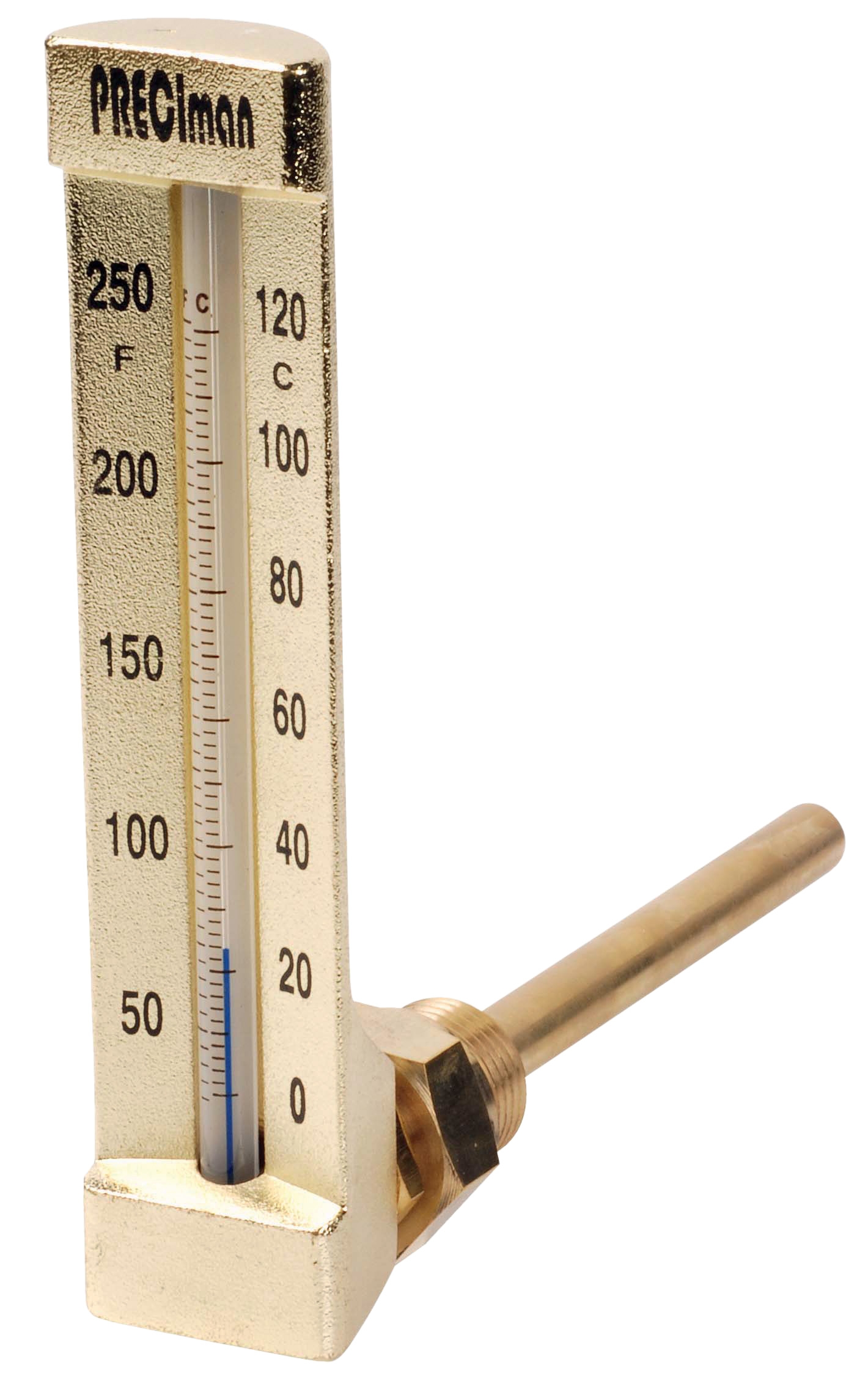
For industrial applications requiring precise point-measurement at specific component depths—such as motor bearing housings or heat exchanger outlets—the CBM Industrial thermometer 0/+50°C immersion 63 right angle height 150 delivers 90-degree positioning that fits confined equipment spaces. The right-angle design prevents thermometer damage from vibration or accidental contact.
Building Your Temperature Measurement Protocol
Implement a structured temperature measurement routine:
- Establish baselines: Record normal operating temperatures for each monitored point across full load conditions
- Define alert thresholds: Set alarm temperatures 5-10°C above maximum normal operating point
- Create measurement schedules: Daily checks for critical systems, weekly for standard equipment, monthly for backup systems
- Document trends: Maintain simple spreadsheets showing weekly readings to identify gradual temperature creep
- Train team members: Ensure all technicians understand thermowell insertion depth and reading accuracy
Temperature trends matter more than single measurements. A slow 2°C rise each week indicates developing problems—sudden 5°C jumps may indicate transient conditions. Your records become invaluable for pattern recognition and failure prediction.
Section 2: Electrical Measurement & Detection for Equipment Diagnostics
Why Electrical Diagnostics Prevent Catastrophic Failures
Electrical faults develop gradually. Loose connections create high resistance, aged insulation degrades, capacitor drift introduces phase imbalance, and ground faults become safety hazards. Measurement & Detection of electrical parameters catches these developing problems before they cause equipment damage, safety incidents, or facility shutdowns.
Electrical diagnostics accomplish three critical functions: confirming equipment receives correct power supply, identifying developing electrical faults before failure, and validating repairs before returning equipment to service.
Implementing Basic Electrical Measurement with Multimeters
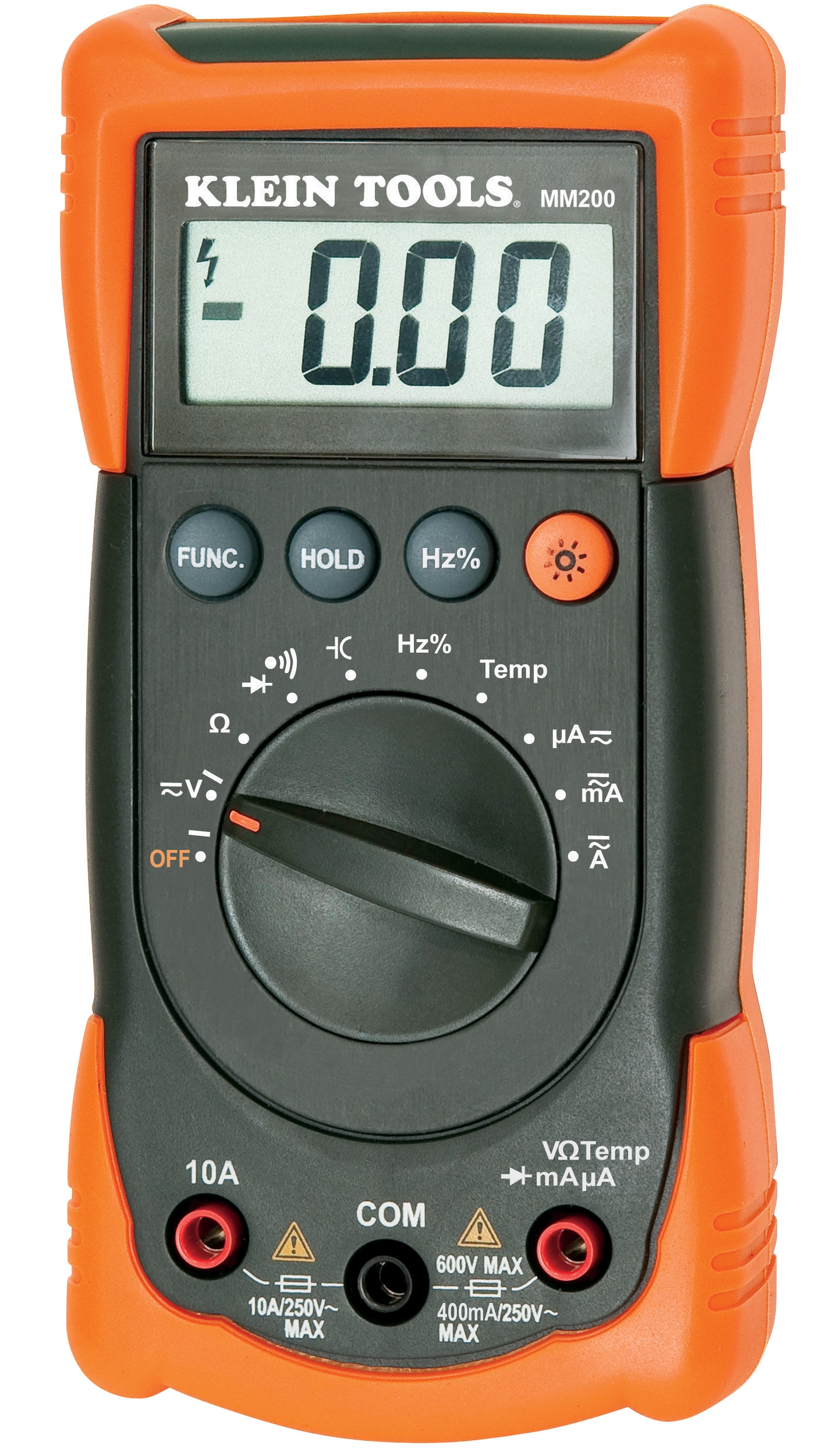
The CBM Automatic multimeter MM420 provides maintenance teams with a user-friendly platform for electrical Measurement & Detection across multiple parameters:
Voltage measurement: Verify that motors, control circuits, and power distribution boards receive correct voltages. Check three-phase voltage balance (readings within 3-5% of each other indicate healthy conditions; imbalances above 5% signal transformer issues or loose connections). Measure voltage drop across suspect switch contacts—readings above 0.5V indicate contact degradation requiring replacement.
Continuity and resistance measurement: Test circuit integrity before troubleshooting. Use continuity function to verify proper wiring in control circuits, safety interlocks, and grounding paths. Measure resistance across motor winding phases to identify shorted turns or opens. Clean contacts should measure near zero ohms; oxidized or corroded contacts show measurable resistance requiring cleaning or replacement.
Current measurement: Where non-invasive current clamps are available, measure load current to identify mechanical problems. Motors drawing 20-30% above nameplate current indicate bearing friction, impeller wear, or misalignment. Current imbalance between phases (differences exceeding 10%) confirms three-phase electrical faults.
Creating Your Electrical Measurement Schedule
Structure electrical Measurement & Detection around equipment criticality:
- Critical systems (motors >15kW, distribution panels, redundant cooling): Weekly voltage balance checks, monthly resistance and continuity verification
- Standard equipment (small motors, control circuits, solenoids): Monthly voltage checks, quarterly continuity verification
- Backup systems (spare equipment, standby generators): Quarterly full electrical verification before storage
- Post-maintenance verification: Complete electrical measurement after any repair before returning equipment to operation
Maintain simple checklists showing which measurements to take at each inspection point. This prevents technicians from missing critical measurements and ensures consistent data collection for trend analysis.
Section 3: Pressure System Measurement & Detection
Pressure Detection in Expansion Tanks and Closed Systems
Pressure measurement extends beyond gauges on system panels. Proper Measurement & Detection of closed system pressures—particularly in expansion tanks, accumulators, and pressurized reservoirs—prevents equipment damage, safety hazards, and efficiency losses.
Expansion tanks commonly lose pressurization through multiple mechanisms: rubber membrane failure allowing water to enter the gas chamber, corrosion creating small leaks, schrader valve degradation, and normal air absorption into water. Even small pressure losses compound over time, forcing compressors to work harder, reducing system efficiency by 5-10%, and eventually causing equipment failure.
Measuring and Maintaining Expansion Tank Pressure
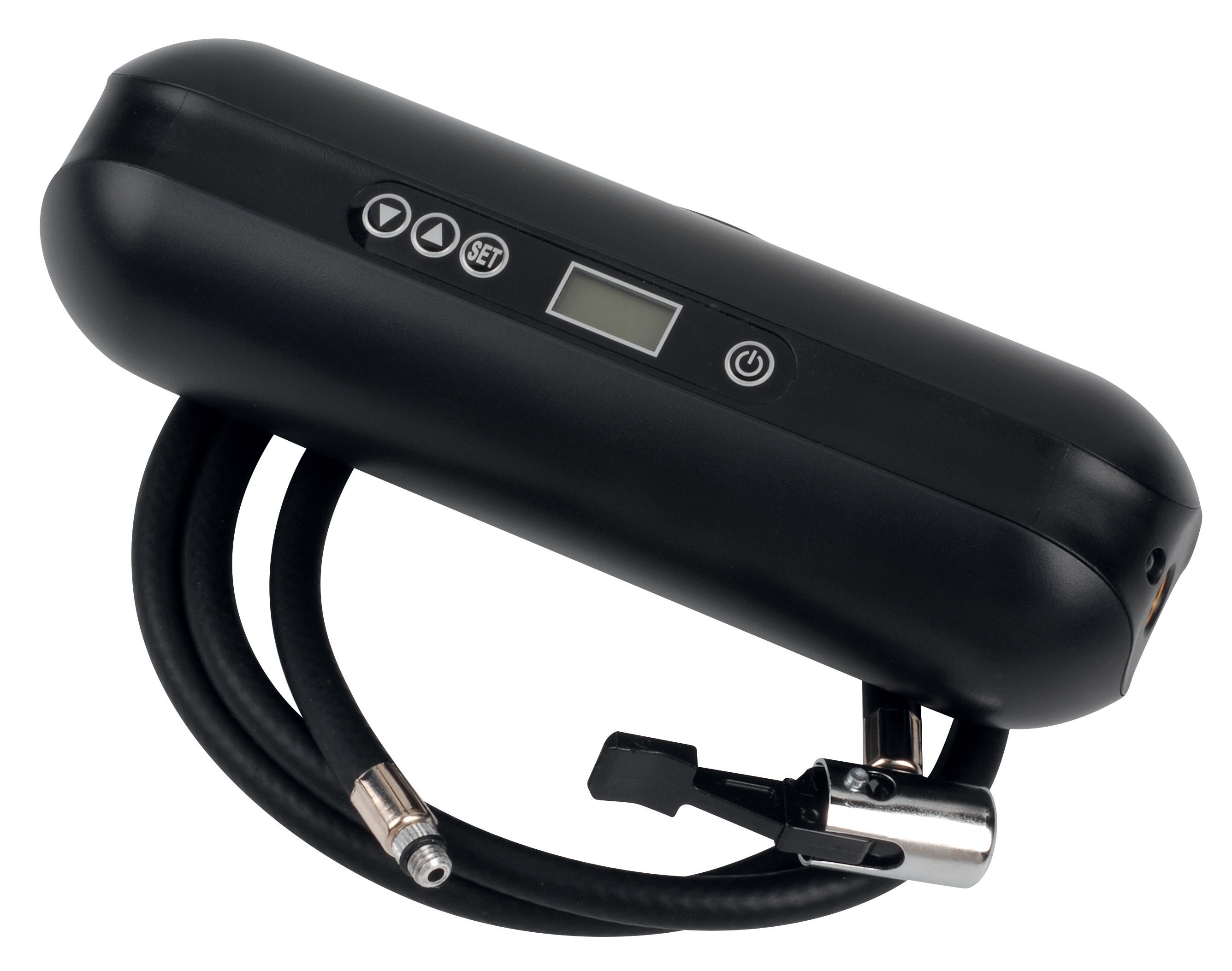
The CBM Expansion tank inflator battery 2000 mAH enables maintenance teams to measure and correct expansion tank pressure on-site without disassembling systems or calling specialized technicians.
Measurement procedure: Most expansion tanks include a schrader valve (identical to automotive tire valves). Using a standard tire pressure gauge, attach to the schrader valve and record the reading. Proper expansion tank pressure typically ranges 0.5-2.0 bar depending on system design; refer to equipment documentation for your specific system.
Corrective inflation: If pressure reads below specification, the CBM inflator provides portable battery-powered inflation without requiring external compressor access. The 2000 mAH battery delivers sufficient pressure for multiple expansion tank corrections before requiring recharge. This capability transforms expansion tank maintenance from a service call into a routine preventive task.
Measurement frequency: Check expansion tank pressure quarterly during season changes and whenever performing system maintenance. Document readings to identify slow leaks—pressure losses exceeding 0.2 bar between quarterly checks signal membrane or valve failure requiring replacement.
Pressure Trends and System Health
Understanding pressure behavior improves diagnostics:
- Stable pressure with seasonal temperature changes: Indicates healthy expansion tank function
- Gradual pressure loss: Points to slow leaks in schrader valve or membrane (typically 0.1-0.2 bar per month)
- Rapid pressure loss: Suggests membrane rupture or significant connection leak requiring immediate system inspection
- Inability to reach normal pressure after inflation: Indicates relief valve setting too low or active internal leak
Maintain a pressure log showing readings across the maintenance season. Pressure trends provide early warning of developing problems and justify budgeting for planned component replacement before emergency failures occur.
Section 4: Implementing Effective Measurement & Detection Protocols
Creating Sustainable Measurement Routines
Successful Measurement & Detection programs balance thoroughness with practical implementation. Your routine should:
Be equipment-focused: Concentrate measurement efforts on assets that cost most to replace, consume most energy, or affect safety. High-capacity chillers, central boilers, and critical process equipment justify daily measurement; backup equipment and redundant systems can operate on quarterly schedules.
Use clear documentation: Simple spreadsheets, laminated checklists, or mobile forms work better than complex databases. Field technicians need quick recording methods; complex systems lead to skipped measurements.
Establish clear action thresholds: Define when measurements require technician response. "Motor bearing temperature exceeds 80°C" is actionable; "temperature is slightly elevated" is not. Clear thresholds enable team members to make independent decisions.
Train consistently: Measurement accuracy depends on proper technique. Ensure all technicians understand thermowell insertion, multimeter function use, and pressure gauge attachment. Include Measurement & Detection in new employee onboarding.
Trend Analysis and Predictive Maintenance
Individual measurements have limited value; trends enable prediction. After 6-12 months of consistent measurement, patterns emerge:
- Temperature gradually increasing 0.5°C per week = bearing wear developing (schedule replacement in next maintenance window)
- Voltage imbalance increasing each month = transformer aging (plan upgrade)
- Expansion tank pressure dropping 0.1 bar monthly = developing leak (source leak location)
- Motor current trending higher = mechanical load increase or cooling fan degradation
These trends provide months of warning before failures occur. This predictability transforms maintenance from reactive firefighting into planned, budgeted activities.
Leveraging 3G Electric's Experience
With 35+ years of industrial equipment distribution, 3G Electric understands measurement challenges across global operations. Our team can assist with:
- Selecting appropriate instruments for your specific applications and environmental conditions
- Establishing baseline parameters for different equipment types
- Training programs for consistent measurement methodology
- Instrument calibration services ensuring measurement accuracy over time
Contact our technical support team to discuss customized Measurement & Detection strategies for your facility.
Conclusion: Measurement & Detection as Your Maintenance Foundation
Effective Measurement & Detection transforms maintenance from guesswork into systematic problem prevention. By implementing structured temperature monitoring, electrical diagnostics, and pressure system detection, maintenance teams:
- Catch developing problems weeks or months before failure
- Reduce emergency maintenance costs by 30-50%
- Extend equipment life through early intervention
- Improve safety by detecting hazardous conditions before incidents
- Provide management with data-driven justification for maintenance budgets
The investment in reliable measurement tools—thermometers, multimeters, and pressure detection equipment—returns itself quickly through prevented failures and extended equipment life. Start with critical systems, establish baseline measurements, and expand your program systematically. Within 12 months, your data will drive intelligent maintenance decisions that significantly reduce operational risk and cost.