
Understanding Measurement & Detection for Predictive Maintenance Strategy
Measurement & Detection equipment forms the foundation of modern predictive maintenance programs. Rather than waiting for equipment failure, industrial professionals can deploy sensors and transmitters to continuously monitor critical parameters—pressure, temperature, and flow—identifying issues before they become costly problems.
For Southeast Asian facilities operating in demanding tropical climates with high humidity and temperature fluctuations, the right measurement instruments become even more critical. 3G Electric has supplied industrial equipment across the region for over 35 years, helping plant managers implement monitoring systems that reduce unplanned downtime by 20-40% while optimizing operational costs.
The key to successful predictive maintenance is selecting instruments that match your facility's specific needs: HVAC systems require different measurement priorities than refrigeration or thermal management applications. This article compares practical measurement solutions to help you build an efficient, scalable monitoring strategy.
Pressure Monitoring: Selecting Transmitters vs. Mechanical Gauges
Pressure measurement is foundational to equipment health monitoring. Your choice between differential pressure transmitters and mechanical gauges depends on your facility's automation level, data requirements, and budget constraints.
Differential Pressure Transmitters for Integrated Monitoring
The Dwyer Transmitter 616KD-13V-TC represents the modern approach to pressure measurement. This differential pressure transmitter measures 0-1 IN W.C with minimal power consumption (21 mA maximum), making it ideal for networked monitoring systems across HVAC installations.
Key advantages for predictive maintenance:
- Real-time data transmission to building management systems
- Low power consumption suitable for battery-backed monitoring nodes
- Barbed process connections accommodate 3-5 mm tubing for flexible installation
- Factory calibrated and ready for immediate deployment
For Southeast Asian facilities, transmitters like the 616KD-13V-TC enable remote monitoring across multiple zones—critical when facilities span multiple buildings or floors. You can track pressure trends over weeks and months, identifying gradual filter clogging, compressor degradation, or ductwork leaks before they impact system performance.
Mechanical Pressure Gauges for Localized Monitoring
The Preciman Stainless Steel Vertical Pressure Gauge D63 0/+40Mbar offers a practical alternative for facilities with distributed systems or budget constraints. This gauge operates across the 0-40 mbar range with ±1.6% accuracy—sufficient for low-pressure HVAC and refrigeration circuits common in Southeast Asian cooling systems.
Practical benefits:
- No electricity required; suitable for remote equipment locations
- G1/4 connection threads directly into system ports
- Stainless steel construction resists tropical corrosion
- 63mm dial provides clear visibility in noisy industrial environments
- Initial cost approximately 60-70% lower than transmitter solutions
The strategic approach combines both: deploy transmitters on critical main circuits feeding multiple zones, and position mechanical gauges at satellite equipment locations. This hybrid strategy provides early warning on the main system while reducing overall instrumentation costs.
Temperature Measurement: RTD Probes for System Diagnostics
Temperature detection drives predictive maintenance decisions across HVAC and refrigeration systems. RTD (Resistance Temperature Detector) probes provide superior accuracy compared to thermocouples and deliver the stability required for trend monitoring.
Precision Temperature Probes for Cooling Circuits
The Dwyer Probe AVG PT100 OHM RTD L.65 AVG-21241 is a PT100 temperature probe rated to ±0.6% accuracy at 0°C with an operating range of -35.5 to +115.5°C. The flexible copper capillary allows installation in tight spaces—particularly valuable in Southeast Asian facilities where retrofit installations must navigate existing infrastructure.
Predictive maintenance applications:
- Monitor evaporator inlet/outlet temperatures to detect refrigerant undercharge
- Track compressor discharge temperatures as early warning of mechanical wear
- Measure condenser performance degradation from fouling or scale buildup
- Identify thermal imbalances across parallel compressor circuits
For tropical regions, the ability to measure across the full -35.5 to +115.5°C range is essential. Your monitoring system can detect when suction line superheat drops unexpectedly (indicating liquid slugging risk) or when discharge temperatures climb above normal operating envelopes (signaling imminent compressor failure).
The flange-clip mounting allows quick installation without breaking system connections—reducing service time during maintenance windows. Copper alloy wetted parts resist corrosion from humid Southeast Asian environments better than steel alternatives.
Flow Measurement: Optimizing HVAC System Performance
Flow measurement bridges pressure and temperature data, allowing you to calculate actual system capacity and identify efficiency degradation over time.
Average Flow Probes for HVAC Systems
The Dwyer Metal Average Flow Probe MAFS-16 measures static and total pressure across a 16 cm probe length, enabling accurate flow calculation in HVAC ductwork. Unlike point-measurement devices, average flow probes account for velocity variations across the duct profile, providing more representative data.
Predictive value:
- Detect filter loading by monitoring pressure drop trends over weeks
- Verify ductwork integrity—unexpected flow drops indicate leakage
- Confirm proper balancing after system modifications
- Track seasonal performance variations (critical in tropical humidity swings)
- Support energy audits that justify equipment upgrades
For Southeast Asian facilities, flow measurement reveals how humidity affects system performance. Excessive moisture on cooling coils increases pressure drop, which reduces flow and cooling capacity. By monitoring both pressure differential and flow rates, you can schedule cleaning before customer comfort suffers.
System Pressurization and Maintenance Support
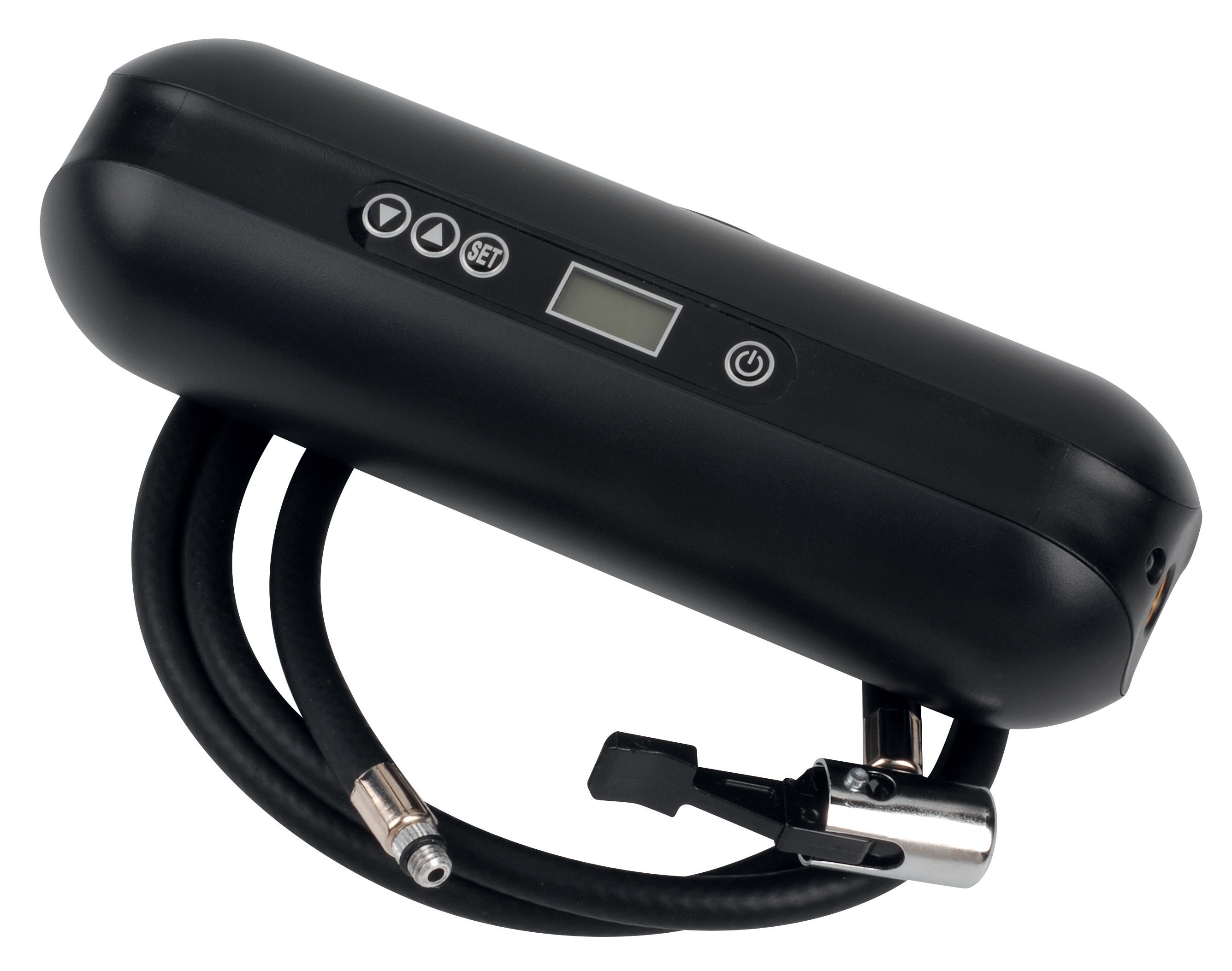
Beyond monitoring, measurement tools support actual maintenance activities. The CBM Expansion Tank Inflator Battery 2000 mAH represents a often-overlooked element of measurement strategy—the ability to verify system integrity during commissioning and maintenance.
This portable inflator with 2000 mAH battery capacity operates to 10.3 bar maximum pressure across -20 to 60°C, supporting multiple pressure unit displays. For HVAC and heating professionals:
- Verify expansion tank pre-charge pressures (critical for system stability)
- Pressure-test circuits during leak detection procedures
- Confirm system integrity before refrigerant charging
- Support multiple pressure display formats (bar, psi, mbar)
In tropical climates where humidity accelerates component corrosion, the ability to verify expansion tank pressurization prevents costly failures. A properly charged expansion tank prevents compressor liquid slugging and extends service life by 2-3 years.
Building Your Predictive Maintenance Measurement Strategy
Phase 1: Foundation (Months 1-2)
Deploy mechanical gauges on all major equipment. Cost approximately $200-400 per unit, providing immediate visibility. Train maintenance teams to read trends week-to-week.
Phase 2: Intelligence (Months 3-6)
Add differential pressure transmitters to primary circuits serving multiple zones. Integration cost is $1,500-3,000 per monitoring node including wiring and system integration. Focus first on systems with highest failure frequency.
Phase 3: Optimization (Months 6-12)
Expand temperature probe coverage, particularly across compressor discharge and suction lines. Deploy data logging or BMS integration to capture trends. Analyze 6-month historical data to establish baseline performance and set alert thresholds.
Phase 4: Advanced Monitoring (Year 2+)
Add flow measurement to critical zones. Begin calculating actual system efficiency (capacity vs. energy consumed) to justify maintenance spend and identify equipment upgrade timing.
This phased approach reduces initial capital requirements while building expertise within your maintenance team. 3G Electric's 35+ years supplying Southeast Asian facilities has demonstrated that this incremental strategy achieves 70-80% of full monitoring benefits at 30-40% of the cost.
Regional Considerations for Southeast Asian Installations
Tropical climate monitoring requires specific equipment selections:
- Humidity Impact: Mechanical gauges with stainless steel cases (like the Preciman unit) outlast painted steel alternatives by 3-5 years
- Temperature Swings: RTD probes with wide operating ranges (-35 to +115°C) accommodate both air-conditioning and hot-water heating circuits
- Power Reliability: Transmitters with 21 mA power consumption (like the Dwyer 616KD) survive voltage fluctuations better than high-consumption alternatives
- Service Accessibility: Battery-powered inflators and portable test equipment reduce dependence on grid power for maintenance activities
- Spare Parts: Standardized connections (G1/4 ports, PT100 probes, barbed tubing adapters) ensure easy replacement during supply chain disruptions
Maximizing ROI from Your Measurement & Detection Investment
The real value emerges when you establish baselines and track trends. A facility deploying the recommended measurement strategy typically realizes:
- 20-30% reduction in unplanned downtime through early issue detection
- 15-25% improvement in energy efficiency by identifying and correcting system imbalances
- 3-5 year extension of equipment service life by preventing catastrophic failures
- 40-60% reduction in emergency service calls through proactive intervention
These benefits compound over 3-5 years. Initial investments of $5,000-15,000 in measurement equipment and installation typically return value within 12-18 months through reduced emergency repairs and extended equipment life.
3G Electric can help you design and source a measurement strategy matched to your specific facility type, climate zone, and budget constraints. With access to transmitters, probes, gauges, and support equipment from industry-leading manufacturers, we provide the integrated solutions Southeast Asian industrial facilities require.