Understanding Multi-Parameter Measurement & Detection in Industrial Operations
Measurement & Detection capabilities extend far beyond single-point monitoring. Modern industrial plants require simultaneous visibility into multiple parameters—temperature, pressure, and electrical current—to maintain optimal performance and safety standards. For plant managers in Singapore's demanding industrial environment, integrating these measurements creates a comprehensive operational picture that prevents cascading failures and enables rapid response to anomalies.
With over 35 years of experience supplying industrial equipment across Southeast Asia, 3G Electric understands that plant managers face increasing pressure to maximize uptime while maintaining strict safety compliance. Single-parameter monitoring creates blind spots. A pressure system operating within specifications might still fail if thermal conditions exceed safe limits. An electrical circuit showing normal current draw might mask developing insulation degradation. Integrated multi-parameter Measurement & Detection eliminates these gaps.
The Singapore industrial sector—particularly petrochemical, food processing, semiconductor manufacturing, and marine operations—demands this level of sophistication. Tropical climate conditions, high humidity, and continuous operation in saltwater environments accelerate equipment degradation. Multi-parameter monitoring catches problems before they escalate into safety incidents or extended downtime.
Designing Your Integrated Measurement & Detection Strategy
Identify Critical Monitoring Points
Begin by mapping your facility's vulnerable systems. Most plants have 8-15 critical monitoring zones where simultaneous parameter measurement prevents catastrophic failure:
- Pumping and compression systems require concurrent pressure and temperature monitoring. Pressure spikes without temperature correlation might indicate blockage; pressure drops with rising temperature suggests bearing wear.
- Electrical distribution circuits need current detection paired with thermal imaging. The Dwyer Miniature current detector MCS-111001 identifies load imbalances and incipient faults before they trigger breakers.
- Process vessels and heat exchangers demand pressure-temperature-flow correlation. A pressure gauge alone misses the full picture; thermal measurement reveals efficiency degradation.
- HVAC and chilled water systems require simultaneous pressure and temperature readings at supply and return points to calculate system efficiency and detect refrigerant loss.
Select Instruments with Complementary Specifications
Instrument selection determines data quality. Your measurement points must provide compatible accuracy and response characteristics.
For pressure monitoring in compact hydraulic and pneumatic installations, the Preciman Green ABS pressure gauge D100 0/+1bar G1/2 delivers ±2.5% accuracy in a 100 mm face that fits confined spaces. Its G1/2 connection integrates readily into existing systems. For higher-pressure applications up to 16 bar, the Preciman ABS manometer axial D63 0/+16bar G1/4 provides equivalent accuracy in a more compact format.
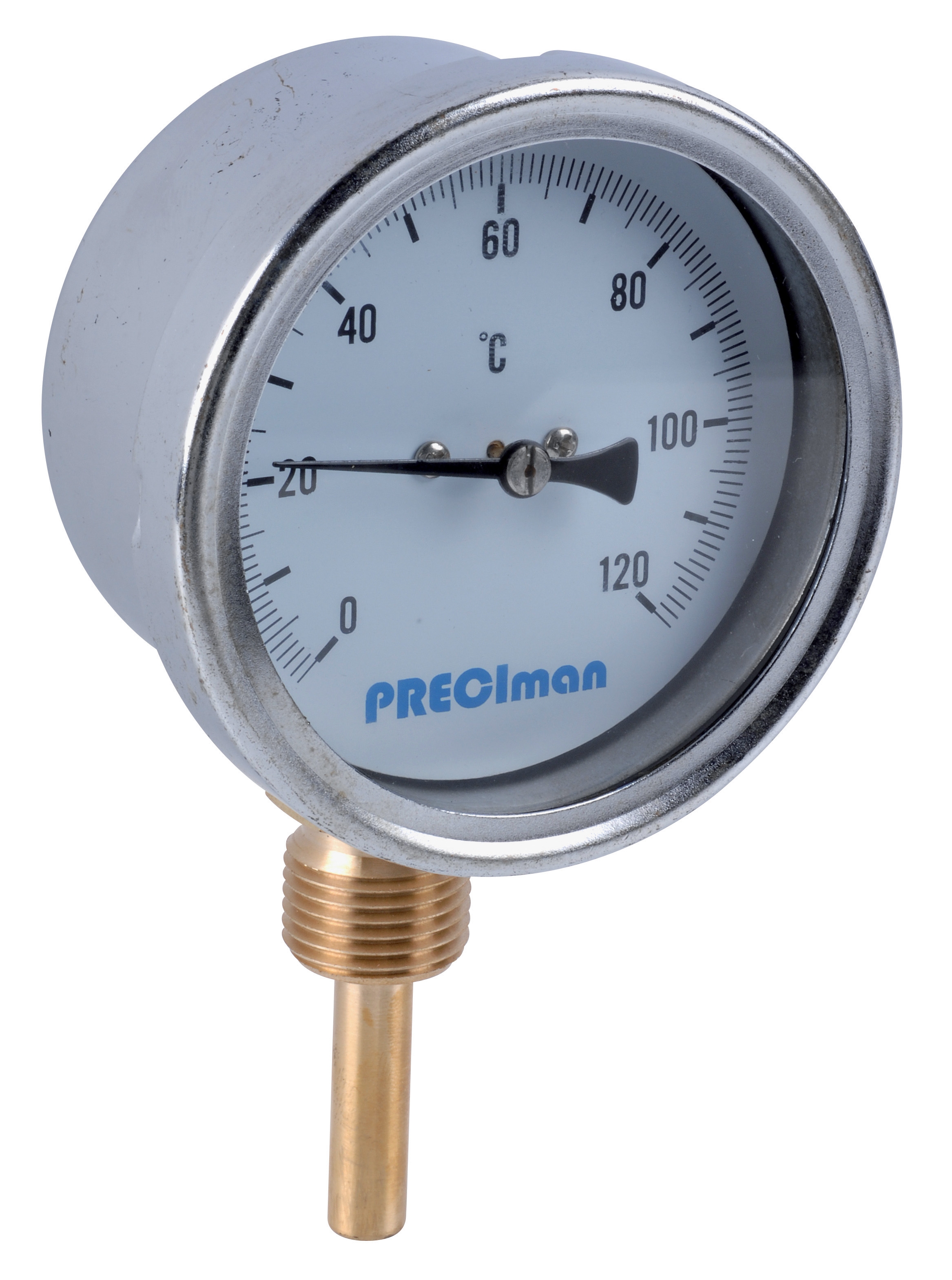
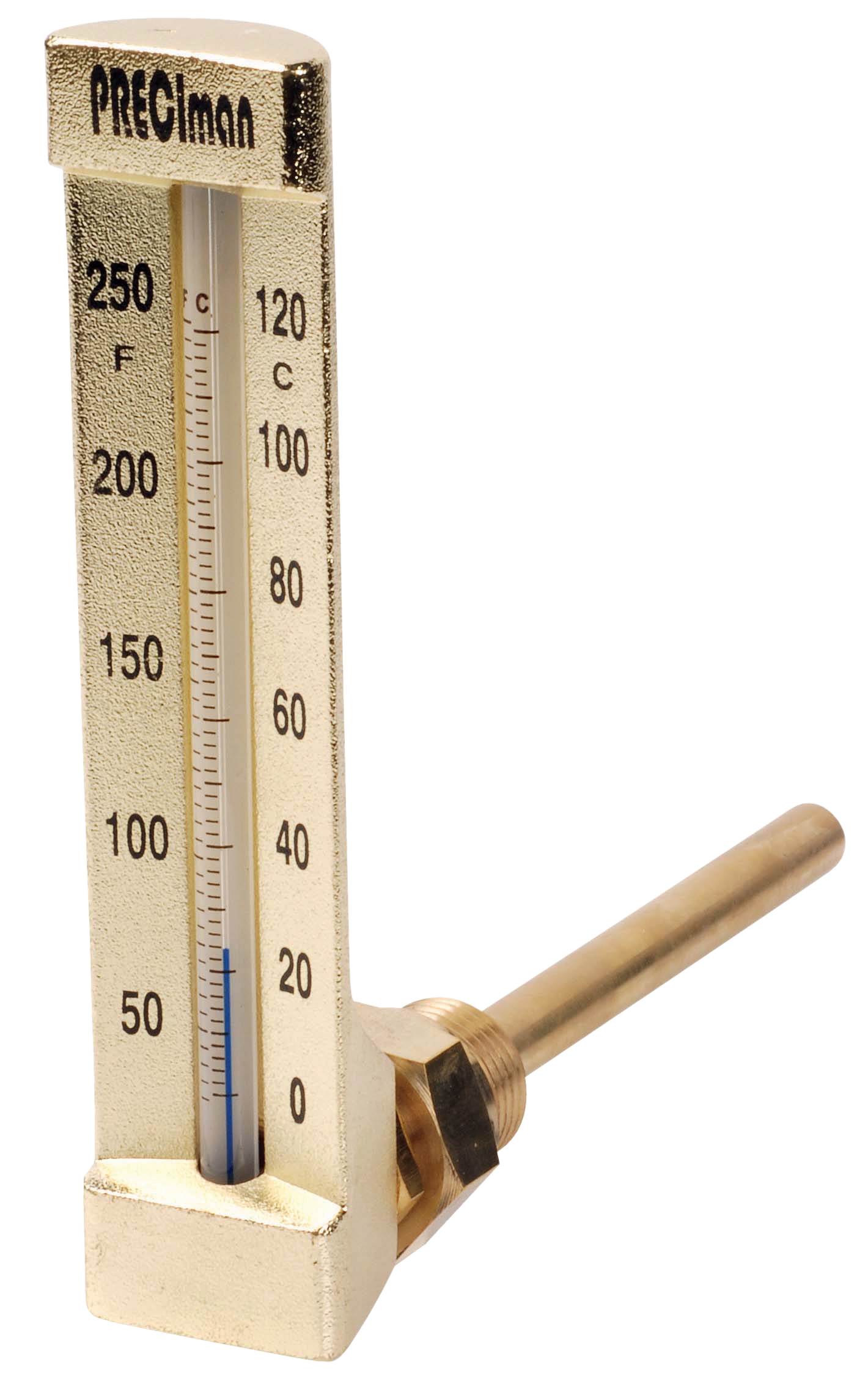
Temperature detection requires matching response times to your process. The Preciman Industrial thermometer 0/+50°C immersion probe 100 elbow height 200 suits applications requiring precise measurement in the moderate temperature range common to chilled systems, tank monitoring, and process control. For broader range requirements spanning -30°C to +50°C, the Preciman Green vertical thermometer D80 -30/+50°C L 10cm with thermowell accommodates ambient monitoring, equipment enclosure temperature control, and industrial process applications with an 80 mm dial that remains readable from distance.
Current detection capabilities round out your measurement matrix. The Dwyer Miniature current detector MCS-111001 offers adjustable setpoints and 600 V isolation rating for control circuit monitoring, equipment load analysis, and fault detection. Its 0.01 A minimum current sensitivity catches developing problems in low-power circuits that traditional ammeters might miss.
Create Zoned Monitoring Zones with Hierarchical Importance
Not all monitoring points carry equal weight. Tier your instrumentation strategy:
Tier 1 (Continuous, Real-Time): Critical systems where failure creates immediate safety risk or production loss—compressor discharge lines, main electrical feeders, process vessel contents, chilled water supply temperatures. These points warrant digital recording and automated alarm capability.
Tier 2 (Regular Scheduled Checks): Important but non-critical systems where degradation develops over hours rather than minutes—auxiliary pump pressures, secondary HVAC zones, equipment enclosure temperatures. Manual readings on shift schedules or daily inspections suffice.
Tier 3 (Periodic Baseline): Reference measurements for comparison and trend analysis—ambient conditions, system idle-state pressures, equipment temperature at standstill. Establish these quarterly or semi-annually to detect long-term drift.
Implementing Measurement & Detection in Singapore's Industrial Environment
Account for Tropical Climate Effects
Singapore's tropical climate—high temperature, humidity, and corrosive salt air in coastal facilities—accelerates instrument degradation. Your Measurement & Detection strategy must incorporate climate resilience:
Instrument Material Selection: Stainless steel stems and ABS plastic gauge faces resist corrosion better than brass or painted steel. The Preciman Green thermometers with stainless steel stems withstand salt air exposure in marine applications and coastal petrochemical facilities. ABS-bodied gauges like the Preciman ABS pressure gauges resist chemical attack in processing environments.
Protection Strategy: House instruments in NEMA 4X or equivalent enclosures in humid areas. Install Measurement & Detection instruments in conditioned control rooms where feasible. For field-mounted equipment, specify sealed connectors and protective caps on unused ports.
Calibration Frequency: Tropical conditions warrant more frequent calibration. Plan quarterly calibration checks rather than annual intervals for instruments in high-humidity zones or exposed to chemical spray.
Establish Cross-Parameter Correlation Protocols
Your plant operators must understand what simultaneous readings mean. Develop quick-reference guides for each critical monitoring zone:
Pressure + Temperature Correlation Table:
- Normal: Pressure stable, temperature within expected range
- Concern: Pressure rising, temperature steady (possible restriction; check filters and lines)
- Concern: Temperature rising, pressure dropping (bearing wear; schedule inspection)
- Critical: Both rising (seal failure or blockage; shut down and investigate)
- Baseline current: Establish normal operating current on each circuit; record during commissioning
- Creeping rise: 5-10% increase over weeks suggests normal load growth or efficiency loss; investigate load profile
- Sudden spike: >20% above baseline indicates fault condition; activate troubleshooting protocol
- Sustained low: Below expected indicates underload, open circuit, or demand reduction
Coordinate with Your Maintenance Team
Measurement & Detection effectiveness depends on rapid response. Ensure your maintenance team understands:
- Alarm thresholds: Why you've set specific pressure or temperature limits; what actions trigger at each level
- Data recording: Whether readings should be logged manually, photographed, or entered into your CMMS
- Trend analysis: How to recognize patterns (gradual drift vs. sudden shift) that predict failure modes
- Instrument limitations: What readings can and cannot tell you; when supplementary testing is necessary
With 35+ years of experience supporting Southeast Asian industrial operations, 3G Electric regularly works with plant managers establishing these protocols. The difference between reactive maintenance and predictive capability often comes down to whether operators actively monitor correlations or merely read individual gauges.
Optimizing Multi-Parameter Monitoring for Operational Excellence
Create Daily and Weekly Review Routines
Implement structured Measurement & Detection review cycles:
Daily Operator Rounds: Quick visual checks of all accessible gauges; record pressures and temperatures on paper or digital checklist. Time investment: 15-20 minutes per shift. Value: Catches acute changes immediately rather than waiting for scheduled maintenance visits.
Weekly Engineering Review: Compile week's readings; plot trends; compare against baseline; identify developing patterns. This 30-minute analysis often reveals problems 1-2 weeks before they become critical.
Monthly Correlative Analysis: Map how parameters interact during normal operation, seasonal changes, and abnormal conditions. Use this to refine your alarm thresholds and response procedures.
Plan Measurement & Detection Calibration as Preventive Maintenance
Instruments drift. Even quality equipment like Preciman and Dwyer devices lose accuracy over time, particularly in harsh industrial environments. Build calibration into your annual maintenance budget:
- Pressure gauges: Calibrate annually; every 6 months in high-vibration or corrosive environments
- Thermometers: Calibrate annually using ice-point and steam-point verification
- Current detectors: Verify annually against known loads; check setpoint repeatability
Document baseline readings at commissioning. Calibration isn't just about accuracy—it's proof that your Measurement & Detection system remains trustworthy for operational decisions.
Leverage Measurement & Detection Data for Efficiency Optimization
Beyond safety and reliability, integrated monitoring reveals efficiency opportunities:
System Pressure Analysis: Monitor pressure across seasons and load conditions. You might discover that pressure-relief setpoints can be optimized downward by 0.5-1 bar, reducing compressor energy consumption by 5-8% without compromising performance.
Temperature Trending: Track how rapidly systems reach operating temperature and how temperature responds to load changes. Anomalies suggest fouling, insulation loss, or aging equipment requiring replacement planning.
Load Profiling: Current detection on electrical circuits reveals actual consumption patterns. You might identify phantom loads, opportunity for demand-side management, or circuits where load consolidation is possible.
Practical Implementation Checklist for Plant Managers
- [ ] Map your facility's 8-15 most critical monitoring points
- [ ] Specify instruments matching pressure range, temperature range, and accuracy requirements for each zone
- [ ] Select quality suppliers like 3G Electric with proven track records supporting your region's industrial sector
- [ ] Procure instruments featuring materials (stainless steel, ABS) suitable for Singapore's tropical environment
- [ ] Establish baseline readings during commissioning and normal operation
- [ ] Train operators on daily measurement protocols and alarm thresholds
- [ ] Create written correlation guides (Pressure + Temp = what it means)
- [ ] Schedule weekly engineering reviews to analyze trends
- [ ] Budget for annual calibration verification
- [ ] Document all readings in your CMMS or maintenance logbook
- [ ] Conduct monthly "what changed" analysis to refine understanding
Conclusion
Measurement & Detection systems that simultaneously monitor temperature, pressure, and current provide plant managers with the operational visibility necessary to prevent failures, optimize efficiency, and maintain safe working conditions. In Singapore's demanding industrial environment, this integrated approach transforms maintenance from reactive firefighting into predictive, data-driven decision-making.
The instruments are available—Preciman and Dwyer products have proven reliability across Southeast Asian operations. The framework is straightforward: identify critical points, select complementary instruments, establish baseline readings, create correlation protocols, and build routine review disciplines. The gap most facilities face isn't technology; it's systematic implementation.
With 35+ years of experience supporting Singapore industrial plants, 3G Electric understands that successful Measurement & Detection deployment requires matching instruments to environment, operators trained in interpretation, and management commitment to acting on data. Partner with a distributor who understands your facility's specific challenges—tropical climate effects, corrosive exposures, regulatory compliance requirements—rather than a generic industrial supplier.
Your measurement strategy today determines your operational capability tomorrow. Invest in integrated multi-parameter Measurement & Detection now, and you'll spend the next three years addressing problems before they become emergencies.