Understanding Measurement & Detection in HVAC Commissioning
Measurement and detection systems form the backbone of professional HVAC commissioning. When you complete an installation—whether it's a new chiller loop, split system, or rooftop unit—you must verify that the system operates within design specifications before handover to facility managers. Without proper measurement and detection protocols, you risk delivering systems that underperform, consume excess energy, or fail prematurely.
Drawing on 35+ years of industrial equipment distribution experience, 3G Electric has supported thousands of HVAC contractors through commissioning challenges across diverse climates and system types. The difference between a successful, warranty-backed installation and costly callbacks comes down to methodical measurement and detection during the critical commissioning phase.
This guide walks you through real-world measurement and detection workflows you'll use on site, the instruments you need, and how to interpret results that confirm system readiness.
Core Measurement & Detection Parameters for HVAC Systems
Temperature Measurement and Verification
Temperature measurement is your primary diagnostic tool during commissioning. You need to verify:
- Supply and return air temperature differential (typically 15–20°F across a cooling coil)
- Chilled water temperatures at the plant and at branch circuits
- Condenser water temperatures to confirm cooling tower performance
- Equipment surface temperatures to detect blockages or refrigerant issues
- Ambient conditions to validate system response under load
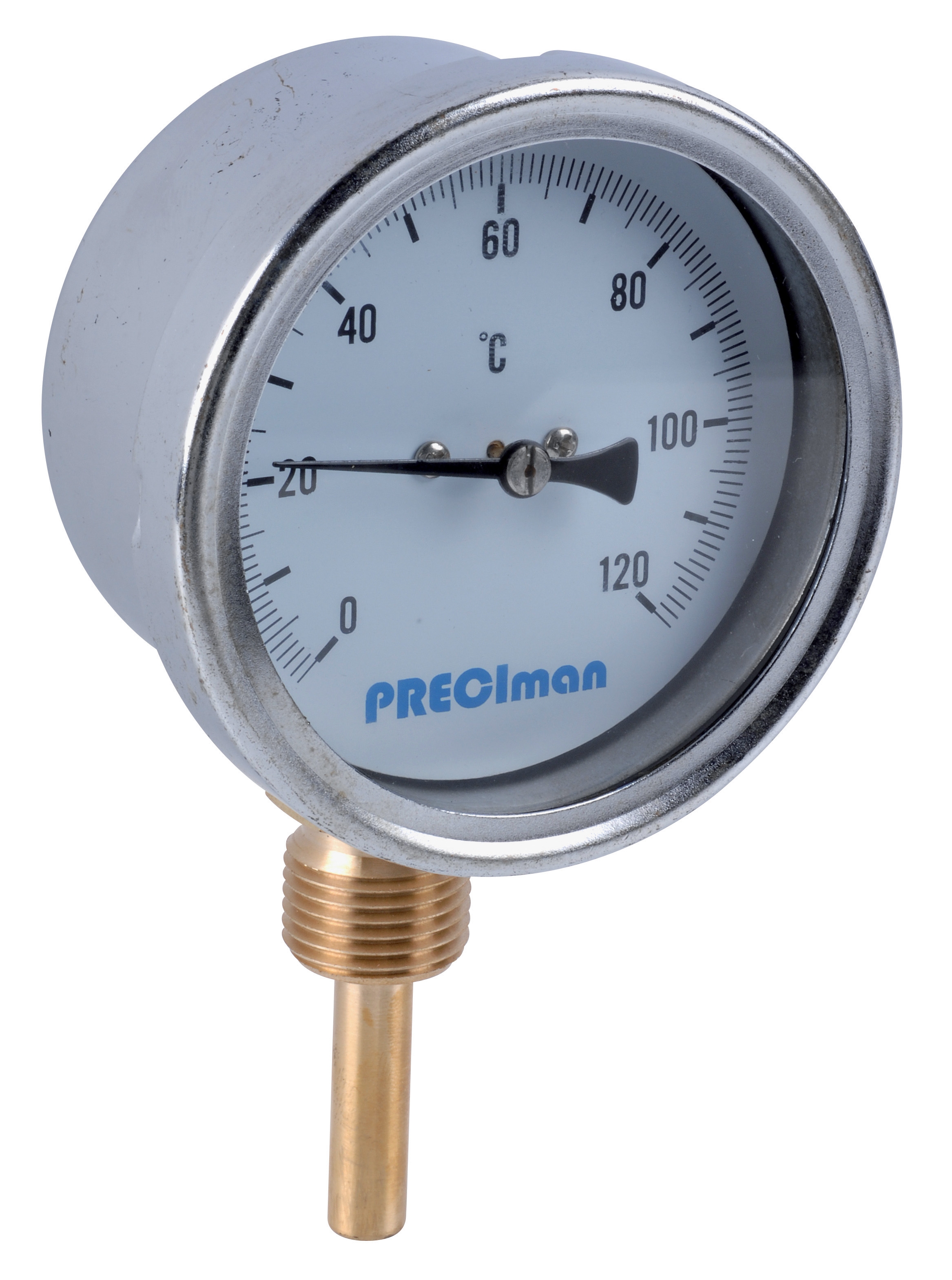
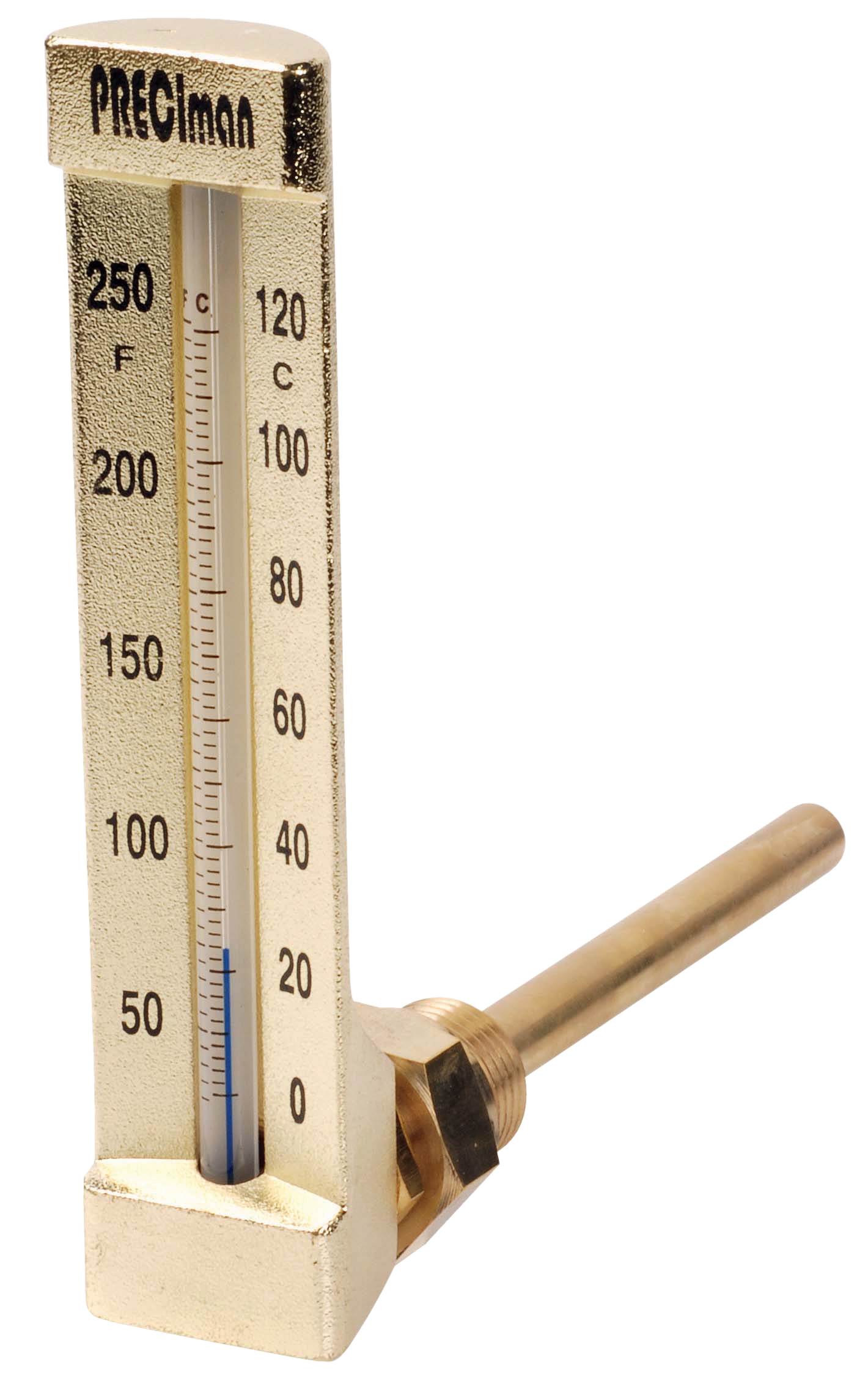
The Preciman Industrial thermometer 0/+50°C immersion probe is ideal for quick spot-checks on piping runs. For critical measuring points—particularly on boiler or chiller return lines—the Preciman Green vertical thermometer D80 -30/+50°C with thermowell provides accuracy and integration into permanent monitoring. The thermowell allows you to remove the thermometer for servicing without draining the system.
When checking air handler discharge temperature, insert the immersion probe into the duct airstream perpendicular to flow and allow 30 seconds for stabilization. Document all readings against outdoor air temperature and system load to establish a baseline for future reference.
Pressure Measurement and System Balance
Pressure measurement confirms that your system is operating at design point and that all components receive adequate flow:
- Chilled water supply/return pressure differential validates pump performance and balancing valve settings
- Air handler coil pressure drop reveals blockages or undersized piping
- Ductwork static pressure ensures proper fan operation and ductwork integrity
- Expansion tank pressure prevents future system expansion failures
The Preciman Green ABS pressure gauge D100 0/+1bar G1/2 suits low-pressure chilled water systems common in light commercial and modular installations. For higher-pressure applications—industrial chillers or condensing units—the Preciman ABS manometer axial D63 0/+16bar G1/4 delivers reliable measurement at compact scale, ideal for tight equipment rooms.
Install permanent gauge ports at key points (pump discharge, coil inlet/outlet, expansion tank) using ¼-inch ball valves. During commissioning, connect your portable gauge, isolate the valve isolators, and take readings at stable flow conditions. Always bleed air from gauge ports before recording data.
Electrical Current Detection and Verification
Electrical verification during commissioning ensures motors operate safely and control circuits respond correctly. Current measurement reveals:
- Motor operating current compared to nameplate Full Load Amperage (FLA)
- Proper phase rotation on three-phase equipment
- Control circuit continuity when actuators and valves respond to commands
- Soft-starter or VFD function if your system includes variable speed drives
The Dwyer Miniature current detector MCS-111001 allows contactless detection of AC current flow in control wiring and low-voltage circuits. Clamp the detector around a motor lead or contactor coil wire to verify current without interrupting the circuit. Its 0.01 A sensitivity catches low-current loads in control circuits that traditional clamp meters might miss.
For main motor verification, use a calibrated clamp meter on each phase of the motor leads. Healthy three-phase motors show balanced current within 10% across all three phases. Unbalanced current exceeding 10% indicates phase loss, improper motor connections, or internal motor damage.
Commissioning Workflows: Measurement & Detection in Practice
Pre-Startup Verification
Before energizing the system, perform static measurements:
1. Isolation and visual inspection: Confirm all manual isolation valves are in the open position. Check for loose fittings, missing insulation, or obstructions.
2. Ductwork and piping verification: Measure internal ductwork dimensions against drawings to confirm correct size. Use a straightedge to check ductwork alignment and listen for audible leaks.
3. Control wiring continuity: Use a multimeter (resistance mode) to confirm continuity in thermostat wiring, actuator leads, and safety interlocks.
4. Expansion tank pressure: Using a bicycle pump equipped with a pressure gauge, confirm pre-charge pressure matches system design (typically 12 psi for low-pressure systems). Never exceed manufacturer limits.
Operational Commissioning and Measurement
Once the system runs, systematic measurement and detection confirms design performance:
Hour 1–2: System startup and stabilization
- Monitor pump and fan motor current every 15 minutes until readings stabilize
- Record inlet and outlet temperatures on all major components
- Listen for unusual noises (cavitation, bearing wear, vibration)
- Check for water or refrigerant leaks at all connection points
- Increase thermostat setpoint 5–10°F and measure system response time (target: stable new temperature within 30–60 minutes depending on system size)
- Verify pressure and temperature sensors transmitting correct signals to the building management system
- Confirm all zone dampers and balancing valves responding to control commands
- Document current draw on major motors under full load
- Measure supply/return differentials across all major coils and components
- Verify chiller or boiler capacity by comparing temperature differential and measured flow rate
- Check expansion tank pressure again after thermal stabilization
- Collect photos and readings of all gauge points for the final commissioning report
Documentation and Handover
Professional measurement and detection during commissioning creates a performance baseline for facility operations:
- Create a commissioning data sheet listing all measurement points, design values, and actual readings
- Photograph all gauge readings with dates and times visible
- Record ambient conditions (outdoor temperature, humidity, time of day)
- Document any deviations from design and corrective actions taken
- Provide the owner with a "normal operation reference" showing typical temperature and pressure values under standard load conditions
This documentation becomes invaluable when troubleshooting future problems. If a system begins to underperform months or years after commissioning, you can compare current measurements against your baseline to isolate the cause quickly.
Selecting the Right Measurement & Detection Tools
Investing in quality instruments saves time on every job and protects your reputation:
- Industrial thermometers (with immersion probes) offer accuracy and durability for frequent on-site use. Glass-stem instruments like the Preciman line withstand rough handling and extreme temperatures without calibration drift.
- Pressure gauges with compact designs and stainless steel internals resist corrosion in humid climates and industrial environments. Choose instruments with ranges matching your system (oversized gauges sacrifice readability; undersized gauges risk damage if pressure spikes).
- Current detectors enable contactless verification in energized circuits, eliminating the need to interrupt power or open control panels. The Dwyer MCS-111001 detects current down to 0.01 A, ideal for confirming solenoid valve operation and relay contacts before full system load.
As a distributor for 35+ years, 3G Electric maintains inventory of measurement and detection instruments proven reliable across global industrial applications. We help contractors select tools appropriate for their specific climate zone, system type, and commissioning frequency.
Measurement & Detection as a Competitive Advantage
HVAC contractors who document commissioning with professional measurement and detection stand out in competitive markets:
- Faster warranty resolution: When a customer reports an issue, your baseline data narrows troubleshooting time from hours to minutes.
- Demonstrable compliance: Documentation proves your work meets design specifications and regulatory requirements.
- Repeat business and referrals: Facility managers and property managers recognize contractors who provide detailed commissioning reports and stand behind their installations.
- Reduced callbacks: Thorough measurement and detection during commissioning prevents 80% of post-installation service calls caused by improper setup or missed adjustments.
Measurement and detection is not administrative overhead—it's the technical discipline that converts installations into reliable, long-lived systems.