Measurement & Detection for Real-Time HVAC Performance Optimization
Measurement and detection technologies form the backbone of modern HVAC system management. For contractors, moving beyond installation to ongoing performance optimization requires understanding how pressure, temperature, and air quality data drive decision-making. With over 35 years of industrial equipment distribution experience, 3G Electric has supported HVAC professionals in selecting the right measurement tools that deliver actionable insights for system tuning and client retention.
This guide focuses on practical strategies for contractors who want to differentiate their service offerings through data-driven HVAC optimization—transforming measurement data into performance improvements that clients can measure in comfort levels, energy costs, and system longevity.
Section 1: Differential Pressure Monitoring for Airflow Verification and Duct System Health
Differential pressure measurement is critical for validating that HVAC systems deliver design airflow. Many contractors rely on basic commissioning checks; few use ongoing differential pressure monitoring to detect system degradation.
Why Differential Pressure Matters:
Airflow degradation typically occurs gradually—filter loading, duct contamination, and register blockages reduce system performance before causing obvious comfort complaints. Differential pressure gauges reveal these problems weeks or months before occupants notice temperature swings or dead zones.
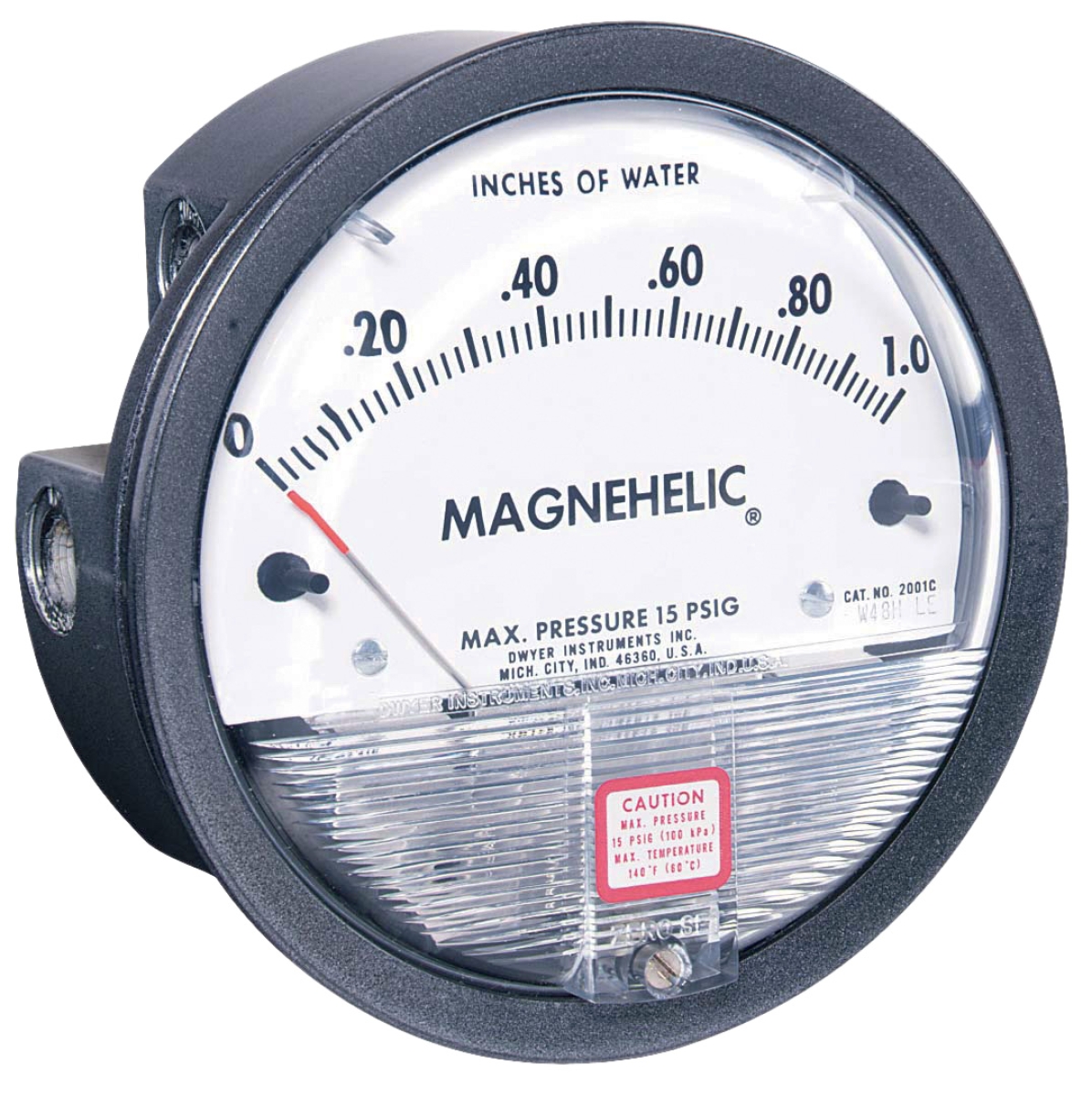
The Dwyer Magnehelic differential pressure gauge (0–8 kPa) is engineered for HVAC applications. Its 4-inch dial provides precise readings at low pressures where most ductwork operates. The 1/8 inch NPT connection fits standard duct tap locations, allowing contractors to install semi-permanent monitoring stations at critical points: upstream of filters, across coil sections, and at main duct risers.
Practical Installation Strategy:
1. Filter pressure drop monitoring: Connect the gauge across the filter housing. Clean filter differential pressure establishes the baseline. When readings exceed 150% of that baseline, schedule filter replacement—catching degradation before airflow reduces to 85% of design.
2. Coil performance tracking: Differential pressure across heating and cooling coils indicates fouling or refrigerant imbalance. Rising pressure without load changes suggests maintenance needs before system efficiency drops noticeably.
3. Zone balancing validation: Use the gauge to verify that branch duct pressures remain within ±0.05 inches of water column of design values. This prevents complaints about uneven heating or cooling across floors or zones.
Client Value: Contractors who monitor differential pressure and proactively address degradation can demonstrate 5–8% efficiency improvements in client energy audits. This becomes a billable value-added service and justifies recurring monitoring contracts.
Section 2: Temperature Profiling for System Efficiency and Comfort Optimization
Temperature measurement extends beyond thermostat readings. Profiling temperatures at multiple points reveals HVAC system efficiency losses and comfort problems that basic thermostats mask.
Multi-Point Temperature Monitoring:
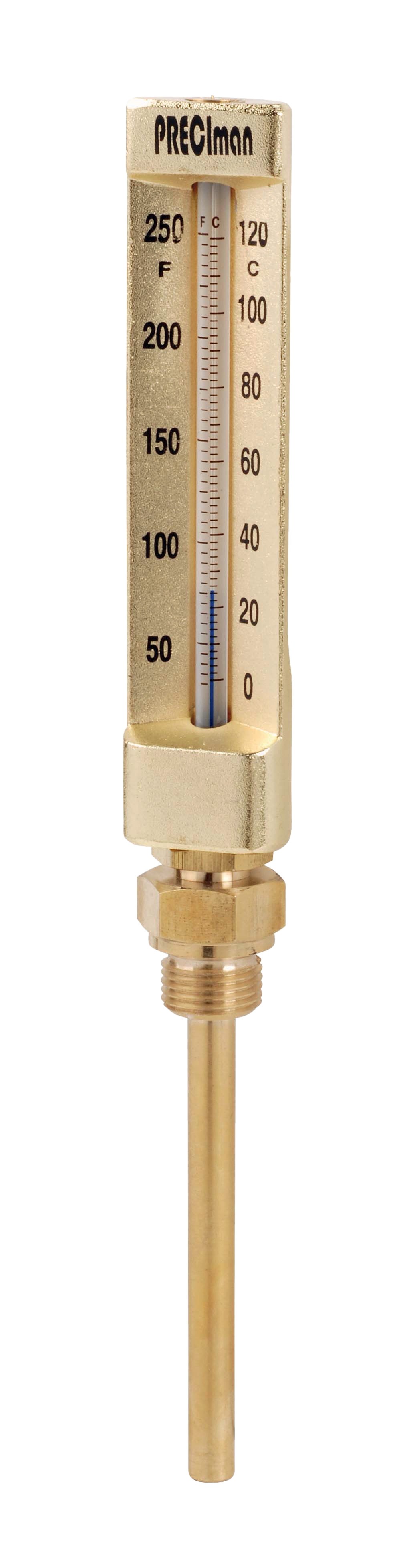
The Preciman industrial thermometer (0 to +120°C, 150 mm immersion) provides durable, reliable temperature measurement for HVAC applications. Its straight immersion probe allows measurement at ductwork, return air, supply registers, and equipment. Unlike electronic sensors that can drift or fail, glass thermometers remain accurate without calibration or batteries.
Optimization Applications:
1. Supply/return temperature differential: Monitor the temperature rise across furnaces and the temperature drop across cooling coils. Deviations from design values signal airflow problems, heat exchanger fouling, or refrigerant undercharge. A furnace that should deliver 50°F temperature rise but only achieves 35°F is starved of airflow—typically a filter or duct problem.
2. Register temperature consistency: Measure supply air at multiple registers. Variations >3°F between zones indicate duct insulation degradation, leakage, or balancing problems. This data justifies duct sealing investments and improves zone control performance.
3. Return air stratification: Temperature differences between ceiling returns and low returns reveal mixing issues. Poor mixing forces the system to heat or cool more air than necessary, reducing efficiency. Data showing stratification of >5°F drives ductwork redesign decisions.
4. Outdoor air fraction optimization: For systems with economizers or outdoor air dampers, measuring supply temperature versus outdoor air temperature reveals whether outdoor air is being introduced efficiently. This is especially valuable for commissioning economizer-controlled systems where outdoor air significantly impacts operating costs.
Client Communication: Contractors can deliver monthly temperature reports showing system consistency and trending. Improving supply temperature consistency by just 1–2°F often eliminates client complaints about hot/cold spots while reducing operating hours.
Section 3: Low-Pressure Pressure Gauges for Precision Monitoring of Ventilation and Combustion Systems
Many HVAC subsystems operate at pressures below 0.5 bar—natural gas lines, ventilation damper commands, pneumatic controls, and combustion air supplies. Standard pressure gauges lack sensitivity in these ranges; specialized low-pressure instruments are required.
Applications for Low-Pressure Measurement:
The Preciman stainless steel manometer (0 to +160 mbar, ±1.6% accuracy) is designed for these low-pressure applications. Its vertical orientation and 63 mm dial provide readable precision at pressures where standard gauges offer only 5–10% accuracy.
Key Monitoring Points:
1. Combustion air verification: For equipment with induced draft or positive pressure combustion, measure combustion air duct pressure. Inadequate combustion air pressure (typically >25 mbar) reduces equipment efficiency and can cause backdrafting in naturally vented systems. Contractors can detect combustion air supply problems before equipment efficiency drops or safety issues occur.
2. Duct pressurization for IAQ: Energy recovery ventilators and balanced ventilation systems maintain slight duct pressure to control infiltration. Low-pressure manometers verify that supply duct pressure remains at design values, typically 10–15 mbar. Pressure loss indicates damper misalignment, filter loading, or ductwork leakage.
3. Pneumatic control line pressure: Many HVAC control systems use low-pressure air lines for damper actuation or sensor signals. Verifying that control air pressures remain stable prevents nuisance equipment shutdowns and ensures proportional controls respond as designed.
4. Exhaust stack draft: For combustion appliances without forced draft, natural draft must be verified with a manometer. Insufficient draft (typically <2 mbar) indicates venting problems, while excessive draft suggests air leakage—both impact safety and efficiency.
Troubleshooting Value: Contractors equipped with low-pressure manometers solve equipment problems that other contractors cannot diagnose. A service call that uncovers combustion air inadequacy or control line pressure loss demonstrates technical expertise and creates opportunities for system improvement recommendations.
Section 4: Indoor Air Quality Detection for Ventilation System Optimization and Client Health Assurance
Indoor air quality (IAQ) measurement is increasingly important as building standards demand ventilation performance documentation. CO₂ detection provides an objective measure of ventilation adequacy and guides economizer and demand-controlled ventilation strategies.
CO₂ as a Ventilation Proxy:
CO₂ concentration directly correlates with ventilation rate and indoor air quality. Building standards (ASHRAE 62.1, local codes) specify maximum CO₂ levels—typically 1000–1200 ppm—to ensure adequate fresh air. Contractors who measure CO₂ can:
- Verify that ventilation systems deliver design fresh air rates
- Commission demand-controlled ventilation systems accurately
- Diagnose economizer failures that fail to bring in adequate outdoor air
- Document indoor air quality for client health and compliance
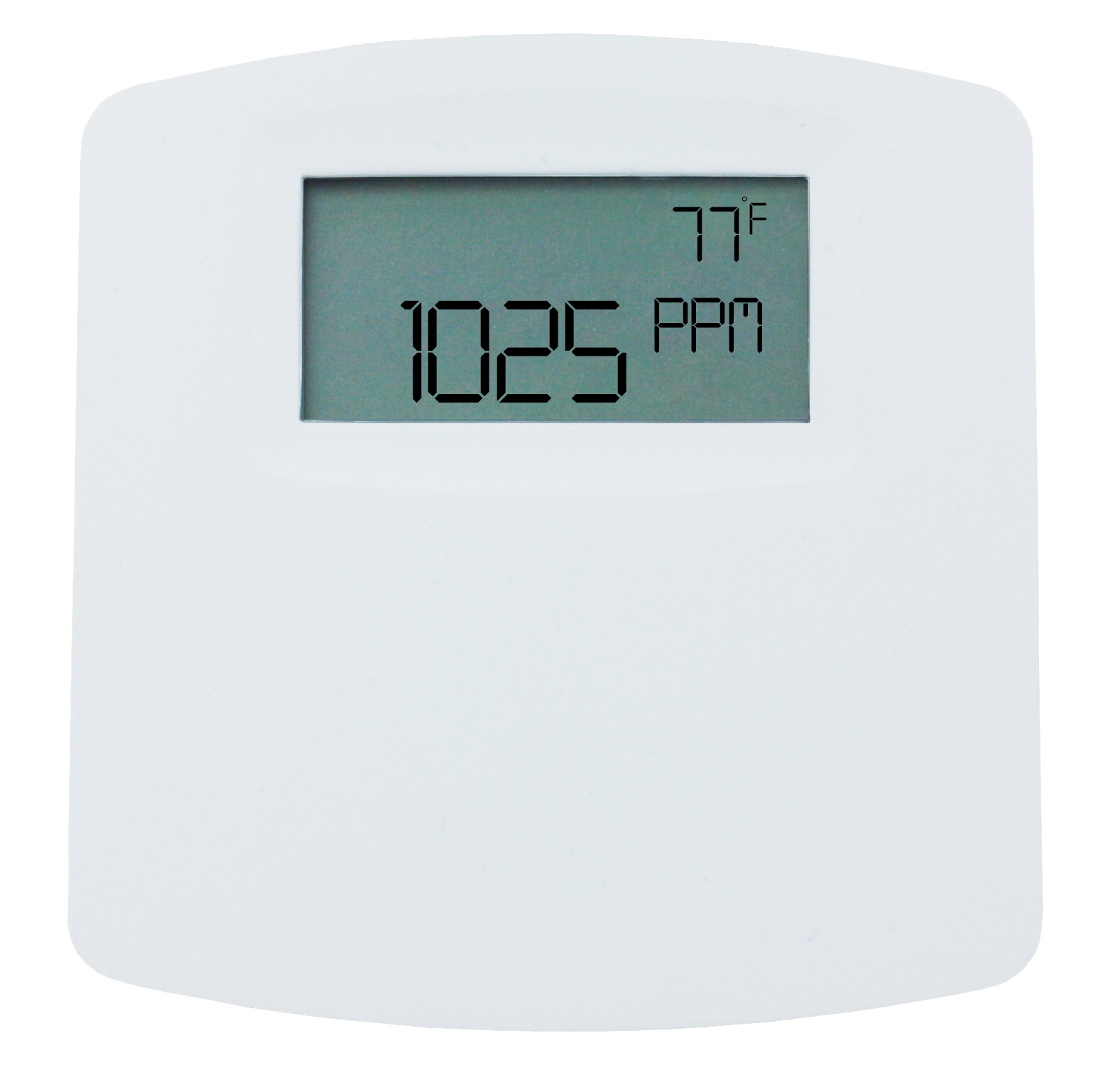
The Dwyer CO₂ detector (Modbus CDTA-5N000, ±8 ppm/°C accuracy, 2 min response) provides accuracy and integration for real-time monitoring. Its Modbus RTU and BACnet MS/TP interfaces allow connection to building management systems, enabling automated ventilation adjustment and historical trending.
Practical Implementation:
1. Commissioning protocol: Install the CO₂ sensor at occupied-zone height (desk level, ~1.2 m). While the space is fully occupied, measure CO₂ rise. If the space reaches 1200+ ppm during normal occupancy, ventilation is inadequate. Data quantifies the need for fresh air increases or damper adjustments.
2. Economizer tuning: Many economizers operate at fixed outdoor air damper positions. CO₂ monitoring reveals whether fixed settings deliver adequate fresh air at all occupancy levels. Demand-controlled logic that adjusts dampers based on CO₂ can reduce over-ventilation (energy waste) while maintaining indoor air quality.
3. Post-maintenance verification: After HVAC service (filter changes, damper cleaning, outdoor air correction), CO₂ readings confirm that fresh air delivery improved. This objective data reassures clients that service problems were solved.
4. Health compliance documentation: Building owners increasingly need IAQ documentation for employee health and regulatory compliance. Contractors who provide CO₂ trending reports and seasonal outdoor air adequacy analysis position themselves as health-conscious service providers.
Service Contract Potential: Monthly or seasonal CO₂ monitoring creates recurring revenue. Contractors can charge for monitoring, reporting, and economizer tuning—turning measurement data into a profitable service line.
Integration: Building a Measurement and Detection Strategy
Individual measurements are valuable; integrated strategies create transformative performance improvements. A contractor's comprehensive approach combines:
- Differential pressure for airflow and system health
- Temperature profiling for efficiency trending and comfort validation
- Low-pressure measurement for subsystem diagnosis
- CO₂ detection for ventilation and IAQ assurance
These four measurement dimensions address the complete HVAC system: delivery (airflow), conditioning (temperature), combustion (pressure), and occupant health (air quality). Contractors who integrate these tools differentiate from competitors and create sticky client relationships through documented performance improvements.
3G Electric's 35+ years of industrial equipment distribution experience ensures you have access to accurate, durable instruments proven in demanding applications. The products referenced here are selected for reliability, accuracy, and HVAC application compatibility—not just initial cost.
Next Steps for Contractors:
1. Start with differential pressure monitoring on 2–3 commercial clients to establish baseline data.
2. Add temperature profiling to your commissioning scope, documenting efficiency metrics.
3. Integrate low-pressure manometers into troubleshooting procedures.
4. Pilot CO₂ monitoring on one building to develop recurring monitoring protocols.
As buildings become smarter and clients demand performance proof, measurement and detection capabilities become essential differentiators. Contractors who invest in these tools and integrate them into service offerings capture value that pure installation work cannot match.