
Understanding Measurement & Detection in HVAC Operations
Measurement & Detection forms the backbone of effective HVAC maintenance in Singapore's humid, demanding climate. Whether you're managing chilled water systems, air distribution networks, or heating equipment, the ability to accurately diagnose system performance through real-time measurement prevents silent failures that can cascade through entire facilities.
With over 35 years of experience supplying industrial equipment across Asia-Pacific, 3G Electric understands that maintenance teams need practical, field-proven measurement solutions—not just theoretical data. The difference between reactive and proactive maintenance often comes down to having the right detection tools at the right time.
Core Measurement & Detection Techniques for HVAC Diagnostics
Differential Pressure Monitoring
Differential pressure measurement is your first diagnostic checkpoint in HVAC systems. It tells you whether air or water is flowing at design rates, whether filters are clogging, and whether coil performance is degrading.
For low-pressure applications across ductwork and filter banks, the Dwyer Transmitter 616KD-13V-TC provides continuous monitoring of differential pressure from 0–1 IN W.C. with minimal power draw (21 mA maximum). This transmitter is particularly valuable for:
- Filter condition assessment: Compare baseline DP readings against current values to schedule filter replacement before airflow restriction damages downstream components
- Coil fouling detection: Rising DP across coils signals biofilm or scale accumulation requiring chemical cleaning
- Valve position verification: Confirms balancing valve settings remain within specification across system branches
Dwyer's barbed process connections accept standard 3–5 mm tubing, making field installation straightforward without requiring specialized fittings. In Singapore's corrosive salt-air environments, confirm your transmitter housing is stainless steel rated for IP67 protection.
Temperature Measurement with RTD Probes
Temperature detection across multiple system points reveals whether heat exchange is occurring at design capacity and identifies refrigerant charge problems or compressor fouling.
The Dwyer Probe AVG PT100 OHM RTD offers ±0.6% accuracy across the -35.5 to +115.5°C range, with flexible copper capillary construction that simplifies installation in confined equipment spaces. Key diagnostic applications include:
- Chiller approach temperature: Measure leaving chilled water and compare against outdoor wet-bulb temperature to assess condenser fouling
- Superheat verification: Monitor refrigerant superheating at compressor inlet—deviations signal expansion valve malfunction or refrigerant undercharge
- Supply-to-return delta-T: Measure temperature rise across fan coils to confirm adequate water flow and detect airflow blockages
Flange-clip mounting allows quick installation at existing tapping points without system downtime. For building management integration, ensure your facility's control system accepts standard 4-wire PT100 RTD signals; most modern systems do, but legacy installations may require signal conditioning.
Flow Measurement and Air Distribution
Flow detection ensures that design air volumes are actually reaching occupied spaces and identifies ductwork leakage or balancing failures.
The Dwyer Metal Average Flow Probe MAFS-16 measures both static and total pressure across 16 cm of probe length, providing flow rate calculations without requiring system shutdown. Installation workflow:
1. Identify a duct section at least 3 duct diameters downstream from bends or branch takeoffs
2. Drill access ports for probe insertion (standard 12 mm or 16 mm probes)
3. Connect differential pressure transmitter across probe ports
4. Calculate velocity from differential pressure using the duct's cross-sectional area
5. Multiply velocity by area to confirm volumetric flow rate against design specifications
This method catches air leakage at duct seams, loose connections, and undersized branch takeoffs—problems that individually cause 5–10% airflow losses but collectively reduce system efficiency by 30% or more.
Pressure Monitoring for System Stability and Safety
Visual Pressure Indication
While electronic measurement provides continuous data, analog pressure gauges offer immediate visual feedback during commissioning, troubleshooting, and emergency response.
The Preciman Stainless Steel Vertical Pressure Gauge D63 0/+40 mbar delivers ±1.6% accuracy with robust construction suited to Singapore's high-humidity industrial environment. The 63 mm dial is easily readable from equipment front panels, and G1/4 connections accept standard tubing without adapters.
Field procedures:
- Pre-season startup: Confirm static pressure at fan intake (should be 0–5 Pa below outdoor static pressure) before running equipment
- Coil blockage detection: Rising pressure drop across coils during operation indicates microbial fouling requiring chemical treatment
- Expansion tank condition: On closed-loop heating systems, monitor pressure trend to detect leaks or waterlogged expansion tanks
Expansion Tank Inflator Tools
Proper expansion tank pre-charge pressure is critical for closed-loop heating system stability. If pre-charge drops, compressibility increases, causing pressure spikes that stress relief valves and pump seals.
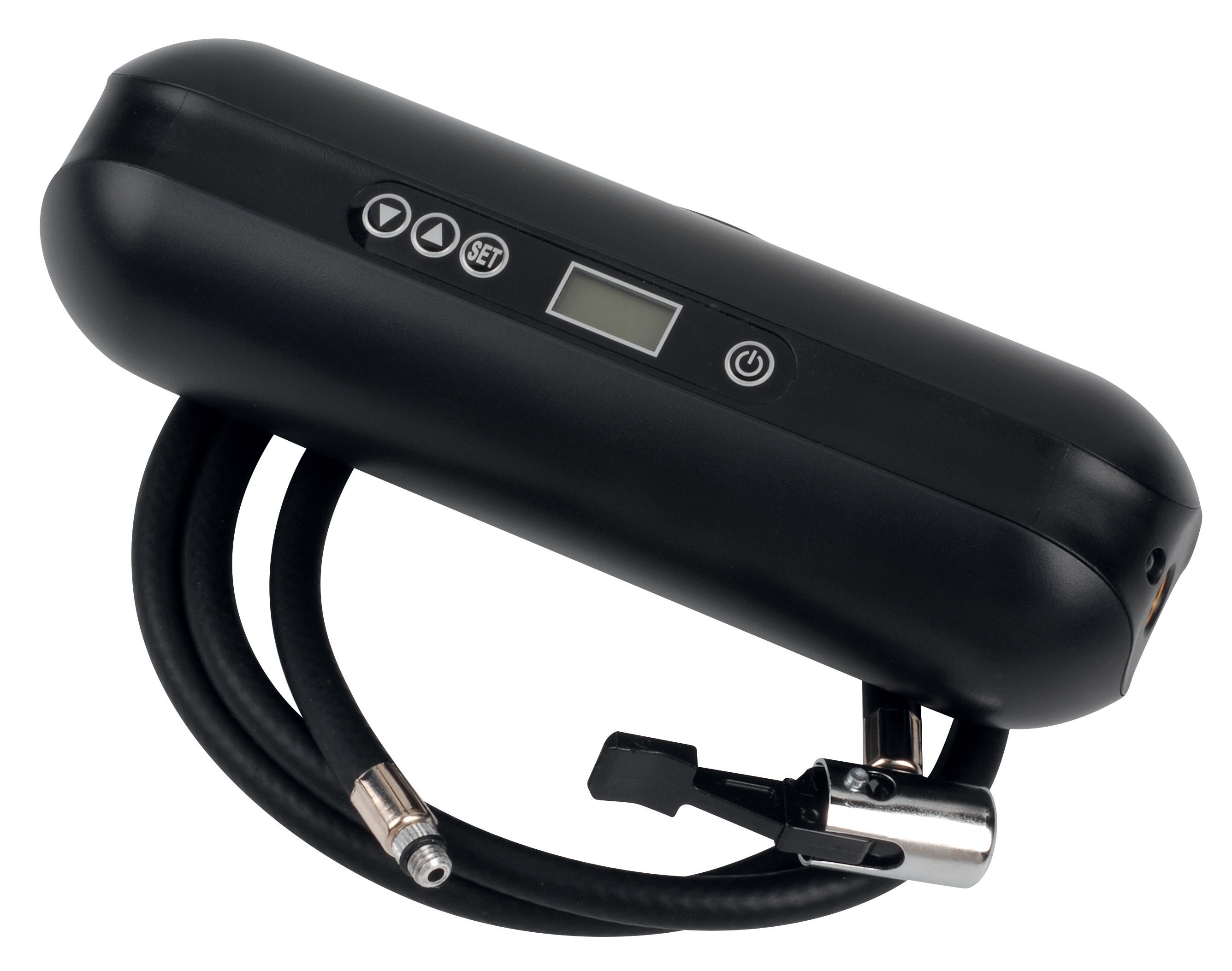
The CBM Expansion Tank Inflator Battery 2000 mAH simplifies tank re-pressurization without requiring external compressors. Operating across -20 to 60°C, the 10.3 bar maximum capacity covers most building heating applications. Process:
1. Isolate expansion tank and fully drain system pressure
2. Measure current tank pressure with your pressure gauge
3. Use inflator to restore pre-charge to design specification (typically 0.7–0.9 bar for chilled water systems)
4. Confirm pressure reading remains stable after 24 hours to detect slow leaks
This preventive step takes 10 minutes but eliminates pressure oscillations that damage equipment and waste energy.
Building a Measurement & Detection Schedule
Monthly Verification Points
- Differential pressure across filters: Record baseline readings during commissioning, then check monthly to schedule replacements before restriction exceeds 50 Pa
- Supply and return temperatures: Confirm delta-T matches design specifications (typically 5°C for chilled water, 10°C for hot water)
- Outdoor air damper position: Verify damper moves freely and supply damper modulation is proportional to demand
Seasonal Commissioning (Before Peak Cooling and Heating)
- Recalibrate all differential pressure transmitters against a reference gauge
- Perform duct traverses using flow probes to confirm design airflow in critical zones
- Check expansion tank pre-charge and adjust if necessary
- Document all readings in a permanent commissioning record for trend analysis
Troubleshooting Workflow
When system performance deteriorates, measurement & detection eliminates guesswork:
1. Report: Tenant complaint ("uncomfortable humidity" or "uneven cooling")
2. Measure: Differential pressure across cooling coil, supply/return temperatures, outdoor air damper position
3. Diagnose: Rising coil DP + normal supply/return delta-T = fouled coil; normal coil DP + low delta-T = inadequate airflow
4. Act: Clean coil or increase supply fan speed accordingly
5. Verify: Repeat measurements to confirm baseline restoration
Without measurements, you'd either replace the coil unnecessarily or waste weeks investigating the wrong component.
Practical Implementation in Singapore Facilities
Singapore's tropical environment creates unique measurement & detection challenges: high humidity promotes biofilm growth in coils and ductwork, salt-air corrosion attacks pressure gauges, and year-round cooling demand masks seasonal commissioning windows.
3G Electric's 35+ years as a distributor across the region means we understand these local conditions. Our recommended approach:
- Specify stainless steel gauges and transmitter housings for corrosion resistance
- Install differential pressure measurement across all coils, not just main units
- Use flexible tubing rather than rigid connections to accommodate thermal expansion in high-temperature applications
- Establish quarterly measurement schedules rather than annual reviews to detect gradual fouling before occupant complaints arise
- Train maintenance staff to interpret measurement trends, not just individual readings
Measurement & Detection tools become valuable only when maintenance teams understand what data means and how to act on it. A differential pressure reading of 100 Pa is meaningless without knowing whether it's higher or lower than baseline. A temperature reading of 12°C leaving the cooler is worthless without knowing outdoor conditions and design supply temperature.
Conclusion
Effective Measurement & Detection in HVAC systems transforms maintenance from reactive crisis response to predictive performance management. By implementing pressure, temperature, and flow monitoring into routine procedures, you'll identify 80% of system faults before occupants experience discomfort.
The investment in quality measurement tools—differential pressure transmitters, RTD probes, and flow detection equipment—pays back within the first year through reduced emergency repairs and optimized energy consumption. For Singapore maintenance teams managing buildings in competition for tenants and energy efficiency credits, this measurement discipline is now a baseline expectation.