Understanding Measurement & Detection Requirements in HVAC Ductwork
Measurement & Detection equipment forms the backbone of reliable HVAC system commissioning and ongoing performance verification. For contractors across Southeast Asia, the tropical climate and high-density commercial environments demand instruments that withstand humidity, temperature fluctuations, and extended service cycles without degrading accuracy.
The challenge isn't simply having instruments on site—it's selecting tools that match specific application requirements while maintaining consistent accuracy across measurement points. Whether you're verifying system balance on a 20-story commercial tower in Singapore, troubleshooting capacity issues in a Bangkok manufacturing facility, or validating new equipment installations in Manila, choosing appropriate Measurement & Detection probes directly impacts project timelines, client confidence, and warranty accountability.
3G Electric has supported HVAC contractors throughout Southeast Asia for over 35 years, supplying measurement instruments that perform reliably under demanding field conditions. This comparison focuses on three critical measurement categories: air velocity and flow rate detection, low-pressure monitoring, and precise temperature sensing—each essential for complete system diagnostics.
Flow Measurement: Comparing Dwyer MAFS Metal Average Probes
Application Considerations for Southeast Asian Installations
Flow measurement in HVAC ductwork requires consistent pressure sensing across multiple points within the air stream. The Dwyer line of metal average flow probes addresses this need through physically distributed measurement ports that capture spatial pressure variations.
Dwyer MAFS-16 Metal Average Flow Probe delivers a compact solution for smaller ductwork sections and branch distribution applications. The 16 cm probe length suits retrofit installations where duct space is constrained, such as suspended ceiling plenums or equipment room connections. With static and total pressure measurement capability, the MAFS-16 provides the data foundation for calculating volumetric flow using established HVAC formulas.
Dwyer MAFS-40 Metal Average Flow Probe extends measurement capability to larger trunk lines and main distribution ducts. The 101.6 cm probe length captures velocity profile variations across wider ductwork, critical for validating system balance in multi-zone installations. This length is particularly valuable during commissioning of central plant systems where main supply and return ducts demand comprehensive flow characterization.
Selection Criteria for Your Project
Choose the MAFS-16 when:
- Working with ductwork smaller than 400mm width or height
- Installing in tight spaces where probe length impacts retrofit difficulty
- Measuring secondary branch lines serving individual zones or floors
- Operating under budget constraints on smaller projects
Specify the MAFS-40 when:
- Main distribution ducts exceed 600mm in any dimension
- System commissioning requires high-confidence flow measurement at critical points
- You need to validate system balance across all major trunk lines
- Client specifications or building codes mandate comprehensive verification data
Both probes feature metal construction suitable for high-temperature applications (exceeding 50°C in tropical climates during peak cooling demand). The port arrangement remains consistent across both models, allowing field personnel to apply identical calculation protocols regardless of probe selection.
Pressure Measurement: Low-Range Monitoring with Preciman Gauges
Why Analog Gauges Matter in Tropical Installations
Preciman Stainless Steel Vertical Pressure Gauge D63 0/+40mbar G1/4 provides direct-read pressure indication across the measurement range most relevant to HVAC ductwork work. The 0 to 40 mbar range captures static pressure variations from building pressurization through return air plenums, supply duct pressure, and equipment connection points.
The stainless steel wetted parts address Southeast Asia's humidity and salt-laden air environments—critical for facilities near coastal zones or subject to high-moisture vapor transmission through walls. Unlike digital transmitters requiring power sources and signal conditioning, analog gauges deliver immediate, independent readings without dependency on external systems.
Gauge Accuracy and Field Application
Preciman's ±1.6% accuracy specification at 40 mbar translates to approximately ±0.64 mbar uncertainty—sufficient for commissioning verification where total system pressure drop typically spans 15–30 mbar across all components. The 63mm dial size provides adequate digit spacing for one-handed reading in confined mechanical rooms or rooftop installations common in Southeast Asia's vertical building stock.
The G1/4 connection accommodates standard quick-disconnect couplings used with portable manometer systems and digital multimeter setups. Vertical mounting orientation—as specified in the model designation—maintains consistent pointer response across different elevation references, important when measuring static pressure at multiple duct locations.
Integrate Preciman gauges into your Measurement & Detection toolkit for:
- Equipment room pressure baseline establishment
- Return plenum pressure verification before and after filter loads
- Supply duct pressure validation at zone branches
- Commissioning sign-off documentation with analog evidence
Temperature Detection: RTD Probes for Precise Thermal Measurement
PT100 RTD Advantages in HVAC Systems
Dwyer Probe AVG PT100 OHM RTD L.65 Flexible Capillary delivers precise temperature sensing across the full HVAC operating range relevant to tropical climates and year-round systems. The ±0.6% accuracy at 0°C ensures reliable measurement for:
- Coil leaving air temperature (critical for capacity verification)
- Return air temperature sensing in economizer control logic validation
- Supply air temperature verification for system performance calculations
- Equipment case temperature monitoring during startup commissioning
The -35.5 to +115.5°C operating range covers scenarios from chilled water coil discharge (4–7°C) through return air conditions (22–28°C in tropical climates) to emergency high-temperature shutoff detection (approaching 50°C in failed cooling scenarios).
Flexible Capillary Advantages
The flexible copper capillary design addresses critical installation challenges in Southeast Asian field conditions:
- Retrofit accessibility: Navigate through existing cable trays, conduit runs, and structural obstructions without rigid probe constraints
- Multiple measurement locations: One RTD transmitter can serve several sensing points through manifold arrangements, reducing wiring complexity
- Service accessibility: Replace sensing elements without disturbing established ductwork or equipment connections
- Corrosion resistance: Copper capillary withstands salt-laden indoor air in coastal facilities and high-humidity environments common across Southeast Asia
Flange clip mounting integrates with standard duct construction, allowing installers to position probes precisely at measurement points without custom fabrication. This standardization reduces commissioning timelines and supports knowledge transfer across your contracting teams.
Integrated System Commissioning: Building Your Measurement & Detection Toolkit
Sequential Measurement Approach
Optimal HVAC commissioning follows a logical measurement sequence that builds confidence in system performance through independent verification:
Stage 1 – Pressure Baseline (Preciman Gauge)
Establish reference static pressure at equipment outlets and return plenums using direct-reading gauges. This 15-minute assessment confirms the system generates design pressure without requiring advanced instrumentation.
Stage 2 – Temperature Characterization (Dwyer RTD)
Validate coil leaving temperatures and return conditions using RTD probes. This measurement confirms heat exchanger performance independent of flow calculations, crucial for capacity verification during tropical peak load conditions.
Stage 3 – Flow Rate Calculation (Dwyer MAFS Probes)
Deploy metal average flow probes at primary measurement points identified during pressure baseline work. Use recorded static and total pressure differentials to calculate volumetric flow, confirming that the system delivers design airflow throughout distribution paths.
Documentation and Compliance Strategy
Southeast Asian building codes increasingly require commissioning documentation demonstrating system performance against design specifications. Your Measurement & Detection approach should produce:
- Analog gauge photographs (Preciman) showing baseline pressure conditions
- RTD calibration certificates (Dwyer) establishing thermal measurement traceability
- Flow calculation worksheets (MAFS probes) documenting velocity measurements and derived volumetric flow
- Trend logs spanning startup through stabilization, critical for demonstrating system reliability to facility managers in tropical climates
Practical Selection Matrix for HVAC Contractors
Project Size and Complexity Mapping
Small Retrofit / Service Call (Budget-Conscious)
Deploy Preciman gauge for pressure verification only. Quick assessment confirms system isn't operating outside safe parameters without significant instrumentation investment. Suitable for tenant improvement work or emergency service scenarios.
Standard Commercial Commissioning
Combine Preciman gauge with Dwyer RTD probe. This pairing captures thermal and pressure performance with minimal complexity, appropriate for office buildings, retail facilities, and standard industrial applications across Southeast Asia.
Full System Commissioning (Compliance-Driven)
Implement complete toolkit: Preciman pressure gauge, Dwyer RTD temperature probes, and appropriate MAFS flow probe (select MAFS-16 or MAFS-40 based on ductwork size). This comprehensive approach generates documentation defensible in building official reviews and supports manufacturer warranty claims.
Performance Troubleshooting (Problem Isolation)
Systematic deployment of all three measurement types identifies root causes—whether capacity shortfall stems from reduced airflow, insufficient coil temperature differential, or system pressure imbalance. Precision measurement prevents misdiagnosis and expensive incorrect repairs.
Southeast Asian Climate Considerations for Measurement & Detection
Tropical humidity and temperature extremes create unique measurement challenges:
- Humidity condensation: Stainless steel components (Preciman gauge) resist corrosion where standard steel gauges fail within months
- High ambient air temperatures: RTD probes with stated operating ranges to +115°C accommodate worst-case return air conditions during failed cooling scenarios
- Salt air environments: Copper capillary (Dwyer RTD) and stainless wetted parts resist coastal corrosion without special coatings
- Extended service intervals: Robust metal construction (MAFS probes, Preciman gauges) survives multiple seasons of use without degradation
3G Electric maintains inventory throughout Southeast Asia specifically selected for tropical performance, ensuring contractors access instruments proven in demanding regional environments rather than generic global stock.
Integration with Portable Testing Equipment
Your Measurement & Detection instruments work most effectively alongside established portable diagnostics:
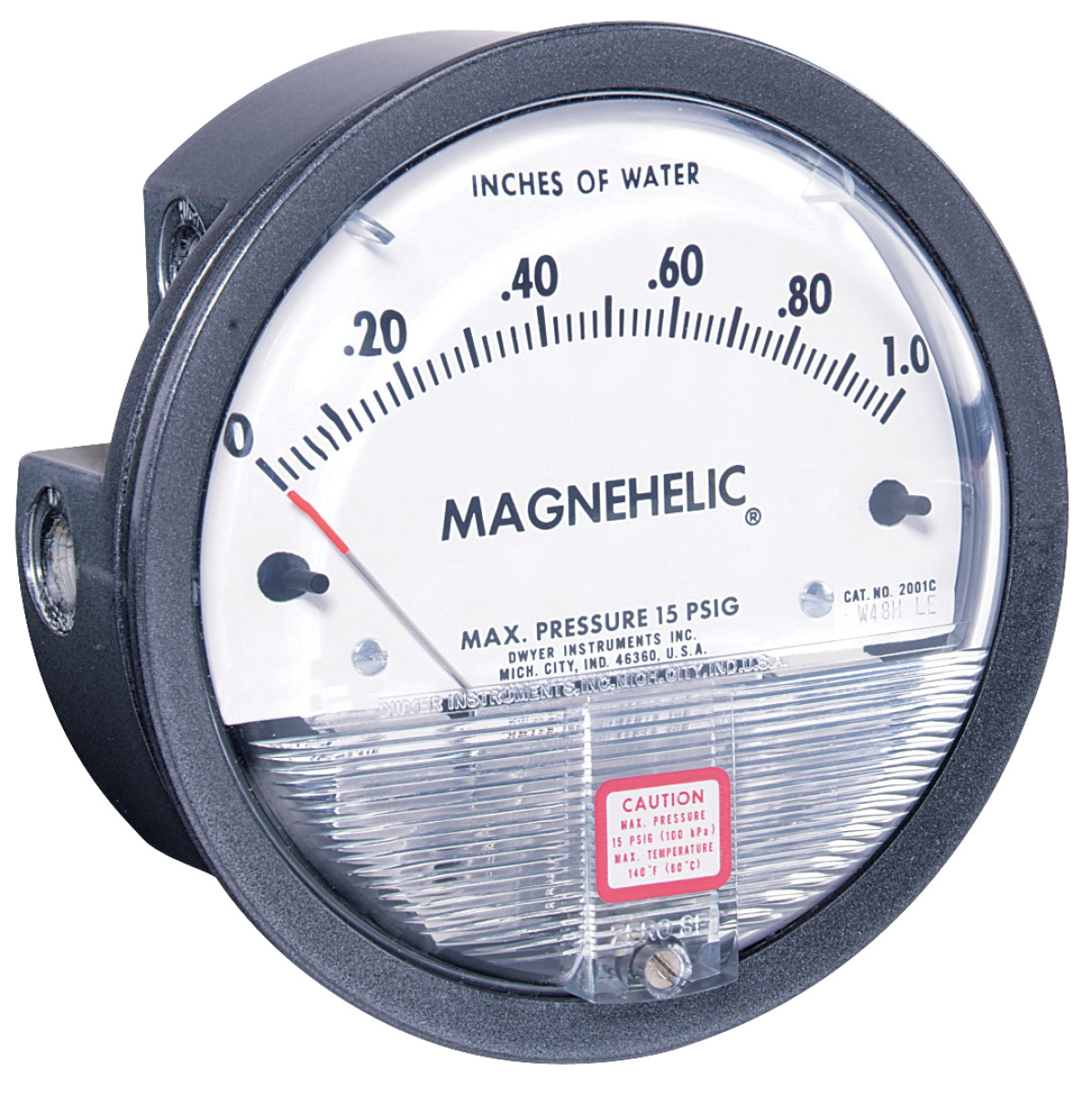
- Manometers: Connect Preciman gauge ports to magnehelic manometer for differential pressure verification across filters, coils, and entire systems
- Digital multimeters: Validate RTD sensor continuity and resistance to confirm probe functionality before installation
- Anemometers: Cross-check MAFS probe flow calculations using instantaneous velocity measurements at multiple duct locations
- Thermal imaging: Identify temperature stratification in plenums that MAFS probes might miss through limited measurement points
Ordering and Specification Support from 3G Electric
Dwyer Probe AVG PT100 OHM RTD—Part DWY14040—establishes temperature baseline for all subsequent measurements. Stock multiple units for redundancy during extended commissioning projects.
Preciman Stainless Pressure Gauge—Part ROS20004—provides immediate pressure indication without power or calibration requirements. Vertical orientation supports standard mechanical room installations across Southeast Asia.
Dwyer MAFS-16 Flow Probe—Part DWY28014—suits compact ductwork and retrofit applications where space constraints limit probe length.
Dwyer MAFS-40 Flow Probe—Part DWY28036—covers main distribution ducts and primary trunk lines requiring comprehensive flow characterization.
Contact 3G Electric's technical support team for project-specific guidance on Measurement & Detection instrument selection, calibration requirements, and commissioning documentation protocols. Our Southeast Asia specialists understand regional building code requirements and climate-specific performance considerations that impact measurement accuracy and equipment reliability.