
Understanding Measurement & Detection in Expansion Tank Systems
Measurement & Detection in expansion tank environments requires a systematic approach to pressure regulation, thermal monitoring, and system integrity verification. Unlike general HVAC measurement, expansion tanks demand specialized attention to pre-charge pressure, charge gas isolation, and real-time performance tracking. Drawing on 35+ years of industrial equipment distribution experience, 3G Electric has supported hundreds of Singapore-based facilities through complex expansion tank installations and maintenance programs.
Expansion tanks serve a critical function in closed-loop heating and cooling systems—they absorb volumetric changes caused by thermal expansion without allowing system pressure to exceed design limits. Proper Measurement & Detection ensures your system maintains optimal pre-charge pressure, responds correctly to temperature fluctuations, and prevents catastrophic failure. This guide walks you through the practical steps to implement reliable measurement protocols, select appropriate detection equipment, and troubleshoot common issues.
Section 1: Pre-Installation Pressure Assessment and System Preparation
Before installing or servicing an expansion tank, you must establish baseline pressure conditions and verify system readiness. This foundation determines whether subsequent measurements will be accurate and meaningful.
Step 1: Calculate Required Pre-Charge Pressure
Pre-charge pressure is the nitrogen gas pressure in your expansion tank when the system is cold and empty. The formula is:
Pp = (Patm × V) / (V - Ve)
Where Patm is atmospheric pressure (typically 1 bar), V is tank volume, and Ve is the volume of water at minimum system pressure. For most heating systems in Singapore's tropical climate, use these guidelines:
- Single-story residential or light commercial: 0.5–1.5 bar pre-charge
- Multi-floor commercial buildings: 1.5–3.0 bar pre-charge
- Industrial high-temperature systems: 3.0–4.5 bar pre-charge
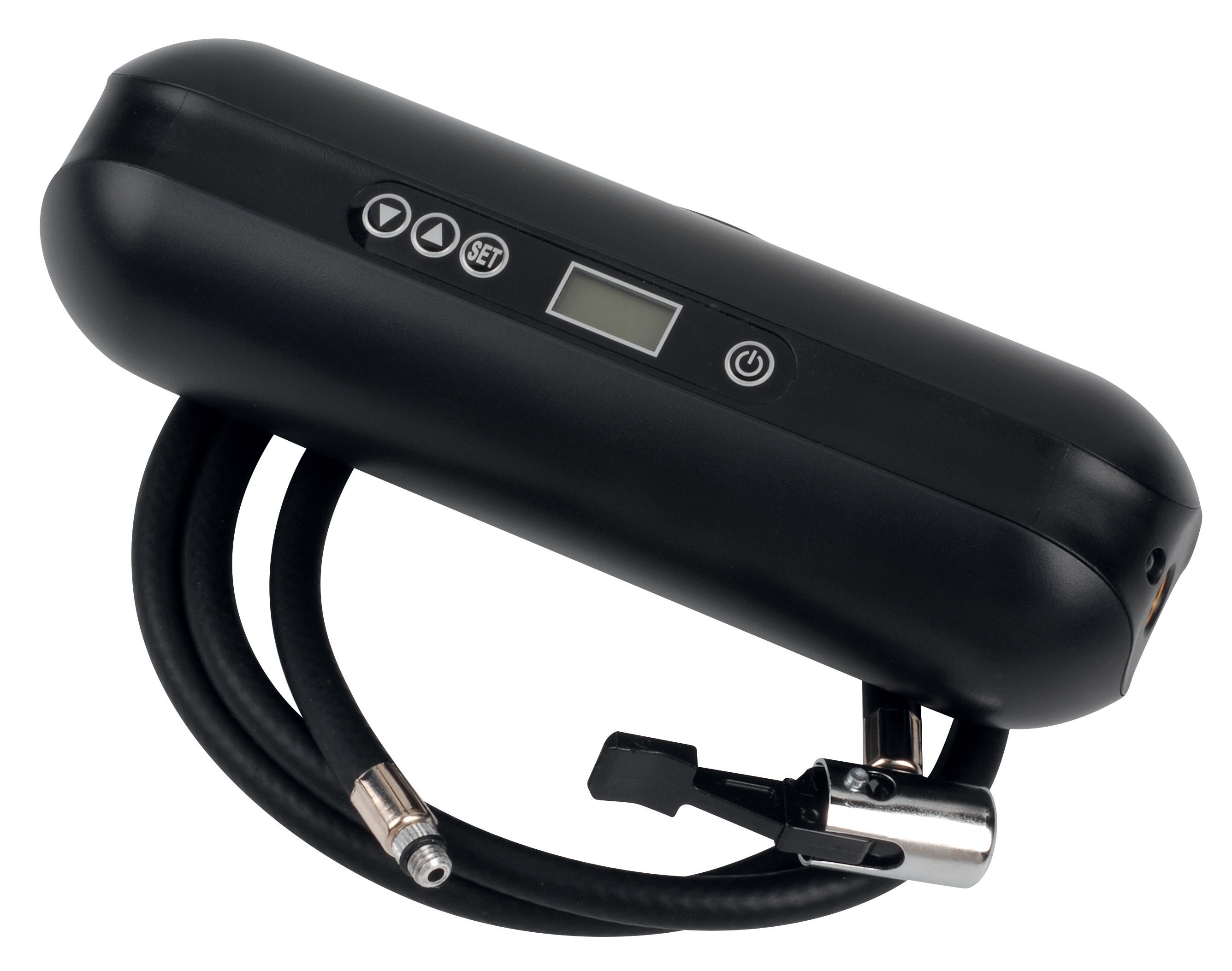
Before pressurizing, inspect the tank shell for corrosion, dents, or leaks. Use the CBM Expansion Tank Inflator Battery 2000 mAH to safely charge the tank with inert nitrogen gas. This specialized tool operates at maximum pressures up to 10.3 bar and functions reliably across Singapore's -20 to +60°C operating range. The 2000 mAH battery capacity supports multiple charging cycles without frequent recharging—essential when servicing multiple sites.
Step 3: Document Baseline Conditions
Record three critical baseline measurements:
- Pre-charge pressure (at tank isolation valve)
- System water temperature (should be 15–20°C during cold fill)
- Ambient temperature at measurement time
These records become your reference point for detecting pressure drift over months and years.
Section 2: Real-Time Pressure Monitoring Installation
Once the expansion tank is properly charged, install permanent Measurement & Detection sensors to monitor system behavior during operation.
Installing Differential Pressure Detection
A differential pressure transmitter reveals how your system responds to thermal loading. The Dwyer Transmitter 616KD-13V-TC is specifically designed for HVAC and industrial applications, measuring differential pressure from 0–1 IN W.C (water column) with only 21 mA maximum power consumption. This low power draw makes it suitable for battery-backed monitoring systems or long-term data logging installations.
Installation steps:
1. Identify the system's high-pressure and low-pressure reference points (typically expansion tank connection and return line)
2. Install barbed process connections (3–5 mm tubing compatible) at both measurement points
3. Use flexible tubing to route sensor inputs away from heat sources and vibration
4. Configure the transmitter output (typically 4–20 mA) to your building management system or data logger
5. Establish alert thresholds: alert at 10% above design differential pressure; alarm at 15%
Positioning Pressure Gauges for Visual Reference
While electronic transmitters provide data logging capability, mechanical pressure gauges serve as a critical visual inspection tool. Install the Preciman Stainless Steel Vertical Pressure Gauge D63 0/+40 mbar G1/4 at the expansion tank isolation valve outlet. The 63 mm dial size ensures readability from a distance, and the G1/4 connection integrates seamlessly with standard industrial pipework. The ±1.6% accuracy across the 0–40 mbar range provides reliable reference data during quarterly inspections.
Placement best practices:
- Mount at eye level (approximately 1.5 meters from floor) for easy visual comparison
- Protect from direct sunlight to prevent dial temperature drift
- Install isolation ball valves on both sides of the gauge to allow removal without system shutdown
- Use gauge snubbers if the system experiences pressure pulsations exceeding ±2 bar per second
Section 3: Temperature Sensing and Thermal Load Detection
Temperature measurement reveals how your expansion tank system responds to heating and cooling cycles. Accurate thermal Measurement & Detection prevents overpressurization and predicts maintenance needs.
Selecting and Installing RTD Probes
Resistance Temperature Detectors (RTDs) offer superior accuracy and stability compared to thermocouples in industrial settings. The Dwyer Probe AVG PT100 OHM RTD L.65 AVG-21241 provides ±0.6% accuracy at 0°C and operates reliably across -35.5 to +115.5°C—a range well-suited to Singapore's heating system applications and emergency shutdown scenarios.
Key specifications for expansion tank monitoring:
- Probe Length: 65 mm allows adequate immersion without excessive thermal lag
- Flexible Copper Capillary: Enables routing around tight spaces and protects against mechanical damage
- Flange-Mount Clips: Provide secure attachment to system piping without requiring welding or threading modifications
Installation procedure:
1. Mount the RTD probe in the system's warm return line, 50–100 cm downstream from the expansion tank connection
2. Ensure at least 50 mm of probe immersion in the flowing water (not touching the pipe wall)
3. Insulate the probe and piping with 50 mm closed-cell foam to reduce ambient temperature interference
4. Connect the RTD to your building automation system using 3-wire or 4-wire connection (4-wire eliminates lead resistance error)
5. Configure temperature logging at 15-minute intervals minimum; 5-minute intervals during commissioning
Interpreting Temperature Data for System Health
Monitor these temperature trends:
- Normal operation: System water rises from 15°C (return) to 45–55°C (supply) during heating cycles
- Expansion tank undercharge warning: System water reaches design temperature, but pressure rises faster than expected—indicates less usable tank volume than calculated
- Expansion tank overcharge warning: System pressure remains flat during heating; temperature continues rising without corresponding pressure increase—indicates excessive nitrogen pre-charge
- Slow thermal response: Temperature rises more than 1–2°C per hour above return line baseline—suggests insulation failure or sensor malfunction
Section 4: Flow Measurement Integration and System Validation
For larger HVAC systems, measuring flow rate through expansion tank connections provides early warning of internal leaks or diaphragm failure.
Installing Flow Probes in Distribution Circuits
The Dwyer Metal Average Flow Probe MAFS-16 measures static and total pressure across a 16 cm probe length, providing reliable flow measurement data for air distribution applications and liquid circulation circuits. While primarily designed for air systems, the MAFS-16 principle applies to expansion tank circulation loops: pressure differential across the probe indicates flow velocity.
For expansion tank monitoring:
1. Install the probe in the system's highest-pressure branch line (near boiler or pump discharge)
2. Space the probe 3 pipe diameters downstream from any elbows or fittings to ensure fully developed flow
3. Connect differential pressure transmitter across the probe (same as Section 2 installation)
4. Establish baseline flow pressure differential during commissioning under design load conditions
5. Log flow data weekly; any 10% deviation indicates potential internal tank failure
Commissioning Checklist
Before declaring your Measurement & Detection system operational:
- Verify pre-charge pressure matches design calculation
- Confirm all sensors respond to manual pressure changes (inflate tank slightly; confirm all readouts increase)
- Test alarm thresholds by simulating overpressure condition
- Document sensor calibration dates and next scheduled verification dates
- Photograph all gauge and transmitter positions for future reference
- Create a maintenance schedule with quarterly pressure verification and annual recalibration
Practical Maintenance and Troubleshooting
Pressure Drift Detection
If pre-charge pressure drops below calculated value, your system has lost nitrogen gas. Possible causes include:
- Leaking tank isolation valve: Inspect for external weeping; replace if necessary
- Faulty inflation check valve: Nitrogen escapes during operation; requires tank recharge and check valve replacement
- Diaphragm rupture: Tank loses usable volume; replace the entire tank assembly
Quarterly verification using the CBM inflator battery ensures early detection before system overpressurization occurs.
Differential Pressure Anomalies
If differential pressure remains abnormally high (exceeding design by >20%), suspect:
- Closed isolation valves: Verify all tank bypass or isolation valves are fully open
- Clogged system filter: Restrict system flow and increase pressure; clean or replace filter
- Pump bearing wear: Reduces pump efficiency; requires pump replacement
If RTD readings diverge from expectations:
- Compare probe reading to thermometer on system pipe (allows quick visual verification)
- Check for insulation damage or moisture contamination in electrical connectors
- Verify 4-wire connection continuity; loose leads introduce measurement error
- Request calibration verification through 3G Electric's technical support network
Conclusion
Effective Measurement & Detection for expansion tank systems combines proper pressure assessment, real-time monitoring sensors, thermal tracking, and systematic maintenance. By implementing the protocols outlined in this guide—using CBM inflators for safe nitrogen charging, Dwyer differential pressure transmitters for data logging, PT100 RTD probes for temperature sensing, and Preciman pressure gauges for visual reference—you create a comprehensive monitoring program that prevents system failures and extends equipment life.
3G Electric's 35+ years of industrial equipment distribution ensures you have access to proven sensors, installation support, and spare parts across Singapore. Whether you're commissioning a new facility or retrofitting existing expansion tank systems, a structured Measurement & Detection approach delivers measurable reliability improvements and maintenance cost reduction.