
Understanding Energy Measurement & Detection in Southeast Asian Industrial Plants
Energy efficiency in Southeast Asian industrial operations has become critical as utility costs continue to rise and regional sustainability regulations tighten. Measurement & Detection systems form the foundation of energy optimization strategies, providing the visibility needed to identify inefficiencies before they escalate into significant operational costs.
For plant managers, the challenge lies not in understanding that measurement matters, but in strategically deploying sensors and monitoring equipment across systems where energy waste occurs most frequently. With more than 35 years of experience serving industrial facilities across Asia-Pacific, 3G Electric has observed that plants implementing comprehensive Measurement & Detection protocols achieve energy reductions of 15–25% within the first operational year—primarily through identifying and correcting system losses that would otherwise go undetected.
In Southeast Asia's tropical and subtropical climate conditions, HVAC and cooling systems consume 40–50% of total plant energy budgets. Pressure measurement, temperature monitoring, and flow detection directly correlate to system efficiency. A single miscalibrated pressure transmitter or undetected temperature drift can force compressors to run longer cycles, wasting thousands of dollars monthly. This guide provides plant managers with practical frameworks for deploying Measurement & Detection systems that align with operational realities and deliver quantifiable ROI.
Strategic Placement and Application of Pressure & Temperature Detection
Effective Measurement & Detection begins with understanding where inefficiencies hide in your industrial systems. Pressure and temperature monitoring at critical points reveals operational deviations that indicate energy waste, component degradation, or system imbalance.
Pressure Measurement in HVAC and Refrigeration Systems
Differential pressure transmitters monitor system efficiency by measuring pressure drops across filters, coils, and ductwork. When pressure drops increase, components are working harder, consuming more energy. The Dwyer Transmitter 616KD-13V-TC measures differential pressure from 0–1 IN W.C with minimal power consumption, making it ideal for continuous monitoring across multiple HVAC zones. In a typical Southeast Asian plant, monitoring differential pressure across air handlers identifies when filters require cleaning—often 2–3 weeks earlier than standard maintenance schedules would indicate. This prevents energy waste from restricted airflow.
For monitoring static pressure at critical points—particularly in compressed air distribution networks—the Preciman Stainless Steel Vertical Pressure Gauge D63 0/+40 Mbar G1/4 provides reliable local verification and serves as a cross-reference point for automated monitoring systems. In humid, corrosive Southeast Asian environments, stainless steel construction protects against rapid gauge degradation, maintaining measurement accuracy over extended periods.
Pressure monitoring at compressor discharge points reveals inefficiencies that directly translate to energy waste. Many plants operate at pressure settings 0.5–1.5 bar higher than required for production processes. Measurement & Detection systems that continuously log discharge pressure enable identification of unnecessary pressure setpoints, often yielding 8–12% energy reductions through optimized pressure regulation.
Temperature Monitoring for Thermal System Optimization
Temperature detection across heating and cooling circuits identifies energy losses from inadequate insulation, leaking steam traps, or inefficient heat exchangers. The Dwyer Probe AVG PT100 OHM RTD L.65 AVG-21241 delivers ±0.6% accuracy across industrial process ranges, enabling detection of temperature deviations as small as 1–2°C. In chiller systems, a 2°C unnecessary temperature differential between supply and return indicates heat exchanger fouling or inadequate water flow—both correctable issues that restore 5–10% of system efficiency.
Temperature probes installed at strategic points—compressor discharge, condenser outlet, expansion tank inlet, and return line—create a temperature profile that reveals system imbalances. When return temperatures exceed expected values, thermal loads are being distributed inefficiently. When discharge temperatures remain elevated during partial load operation, compressor staging or capacity control requires adjustment. These insights are actionable only through continuous Measurement & Detection data.
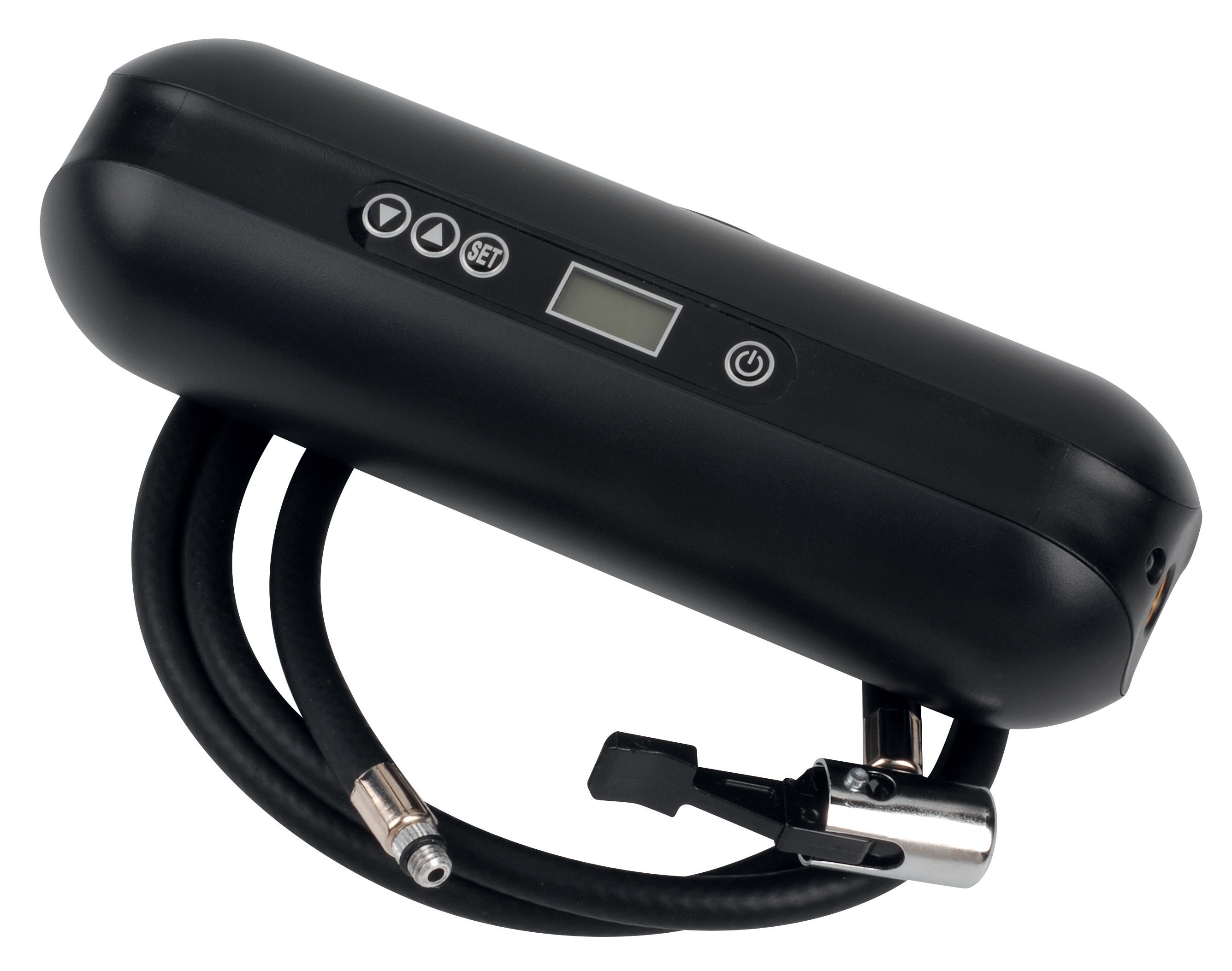
In Southeast Asian plants managing expansion tanks for heating systems, proper pressure maintenance directly impacts thermal efficiency. The CBM Expansion Tank Inflator Battery 2000 mAH enables field verification and adjustment of expansion tank precharge pressure—a frequently neglected maintenance task. Proper precharge pressure, verified through measurement, reduces system stress and improves heat transfer efficiency across the heating circuit.
Flow Detection and System Balance Optimization
Flow measurement represents the third critical element of energy-efficient Measurement & Detection systems. Unbalanced flow distribution across parallel circuits, coils, or terminal units forces some components to work harder while others operate below capacity.
Air Flow Profiling in HVAC Distribution
The Dwyer Metal Average Flow Probe MAFS-16 measures static and total pressure across 16 cm of probe length, enabling accurate flow rate calculation in air distribution systems. In large industrial facilities, flow imbalances across multiple zones create hotspots and coldspots, driving excess fan energy consumption as systems attempt to maintain zone temperatures. Flow probes installed in main supply and return ductwork identify whether intended flow distributions match actual conditions.
For plant managers, the practical value lies in using flow detection data to identify when zone dampers are stuck partially open or closed—a common issue in older Southeast Asian facilities. When flow data shows a particular zone receives 40% less airflow than designed, but pressure differential across that zone's damper is minimal, damper position requires investigation. Similarly, excessively high pressure differentials with moderate flow indicate undersized dampers or obstructions.
Water Flow and Thermal Load Balance
In cooling tower systems and chilled water circuits, flow imbalance reduces cooling capacity and increases compressor runtime. Measurement & Detection systems that log flow rates at chiller inlet and outlet, combined with temperature measurements, reveal whether intended cooling load is being delivered. When chilled water temperature differential narrows (smaller difference between supply and return), flow rate has increased due to reduced resistance somewhere in the circuit—often indicating valve position changes or filter blockages affecting downstream equipment more severely than anticipated.
Flow measurement also enables verification of water treatment effectiveness. In Southeast Asia's mineral-rich water environments, scale formation and fouling reduce heat transfer efficiency. Measurement & Detection systems monitoring flow and temperature can identify fouling progression—as deposits accumulate, maintaining constant flow requires higher pumping pressure, and temperature differentials widen due to reduced heat transfer efficiency. Early detection enables timely water treatment intervention before efficiency losses become severe.
Data Integration and Energy Optimization Workflows
Individual pressure, temperature, and flow measurements provide limited value without integration into systematic energy management workflows. Plant managers must establish processes that convert raw measurement data into actionable insights.
Establishing Baseline Performance Metrics
Before implementing corrective actions, establish baseline Measurement & Detection data under known operating conditions. Document pressure, temperature, and flow readings for each major system under full load and part-load operation. This baseline becomes the reference point for identifying deviations that indicate inefficiency. In Southeast Asian plants operating across highly variable outdoor temperatures and seasonal load swings, baseline data collection should span at least 12 weeks to capture seasonal variations.
Trending and Anomaly Detection
Continuous logging of Measurement & Detection data reveals trending patterns that indicate gradual efficiency degradation. A compressor discharge pressure increasing 0.3 bar monthly suggests progressive fouling of condenser coils. A chiller return temperature rising 1°C monthly indicates cooling capacity decline. By identifying these trends early—through systematic Measurement & Detection monitoring—maintenance interventions occur before efficiency losses become critical.
Anomalies require immediate investigation. When differential pressure across an air filter suddenly increases 20% without corresponding flow decrease, blockage is accelerating. When expansion tank pressure drops 0.5 bar overnight, a leak exists. Measurement & Detection systems that flag anomalies enable rapid response, preventing extended operation at degraded efficiency.
System Optimization Decision Framework
For plant managers, Measurement & Detection data should drive a structured optimization process:
- Monthly Review: Compare current pressure, temperature, and flow data against established baselines. Identify deviations exceeding ±5% as investigation triggers.
- Root Cause Analysis: For each significant deviation, investigate operational causes (load changes, setpoint adjustments), maintenance issues (fouling, leaks, blockages), or equipment degradation (wear, calibration drift).
- Corrective Action Implementation: Prioritize corrections by estimated energy savings. A 15% efficiency improvement on a 150 kW compressed air system yields 22.5 kW continuous savings; a 5% improvement on a 50 kW chiller yields 2.5 kW savings. Energy value assessment guides resource allocation.
- Verification and Documentation: After implementing corrections, verify through follow-up Measurement & Detection that expected improvements materialized. Document baseline-to-corrected performance comparisons.
Practical Implementation for Southeast Asian Operating Environments
Southeast Asia's tropical and subtropical conditions, combined with industrial operating realities, create specific implementation considerations for Measurement & Detection systems.
Environmental Resilience
High humidity and salt air corrosion (particularly in coastal facilities) require measurement instruments with stainless steel or coated construction. The Preciman Stainless Steel Vertical Pressure Gauge D63 0/+40 Mbar G1/4 resists corrosion better than standard steel gauges, maintaining accuracy over equipment life. Similarly, pressure transmitters and temperature probes require corrosion-resistant materials in the wetted process connections.
Temperature extremes—equipment operating in 40–50°C ambient conditions with even higher component surface temperatures—require Measurement & Detection instruments rated for extended temperature ranges. The Dwyer PT100 OHM RTD operates across -35.5 to +115.5°C, accommodating both indoor and outdoor sensor placements.
Installation and Maintenance Best Practices
For pressure transmitters, install manifold blocks with isolation valves and snubbers at each measurement point. This enables field calibration verification and instrument replacement without system shutdown. Snubbers reduce measurement noise from pressure pulsation, providing stable data for trending analysis.
Temperature probes require proper immersion length—typically 25–50 mm of probe tip in the process fluid for accurate measurement. Surface-mounted temperature sensors on pipes provide only ambient-influenced readings and should be avoided for critical process measurements.
Flow probes, particularly average-flow devices like the Dwyer MAFS-16, require straight duct or pipe sections of at least 10 pipe diameters upstream and 5 diameters downstream. Installation in elbows, tees, or near dampers introduces measurement error. Take time during system design to identify optimal flow measurement locations meeting these geometric requirements.
Calibration and Verification Schedules
Establish calibration schedules aligned with manufacturer specifications—typically annual for high-precision instruments and bi-annual for standard industrial equipment. 3G Electric's 35+ years of experience serving Southeast Asian facilities demonstrates that plants achieving best energy performance implement preventive calibration rather than reactive responses to suspected measurement drift.
For mission-critical measurements (primary HVAC differential pressure, compressor discharge pressure), consider implementing redundant measurement points using different instrument types. Comparing readings identifies drift or instrument malfunction before operational decisions rely on inaccurate data.
Conclusion
Measurement & Detection systems form the foundation of energy efficiency optimization in Southeast Asian industrial plants. Strategic deployment of pressure transmitters, temperature probes, and flow measurement equipment reveals inefficiencies hidden from routine operational visibility. By establishing systematic processes for data collection, trending analysis, and optimization, plant managers transform measurement capabilities into quantifiable energy reductions and extended equipment life.
For plant managers seeking to reduce energy costs while improving operational reliability, the investment in comprehensive Measurement & Detection infrastructure delivers measurable ROI within 12–18 months—with 3G Electric providing the equipment selection expertise and technical support required for successful implementation across diverse Southeast Asian industrial environments.