
Understanding Measurement & Detection Calibration Drift in Manufacturing
Calibration drift represents one of the most insidious challenges in industrial Measurement & Detection systems. Unlike catastrophic sensor failures that trigger alarms, drift occurs gradually, causing process readings to deviate from true values without obvious warning signs. For plant managers in Singapore's competitive manufacturing sector, this silent degradation directly impacts batch quality, regulatory compliance, and equipment lifetime costs.
Measurement & Detection devices—pressure transmitters, temperature sensors, flow probes, and mechanical gauges—all drift over time due to component aging, mechanical stress, thermal cycling, and environmental exposure. The tropical climate of Singapore accelerates this process: high humidity, rapid temperature swings, and salt-laden air in coastal facilities introduce corrosion and material degradation that temperate climates experience more slowly.
3G Electric's 35 years of experience distributing industrial measurement equipment across Southeast Asia has revealed that most calibration failures are preventable through structured verification protocols and root cause analysis. This guide provides plant managers with practical diagnostic procedures to detect drift early, quantify its impact, and restore measurement accuracy without unnecessary sensor replacement.
Identifying Calibration Drift: Detection Methods and Diagnostic Procedures
Visual and Physical Indicators
Begin drift diagnosis with physical inspection before pulling readings:
- Mechanical gauge observations: For analog instruments like Preciman manometers, check the pointer position at zero pressure. If the pointer does not return to the zero mark (or sits noticeably off-zero with no applied pressure), the linkage has likely shifted. Glycerin-filled gauges may show fluid discoloration or bubbles—both indicate seal degradation and imminent accuracy loss.
- Connector and wiring corrosion: Inspect electrical connectors and terminal blocks on transmitters like the Dwyer 629-05-CH-P2-E5-S1. Green or white corrosion films on contacts introduce resistance, causing signal degradation and apparent drift even though the sensor itself remains accurate.
- Physical mounting integrity: Vibration can shift sensor orientation and stress internal components. Verify that brackets are tight, damping elements are intact, and there is no visible movement when the system is operating.
Multi-Point Verification Testing
The most reliable drift detection method involves comparing sensor output against known reference standards at multiple process points:
Three-Point Verification Protocol:
1. Zero point check: Apply zero signal condition (atmospheric pressure for pressure sensors, ice bath for temperature sensors). Record transmitter output. For transmitters with 4-20 mA output, expect 3.8–4.2 mA at true zero.
2. Mid-range point check: Apply a known reference value approximately 50% of the sensor's operating range. Use calibrated portable instruments or reference devices. Document the difference between sensor reading and true value. Acceptable deviation depends on sensor accuracy rating (typically ±0.5% to ±2.5% of full scale).
3. High-range point check: Apply maximum expected process condition. This test reveals non-linearity—drift that worsens at high or low ranges, indicating internal component failure rather than simple offset error.
Practical example: A Dwyer transmitter rated 0–100 psid at 0.5% accuracy should produce readings within ±0.5 psid of true pressure. If your reference gauge shows 50 psid but the transmitter reads 51.8 psid, the 1.8 psid error exceeds tolerance and requires recalibration or replacement.
Environmental Data Logging
Drift often correlates with environmental conditions. Implement temporary data logging:
- Record sensor output, ambient temperature, system temperature, and humidity every 30 minutes over a 7-day period.
- Plot drift trend against environmental variables.
- Singapore plants frequently experience afternoon ambient spikes (32–35°C) that transmitters are not rated for. Thermal drift becomes apparent when readings diverge during these periods.
Root Cause Analysis: Distinguishing Between Sensor Drift, Transmitter Error, and Installation Faults
Transmitter Output Verification vs. Sensor Element Performance
When verification testing reveals drift, the diagnostic challenge is isolating whether the sensor element has drifted or if electronics are failing. For 4-20 mA transmitters, this distinction is critical because repair strategies differ:
Transmitter electronics failure (common in high-humidity environments):
- Offset error: Readings consistently low or high by fixed amount (e.g., always reads 2% low across entire range).
- Non-linearity: Readings drift more at high range than low range, or vice versa.
- Noise: Output fluctuates erratically; no stable reading even with steady input.
- Action: Clean connector pins, verify supply voltage (typically 18–30 VDC for 4-20 mA transmitters), and test electronics calibration points. Often a firmware recalibration restores accuracy without sensor replacement.
- Slow, progressive drift across all range points.
- Drift correlates with cumulative operating hours or pressure cycles.
- Transmitter electronics pass self-check tests but output does not match reference standards.
- Action: Sensor element replacement is typically necessary. For flow probes like the Dwyer MAFS-20, inspect the impact plate and internal passages for blockages or erosion. Corrosion deposits on the orifice edge create false readings.
- Flow probe measurements read low if the probe is not inserted to proper depth or is partially blocked by system deposits.
- Pressure transmitter readings drift if the sensing port is exposed to process fluid that has precipitated minerals or scale, creating a false secondary pressure volume.
- Temperature sensor readings stabilize incorrectly if the sensor is installed in a location with localized hot or cold spots (e.g., near steam pipes or uninsulated sections).
- Action: Verify installation against equipment specifications. For flow probes, confirm insertion depth matches equipment design. For pressure sensors, confirm the sensing line is purged and free of gas pockets.
Mechanical Gauge Degradation Diagnosis
Analog gauges like the Preciman manometer require specific diagnostic procedures:
Glycerin leakage indicators:
- Fluid level inside the gauge tube drops over weeks or months, reducing damping effectiveness.
- Bubbles form at the top of the fluid column, indicating air ingress.
- Pointer movement becomes jerky or non-responsive because the damping oil cannot cushion needle motion.
- Action: Refill or replace the gauge. Do not attempt to add standard glycerin; use the manufacturer's specified fluid with correct viscosity and material compatibility.
- Pointer does not return to zero after pressure is released, or returns slowly.
- Moving the pointer by hand reveals stiffness or notching.
- Gauge reads correctly when tapped gently but drifts when vibration is applied.
- Action: Clean the linkage mechanism and apply appropriate lubricant. Tropical humidity causes internal corrosion; opening the gauge in a controlled environment (not the plant floor) for inspection is necessary.
Corrective Actions and Restoration of Measurement & Detection Accuracy
In-Situ Recalibration Procedures
For transmitters like the Dwyer 629-05-CH-P2-E5-S1, most modern units support field recalibration without removal:
1. Access calibration menu: Consult equipment documentation for specific key sequences or external calibration connectors. Some transmitters use a five-button interface; others require a dedicated programmer tool.
2. Apply reference pressure/temperature: Use a certified portable reference device (calibrated pressure gauge or thermometer). For the Dwyer transmitter, connect a hand pump or pressure regulator to the NPT 1/4" sensing port. Document the reference value.
3. Perform two-point calibration: Most transmitters require zero-point and span-point calibration. Set the transmitter to output 4 mA at true zero pressure, and 20 mA at true full-scale pressure. This compensates for both offset and span drift.
4. Verify post-recalibration: Confirm accuracy at the three-point protocol described above. Document all results and record the recalibration date on the equipment tag.
Critical note: If recalibration cannot restore accuracy to within ±0.5–1% of range, the transmitter electronics have failed beyond field repair and must be replaced.
Flow Probe and Sensing Line Cleaning
For the Dwyer MAFS-20 flow probe, drift often results from internal deposits:
1. Isolate the sensor: Close isolation ball valves on both sides of the flow measurement section to allow safe disassembly.
2. Visual inspection: Remove the probe and observe the impact plate (the flat face at the probe tip) for mineral deposits, rust, or foreign material.
3. Soft cleaning procedure: Use distilled water and a soft brush to remove surface deposits. For stubborn buildup, soak in a weak acid solution (1:10 vinegar-to-water ratio) for 30 minutes, then brush gently. Do not use wire brushes or abrasive pads, as these damage the probe's sensing surfaces.
4. Reinstall and purge: Reinstall the probe, ensuring it is inserted to the correct depth. Open isolation valves slowly and let the system flow for 5 minutes to purge air and stabilize readings.
5. Re-verify: Compare the cleaned probe's output against known reference conditions. Document improvement (if any) to establish whether the probe requires replacement.
Pressure Switch Verification and Adjustment
For devices like the Dwyer DXW-11-153-4 pressure switch, drift manifests as incorrect setpoint response:
1. Measure actual switch actuation point: Using a hand pump and certified reference gauge, slowly increase pressure until the switch contact closes (relay energizes or solenoid opens). Record this pressure value. The Dwyer DXW-11-153-4 has a setpoint range of 0.41–0.55 bar; if your switch actuates at 0.62 bar, it has drifted outside specification.
2. Check differential: Reduce pressure until the switch de-energizes. The difference between actuation and de-actuation pressures is the hysteresis or differential. The DXW-11-153-4 should have a differential of 3.46–5.17 bar; verify this matches your application requirements.
3. Field adjustment: Many pressure switches include a small adjustment screw on the casing. Consult the specific model documentation to identify the setpoint adjustment and differential adjustment mechanisms. Make small incremental turns (typically 1/4 turn at a time) and re-test after each adjustment.
4. Electrical verification: Confirm the switch is delivering rated contact voltage and current. For the DXW-11-153-4 rated at 5 A @ 125/250 VAC, use a multimeter to measure voltage across the contact terminals when the switch is energized. Low voltage readings indicate contact wear or internal arcing; replacement is required.
Temperature Sensor Restoration for Tropical Environments
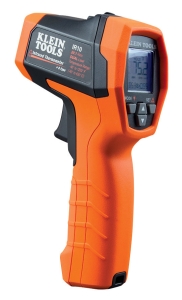
For infrared and contact thermometers like the CBM infrared thermometer with type K input, drift in Singapore's humid environment is common:
1. Lens cleaning for infrared sensors: The optical window (infrared lens) accumulates dust and condensation, degrading signal reception. Use a clean, dry microfiber cloth and distilled water to gently wipe the lens. Allow it to air-dry completely before re-measuring.
2. Type K thermocouple verification: For the CBM unit with type K input, verify the thermocouple connector is fully seated and corrosion-free. Green deposits on the connector indicate oxidation; clean with a pencil eraser or fine sandpaper, then apply a thin layer of dielectric grease.
3. Emissivity calibration check: The CBM thermometer features adjustable emissivity between 0.10–1.00. Verify the emissivity setting matches the target surface material. Incorrect emissivity is a common cause of apparent drift. For black surfaces (emissivity ≈ 0.95), for polished metal (emissivity ≈ 0.1–0.3), adjust accordingly.
4. Reference temperature comparison: Test the thermometer against a known stable heat source (steam bath at 100°C, ice bath at 0°C, or calibrated oven). If deviation exceeds ±2°C, the sensor element requires factory recalibration.
Preventive Maintenance and Drift Mitigation Strategies
Scheduled Verification Intervals
Establish a formal verification schedule based on equipment criticality and drift history:
- Critical control loops (temperature or pressure directly affecting product quality): Verify quarterly (every 3 months).
- Secondary monitoring (trend data or backup sensing): Verify bi-annually (every 6 months).
- Mechanical gauges in corrosive environments: Inspect quarterly for visible degradation; verify accuracy annually.
- Flow probes in systems with particulate or mineral-rich fluids: Inspect and clean semi-annually.
Document all verification results in a calibration register. This creates a historical trend that predicts when replacement will be necessary and justifies capital planning.
Environmental Controls and Protection
Singapore's tropical climate accelerates sensor degradation. Implement protective measures:
- Install transmitter enclosures: House electrical transmitters in wall-mounted or DIN-rail mounted enclosures with temperature control. Maintain internal ambient temperatures between 15–30°C if possible.
- Use sensing line heat tracing: For temperature sensors exposed to extreme ambient swings, insulate the sensing line with foam or mineral wool. Consider electric heat tracing if ambient temperatures drop below sensor operating range.
- Apply connector protection: Use IP65-rated or higher connector covers on all electrical connections. The Dwyer transmitter features IP65 protection, but connections between the transmitter and control cabinet must also be protected.
- Ventilate enclosures: Ensure control cabinets have filtered ventilation to prevent humidity buildup without introducing dust or salt spray.
Spare Equipment Strategy
Maintain calibrated spare units on hand for critical Measurement & Detection applications:
- Stock one spare Dwyer 4-20 mA transmitter for every three in service.
- Maintain one spare flow probe if flow measurement is critical to process control.
- Keep spare mechanical gauges for backup analog indication, especially in control rooms where digital failure could render all information unavailable.
Rotate spares into service every 12–18 months to ensure they remain functional and calibrated.
Conclusion
Measurement & Detection calibration drift is manageable with systematic verification procedures and preventive maintenance. Plant managers in Singapore can minimize unplanned downtime and product quality issues by implementing the diagnostic protocols outlined in this guide. When in doubt about sensor accuracy, verify against reference standards—the small investment in calibrated reference equipment and technician time will return significant value through improved process control and extended equipment life.
3G Electric's team of industrial specialists stands ready to assist with equipment selection, spare parts, and technical troubleshooting support. Contact us for calibration services, reference equipment recommendations, or to discuss your facility's Measurement & Detection challenges.