
Understanding Measurement & Detection Failures in HVAC Systems
When your HVAC control system reports inconsistent temperature or pressure readings, the culprit rarely points to a single failure. Instead, measurement drift, electrical noise, sensor degradation, and poor installation practices compound into unreliable Measurement & Detection across your system. For Singapore contractors managing humid tropical climates with demanding cooling loads, this problem cuts directly into equipment reliability and occupant comfort.
With 35+ years of industrial equipment distribution experience, 3G Electric has seen how measurement failures cascade through control loops, causing compressors to short-cycle, expand valves to hunt, and thermostats to cycle erratically. The difference between a 2-hour diagnostic call and a 2-day system failure often comes down to understanding where to check first.
Section 1: Diagnosing Temperature Probe Failures and Drift
Temperature measurement failures account for roughly 40% of HVAC control problems in tropical climates. Your system may read 22°C when actual conditions are 26°C, or show oscillating values that prevent proper thermostat response.
Common Temperature Measurement Problems:
- Sensor Lag and Response Time Issues — PT100 RTD probes lose accuracy when fouled by dust, corrosion, or moisture in connectors. The copper capillary that carries the signal becomes intermittently open or develops high resistance.
- Electrical Interference — Air handlers, compressor contactors, and variable frequency drives (VFDs) generate EMI that couples into low-voltage sensor wiring, especially over distances exceeding 10 meters without proper shielding.
- Connector Corrosion — In Singapore's humid environment, unprotected DIN connectors oxidize within weeks, creating high contact resistance that shifts readings by 2–5°C.
- Probe Positioning Errors — Temperature probes mounted in stagnant air pockets, direct sunlight, or against metal ducting read differently than true bulk air temperature.
1. Verify probe location — Confirm the Dwyer PT100 OHM RTD probe sits in active airflow at least 150 mm from supply registers or return grilles. Check that the flexible copper capillary isn't kinked, pinched, or routed near high-temperature pipes.
2. Test sensor resistance — Disconnect the probe at the control panel and measure resistance with a calibrated multimeter. A PT100 probe should read 100 Ω at 0°C (approximately 109 Ω at 22°C, 119 Ω at 40°C). If readings drift by more than ±2 Ω from published tables, the probe element has degraded.
3. Check connector cleanliness — Unplug the sensor connector and inspect both mating surfaces under magnification. Light oxidation appears as dull green or white film. Clean with isopropyl alcohol and contact cleaner spray, then reconnect firmly.
4. Measure shielding integrity — If temperature readings oscillate when motors start or VFDs ramp, suspected EMI coupling is likely. Test by temporarily routing sensor cable away from power wiring by 50 cm; if readings stabilize, upgrade to shielded twisted pair cable.
5. Perform a bench calibration check — Immerse the probe in an ice water bath (0°C reference) and a heated water bath (40°C reference) to confirm ±0.6% accuracy as specified. The Dwyer probe maintains ±0.6% accuracy at 0°C under ideal conditions—if your readings drift beyond this, the element requires replacement.
Section 2: Pressure Measurement Troubleshooting and Transmitter Diagnostics
Pressure Measurement & Detection failures strike differently than temperature issues. A failing pressure transmitter may read steady but wrong, or oscillate wildly, tricking your control system into unsafe actions like over-pressurizing expansion tanks or underfeeding flow to cooling coils.
Common Pressure Measurement Failures:
- Differential Pressure Transmitter Drift — The Dwyer 616KD-13V-TC transmitter measures tiny pressure differences (0–1 IN W.C., equivalent to 0–250 Pa). Contaminated process ports or stiction in the diaphragm cause readings to lag or stick.
- Mechanical Gauge Blockage — The Preciman stainless steel pressure gauge serves as both a visual reference and redundant check. If the Bourdon tube fills with mineral deposits or moisture, the pointer moves sluggishly or freezes.
- Barbed Connector Leaks — The Dwyer transmitter uses barbed process connections for 3–5 mm tubing. Over time, vibration or thermal cycling loosens these connections, allowing small leaks that create measurement noise.
- Power Supply Instability — The 616KD-13V-TC draws up to 21 mA. If your 24V DC supply droops below 18V during compressor startup, transmitter output becomes unreliable.
1. Compare transmitter and mechanical gauge readings — Physically observe the dial on your Preciman gauge and compare its reading to the digital transmitter output on your control panel. A discrepancy exceeding 3 mbar indicates transmitter failure or mechanical gauge contamination.
2. Inspect process port connections — Trace the tubing from the Dwyer transmitter's barbed ports back to your pressure test points. Gently wiggle each connection while monitoring the transmitter output. If readings jump or stabilize differently, a loose connection is siphoning signal.
3. Purge process lines — Use a small hand pump or compressed air at low pressure (< 0.5 bar) to gently blow out the tubing connected to pressure ports. Mineral deposits and moisture accumulate in stagnant lines, especially in tropical environments. Listen for hissing; if air bubbles escape, water is present and must be flushed out.
4. Verify power supply voltage — Measure the 24V DC supply at the transmitter's power terminals using a calibrated multimeter, especially during peak system load (compressor running, fans at full speed). The supply must stay ≥ 18V. If it sags below this during transients, upgrade the power supply or add a dedicated circuit.
5. Test transmitter isolation — Carefully disconnect the transmitter from the control panel and measure its output signal directly with a calibrated loop meter (0–20 mA or 4–20 mA depending on your model). Apply known pressure values (using a portable pressure pump) and confirm the transmitter's milliampere output matches the specified transfer function. The Dwyer unit should output proportional signal across its 0–1 IN W.C. range.
6. Check mechanical gauge accuracy — If the Preciman gauge appears sticky or reads outside its ±1.6% accuracy band, it requires recalibration or replacement. Tropical humidity and salt air (near coastal areas) accelerate Bourdon tube internal corrosion.
Section 3: Expansion Tank Pressure and Flow Measurement Validation
Expansion tanks and fluid circuits introduce unique Measurement & Detection challenges. Incorrect pressure readings lead to premature tank failures, while inaccurate flow probes mask blockages or circulator pump wear.
Expansion Tank Measurement Issues:
- Incorrect Pre-Charge Pressure — The CBM expansion tank inflator battery charges the air side to a reference pressure while the system is static and depressurized. Many contractors rely on visual gauges that are themselves inaccurate; if the air charge is 0.1 bar too low, the tank cannot absorb system expansion, leading to pressure spikes.
- Gauge Creep at Temperature Extremes — In Singapore's 22°C to 35°C ambient range, expansion tank pressure fluctuates with fluid temperature. A reading of 2.5 bar at 22°C will climb to 3.1 bar at 45°C. Contractors who don't factor this thermal swing misinterpret pressure changes as equipment failure.
- Trapped Air and Deaeration Failures — If Measurement & Detection shows erratic pressure swings during system startup, micro-bubbles in the fluid are compressing unevenly, creating false pressure spikes.
- Probe Blockage and Fouling — The Dwyer MAFS-16 metal average flow probe spans 16 cm across a duct and measures static and total pressure to infer velocity. If dust accumulation blocks the probe's static ports (small holes facing away from airflow), the differential pressure measurement becomes meaningless.
- Poor Probe Positioning — The flow probe must sit at least one duct diameter downstream from elbows, branches, or supply grilles. If installed too close to air handler discharge, velocity profile distortion creates false readings.
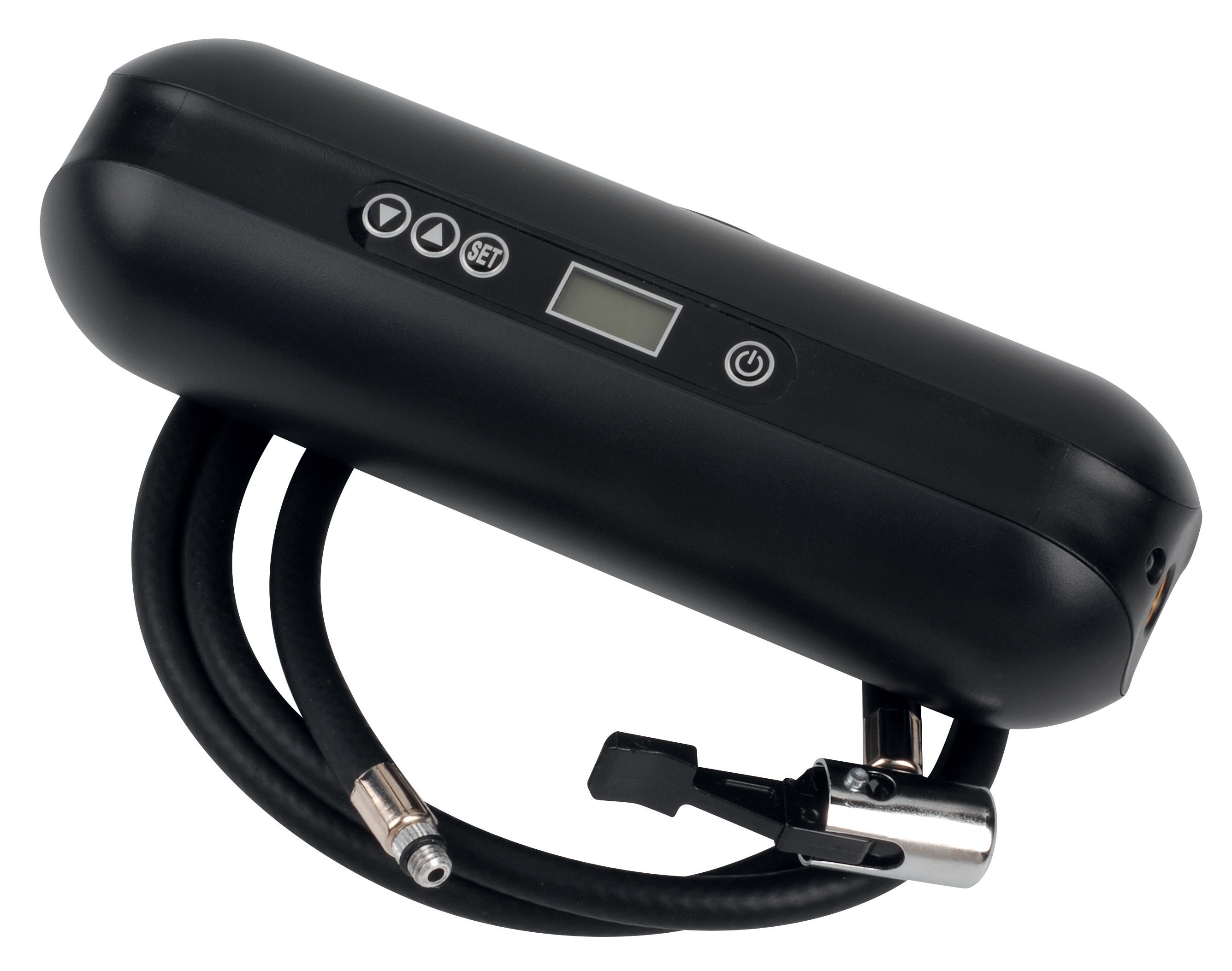
1. Re-verify expansion tank pre-charge — Using the CBM inflator battery 2000 mAH unit, depressurize the system completely, then drain the fluid side below the tank isolation valve. Measure the air-side pressure with an independent digital gauge (not the tank's integral gauge). The target pre-charge should equal approximately 30% of the system's maximum operating pressure. For a 4 bar maximum system, pre-charge to ~1.2 bar. If the tank inflator battery is old or depleted, the pre-charge drifts, and measurement becomes unreliable.
2. Account for thermal pressure swing — Monitor expansion tank pressure over a 24-hour cycle (morning cool, afternoon warm, night cool). Document readings every 2 hours. A 0.6 bar swing is normal due to fluid thermal expansion; swings exceeding 1.0 bar indicate either incorrect pre-charge or fluid volume issues, not measurement error.
3. Deaerate the system — If the differential pressure transmitter reading oscillates or spikes during system startup, air is trapped in the fluid. Locate the highest point in the piping (usually the expansion tank or top of the risers) and install a manual air vent or automatic float-type deaerator. Purge air until steady flow appears at the vent.
4. Clean flow probe static ports — Turn off the fan and airflow. Using compressed air at < 1 bar and a small straw or tube, gently blow across the probe's static pressure ports (small holes perpendicular to airflow direction). Visible dust or ice should dislodge. Do not use a pick or wire, as this damages the ports and introduces measurement error.
5. Verify probe duct position — Measure duct dimensions and ensure the MAFS-16 probe sits at least one duct height (if rectangular) or one diameter (if round) downstream from the nearest disturbance. If the probe was installed too close to the air handler, relocating it 0.5–1.0 meters downstream often restores accurate flow measurement.
Section 4: Practical Measurement & Detection Verification and Documentation
Silent measurement failures harm systems because contractors lack a verification routine. After repairs, you must confirm that sensors and transmitters return to spec.
Establishing a Verification Protocol:
- Create a baseline measurement log — On system startup or after any sensor replacement, document transmitter outputs, probe resistances, pressure gauge readings, and flow probe differentials in a commissioning spreadsheet. Record ambient temperature, system operating mode, and load conditions. This baseline becomes your reference if readings drift later.
- Use redundant cross-checks — When the Dwyer transmitter reports pressure, always confirm with the visual Preciman gauge reading. If they diverge by more than the gauge's ±1.6% tolerance band, troubleshoot the transmitter first (it's often the failure point in low-pressure applications).
- Schedule regular transmitter validation — Every 6 months in tropical climates, disconnect the pressure transmitter and verify its 4–20 mA output with a portable loop calibrator or multimeter at three known pressure points (low, mid, high). Drift exceeding 2% of full scale means recalibration or replacement is due.
- Document expansion tank service — Each time you service the CBM inflator, record the measured air-side pressure, the pressure setting you adjusted it to, fluid volume added or removed, and the date. Track whether pre-charge drift recurs; rapid drift suggests a micro-leak in the tank or diaphragm.
- Thermal compensation for temperature probes — If your control system allows, program a temperature offset that accounts for known sensor lag at startup. For example, if the PT100 probe reads 1°C low during morning warm-up, add a +1°C offset during occupied hours until the space reaches setpoint. This prevents hunting and reduces HVAC runtime.
3G Electric supplies these measurement instruments because we understand that HVAC contractors need sensors and transmitters that survive tropical heat, humidity, and electrical noise. Our 35+ years in the distribution business taught us that the cheapest sensor failure costs more in callbacks than the price difference between premium and budget equipment.
Recommended Tools and Equipment for Your Service Vehicle
- Dwyer PT100 OHM RTD temperature probe — replacement or backup probe for bench testing
- Dwyer 616KD-13V-TC transmitter — backup differential pressure transmitter for critical circuits
- Preciman stainless steel pressure gauge — redundant reference for pressure verification
- CBM expansion tank inflator battery 2000 mAH — for accurate tank pre-charge service
- Dwyer MAFS-16 flow probe — spare or reference for duct flow diagnostics
- Calibrated digital multimeter (0.1 Ω resolution)
- Portable 4–20 mA loop calibrator
- Hand-pump pressure tester (0–6 bar range)
- Isopropyl alcohol and contact cleaner spray
- Shielded twisted pair cable (22 AWG, 100 m spool)
Keeping these tools in stock reduces diagnostic time from hours to minutes and demonstrates competence to building managers and system owners.