Understanding Maintenance & Service Priorities for HVAC Contractors
Maintenance & Service excellence in HVAC operations depends heavily on selecting components that balance reliability, safety, and cost-effectiveness. Southeast Asian contractors often work in humid, demanding environments where equipment failures can result in extended downtime and customer dissatisfaction. The choice between investing in specialized pressure regulation systems and upgrading to higher-capacity pumps fundamentally affects your maintenance protocols and long-term operational expenses.
With over 35 years of experience supplying industrial equipment across Asia-Pacific markets, 3G Electric has observed that HVAC contractors frequently struggle with maintenance decisions because they lack clear comparison frameworks. This article provides practical guidance for contractors considering component upgrades, focusing on real-world application scenarios you'll encounter in climate control system servicing.
Pressure Regulation Systems: Safety-First Maintenance & Service
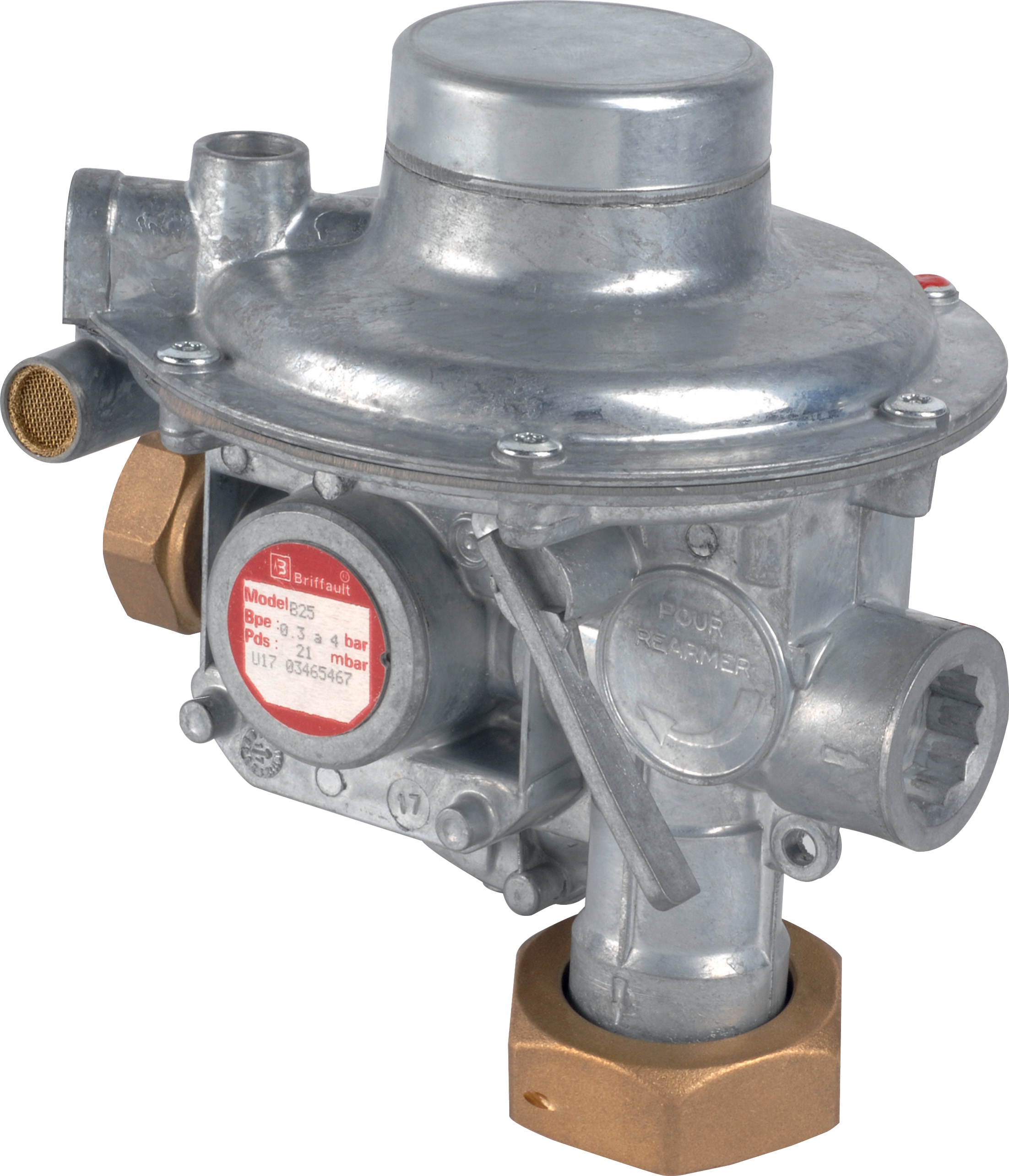
Pressure regulators represent the foundation of safe HVAC maintenance & service operations. The Francel B25/37mb pressure regulator with integrated safety relief exemplifies this category, delivering 37 mbar outlet pressure with a 10 mm vent size designed for laboratory and industrial gas distribution systems.
Key advantages for HVAC contractors:
- Safety integration: Built-in relief mechanisms prevent dangerous pressure spikes in refrigerant circuits
- Consistent performance: Maintains stable 37 mbar outlet pressure across varying load conditions
- Compact design: The 10 mm vent accommodates typical HVAC system requirements without requiring external safety valves
- Maintenance simplicity: Fewer external components mean reduced servicing complexity
When deploying pressure regulators in your HVAC maintenance & service workflow, inspect vent lines quarterly to prevent blockages from dust or moisture—common issues in Southeast Asia's tropical climate. The integrated safety relief requires annual pressure testing to verify relief valve actuation points remain within manufacturer specifications. Budget approximately 2-3 hours quarterly per regulator for preventive maintenance tasks.
Pressure regulators excel in situations where you're retrofitting older systems, as they require minimal modification to existing piping. However, they represent a cost-control solution rather than a performance upgrade. If your contractor business focuses on routine maintenance and system preservation, pressure regulation components should dominate your maintenance & service inventory.
High-Performance Pump Systems: Upgrading Maintenance & Service Capacity
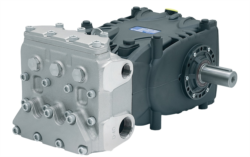
For contractors managing larger commercial HVAC installations or planning system capacity expansion, industrial pump options provide dramatically different maintenance & service profiles. Consider the Pratissoli KF30 pump (106 L/min, 200 bar, 40 kW) versus the Pratissoli MW40 pump (211 L/min, 210 bar, 85 kW) when evaluating performance scaling.
KF30 Specifications for Mid-Tier Maintenance & Service:
- Flow capacity: 106 L/min supports medium commercial HVAC systems
- Pressure rating: 200 bar suitable for refrigerant circulation in large-format chillers
- Power consumption: 40 kW provides reasonable operational efficiency
- Weight: 72 kg enables practical installation in existing mechanical rooms
- Flow capacity: 211 L/min—double the KF30—handles high-rise building systems
- Pressure rating: 210 bar maintains system integrity under peak demand
- Power consumption: 85 kW reflects substantially increased capacity
- Weight: 264 kg requires structural reinforcement and professional installation
The KF30 represents an ideal choice for contractors operating 5-15 service vehicles. Its relatively modest power requirement allows installation in facilities with standard electrical infrastructure. Preventive maintenance involves seal inspections every 250 operating hours and bearing lubrication per manufacturer guidance—tasks your technicians can complete during regular service visits.
The MW40 demands specialized infrastructure planning. Your facility requires dedicated electrical circuits, potentially including three-phase power upgrades. Maintenance & Service intervals tighten: bearing inspections occur at 150-hour intervals, and seal replacement becomes a semi-annual requirement rather than annual. However, the MW40's increased capacity justifies this commitment if you're managing building-wide HVAC systems with 15+ connected zones.
Italian-engineered by Pratissoli (Interpump Group), both pumps demonstrate superior reliability compared to lower-cost alternatives. In Southeast Asia's demanding environment, this engineering quality reduces unexpected failures during peak cooling demand periods.
Specialized Spray Components and System Integration in Maintenance & Service
Beyond pressure regulators and primary pumps, complete Maintenance & Service systems require auxiliary components. The Euspray flat jet nozzle (1/4" M BSPT, 25° angle, index 30) illustrates this critical category.
Spray nozzles directly impact HVAC maintenance & service efficiency when cleaning coils, heat exchangers, or performing system diagnostics. The 25° spray angle provides targeted coverage without excessive overspray—essential in climate-controlled facilities where moisture control affects operational reliability.
Integration considerations:
Specialty nozzles like the Euspray component must match your pump selection. The KF30's 106 L/min output pairs well with standard 1/4" connections, while MW40 installations may require multiple nozzle arrays for balanced pressure distribution. Contractors frequently overlook nozzle compatibility, resulting in uneven spray patterns that reduce cleaning effectiveness and extend maintenance cycles.
For Southeast Asian applications, choose nozzles compatible with chlorine-resistant materials—local tap water typically contains corrosive minerals, and high-pressure spray systems can damage standard brass components within 12-18 months. The Euspray design specifications suggest compatibility with industrial-grade materials appropriate for humid environments.
Compact Pump Solutions for Resource-Constrained Contractors
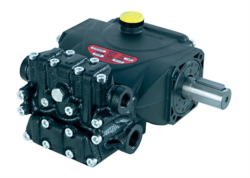
Not all contractors operate large facilities. The Interpump E1D1808 compact gear pump (8 L/min, 180 bar, 2.72 kW, 5 kg) addresses Maintenance & Service requirements for smaller operations or portable equipment configurations.
This compact pump class suits contractors managing:
- Mobile service units: 5 kg weight allows integration into truck-mounted systems
- Limited electrical infrastructure: 2.72 kW power demand avoids facility upgrades
- Smaller commercial buildings: 8 L/min satisfies HVAC maintenance cleaning and diagnostic operations
- Cost-sensitive customers: Lower equipment investment reduces service call premiums
The gear pump's 2800 rpm operating speed provides consistent pressure despite varying load conditions—important when working across different building types with varying system configurations. However, the 180 bar pressure ceiling means this component suits maintenance & service tasks rather than primary system circulation.
Maintenance & Service Decision Framework for Southeast Asian Contractors
Selecting between these component categories requires evaluating five factors:
1. Customer Base Characteristics
Small apartment buildings and retail spaces justify pressure regulator investments and compact pump solutions. High-rise commercial towers require KF30 or MW40 capacity planning.
2. Service Frequency Economics
Pressure regulators minimize maintenance cycles but limit system upgrade potential. Higher-capacity pumps increase service complexity but enable contractor specialization in larger projects with higher margins.
3. Facility Infrastructure
Existing electrical capacity determines pump selection. Many Southeast Asian facilities lack three-phase power, favoring compact single-phase solutions initially.
4. Technician Skill Levels
Pressure regulators require basic mechanical competency. High-performance pump systems demand advanced troubleshooting capability, necessitating additional technician training investments.
5. Long-Term Growth Strategy
Contractors planning regional expansion should evaluate pump investments against facility capabilities. The MW40 represents a business scaling decision, not merely an equipment purchase.
Practical Maintenance & Service Scheduling Recommendations
Monthly:
- Visual inspection of all pressure regulators for leaks or corrosion
- Nozzle spray pattern verification under operating conditions
- Filter element assessment in pump intake systems
- Pressure regulator vent line cleaning and flow testing
- Pump bearing lubrication and noise assessment
- Electrical connector inspection for moisture intrusion (critical in tropical climates)
- Pressure regulator relief valve testing against manufacturer specifications
- Complete pump seal inspection with replacement if marginal leakage appears
- System flow rate verification to identify early pump degradation
- Nozzle component replacement if spray patterns show irregularity
- Professional bearing service and potential replacement
- Seal integrity testing under sustained high-pressure conditions
3G Electric's 35+ years supporting Southeast Asian industrial operations demonstrates that contractors who implement structured maintenance & service scheduling reduce emergency repairs by 40-60% while extending equipment life beyond manufacturer-stated intervals.
Sourcing Maintenance & Service Components Through Established Suppliers
When upgrading your Maintenance & Service capabilities, work with distributors offering comprehensive support across component categories. 3G Electric supplies all referenced components—pressure regulators, performance-class pumps, specialized nozzles, and compact solutions—through established regional networks.
This consolidation approach simplifies your procurement, ensures component compatibility through engineering resources, and provides access to technical support teams familiar with Southeast Asian operational conditions. Rather than coordinating multiple suppliers managing different equipment categories, contractors benefit from single-source accountability and integrated warranty coverage.