Understanding Maintenance & Service Component Integration
Maintenance & Service decisions in Southeast Asian industrial operations require a systematic approach to component selection. The tropical climate, variable power infrastructure, and demanding operational schedules across the region create unique challenges for equipment reliability. After 35+ years as a distributor of industrial equipment, 3G Electric has observed that successful operations integrate three critical system layers: pressure regulation for safety and consistency, pump selection for capacity matching, and spray system precision for application effectiveness.
The relationship between these components determines overall system performance. A pressure regulator without proper safety relief creates operational risk. A pump selected for peak demand rather than typical loads wastes energy. Spray nozzles mismatched to system pressure reduce application efficiency. This comparison examines how these components work together and helps you select the right combination for your specific operational requirements.
Pressure Regulation: Safety, Consistency, and System Protection
The Francel B25/37mb Approach to Laboratory and Industrial Gas Distribution
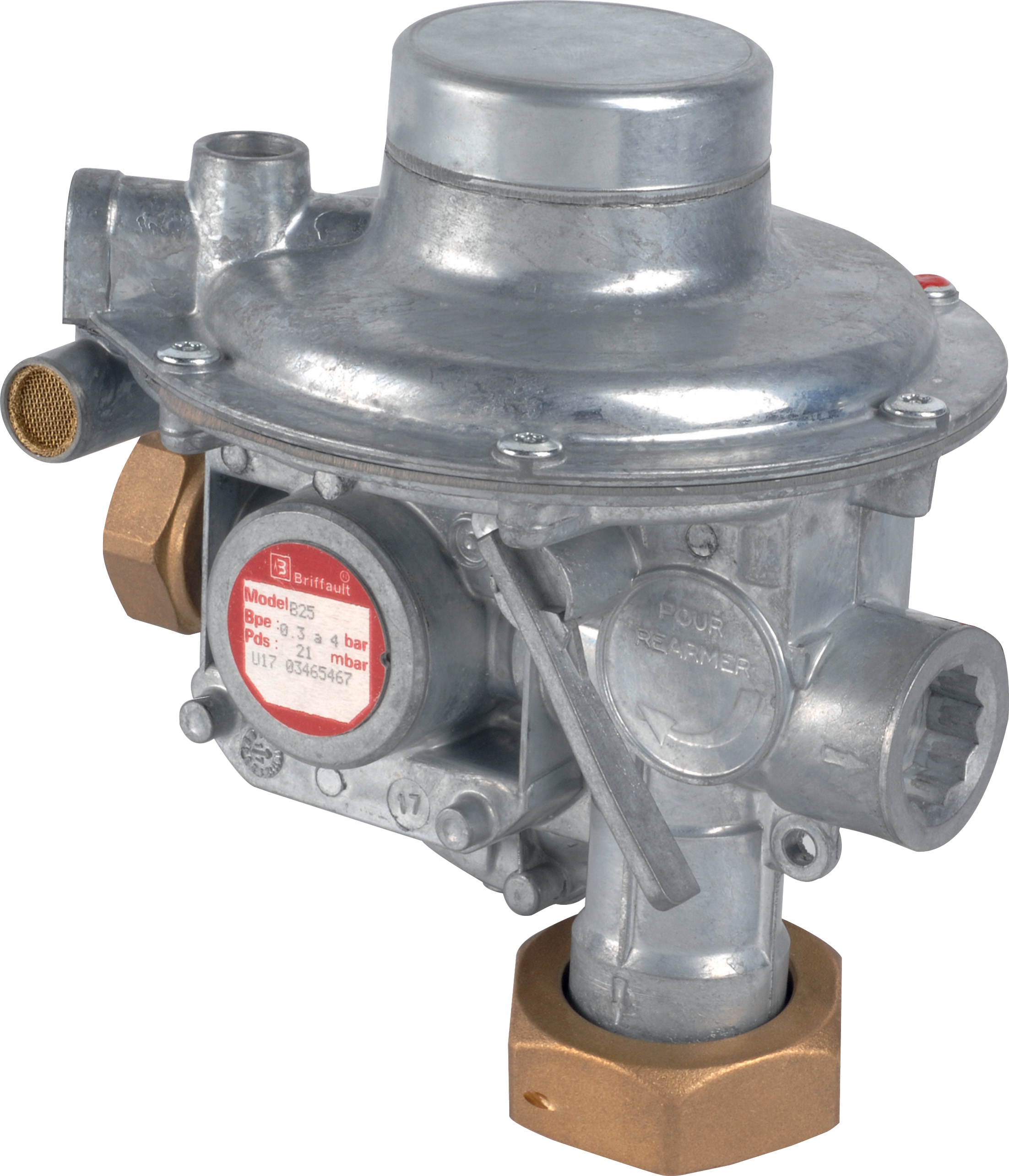
The Francel B25/37mb pressure regulator represents a specialized approach to pressure management in gas distribution systems. Designed for both laboratory and industrial applications, this regulator delivers consistent 37 mbar outlet pressure with integrated safety relief functionality. The 10 mm vent size accommodates gas flows typical in controlled environments where precise pressure maintenance is essential.
Key characteristics of this regulation approach:
- Integrated Safety Relief: Prevents over-pressurization without requiring separate safety devices, reducing component count and potential failure points
- Fixed 37 mbar Output: Ideal for applications requiring consistent, unchanging outlet pressure across varying demand cycles
- Compact Design: Laboratory-suitable footprint reduces installation complexity in space-constrained environments
- Direct Vent System: The 10 mm vent size manages relief flows efficiently without requiring external discharge piping
This regulator excels in Southeast Asian facilities where gas supply consistency matters more than adjustability. Applications include medical gas systems, laboratory burner assemblies, and precision cutting operations where pressure stability drives application success.
Maintenance Implications of Pressure Regulation Choice
Pressure regulator selection directly impacts maintenance frequency and downtime. Fixed-output regulators like the Francel B25/37mb require less calibration and adjustment than variable designs, reducing scheduled maintenance visits. However, they demand greater initial accuracy in system design—you must confirm that 37 mbar matches your application's actual requirements before installation.
In tropical Southeast Asian climates, integrated safety relief prevents moisture accumulation issues that external relief systems might experience. The sealed design maintains pressure consistency despite humidity fluctuations common in the region. For operations running continuous schedules (common in manufacturing across Thailand, Vietnam, and Indonesia), this reliability translates to reduced service calls and predictable maintenance planning.
Pump Capacity Selection: Matching Flow Demands to Operational Reality
Light-Duty Applications: The Interpump E1D1808 and Compact Flow Requirements
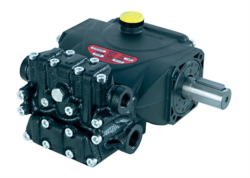
Not every operation requires high-horsepower pump systems. The Interpump PUMP E1D1808 L delivers 8 L/min flow at 180 bar pressure, consuming 2.72 kW power input while weighing just 5 kg. Operating at 2800 rpm, this compact gear pump suits applications where:
- Flow volume is modest: 8 L/min covers small spray systems, single-line lubrication, or low-flow circulation applications
- Space constraints exist: 5 kg weight and compact dimensions fit confined installation areas
- Energy efficiency matters: At 2.72 kW, this pump consumes minimal electrical power compared to larger alternatives
- Pressure requirements are moderate: 180 bar handles most industrial spraying and circulation tasks
This pump represents the practical lower boundary of high-pressure industrial equipment. Southeast Asian facilities operating single production lines, small batch processes, or supplementary system applications benefit from this capacity. The low power draw reduces electrical infrastructure requirements—critical in regions where reliable high-amperage supply can be inconsistent.
Mid-Range Industrial Operations: The Pratissoli KF30 Series
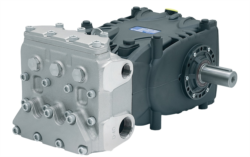
The Pratissoli KF30 industrial pump escalates capacity significantly with 106 L/min flow at 200 bar pressure. At 40 kW power input and 72 kg weight, this Italian-engineered pump (Interpump Group) suits medium-scale industrial operations:
- Continuous production lines: 106 L/min supports multiple spray heads or sequential application stages
- Mixed-pressure requirements: 200 bar balances flow volume with pressure for diverse application types
- Modest power footprint: 40 kW requires standard industrial electrical infrastructure available throughout Southeast Asia
- Manageable weight: At 72 kg, installation in existing systems requires ordinary equipment handling
The KF30 represents the "sweet spot" for many Southeast Asian manufacturing facilities. It delivers sufficient flow for typical industrial cleaning, coating, and process applications without oversizing and wasting energy. Maintenance intervals for this capacity class typically extend 1,000-1,500 operating hours, aligning well with quarterly service schedules common in the region.
High-Capacity Demanding Operations: The Pratissoli MW40 Series
The Pratissoli MW40 pump handles demanding, high-volume operations with 211 L/min flow at 210 bar pressure. Consuming 85 kW power and weighing 264 kg, this pump applies to:
- Multiple simultaneous application points: 211 L/min supports complex production configurations with numerous spray or distribution locations
- High-speed production lines: Continuous, demanding operations requiring sustained high-flow delivery
- Diverse pressure requirements: 210 bar maintains performance across variable application needs
- Industrial-scale facilities: Large manufacturing operations, processing plants, and integrated production systems
The MW40 requires substantial electrical infrastructure and dedicated installation space. However, for operations processing high volumes across Southeast Asia's automotive, food processing, and textile sectors, this capacity delivers the reliability needed for 24/7 operation. Maintenance planning for this class includes quarterly inspections, semi-annual fluid analysis, and annual seal replacement, with downtime typically scheduled during planned production stoppages.
Spray System Precision: Converting Pump Output to Application Effectiveness
The Euspray Flat Jet Nozzle: Targeted Application Geometry
Pump capacity and pressure mean nothing without converting that energy into effective application. The Euspray flat jet nozzle HP 1/4" M BSPT index 30 angle 25° precisely directs spray patterns for cleaning and coating applications.
Key technical features:
- 25° Spray Angle: Provides targeted coverage with controlled spray width—wider than pencil jets, more focused than fog patterns
- Index 30 Design: Standardized pattern geometry ensures consistent application across multiple nozzle installations
- 1/4" M BSPT Connection: Matches standard industrial quick-connect systems prevalent throughout Southeast Asia
- High-Pressure Rated: Handles 200+ bar operation from both KF30 and MW40 pump classes
The flat jet nozzle excels in coating applications (paint, protective finishes), precision cleaning (removing contaminants without substrate damage), and industrial surface treatment. The 25° angle balances coverage area with spray intensity—too narrow, and you require excessive nozzle movement; too wide, and pressure drops excessively.
Nozzle Selection Impact on Maintenance Requirements
Nozzle choice directly affects system maintenance. Flat jet nozzles like the Euspray model resist clogging better than fine-mist designs, reducing cleaning frequency. In Southeast Asia's dusty industrial environments (manufacturing plants, construction sites, logistics facilities), this clog resistance proves valuable. A clogged nozzle forces unscheduled production stops and service calls—flat jet designs minimize this risk.
The 1/4" BSPT connection matches standard industrial quick-couplers, enabling nozzle changes without system depressurization. For operations requiring multiple application types (cleaning, coating, cooling) on the same production line, quick-change capability reduces changeover time and minimizes operator error.
Practical Integration: Building Systems from Components
Small-Scale System Example: Laboratory or Batch Processing
A Southeast Asian laboratory or small batch operation might configure:
- Pressure Source: Francel B25/37mb for safe, consistent laboratory gas supply
- Pump: Interpump E1D1808 L for modest flow circulation or sample application
- Spray Application: Euspray flat jet nozzle for controlled sample delivery
This configuration prioritizes safety (integrated relief valve), space efficiency (compact pump), and precision (flat jet targeting). Total system power: 2.72 kW. Installation footprint: minimal. This suits Thai medical device laboratories, Vietnamese pharmaceutical facilities, or Indonesian specialty chemical operations.
Medium-Scale Continuous Operation: Production Line Spray Application
A typical Southeast Asian manufacturing facility might deploy:
- Flow Source: Pratissoli KF30 for 106 L/min sustained delivery
- Application Points: Multiple Euspray flat jet nozzles (3-5 units) along production line
- Pressure Management: Separate pressure regulator with adjustable relief (not pressure-fixed) allowing line-specific pressure tuning
This configuration supports continuous coating, cleaning, or cooling across a single production line. The KF30's 40 kW consumption fits standard industrial electrical service. Nozzle arrays allow pattern customization without system redesign. Maintenance schedule: monthly inspections, quarterly pump servicing, semi-annual filter replacement.
Large-Scale Multi-Line Operation: Industrial Manufacturing Complex
A major Southeast Asian manufacturer (automotive, food processing, textiles) might operate:
- Primary Flow Source: Pratissoli MW40 for 211 L/min peak capacity
- Secondary Supply: Pratissoli KF30 for line-specific supplementary applications
- Distribution: Pressure-regulated manifold dividing flow to multiple production areas
- Application Points: Euspray flat jet nozzles distributed across numerous spray stations
This configuration provides resilience (secondary pump enables partial operation if primary requires maintenance), flexibility (separate regulation for different production requirements), and scalability (additional nozzles add cost-effectively without full system redesign). Maintenance requires dedicated technician schedules, predictive fluid monitoring, and coordinated downtime planning across multiple operational areas.
Maintenance Considerations: Tropical Climate and Regional Operating Conditions
Humidity and Corrosion Management
Southeast Asia's tropical humidity demands specific maintenance attention. Pressure regulators with sealed designs (like the Francel B25/37mb) resist moisture ingress better than externally vented alternatives. Pumps operating in humid environments require more frequent seal inspection—moisture contamination in hydraulic fluid causes accelerated wear.
3G Electric recommends quarterly fluid analysis in tropical installations, versus semi-annual intervals typical in temperate climates. The cost of analysis ($50-100 per sample) prevents catastrophic pump failure (replacement cost $2,000-5,000+).
Power Supply Inconsistency
Many Southeast Asian facilities experience voltage fluctuations and temporary outages. Pump motors with thermal overload protection prevent damage during supply instability. Variable-displacement pumps (not discussed here) suffer more from inconsistent power than fixed-displacement designs like the Pratissoli series.
Install dedicated electrical protection: uninterruptible power supplies (UPS) for control systems, oversized motor starters with extended ramp times, and separate circuits for pump motors. This investment (typically 5-10% of pump cost) dramatically extends equipment life in regions with unreliable power infrastructure.
Parts Availability and Service Response
As a distributor with 35+ years in the industrial equipment market, 3G Electric maintains regional inventory across Southeast Asia. However, component availability varies by location. Remote facilities should maintain spare kits: pump seals, relief valve cartridges, nozzles, and pressure gauge components. Calculate spare costs at approximately 8-12% of installed equipment value annually.
Service response times differ by country. Urban centers (Bangkok, Ho Chi Minh City, Singapore, Manila) typically achieve 24-48 hour response; rural operations may require 3-5 day planning. Budget maintenance scheduling accordingly, avoiding single-point-of-failure equipment that lacks local spare parts.
Making the Selection: Decision Framework for Industrial Professionals
Assessment Questions
Before specifying components, answer these questions:
- What is your actual sustained flow requirement? Measure, don't estimate. Oversizing costs energy; undersizing creates bottlenecks. The Interpump E1D1808 covers 5-8 L/min needs; KF30 handles 80-120 L/min; MW40 suits 180-220 L/min operations.
- What pressure does your application truly require? Relief valve adjustments add cost and complexity. Choose a pump rated for actual working pressure. All three models suit 180-210 bar operations; choose based on flow, not pressure.
- How many simultaneous spray points do you need? Each nozzle requires roughly 15-25 L/min at full output. A KF30 pump supports 4-6 Euspray nozzles; MW40 supports 8-14 nozzles.
- What is your facility's maintenance capacity? Larger pumps demand more sophisticated maintenance. If your facility lacks predictive maintenance capability, choose smaller capacity requiring less intensive monitoring.
- What is your power infrastructure? If your facility struggles with 40 kW loads, don't specify the MW40. Choose the KF30 or Interpump E1D1808 and accept lower capacity.
Regional Considerations
Different Southeast Asian markets have distinct equipment preferences:
- Singapore: Emphasis on reliability and efficiency; accepts premium pricing for extended service intervals
- Thailand: Focus on affordability and straightforward operation; prefers locally available components
- Vietnam: Growing manufacturing sector prioritizes scalability and future expansion capability
- Indonesia: Distributed geography demands robust, low-maintenance designs tolerating less frequent service
- Philippines: Seasonal typhoon impacts require corrosion-resistant designs with quick-disconnect features for rapid setup changes
3G Electric's 35+ years serving the region inform component recommendations for each market's specific conditions.