Understanding Maintenance & Service Interval Requirements for Industrial Components
Maintenance & Service intervals determine equipment availability, spare parts inventory, and total operational cost for industrial facilities. Unlike reliability metrics or pressure specifications, service intervals directly impact procurement planning—requiring procurement engineers to forecast downtime windows, budget repair cycles, and coordinate inventory with equipment aging profiles.
3G Electric's 35+ years of industrial equipment distribution across Southeast Asia demonstrates that component lifespan variation across pressure regulators, pumps, and ignition systems creates practical scheduling conflicts. A single facility may operate equipment with different service requirements: high-frequency inspection components (ignition transformers), medium-cycle maintenance items (pressure regulation valves), and long-interval overhauls (industrial pump assemblies). Understanding these distinctions enables procurement engineers to design staggered maintenance windows that minimize simultaneous downtime across critical systems.
This comparison examines four component categories—pressure regulation, high-performance pumping, ignition transformation, and spray atomization—against measurable maintenance demands in Singapore's industrial environment, where tropical humidity, thermal cycling, and 24/7 operational expectations create accelerated wear patterns.
Pressure Regulation: Safety Components vs. Performance Maintenance
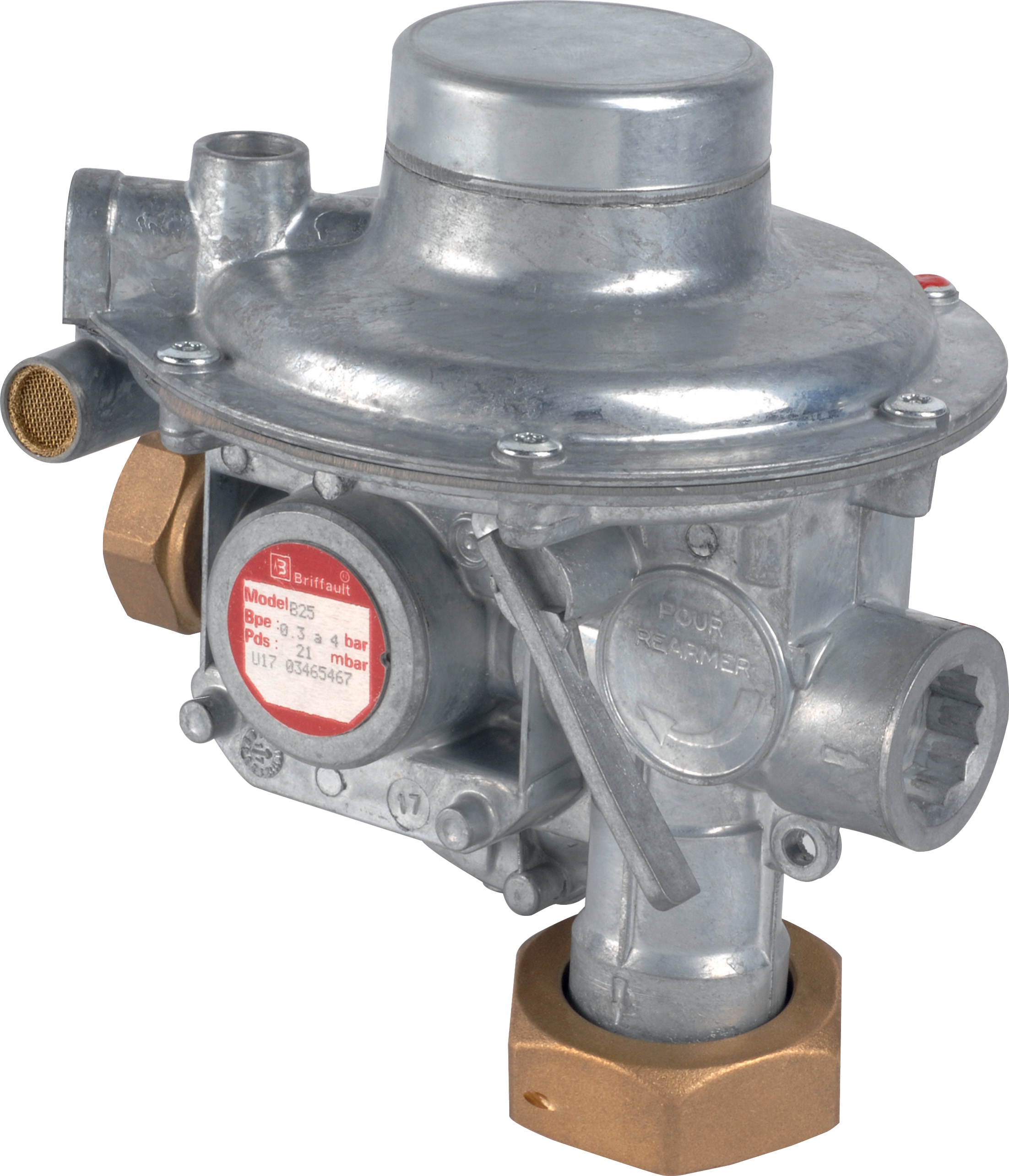
The Francel B25/37mb pressure regulator with integrated safety relief represents a critical maintenance distinction for procurement engineers. Safety relief components require functional verification on shorter intervals than standard pressure regulation maintenance, creating a dual-schedule requirement.
Francel B25/37mb Maintenance Profile:
- Functional Safety Testing: 6-12 month intervals (regulatory requirement under Singapore PED compliance)
- Internal Seal Inspection: 24-36 month intervals or after 10,000 operational hours
- Relief Valve Calibration Verification: Annual checks recommended; recalibration at 36 months
- Vent Port Clearance (10 mm): Monthly visual inspection; cleaning as needed in humid environments
The integrated safety relief design reduces component count versus separate regulator-plus-relief systems, but creates maintenance complexity: safety testing must occur independently of performance checks, requiring specialized test equipment and trained technicians. For Singapore facilities, the 10 mm vent size demands humidity management—salt spray environments near coastal industrial zones accelerate corrosion of vent pathways, requiring quarterly inspection cycles instead of semi-annual standards.
Procurement Implication: Budget 15-20% additional maintenance hours annually compared to standard pressure regulators. Safety relief components cannot be deferred; missed functional testing creates compliance liability under Singapore's Pressure Equipment and Safety Systems Regulations.
Industrial Pump Service Cycles: Flow and Pressure Bearing the Cost
The Pratissoli KF30 high-performance industrial pump (106 L/min, 200 bar, 40 kW) operates under demanding pressure and flow conditions that drive predictable maintenance cycles. Procurement engineers must distinguish between preventive maintenance intervals and condition-monitoring triggers.
Pratissoli KF30 Preventive Maintenance Schedule:
- Oil Analysis and Filtration: 500-hour intervals (approximately 3-4 weeks at continuous duty); critical for bearing wear detection
- Seal Pack Replacement: 2,000-3,000 operational hours (6-9 months continuous service); mandatory before pressure loss exceeds 5%
- Bearing Pack Inspection: 4,000-hour intervals; replacement at 6,000 hours or upon vibration anomaly detection
- Complete Pump Overhaul: 8,000-10,000 operational hours (24-36 months at 24/7 duty); internal cam and gear replacement
- Housing and Coupling Inspection: 1,000-hour visual checks; potential re-alignment required at 3,000 hours
At 106 L/min continuous operation (typical for Southeast Asian industrial HVAC, hydraulic, and injection systems), a KF30 pump requires professional service every 3-4 weeks for oil analysis alone. This frequency creates practical inventory planning: procurement must maintain 2-3 pre-analyzed oil samples on-site, schedule technician visits biweekly, and budget for immediate seal pack replacement if pressure drop exceeds tolerance.
Spare Parts Inventory:
Procurement engineers should maintain standing inventory of Pratissoli KF30 seal packs, bearing assemblies, and oil filtration cartridges. Lead time from Singapore distributors is 5-7 days for standard components; emergency orders (bearing failures, catastrophic seal loss) require 24-48 hour expedite windows. 3G Electric's regional inventory network supports 2-3 day standard fulfillment for KF30 components, critical for minimizing production downtime in continuous-duty applications.
Conditioning Monitoring Override: Vibration analysis or pressure trend monitoring may trigger seal replacement before standard 2,000-hour intervals. Singapore's tropical humidity accelerates water ingress into pump oils; facilities operating within 5 km of coastlines should reduce oil analysis intervals to 300 hours and implement desiccant breather systems.
Ignition System Maintenance: High-Voltage Component Degradation Cycles
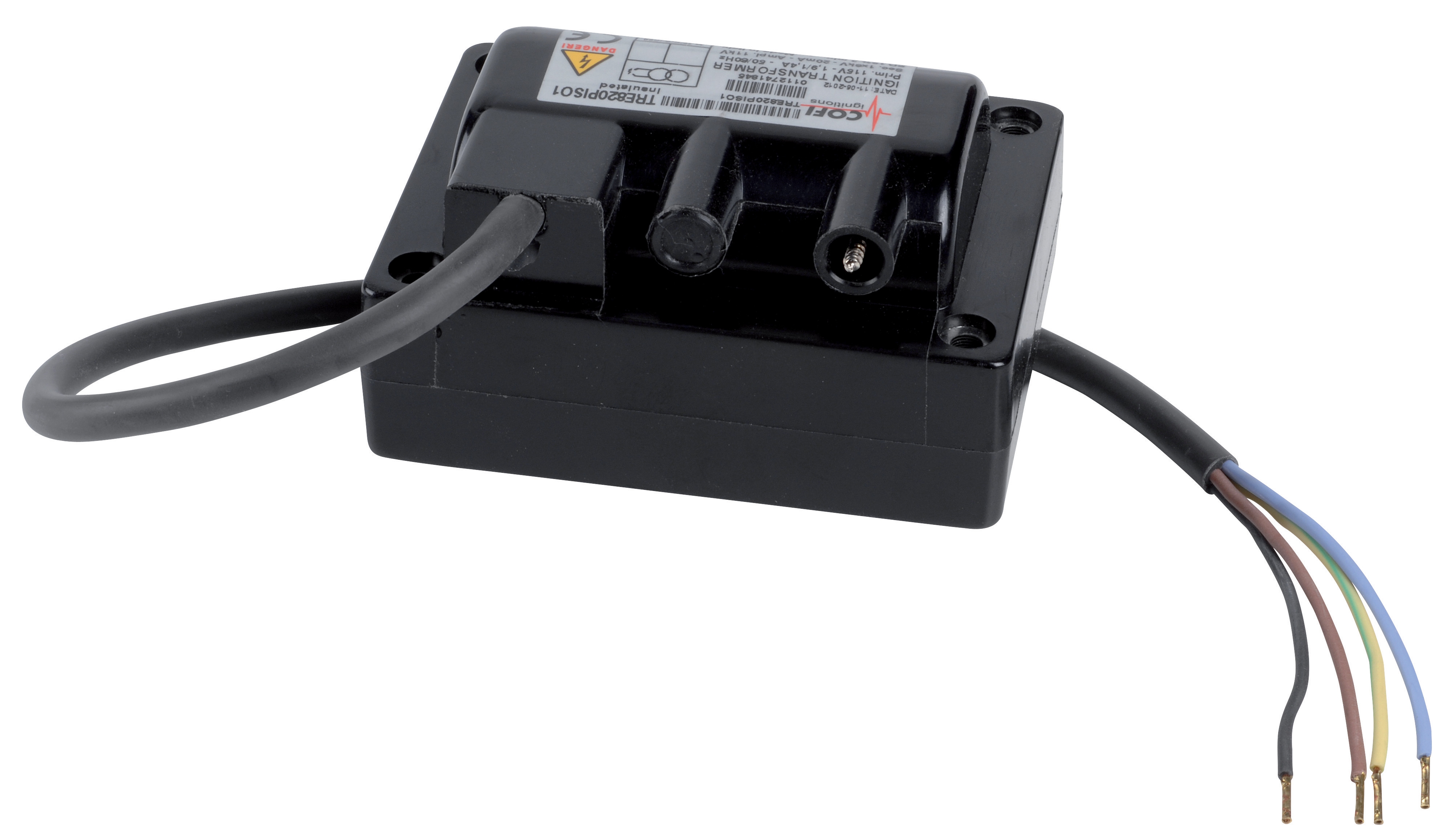
The Cofi TRE 820 Piso1 ignition transformer (8000 V output, 115 V input, 20 mA rated) operates in continuous thermal cycling conditions that define its maintenance life. Unlike mechanical components with gradual wear, ignition transformers experience capacitive degradation that can fail suddenly without warning.
Cofi TRE 820 Preventive Maintenance Requirements:
- Insulation Resistance Testing (megohm meter): 30-day intervals for critical systems; quarterly acceptable for standard duty
- High-Voltage Output Verification: 60-day intervals using calibrated high-voltage probe; output should remain within 5% of 8000 V specification
- Molded Cable Condition Assessment: Monthly visual inspection for cracking, discoloration, or hardening; tropical humidity environments require bi-weekly checks
- Thermal Cycling Stress Analysis: Quarterly during operational periods; Singapore's 80-95% relative humidity creates condensation risk
- Complete Transformer Replacement: 36-48 month maximum service life regardless of test results; capacitive aging is non-recoverable
Procurement Strategy: Establish a rolling replacement schedule at month 36-40 of service life, before failures occur during high-demand seasons (Singapore's cooling demand peaks April-August). Maintain one spare TRE 820 unit in climate-controlled storage; shelf life is 24 months without operation, acceptable for backup inventory. Lead time for replacement units is 10-14 days from distributors; emergency procurement is difficult, making spare inventory essential.
The 115 V primary input and 4-wire molded cable (380-440 mm standard) create site-specific compatibility constraints. Verify power supply voltage stability (±5% tolerance required) and cable routing away from moisture sources. Tropical humidity inside molded cables can reduce insulation resistance below safe thresholds within 6 months if cables are routed through unventilated cable trays.
Pressure Control and Flow Integration: The Regulating Valve Maintenance Intersection
The Pratissoli R1/400 regulating valve (400 bar, 110 L/min) operates at the intersection of pump maintenance and system reliability, requiring coordination between pump service intervals and valve maintenance schedules.
Pratissoli R1/400 Service Requirements:
- Pressure Setting Verification: 1,000-hour intervals; no adjustment required unless system pressure deviates >5% from target
- Internal Spool Inspection: 3,000-hour intervals; contamination or scoring requires valve replacement (repair not economical)
- Flow Capacity Testing: 6-month intervals using calibrated flow meter; bypass leakage should not exceed 2% at rated pressure
- Seal and O-ring Replacement: 5,000-hour intervals or upon pressure loss detection; integrated with pump seal pack schedule
- Complete Valve Exchange Program: 10,000 hours or 36 months maximum; exchange cores are cost-effective for Singapore procurement
The R1/400 valve (designed for KE, EV, KT-series pump families) must be serviced in coordination with KF30 pump maintenance. When pump seal packs are replaced at 2,000-3,000 hours, simultaneous valve spool inspection prevents pressure instability during the weeks following pump service. Misaligned service schedules create risk: a newly-serviced pump paired with a worn regulating valve develops oscillating pressure that damages downstream equipment.
Procurement engineers should schedule R1/400 maintenance at pump overhaul cycles (every 8,000 pump hours), ensuring both components are refreshed simultaneously. This prevents the common failure pattern where pump performance improves (after seal replacement) but valve wear masks the improvement, resulting in false diagnostics.
Spray System Component Lifecycle: Nozzle Degradation and Maintenance Access
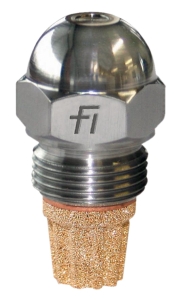
The CBM Fluidics 1.35 45° SF full-cone oil nozzle (1.35 L/h at 10 bar, 45° spray angle) represents the shortest-cycle maintenance component in industrial systems, requiring the most frequent intervention and therefore the most critical procurement planning impact.
CBM Fluidics 1.35 SF Maintenance Profile:
- Spray Pattern Verification: 40-80 operating hours; visual inspection for asymmetry or spray angle drift
- Internal Orifice Cleaning: 120-160 hours for standard applications; 40-80 hours in dusty or contaminated fuel environments
- Complete Nozzle Replacement: 500-800 operational hours or upon pattern degradation; internal deposits are not cleanable
- Supply Line Filter Replacement: 50-hour intervals to protect nozzle orifice from upstream contamination
- Pressure Setting Confirmation: 200-hour intervals using calibrated pressure gauge at nozzle inlet
In Singapore's industrial environment, dusty petrochemical operations, cement handling facilities, and waste-to-energy plants accelerate nozzle clogging. Supply air humidity (100% RH in coastal zones) introduces water droplets into compressed air lines; these droplets combine with fuel residues inside nozzle orifices, creating rapid blockage (40-hour cycles vs. 120+ hours in dry climates).
Procurement Implication: Establish a nozzle replacement budget of 5-8 units per year per installation (vs. 2-3 in temperate climates). Maintain standing inventory of 6-10 spare CBM 1.35 SF nozzles to avoid production delays during component cleaning or replacement. Lead time from 3G Electric is 3-5 days for standard stock; expedited orders require 24-hour notice.
Nozzle maintenance creates the highest labor cost in spray system upkeep: technician time for removal, cleaning, testing, and reinstallation is 2-3 hours per cycle. Automated nozzle cleaning systems or predictive replacement strategies (replacing at 500 hours regardless of visual condition) often reduce total cost-of-ownership versus reactive maintenance.
Practical Maintenance Scheduling Framework for Singapore Procurement
Procurement engineers must synthesize these component lifecycles into a unified maintenance calendar that balances spare parts inventory, technician availability, and production downtime. The following framework applies to integrated systems combining pressure regulation, pumping, flow control, and spray atomization:
Weekly Maintenance Window:
- CBM nozzle spray pattern visual inspection
- Francel regulator vent port clearance check
- KF30 pump vibration listening (bearing condition)
- Cofi transformer insulation resistance test
- R1/400 valve pressure setting verification
- CBM nozzle supply filter replacement
- KF30 pump oil analysis and filtration cartridge replacement
- Cofi transformer high-voltage output measurement
- Francel regulator functional safety test preparation
- Pratissoli R1/400 flow capacity testing
- KF30 bearing pack visual inspection
- Francel B25/37mb safety relief calibration verification
- Francel regulator functional safety test (regulatory requirement)
- KF30 seal pack replacement (2,000-hour mark)
- CBM nozzle replacement (500+ hour threshold)
- Cofi transformer insulation and output comprehensive testing
- KF30 pump bearing replacement (4,000+ hour mark)
- Francel regulator internal seal inspection
- Cofi transformer mandatory replacement (regardless of test results)
- R1/400 valve complete exchange (5,000+ hour mark)
This staggered schedule prevents simultaneous downtime of multiple components while maintaining cost control through consolidated technician visits and planned spare parts procurement.
Procurement Decision Framework: Component Selection Based on Maintenance Access
While maintenance intervals are fixed by engineering design, procurement engineers can influence long-term maintenance cost through initial component selection. Three decision criteria apply:
1. Geographic Service Network Proximity:
3G Electric's distribution network covers Singapore with same-week component delivery for standard orders. Competing component brands with longer lead times (14-21 days) create hidden downtime costs: during waiting periods, backup systems must operate, increasing overall maintenance burden. Prioritize components with regional distributor support.
2. Spare Parts Commonality:
Francel pressure regulators use standardized seal packs shared across B-series models (B12, B25, B37); Pratissoli KF-series pumps share bearing and seal components across KF30, KF40, KF50 models; CBM nozzles are interchangeable across 1.0–1.5 L/h flow rates. Component families with high commonality reduce inventory complexity and improve emergency response times.
3. Predictive Maintenance Capability:
KF30 pumps support oil analysis programs (ISO 4406 cleanliness sampling, ferrography, viscosity trending); Cofi transformers support megohm testing and output verification; Pratissoli R1/400 valves support flow measurement and pressure trending. Components with established condition monitoring reduce unplanned downtime versus calendar-based replacement schedules.
Conclusion: Maintenance & Service as Procurement Specification
Maintenance & Service intervals should be primary specifications in component selection, equal in importance to pressure ratings, flow capacity, or power requirements. Procurement engineers who specify components with incompatible service cycles create operational complexity that increases total cost-of-ownership despite lower initial purchase price.
3G Electric's 35+ years of industrial distribution in Southeast Asia have demonstrated that successful maintenance planning requires understanding component lifespan expectations, tropical environmental accelerators (humidity, salt spray, thermal cycling), and coordination between system-integrated components.
The Francel B25/37mb, Pratissoli KF30, Cofi TRE 820, Pratissoli R1/400, and CBM Fluidics 1.35 SF represent components with clearly defined maintenance intervals, regional distributor support, and established spare parts availability. By aligning procurement decisions with realistic service schedules, Singapore procurement engineers can optimize inventory investment, minimize emergency procurement, and maintain production reliability across industrial facilities.