Understanding Maintenance & Service as Strategic Plant Operations
Maintenance & Service excellence extends far beyond reactive repairs. For plant managers overseeing complex fluid distribution systems, Maintenance & Service represents a critical investment in production continuity, equipment longevity, and operational cost control. Drawing on 35+ years of experience as an industrial equipment distributor, 3G Electric has supported thousands of Singapore operations in building robust Maintenance & Service frameworks that prevent catastrophic failures while maximizing equipment asset value.
In Singapore's demanding industrial environment—where humidity, thermal stress, and continuous operational cycles accelerate wear—effective Maintenance & Service protocols directly impact bottom-line profitability. Equipment downtime costs far exceed component replacement expenses, making proactive service planning essential for competitive manufacturing operations.
Section 1: Establishing Baseline Performance Metrics and Service Intervals
The foundation of effective Maintenance & Service begins with understanding your system's baseline performance characteristics. Before any maintenance activity, plant managers must establish documented performance baselines for critical components: pressure outputs, flow rates, temperature stability, and vibration patterns.
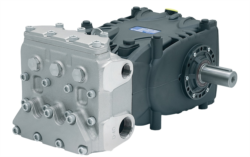
For high-performance industrial pumps like the Pratissoli KF30, which operates at 200 bar pressure with 106 L/min flow capacity, baseline documentation should capture:
- Pressure stability: Monitor outlet pressure fluctuations under full-load conditions. Deviations exceeding ±5 bar suggest internal seal degradation or cavitation issues requiring immediate service attention.
- Flow rate consistency: Record actual output against nameplate specifications. Flow reduction below 95% of rated capacity indicates impeller wear or internal leakage.
- Temperature profiles: Fluid temperature rise during operation reveals bearing friction, fluid degradation, or circulation system inefficiency. Excessive heat accelerates seal failure and reduces fluid lifespan.
- Acoustic signatures: Unusual noise—grinding, cavitation, or bearing rumble—signals imminent component failure and warrants immediate diagnostic inspection.
Establish documented service intervals based on manufacturer specifications and your operational duty cycle. For most Singapore industrial operations running 16-24 hour daily cycles, preliminary inspections should occur every 250 operating hours, with comprehensive maintenance every 1,000 operating hours or quarterly—whichever arrives first.
Utilize simple documentation systems—shift logs, maintenance checklists, or CMMS software—to track all observations. This historical data becomes invaluable for predictive maintenance planning and warranty claim support.
Section 2: Pressure Regulation System Maintenance & Service Protocols
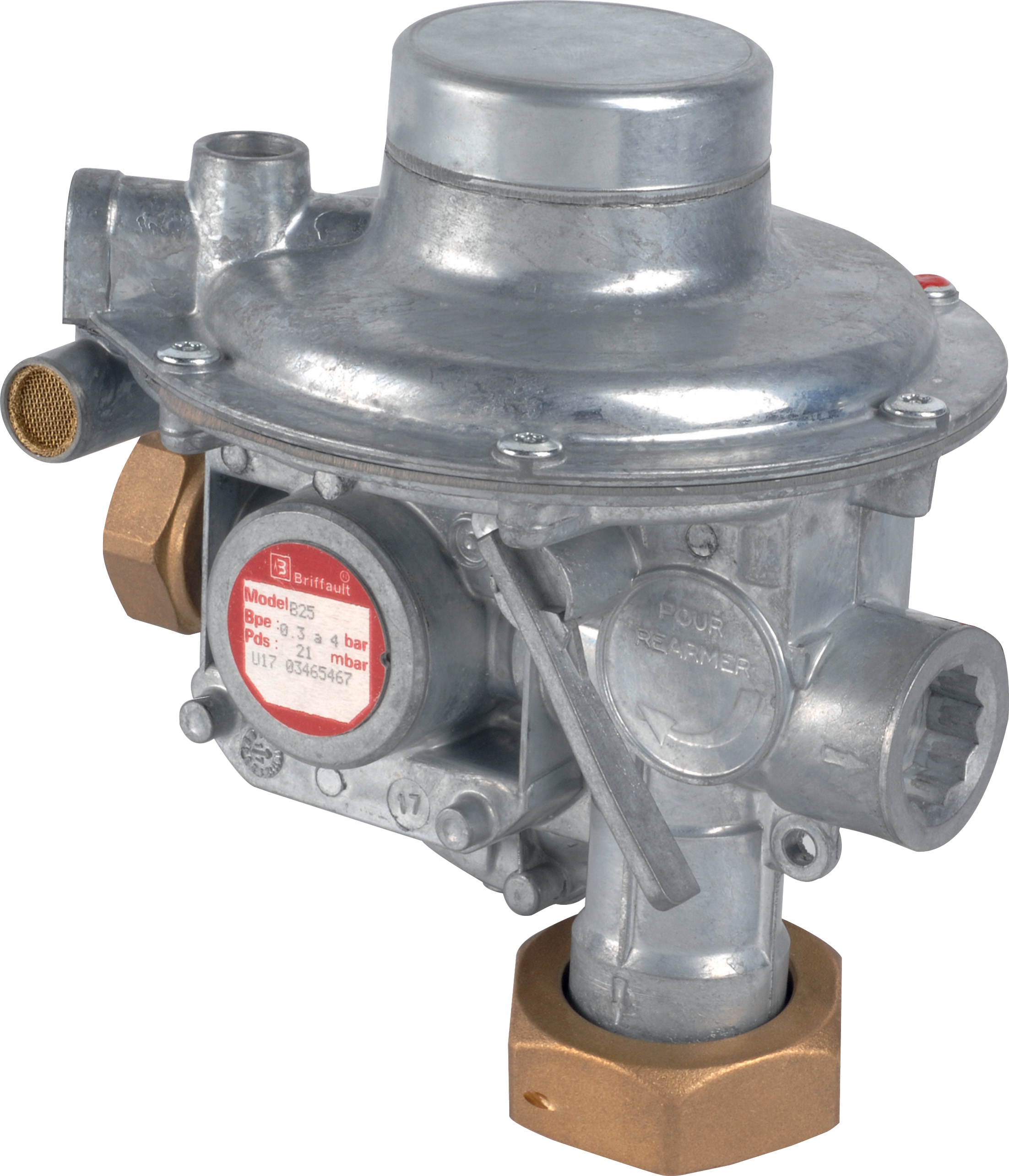
Pressure regulators represent critical control points in industrial fluid systems, yet they frequently receive inadequate service attention until failure occurs. The Francel B25/37mb pressure regulator with integrated safety relief exemplifies modern regulator design, delivering precise 37 mbar outlet pressure while providing integrated safety function—but only if properly maintained.
Effective Maintenance & Service for pressure regulation systems requires understanding three distinct failure modes:
1. Seal and Seat Degradation
Internal elastomer seals and valve seats experience continuous micro-stress from pressure cycling and fluid contamination. Over time, chemical incompatibility between sealing materials and system fluids causes hardening, loss of elasticity, and micro-leakage. Service protocol includes:
- Monthly visual inspection for external weeping or dripping
- Quarterly measurement of outlet pressure accuracy (should remain within ±2 mbar of setpoint)
- Semi-annual flush-through with clean system fluid to remove internal deposits
- Annual replacement of integral safety relief cartridges, even if no leakage is evident
Microparticulates—ferrous debris from pump wear, seal fragments, and fluid oxidation byproducts—lodge in regulator valve seats, creating erratic pressure control and downstream component damage. Implement:
- Pre-regulator filtration with 10-micron absolute rating (100-mesh screen)
- Quarterly filter element inspection and replacement when differential pressure exceeds 0.3 bar
- Annual regulator internal cleaning using approved solvents
The 10 mm vent size on the Francel B25/37mb can become obstructed by dust, insect nesting, or dried fluid residue. A blocked vent prevents internal pressure relief, causing regulator failure and downstream pressure spikes. Monthly vent inspection and quarterly vent line flushing prevent this common failure mode.
Section 3: Nozzle Performance Maintenance & Service and System Integration
Industrial nozzles function as precision delivery points where system pressure, flow rate, and spray pattern converge to create operational output—whether coating, cleaning, or cooling applications. The Euspray flat jet nozzle with 25° spray angle and 1/4" BSPT connection delivers specific performance only when properly maintained as an integrated system component.
Nozzle Maintenance & Service differs fundamentally from pump or regulator service because performance degradation occurs gradually and subtly:
Erosion and Pattern Drift
High-pressure fluid streams create shear forces that gradually erode nozzle orifices. A seemingly minor 0.1 mm orifice enlargement can reduce spray angle precision by 5-8° and increase flow by 12-15%, compromising coating quality or cooling efficiency. Monthly pattern verification using visual inspection (target spray uniformity and angle consistency) identifies erosion before it impacts production:
- Compare spray pattern photographically against baseline documentation
- Measure spray width at fixed distance (typically 30 cm) and compare against specification
- Verify spray angle remains within ±2° of nameplate specification
Viscous fluids, mineral deposits from hard water, and fluid oxidation products accumulate at nozzle inlet and internal passages, progressively restricting flow and raising internal backpressure. This causes:
- Pressure gauge creep (outlet pressure rises above setpoint)
- Spray pattern distortion and split streams
- Reduced coverage area and application inconsistency
- Premature pump wear from sustained elevated pressure
Preventive Maintenance & Service protocol:
- Weekly visual inspection for pattern degradation or color change in spray
- Monthly low-pressure flush (0.5-1 bar) using clean system fluid to clear inlet deposits
- Quarterly submersion cleaning in approved solvent (never ultrasonic, which can damage precision surfaces)
- Semi-annual replacement of nozzles showing >5% flow deviation from baseline
Vibration and thermal cycling cause BSPT thread connections to gradually loosen. A nozzle loose by just one full turn significantly increases vibration, spray pattern distortion, and potential safety hazards. Implement:
- Weekly thread connection torque verification (typically 8-12 Nm for 1/4" connections)
- Threadlocker compound application on reinstallation (medium-strength, removable formula)
- Backup nut installation where possible to prevent vibration loosening
Section 4: Pump System Maintenance & Service and Integrated Lifecycle Planning
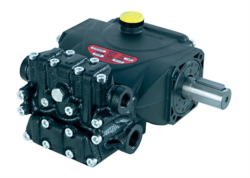
High-performance industrial pumps represent the most significant capital investment in most fluid systems. Models like the Pratissoli MW40 (211 L/min, 210 bar, 85 kW) or compact designs like the Interpump E1D1808 L (8 L/min, 180 bar) require comprehensive Maintenance & Service strategy spanning installation through end-of-life planning.
Fluid Quality and Circulation System Maintenance
Pump reliability depends primarily on fluid condition. Industrial hydraulic and pressure fluids experience chemical degradation, water absorption, and particulate contamination during operation. Effective Maintenance & Service prioritizes fluid management:
- Establish baseline fluid analysis: viscosity (ISO VG rating), acid number (TAN), water content, and particulate count (ISO 4406 code)
- Conduct fluid sampling every 500 operating hours initially, extending to 1,500 hours once baseline stability is established
- Replace or recirculate fluid through high-efficiency filtration when:
* Water content exceeds 500 ppm (causes corrosion and seal swelling)
* Particulate count exceeds ISO 19/17/14 (accelerates pump wear)
- Flush circulation system completely when changing fluid formulations or after component failures
Internal bearings and seals experience wear proportional to operating hours and duty severity. Proactive assessment prevents catastrophic failures:
- Temperature monitoring: Bearing temperature rise >15°C above system baseline indicates friction increase from wear progression
- Acoustic monitoring: Bearing rumble or grinding noise requires immediate bearing inspection
- Vibration analysis: Progressive vibration amplitude increase suggests bearing play development
- Oil sampling: Ferrous particle concentration indicates bearing wear rate; trending this value predicts bearing remaining useful life
Most pump failures originate from installation issues: misalignment, inadequate mounting, or improper fluid routing. Comprehensive Maintenance & Service includes annual verification:
- Coupling alignment check (misalignment >0.05 mm produces excessive vibration and bearing stress)
- Motor mounting bolt torque verification (loose mounts cause misalignment over time)
- Inlet and outlet piping support confirmation (unsupported piping causes vibration and connection loosening)
- Suction line pressure verification (should measure 0.3-0.5 bar above atmospheric; lower values indicate inlet restriction)
Plant managers must recognize that Maintenance & Service investment extends equipment lifespan and defers capital replacement. For a Pratissoli MW40 pump operating in demanding Singapore conditions, strategic Maintenance & Service planning typically extends operational life from 10,000 hours to 15,000+ hours—a 50% increase in asset utility.
Document all Maintenance & Service activities with dates, findings, and corrective actions. This historical record:
- Justifies warranty claims with original manufacturers
- Demonstrates due diligence for insurance purposes
- Provides data for equipment replacement planning and ROI analysis
- Supports budgeting for predictable maintenance costs
Maintenance & Service Documentation and Continuous Improvement
Effective industrial Maintenance & Service ultimately depends on systematic documentation and organizational commitment. Establish standardized checklists for each major component category, assign clear responsibility for inspection execution, and create feedback loops where field observations inform design and procurement decisions.
With 35+ years of distributor experience supporting Singapore industrial operations, 3G Electric has observed that plants implementing comprehensive Maintenance & Service protocols achieve 30-40% reduction in unplanned downtime and extend equipment lifespan by similar margins. The investment in discipline and documentation pays measurable dividends.
Regular Maintenance & Service training for maintenance technicians ensures consistent execution. As equipment design evolves and operational demands change, manufacturers release updated service guidance—staying current with these developments prevents costly oversights.
Your Maintenance & Service excellence directly determines whether capital equipment investments generate maximum value or become liabilities. By implementing the protocols outlined here, plant managers transform Maintenance & Service from a cost center into a strategic competitive advantage.