Understanding Industry Applications in Southeast Asian Manufacturing
Industry Applications in Southeast Asia demand equipment that balances precision with durability across diverse operational environments. Plant managers across the region manage facilities that range from small-scale food processing operations to large-scale textile manufacturing, each with distinct requirements for fluid delivery systems, pressure regulation, and spray application technologies.
With over 35 years of experience supplying industrial equipment globally, 3G Electric understands that one-size-fits-all solutions rarely work in Southeast Asia's varied industrial landscape. The region's high humidity, temperature fluctuations, and varying supply chain reliability require careful component selection. This article examines how different industries—textiles, food and beverage processing, and chemical manufacturing—approach fluid system optimization and what plant managers should prioritize when upgrading or replacing equipment.
Textile Manufacturing: Pressure Regulation and Chemical Spray Applications
Textile mills throughout Southeast Asia rely on precise fluid delivery for dyeing, finishing, and chemical coating processes. These operations demand consistent pressure regulation combined with targeted spray application.
Pressure Regulation Challenges in Textile Operations
Textile facilities typically operate multiple chemical distribution lines simultaneously. Unlike laboratory settings, industrial textile environments experience:
- Fluctuating inlet pressures from aging municipal water systems
- Corrosive chemical environments that degrade standard regulators
- Need for integrated safety features to prevent downstream equipment damage
- Continuous operation (16-24 hour shifts) requiring reliability over hours of daily use
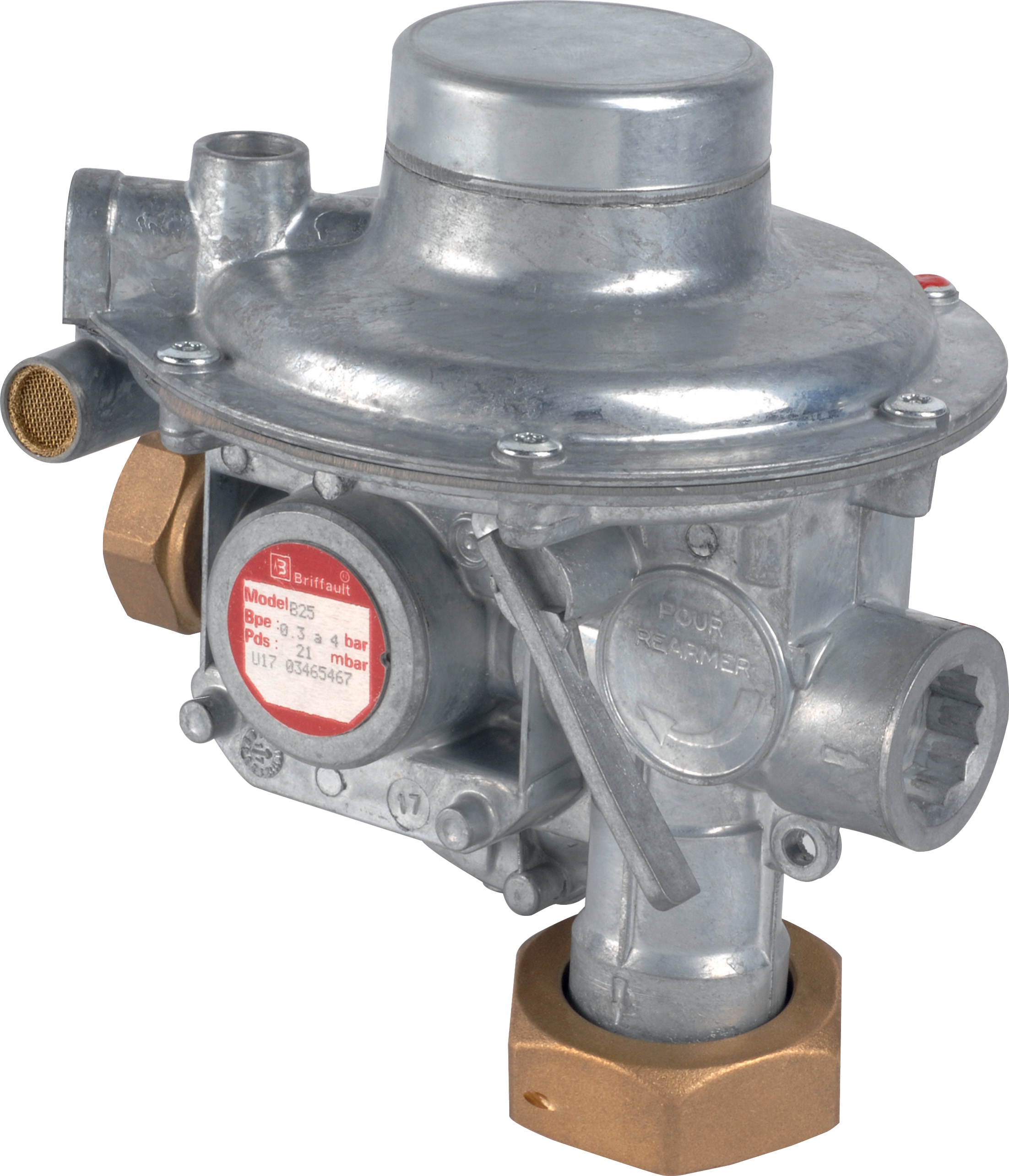
The Francel B25/37mb pressure regulator addresses these requirements with integrated safety relief capability. At 37 mbar outlet pressure with a 10 mm vent size, this regulator maintains consistent flow to chemical application systems while protecting downstream components. For textile plants, this means:
- Reduced chemical waste: Consistent pressure prevents over-application in spray systems
- Equipment protection: Safety relief prevents pressure spikes that damage nozzle assemblies
- Operational continuity: Reliable 24-hour performance without recalibration
Textile finishing requires precise spray patterns. The Euspray flat jet nozzle with 25° spray angle and 1/4" BSPT connection delivers targeted application compared to traditional round-jet nozzles:
| Feature | Flat Jet (25°) | Round Jet | Application Impact |
|---------|---|---|---|
| Coverage Width | Narrow, concentrated | Circular, dispersed | Less chemical overspray, 15-20% savings |
| Pressure Drop | Lower (suited to 37 mbar systems) | Higher | More efficient regulation compatibility |
| Pattern Consistency | Maintains width across pressure range | Varies with pressure changes | Better quality control in dye application |
| Fabric Penetration | Shallow (surface coatings) | Deep (saturation processes) | Choose based on finish type |
For textile plants managing multiple finishing lines, flat jet nozzles reduce chemical costs while improving finish consistency—a significant advantage for facilities producing export-quality fabrics.
Food and Beverage Processing: High-Flow Pump Selection
Food processing facilities across Southeast Asia—from coconut oil refineries to beverage bottling plants—require pumps that deliver high volume at moderate pressure while meeting sanitary operation standards.
Pump Performance Comparison: Scale and Application
Facility size determines pump selection. Consider two common scenarios:
Scenario 1: Mid-Scale Operation (200-300 L/min requirement)
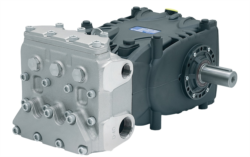
The Pratissoli KF30 pump delivers 106 L/min at 200 bar with 40 kW power input. For food processing applications:
- Suitable for liquid ingredient transfer between process tanks
- Adequate for moderate-pressure cleaning systems (CIP—Clean-In-Place)
- Power efficiency reduces operational costs on budget-constrained facilities
- 72 kg weight allows installation in space-constrained facilities
The Pratissoli MW40 pump delivers 211 L/min at 210 bar with 85 kW power. This upgrade suits:
- High-volume ingredient circulation in batch processing
- Heavy-duty cleaning systems for large equipment
- Continuous operation across multiple production lines
- Italian engineering (Interpump Group) ensures reliability in 24/7 environments
Selecting between KF30 and MW40 requires analyzing:
1. Current bottleneck: Is production limited by pump capacity or pressure capability?
2. Energy costs: MW40 uses 2.1x more power—calculate 12-month operating cost difference
3. Maintenance downtime: Larger pumps (MW40 at 264 kg) may require production shutdown for installation; KF30 allows installation during shorter maintenance windows
4. Growth projection: If facility plans expansion within 3-5 years, MW40 may be cost-effective long-term
Chemical Manufacturing and Precision Fluid Delivery
Chemical plants require exact flow control and pressure management for reaction vessel charging, additive injection, and batch transfer operations. Unlike textile or food processing, chemical manufacturing demands both high precision and flexibility across varying process requirements.
Compact Pump Solutions for Variable-Pressure Applications
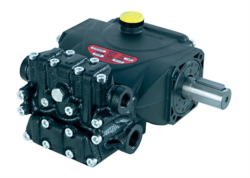
The Interpump E1D1808 gear pump represents a different approach from large centrifugal systems. Delivering 8 L/min at 180 bar with just 2.72 kW input, this compact design offers:
- Portability: 5 kg weight enables temporary installation for pilot batches
- Precision: Gear pump design delivers consistent, pulseless flow ideal for chemical reactions sensitive to flow variations
- Space efficiency: Fits into existing manifold systems without major reconfiguration
- Cost-effectiveness: For experimental or small-batch operations, this compact solution eliminates investment in full-scale pump systems
Chemical plants deploying the E1D1808 pump benefit from pairing with the Francel B25/37mb regulator for:
- Downstream pressure clamping (preventing process upsets from inlet pressure variations)
- Integrated safety relief protecting expensive downstream injection equipment
- Modular design allowing rapid reconfiguration between batch processes
| Strategy | Dedicated System | Modular, Multi-Purpose |
|----------|---|---|
| Example | Separate pumps for each chemical line | Portable E1D1808 + Francel regulator moved between applications |
| Capital Investment | Higher (multiple complete systems) | Lower (shared components) |
| Maintenance Complexity | Higher (more equipment to maintain) | Lower (fewer unique components) |
| Flexibility | Lower (each system optimized for one process) | Higher (adapt components to process changes) |
| Suitable For | Stable, high-volume processes | Variable formulations, experimental batches |
For smaller chemical manufacturers or contract manufacturers, the modular approach reduces capital burden while maintaining operational flexibility—a critical advantage in Southeast Asia's competitive contract manufacturing sector.
Practical Implementation: Southeast Asian Considerations
Regional Challenges Affecting Component Selection
Plant managers in Southeast Asia must account for:
1. Supply Chain Variability: Component availability varies by country. Malaysia and Thailand have better access to Italian equipment (like Pratissoli pumps) through established distribution. 3G Electric's 35+ years as a distributor ensures reliable sourcing across the region.
2. Environmental Factors: Coastal facilities (Singapore, coastal Thailand, Vietnam) experience salt-air corrosion. Stainless steel regulator bodies and pump housings justify the premium investment.
3. Power Quality: Some areas experience voltage fluctuations affecting motor-driven pumps. Oversizing slightly (selecting MW40 over KF30 when borderline) provides operational margin.
4. Spare Parts Lead Times: Compact designs like the E1D1808 are easier to replace with spare equipment held in stock, reducing downtime compared to sourcing replacement parts for large systems.
Decision Framework for Plant Managers
When evaluating fluid component upgrades:
1. Audit current operation: Document actual flow rates and pressures during peak production using temporary instrumentation
2. Calculate true cost of ownership: Include energy, maintenance, and downtime costs—not just purchase price
3. Assess growth trajectory: Will this facility expand? Modular systems enable phased scaling
4. Evaluate integration effort: Can new components retrofit existing piping, or does reconfiguration add significant cost?
5. Consider regional supply: Prioritize components with regional distributor support for faster spare parts and technical service
With industrial equipment sourcing across Southeast Asia since the company's founding in 1990, 3G Electric maintains distributor relationships that provide both product availability and application support specific to regional operational challenges.