Industrial Pump Integration with Gas Burner Systems: A Technical Guide for Global Operations
When designing or upgrading industrial heating and fluid transfer systems, one critical challenge procurement engineers face is ensuring seamless integration between high-pressure pumps and gas burner equipment. These two components operate in fundamentally different contexts—pumps manage hydraulic or fluid transfer, while burners generate thermal energy—yet their successful pairing determines overall system efficiency, safety, and operational reliability. This technical explainer walks through the architecture, specifications, and selection criteria for coordinating these complementary systems across global industrial applications.
Understanding System Architecture: How Pumps and Burners Work Together
Industrial pump and gas burner integration typically appears in two primary system configurations: indirect heating applications and auxiliary fluid management systems. In indirect heating, a pump circulates heat transfer fluid (or water in some applications) through a heat exchanger fed by a gas burner, while in auxiliary systems, pumps manage fluid supplies independent of burner operation but within the same equipment framework.
The architectural relationship between these components hinges on three technical factors: pressure compatibility, flow rate alignment, and thermal management. Pressure compatibility ensures the pump can operate safely when connected to components subject to burner-generated heat and pressure fluctuations. Flow rate alignment guarantees the pump delivers sufficient fluid volume to meet both thermal transfer and operational demands. Thermal management addresses how elevated temperatures from burner operation affect pump performance, seal integrity, and fluid viscosity.
From a specifications perspective, modern industrial systems require pumps rated for working pressures significantly higher than the steady-state demand. This safety margin accommodates pressure spikes during transient conditions—when burners cycle on/off or when system demand changes rapidly. Additionally, gas burners used in industrial settings demand precise fuel delivery and combustion air management. When a pump supplies fuel (in dual-fuel burner configurations) or manages pressurized fluid for burner-adjacent operations, that pump must meet stringent repeatability and pressure stability requirements.
The integration also depends on regulatory considerations. Different geographic regions (Europe, North America, Asia-Pacific) maintain distinct safety codes governing how combustion equipment interfaces with pumping systems. Equipment purchased for global operations must therefore account for these variations during the specification phase.
Technical Specifications: Matching Pump Performance to Burner Requirements
The Interpump PUMP E3B2515I R exemplifies the compact, high-pressure pump architecture increasingly deployed in modern burner-integrated systems. Operating at 250 bar (3,625 psi) with a flow rate of 15 L/min, this pump generates sufficient pressure head to overcome burner fuel line resistance while maintaining stable delivery under variable combustion conditions. The pump's 7.13 kW power rating reflects the energy cost of maintaining these pressure levels—a critical procurement consideration when calculating system operational expenses.
For comparison, the Interpump PUMP E3B2515 L offers identical pressure and flow specifications with different shaft configurations, allowing flexibility in coupling arrangements. Both variants operate at 1,450 rpm rotation regime, a standard speed that simplifies motor selection and reduces vibration compared to higher-speed alternatives. The 9.5 kg weight keeps system footprints compact—important in space-constrained industrial environments where burner assemblies must fit within existing equipment envelopes.
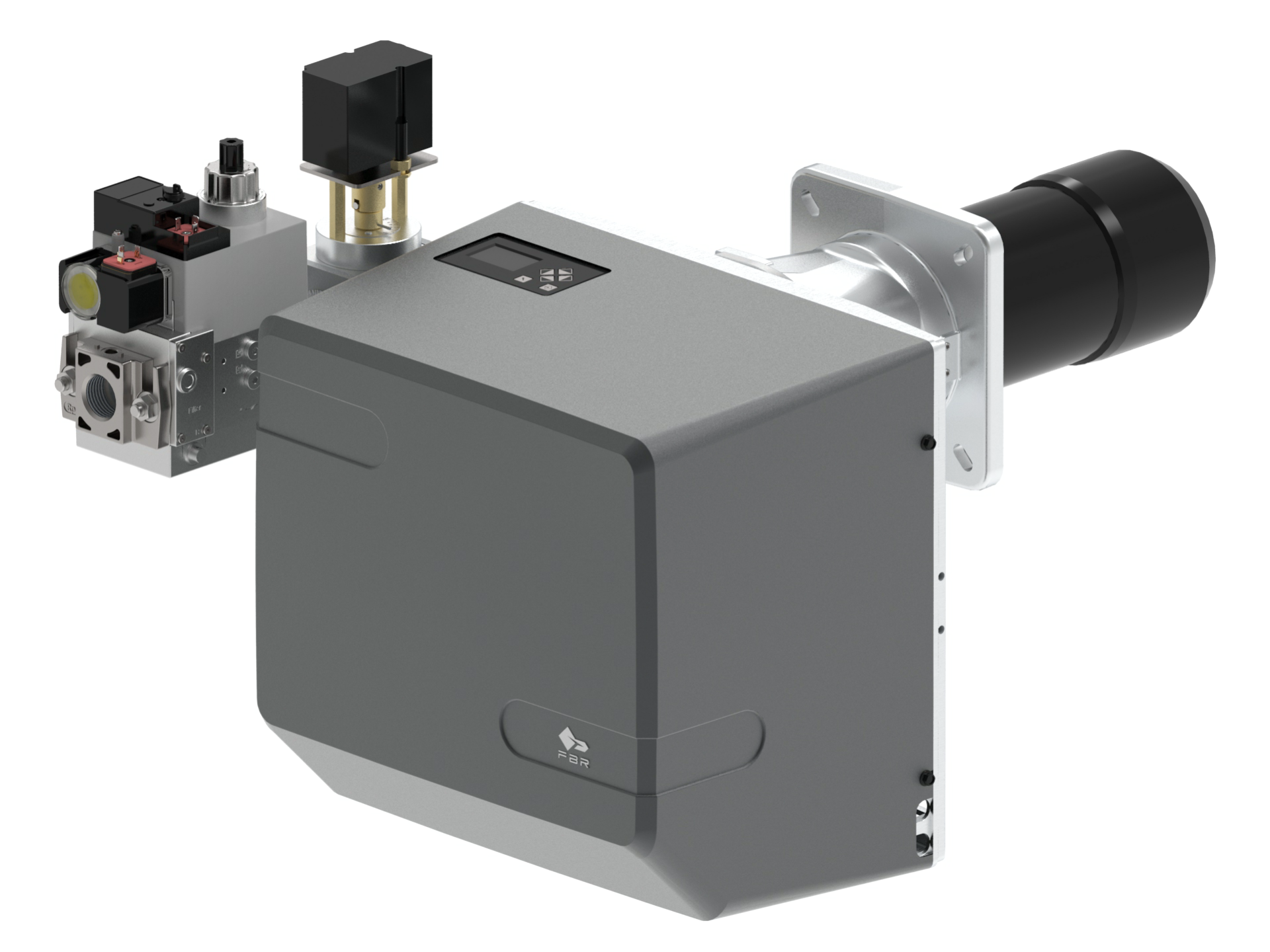
When these pumps integrate with gas burner systems like the FBR BURNER GAS X5/MF TL EL VC LPG, several pressure-related factors require attention. This burner operates across a fuel pressure range of 27-33 mbar for natural gas (minimum D1"-S inlet), considerably lower than the pump discharge pressure. This discrepancy is normal—excess pump pressure is regulated downstream through pressure relief valves and control orifices. The burner's 370 W fan motor operates independently, requiring no pump support, but the fuel delivery pathway must remain pressurized and stable regardless of burner firing modulation cycles.
Temperature considerations become significant when pump discharge lines pass near or through burner combustion zones. Most industrial pump seals tolerate continuous fluid temperatures to 80-100°C, though some specialized seals extend this to 120°C. Gas burner systems generate combustion gases exceeding 1,000°C, but properly designed systems isolate pump fuel lines through insulation, routing, or thermal barriers. During specification, verify that any pump-supplied fuel (LPG, natural gas, or alternate fuels) remains below the pump manufacturer's maximum temperature rating.
For systems requiring directional control or load-bearing integration, the Interpump PUMP E3B1515 DX with GEARBOX RS500H provides integrated valve and reduction gearbox functionality. This configuration simplifies plumbing and reduces component count, though it increases the system's mechanical complexity and requires more detailed installation planning.
Real-World Application Examples Across Global Industries
In North American industrial heating applications, pump-burner integration commonly appears in high-pressure hot water systems serving manufacturing facilities. A facility requiring 90 kW of continuous thermal output pairs a gas burner with 250-350 kW peak capacity with a compact pump rated for 250 bar—allowing the burner to modulate down to lower firing rates while maintaining fuel delivery stability. The pump runs continuously at reduced speed once the system reaches setpoint temperature, consuming minimal energy while maintaining fluid circulation and preventing stratification in heat exchangers.
Southeast Asian applications frequently involve agricultural or food processing operations where space constraints and tropical ambient temperatures create distinct challenges. Here, the Interpump E3B2515I R's compact 265mm overall length fits within equipment frames designed for single-burner installations. The 7.13 kW input handles fuel delivery and pressure maintenance without excessive waste heat generation—critical in humid, warm climates where parasitic losses rapidly accumulate.
European industrial facilities integrating dual-fuel capability demonstrate another pattern: a single pump system designed to deliver either natural gas (via pressure regulation to 27-33 mbar) or LPG (via separate regulator sets) to a modulating burner. The pump's consistent 15 L/min flow ensures adequate fuel availability regardless of which fuel source the facility prioritizes, accommodating supply chain disruptions or seasonal availability variations across the EU and neighboring regions.
Selection Criteria and Best Practices for Pump-Burner System Design
Pressure Matching: Always size the pump for 25-30% higher pressure than the burner's maximum fuel inlet pressure. This safety margin accommodates line resistance, valve pressure drops, and transient spikes. For a 33 mbar burner requirement, select a pump rated 250+ bar to ensure adequate reserve.
Flow Rate Verification: Burner fuel consumption varies with firing rate. Calculate maximum fuel flow demand (typically stated in kg/h or L/h), then verify the pump's L/min rating exceeds this requirement at the system's expected operating speed. A 15 L/min pump supports approximately 900 L/h (900 kg/h for liquid fuels), adequate for most compact industrial burners.
Thermal Isolation: Install flexible, heat-resistant hose between pump discharge and burner inlet. Use proper routing to avoid thermal radiation from combustion air intake or flame zones. Position the pump itself at least 1 meter from the burner assembly whenever possible.
Regulatory Alignment: Confirm the burner model complies with fuel category classifications relevant to your geographic market (I2R, I3B/P, etc., for European markets; ANSI standards for North America). Specify pump materials—stainless steel construction preferred for harsh environments or corrosive fuels.
Instrumentation Integration: Consider integrating pressure monitoring via glycerin-filled pressure gauges and voltage detection equipment for diagnostic capability and preventive maintenance scheduling.
Closing Remarks and Next Steps
Successful integration of industrial pumps with gas burner systems requires understanding both the individual equipment specifications and the system-level interactions that determine overall reliability and efficiency. Whether you're specifying equipment for manufacturing, HVAC, or process heating applications—whether in Singapore, Europe, North America, or elsewhere globally—the fundamental principles of pressure compatibility, flow rate alignment, and thermal management remain constant.
The products and specifications discussed in this guide represent proven industrial solutions deployed successfully across diverse applications. However, every facility presents unique constraints: existing equipment compatibility, space limitations, fuel availability, and regulatory requirements demand customized engineering.
3G Electric's experienced technical team can help you navigate these decisions. As an experienced industrial equipment distributor serving global customers since 1990, we maintain extensive inventory of compatible pumps, burners, instrumentation, and integration components. Contact our procurement specialists to discuss your specific application requirements—we'll help you select and specify the optimal pump-burner system architecture for your operational context.