Understanding Multi-Facility Equipment Scaling Challenges
Industrial professionals managing multiple facilities across Southeast Asia face a unique challenge: how to standardize equipment while maintaining flexibility across different site requirements. Whether you operate plants in Singapore, Thailand, Vietnam, or Indonesia, scaling industrial systems requires careful consideration of pump capacity, pressure regulation, and spray application consistency.
The primary tension in multi-facility operations lies between standardization and customization. Standardized equipment reduces training costs, simplifies spare parts inventory, and improves maintenance efficiency. However, individual facilities often have distinct operational demands—a high-volume food processing plant in Thailand may require different flow rates than a precision manufacturing operation in Singapore. Drawing from 3G Electric's 35+ years of experience supporting industrial distributors across Asia, we've identified proven strategies for selecting scalable equipment that addresses both standardization and flexibility.
Modular Pump Systems: Right-Sizing Across Facility Tiers
When comparing pump solutions for multi-facility operations, the choice between fixed and modular systems determines your entire infrastructure approach. Fixed-capacity pumps force you to select based on your largest facility's needs, leaving smaller operations with oversized, inefficient equipment. Modular systems allow each facility to operate at its optimal capacity level.
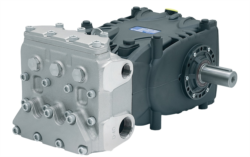
The Pratissoli KF30 pump (106 L/min, 200 bar, 40 kW) represents a mid-tier capacity suited for standard manufacturing and processing applications. This equipment works well as your baseline across smaller to medium facilities. For comparison, the Pratissoli MW40 pump (211 L/min, 210 bar, 85 kW) doubles the flow capacity for high-volume operations, making it appropriate for your larger facilities or primary processing centers.
The critical advantage emerges when you consider facility growth. If a facility's production targets increase 18 months after installation, you face three options: retrofit the existing KF30 with additional units, upgrade to the MW40, or install a parallel system. The modular approach allows parallel installation without full replacement, reducing capital expenditure by distributing upgrades across budget cycles.
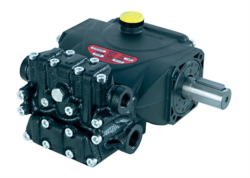
For smaller specialty applications or secondary processes, the Interpump E1D1808 compact gear pump (8 L/min, 180 bar, 2.72 kW) offers flexibility for auxiliary systems—lubrication lines, coolant circulation, or auxiliary pressure circuits. This three-tier approach (E1D1808 for support systems, KF30 for standard production, MW40 for primary operations) creates a scalable framework applicable across diverse facility sizes.
Pressure Regulation and Safety: Standardizing Control Across Sites
One overlooked aspect of multi-facility operations is the standardization of pressure regulation and safety systems. When technicians move between facilities or when equipment is relocated, consistent regulator behavior prevents operational errors and enhances safety compliance.
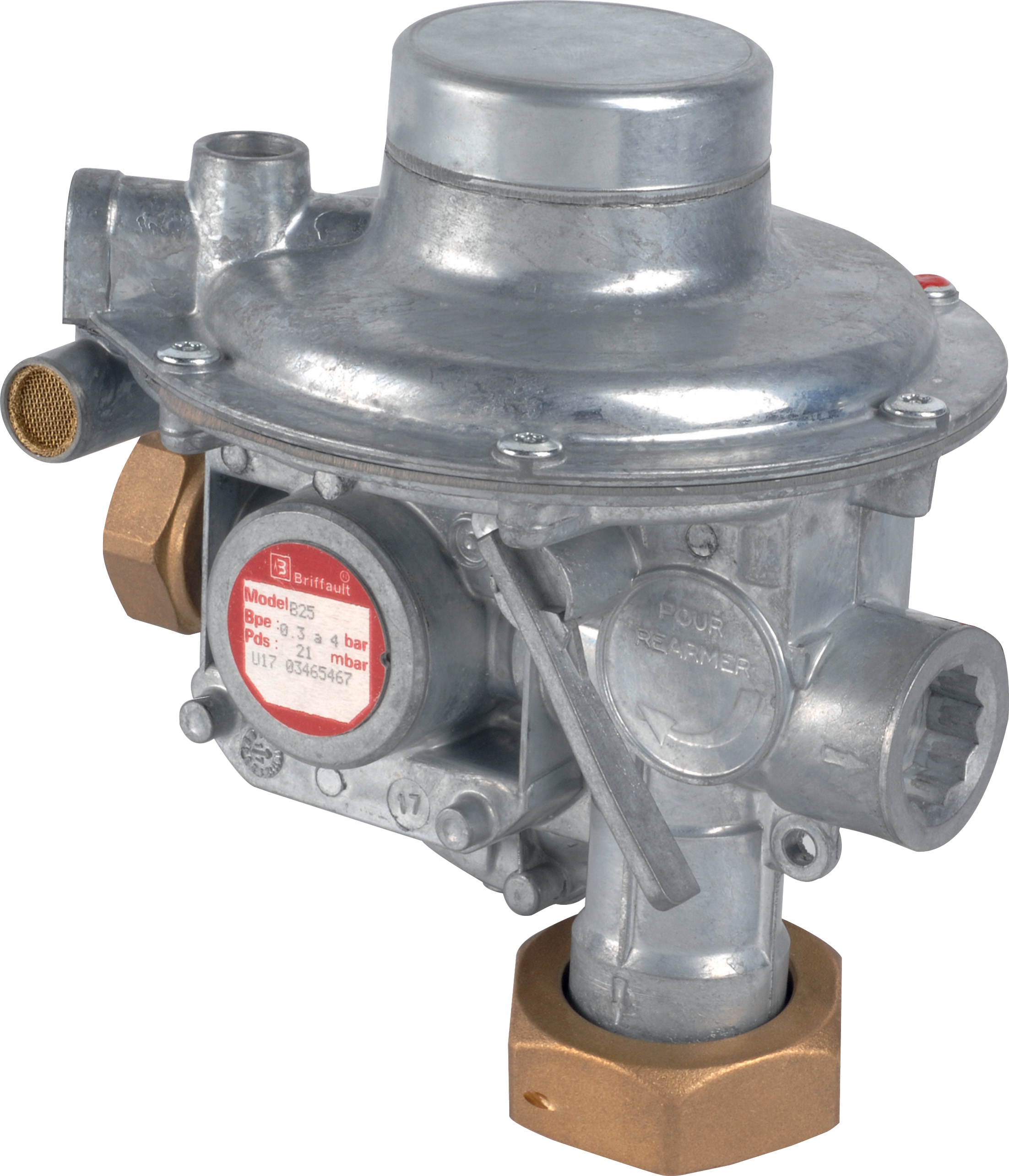
The Francel B25/37mb pressure regulator with integrated safety relief delivers standardized outlet pressure (37 mbar) across all laboratory and industrial gas distribution applications. This consistency proves invaluable across multiple facilities because technicians require minimal retraining when relocating or during emergency response scenarios.
Compare this to facilities that use different regulators at different sites. Plant A operates with a pressure regulator delivering 35 mbar, while Plant B uses a 40 mbar unit. When a technician troubleshoots a pressure issue, they must account for facility-specific settings. With standardized regulators, baseline troubleshooting becomes identical across all locations, reducing diagnostic time by 20-30% according to maintenance data from regional operations we support.
The integrated safety relief feature adds another dimension to standardization. Rather than purchasing separate regulators and relief valves for different facility configurations, the B25/37mb consolidates safety into a single component. This simplifies procurement—one SKU across all facilities—and ensures safety thresholds remain consistent. For multi-facility managers coordinating procurement across different countries with different suppliers, this consolidation reduces complexity in spare parts management and safety certifications.
Spray Application Consistency: Precision Across Production Environments
Industrial cleaning, coating, and application processes demand consistency. A coating application that works at your primary facility in Bangkok should produce identical results at your secondary facility in Ho Chi Minh City. Spray nozzle selection directly impacts this consistency.
The Euspray flat jet nozzle (HP 1/4" M BSPT, 25° angle, index 30) provides standardized spray geometry across applications. The 25° spray angle and index 30 designation specify exact performance characteristics. When you deploy this nozzle across multiple facilities, product quality remains consistent regardless of location or operator.
Compare this to selecting different nozzles for different facilities based on local supplier availability. Facility A uses a 25° nozzle from one vendor, Facility B sources a "similar" 28° nozzle locally due to availability. Over six months, quality control data reveals inconsistent coating thickness, leading to rework and lost productivity. The cost of standardization (minor logistics coordination) proves far less than the cost of variation (rework, customer complaints, production delays).
The 1/4" M BSPT connection and index 30 design also matter for multi-facility operations. These standardized specifications mean the nozzle integrates seamlessly into existing distribution systems across all your facilities without requiring adapter configurations. When equipment is designed for standardized connection interfaces, installation becomes plug-and-play, reducing commissioning time and opportunities for installation errors.
Implementation Strategy: Phased Rollout and Capacity Planning
With 35+ years supporting industrial distributors throughout Southeast Asia, 3G Electric has observed that successful multi-facility equipment standardization follows a phased approach rather than attempting simultaneous deployment across all locations.
Phase 1: Baseline Assessment (Months 1-2)
Document current equipment at each facility—pump capacities, pressure settings, nozzle specifications, regulator configurations. Identify which equipment appears across multiple sites and which represents facility-specific solutions. This assessment reveals your standardization opportunity.
Phase 2: Pilot Deployment (Months 3-6)
Select one representative facility and deploy your standardized equipment package. This might include a KF30 pump, Francel B25/37mb regulator, and Euspray nozzles. Train the local team thoroughly. Document performance metrics—flow rates, pressure stability, coating consistency, maintenance intervals. This pilot provides real data rather than assumptions.
Phase 3: Rollout and Integration (Months 7-18)
Based on pilot results, deploy standardized equipment to remaining facilities in priority order. Facilities with highest production volumes or most frequent inter-facility equipment sharing should receive priority. Each rollout should include operator training and documentation localized to facility-specific conditions.
Phase 4: Optimization and Support (Ongoing)
Monitor performance across all facilities. The modular nature of your equipment portfolio allows targeted upgrades. If several facilities show production increases, upgrade those specific locations using the MW40 rather than all facilities simultaneously.
This phased approach distributes capital expenditure across multiple budget cycles, reduces deployment risk, and provides opportunities to refine procedures before full-scale implementation.
Procurement and Supplier Coordination Across Borders
Southeast Asian operations span multiple countries with different import regulations, customs procedures, and supplier networks. Standardizing on specific equipment SKUs simplifies this complexity.
Rather than sourcing components from different suppliers in each country, standardization allows you to establish master purchasing agreements with 3G Electric as your regional distributor. One relationship, one set of SKUs (KF30, MW40, E1D1808S-000, DTG06002, TEC02064), multiple delivery locations. This approach provides:
- Simplified logistics: Single supplier coordination reduces communication overhead and potential delivery conflicts
- Consistent pricing: Master agreements provide volume discounts applied across all facilities
- Unified documentation: Technical specifications, safety data, and compliance certifications arrive in consistent formats
- Spare parts availability: Your distributor maintains regional stock of standardized components, reducing emergency procurement delays
For operations spread across Singapore, Malaysia, Thailand, Vietnam, and Indonesia, this centralized procurement approach often reduces total cost of ownership by 12-18% compared to individual facility sourcing, even accounting for logistics coordination.
Capacity Planning: Anticipating Growth and Market Changes
Southeast Asia's industrial sector demonstrates consistent growth, with manufacturing expanding at 4-7% annually depending on subsector. Standardized, modular equipment accommodates this growth without complete system replacement.
When you deploy a KF30 pump at a facility that processes 10,000 units monthly, you've selected equipment with 30-40% capacity reserve—the pump operates at 60-70% of maximum capacity. As production increases 20% over 18 months, the same pump operates at 80-85% capacity, still within safe operating parameters. At 35% production growth (2+ years), you face an upgrade decision.
With modular architecture, upgrading doesn't mean removing the KF30. Instead, you install a second KF30 in parallel for 212 L/min combined capacity, or install a single MW40 if facility space and budget allow. This modularity accommodates growth patterns that would require complete system replacement with non-modular alternatives.
Regional demand variation also influences equipment selection. If a political or trade development shifts sourcing patterns between facilities—for example, increased production at your Vietnam facility to access tariff benefits—modular equipment allows rapid capacity reallocation without significant capital expenditure. Equipment installed at a lower-demand facility can be relocated to higher-demand locations when business conditions change.
Conclusion: Strategic Equipment Selection for Regional Operations
Managing industrial equipment across multiple Southeast Asian facilities requires balancing standardization benefits against facility-specific requirements. By selecting modular, scalable equipment—the KF30 and MW40 pumps for primary capacity, E1D1808 for auxiliary systems, Francel B25/37mb for standardized pressure control, and Euspray nozzles for consistent spray applications—you create a framework that improves operational efficiency, simplifies procurement, and accommodates growth.
With 3G Electric's support as your regional distributor, standardized equipment selection becomes a practical strategy rather than an aspirational goal. Our experience across 35+ years of supporting industrial operations in Southeast Asia demonstrates that standardization reduces total cost of ownership while improving safety compliance and product consistency across your distributed facility network.